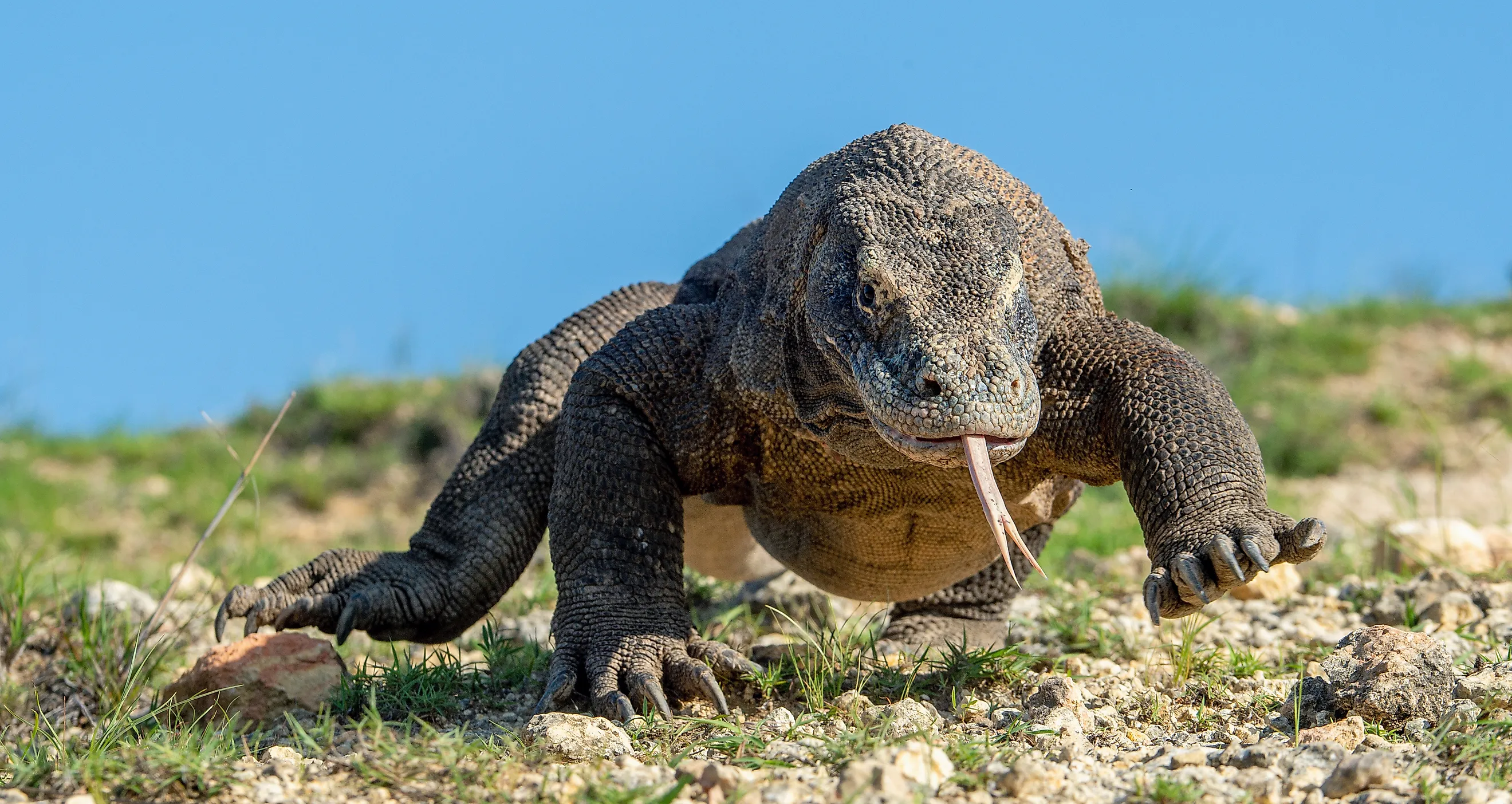
Komodo Dragon
The Komodo dragon (Varanus komodoensis) is no legend. It's a real lizard that lives in the dry savannas, grasslands, and forests of Southeast Asian islands. Its long forked tongue, sharp teeth, and intimidating size have earned it a kind of celebrity. Lieutenant van Steyn van Hensbroek brought the species to Western scientific attention in 1910 after investigating rumors of a "land crocodile." The London Zoo opened its Reptile House in 1927 with two of the first Komodo dragons in Europe, and they quickly became a sensation. The species is now endangered, with most of the wild population protected inside Komodo National Park. It's one of the few places visitors can see them in the wild.
Distribution

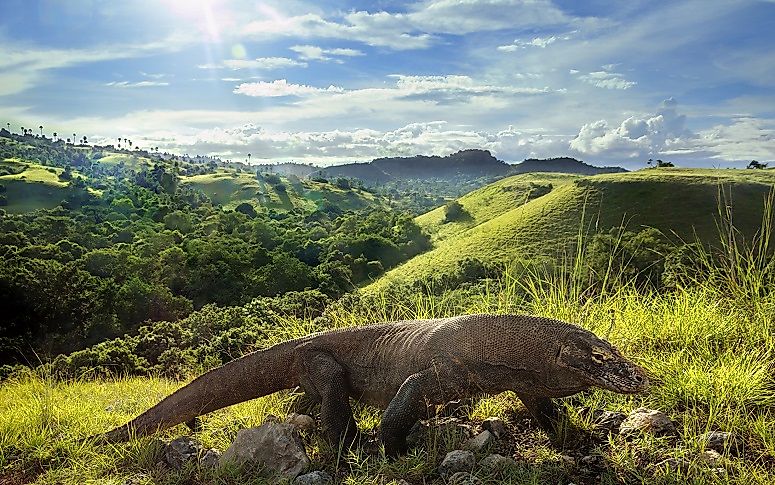
There is only one species of Komodo dragon, and it is found exclusively in Indonesia. Although their distant ancestors once lived in regions such as Australia, modern Komodo dragons are now limited to a small group of islands in the Lesser Sunda chain, east of Bali. These islands include Komodo, Rinca, Flores, Gili Motang, and Nusa Kode. The largest concentration is on Komodo Island itself, a volcanic island dominated by savannah and protected by Komodo National Park.
Komodo dragons prefer hot, dry environments such as savanna grasslands. They are adaptable, however, and also move through tropical forests and along coastal areas, often in search of prey. As cold-blooded animals, they are most active in warm temperatures and slow down when conditions cool.
Physical Traits

Komodo dragons are the largest living lizards. Adult males typically grow to about 8.5 feet (2.6 meters) in length, while females are slightly smaller, averaging around 7.5 feet (2.3 meters). Most weigh between 150 and 200 pounds, though exceptionally large individuals have reached lengths of more than 10 feet and weights over 300 pounds. The largest verified specimen, held in captivity, measured 10.3 feet and weighed 366 pounds.
Befitting their name, Komodo dragons are powerfully built with osteoderms covering their bodies. These small bony plates embedded in the skin function much like the armor found in American and Chinese alligators. Every part of the body is built for force, including loosely articulated jaws that allow the dragon to take huge bites. They can eat enormous meals, sometimes consuming a significant portion of their body weight in a single feeding.
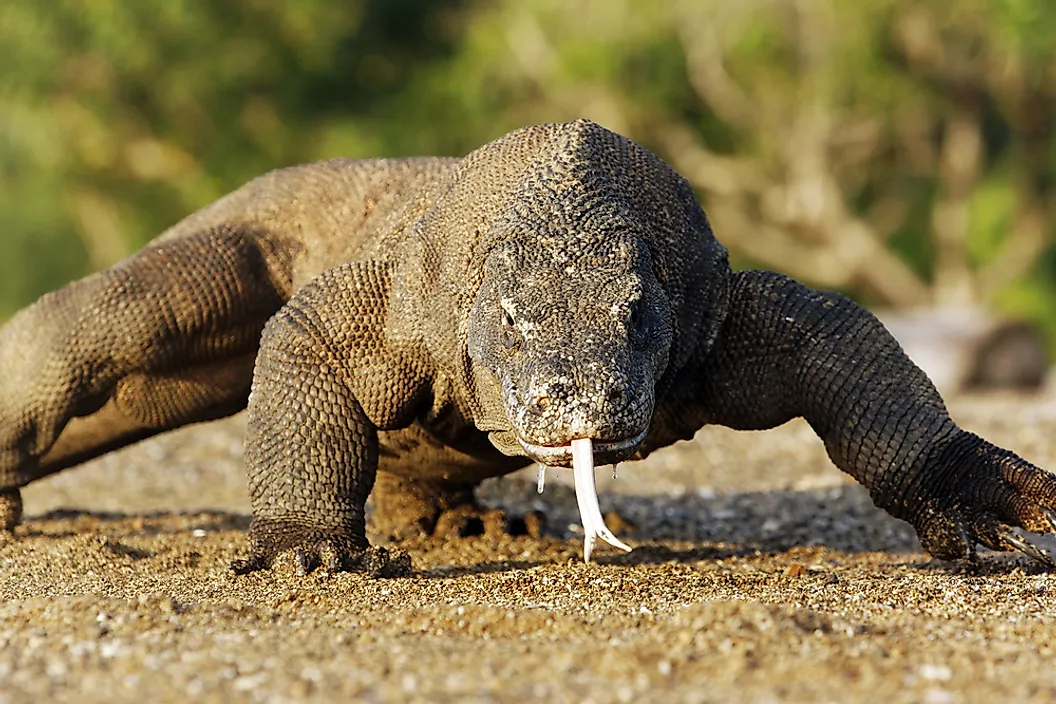
Another distinctive feature is the long forked tongue, which the dragon uses to "taste" the air and search for prey. They have a strong sense of smell and good daytime vision, with sight reaching objects up to 985 feet away. Their night vision is more limited, so they are mostly active during the day and rest in burrows or sheltered areas at night. Despite their size, Komodo dragons can reach about 12 miles per hour (20 km/h) in short bursts and are strong swimmers, capable of crossing between islands when they need to.
Hunting

Like alligators and other apex predators, Komodo dragons are opportunistic hunters. Adults eat almost anything they can catch, including pigs, goats, deer, and water buffalo. Younger dragons stick to insects, birds, and smaller reptiles. Beyond their powerful bite, Komodo dragons have venom glands that contribute to blood loss and shock in their prey. Hunting success comes from a combination of physical injury and venom rather than venom alone. The venom contains toxins that lower blood pressure and prevent blood clotting. Earlier theories suggested harmful bacteria in their saliva did most of the killing, but modern research has shifted toward this venom-and-trauma model. The exact balance is still being studied.

Komodo dragons typically hunt by stealth, slowly approaching before launching a sudden ambush with claws and teeth. Their jaws can close quickly, swallowing small prey whole and tearing apart larger prey. Up to 60 serrated teeth, each about an inch long, do most of the work. After a successful hunt, a Komodo dragon can consume a large meal and may go weeks without eating again. Digestion is slow, often taking several days to process a meal, and they can swallow nearly everything from larger prey, including bones, hooves, hide, and intestines.
Behavior

These apex predators are mainly solitary. They live alone except at feeding sites, where a clear dominance hierarchy forms and larger dragons feed first. Komodo dragons hiss or lash their tails when threatened by another creature or a rival dragon. They also use their forked tongues to sense chemical cues, including the presence of other dragons.
Male dragons engage in aggressive wrestling matches, standing upright on their tails and grabbing each other with their forelegs in an attempt to throw the other down. Once one is defeated, the winner goes off to mate with a female. If males aren't available, some females reproduce asexually through parthenogenesis, although this only produces male offspring.
Females can lay clutches of up to 30 eggs, often in burrows or abandoned megapode bird nests. After laying, they may guard the nest for a period, but the young are largely left to fend for themselves once they hatch. Juvenile dragons are vulnerable to predation, including from adult Komodo dragons, and often spend much of their early life in trees to avoid danger. They may also cover themselves in feces, a behavior thought to deter attacks by making them less appealing to larger dragons.
Combat between dragons can turn bloody, whether triggered by mating or territorial disputes. The animals use claws and teeth to tear at each other. Komodo dragons have some resistance to their own venom and oral bacteria but are not completely immune to harm from these encounters.
Conservation

Wild population estimates have ranged from roughly 3,000 to 5,000 across recent decades, with the IUCN counting fewer than 1,400 mature breeding adults at the time of its 2021 reassessment. The species was reclassified from vulnerable to endangered that year. Komodo dragons used to be especially prevalent on the island of Flores, but habitat destruction has significantly cut their numbers. As apex predators, their biggest threat is human activity in the form of clear-cutting, agriculture, development, and poaching. Climate change is also a major concern, with rising sea levels projected to wipe out 30 to 70 percent of the species' habitat by 2040.
Komodo National Park was established in 1980 to protect the species, and the park has since expanded to safeguard surrounding marine and terrestrial habitats. Visitors who feed dragons can disrupt their behavior and survivability, and detecting illegal activity in the park, such as poaching, remains a challenge. Rangers conduct regular ecological monitoring and patrols on land and at sea. Conservation organizations such as the Komodo Survival Program also support research, education, and protection efforts, including the establishment of local conservation and education centers.
Not Your Typical Dragon
Komodo dragons don't breathe fire, but they are powerful predators with sharp teeth and a venomous bite that can bring down most prey on their islands. Attacks on humans are rare but have occurred, especially when park rules are ignored or when dragons feel cornered. The species faces real dangers from climate change and poaching, and ongoing monitoring and conservation work will be needed to keep them at the top of their island food webs.