The Most Biodiverse Deserts in the United States
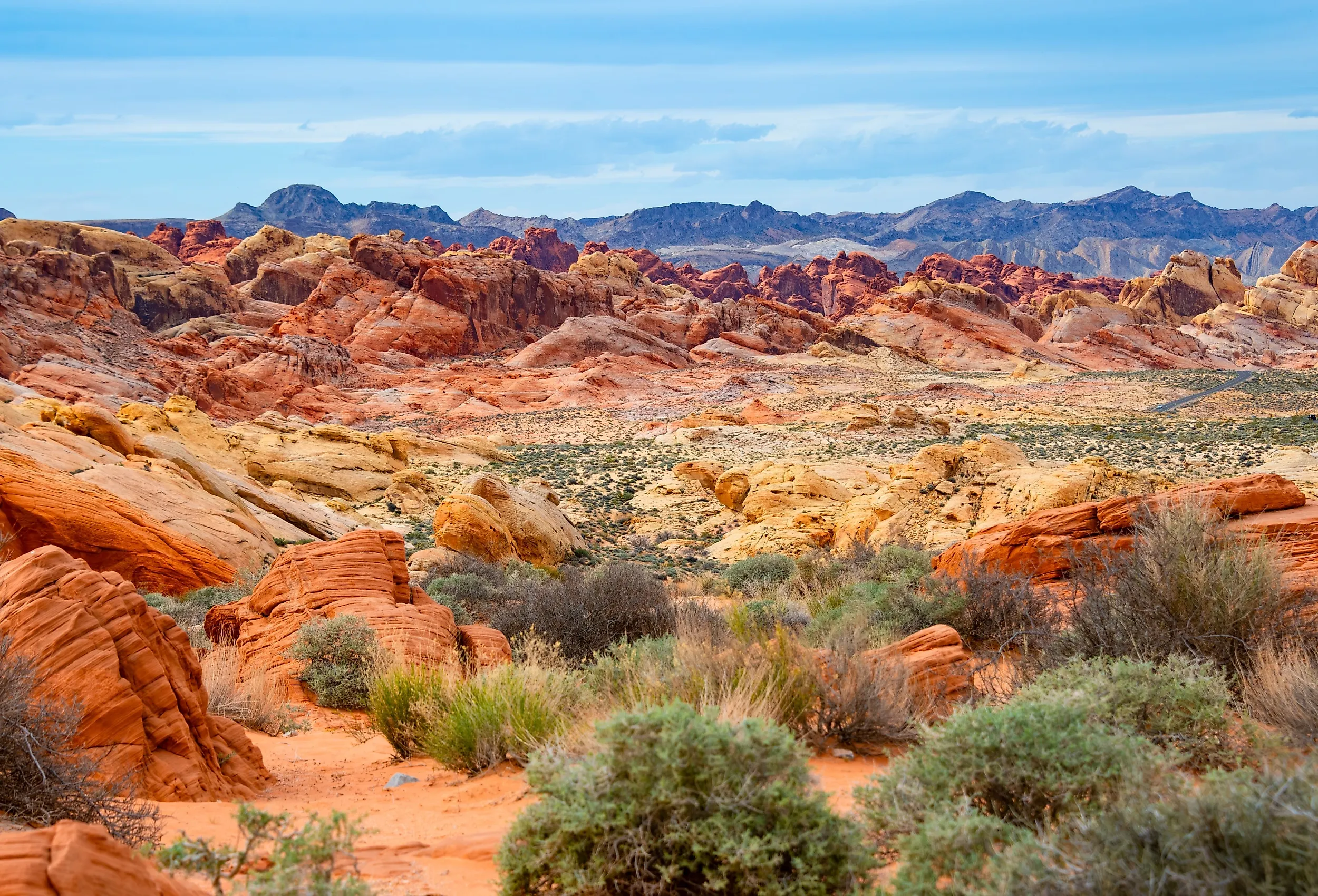
When most people picture deserts, they imagine arid expanses, a lack of vegetation, and a hot dry climate. In the American Southwest and Intermountain West, desert landscapes host intricate ecological systems shaped by temperature extremes, seasonal rainfall, and geological history stretching back millions of years. Biodiversity here reveals itself through specialization: plants that store water in ribbed stems, animals that avoid heat by living underground, and ecosystems that pulse with activity during brief windows of rain. Four major deserts in the United States, the Sonoran, Chihuahuan, Mojave, and Great Basin, each support distinct communities of plants and animals, with biodiversity concentrated in places where elevation, climate, and habitat intersect.
Sonoran Desert (Arizona & California)

The Sonoran Desert is widely regarded as having the greatest species diversity of any desert in North America, and one of the richest arid ecosystems globally. Covering southern Arizona and southeastern California, it owes its diversity to a rare climatic advantage: two distinct rainy seasons.
Winter storms bring steady precipitation, while summer monsoons deliver sudden, intense bursts of rain. This dual system creates overlapping growing cycles, allowing vegetation to flourish in ways not seen in other North American deserts. The result is a landscape where giant saguaros rise above palo verde trees, ocotillo bloom after rainfall, and wildflowers briefly carpet the desert floor in spring.

This plant diversity supports a wide range of animal life. According to the National Park Service, the Sonoran is home to more than 350 bird species, around 100 reptile species, 60 mammals, and over 2,000 native plants. Notable residents include the Gila monster and the desert tortoise. Research on desert ecosystems shows that reptile diversity, particularly lizard populations, peaks in areas where different desert regions overlap, making southern Arizona a key hotspot.
Places like Saguaro National Park and Organ Pipe Cactus National Monument offer some of the most accessible ways to experience this biodiversity. At dawn, the desert thrums with activity: birds calling from cactus arms, insects moving through the brush, and mammals returning to shelter after nighttime foraging. The Sonoran rewards longer exploration, especially in spring or after monsoon rains.
Chihuahuan Desert (New Mexico & Texas)

The Chihuahuan Desert is the largest desert in North America at roughly 200,000 square miles, with most of its area in Mexico and U.S. portions extending into West Texas, southern New Mexico, and a corner of southeastern Arizona. Unlike cactus-dominated deserts, the Chihuahuan's biodiversity lies in its structural complexity: a mix of desert scrub, grasslands, and mountain ranges. Summer monsoon rainfall shapes its ecological rhythms, supporting vegetation that can withstand both heat and periodic moisture. These shifting conditions create habitats for a wide range of species, from roadrunners and golden eagles to small mammals and pollinators. The World Wildlife Fund considers the Chihuahuan one of the most biologically diverse deserts on Earth, with around 3,500 plant species (including roughly a quarter of the world's cacti), 130-plus mammal species, and around 400 bird species.
One of the most striking features of this desert is how biodiversity responds to environmental change. Studies of desert grasslands show that as landscapes shift, through processes like shrub encroachment or desertification, species composition changes rather than simply declines. In some cases, new habitats support additional species, increasing overall richness even as ecosystems transform.

Nowhere is this more visible than in Big Bend National Park, where desert, river, and mountain ecosystems converge. Along the Rio Grande, riparian corridors support species that would not survive in the surrounding desert, while higher elevations in the Chisos Mountains provide refuge for entirely different communities.
At White Sands National Park, the desert is at its most exceptional for its surreal form. The gypsum dunes reflect sunlight and retain moisture differently than the surrounding terrain, creating a unique microhabitat that supports specialized plant and animal life including bleached earless lizards and the Apache pocket mouse. The Chihuahuan offers a contrast of river canyons, dunes, grasslands, and mountains, a collection of interconnected ecosystems coexisting in harmony.
Mojave Desert (California, Nevada, Arizona, Utah)

The biodiversity of the Mojave Desert emerges through specialization rather than abundance. As the smallest and driest of North America's four major deserts, it receives limited rainfall, primarily in winter, creating conditions that favor highly adapted species.
The Mojave's defining plant, the Joshua tree, grows mostly above 3,000 feet where temperatures are slightly cooler. Elsewhere, creosote bush blooms, forming one of the most resilient plant communities in the desert. Beneath the surface, a network of life persists: kangaroo rats that extract moisture from seeds, nocturnal predators that avoid daytime heat, and reptiles that thrive in narrow thermal ranges. About a quarter of the Mojave's plant species are endemic (found nowhere else), and nearly 80 percent of its annual plants are endemic, producing high species richness at fine scale after rains.

Ecologically, the Mojave functions as a transitional zone. It sits between the Sonoran Desert to the south and the Great Basin to the north, and biodiversity tends to increase where these regions overlap. Research confirms that species richness is often highest in these boundary zones, where multiple habitats intersect.
In Joshua Tree National Park, the meeting of the Mojave and the Colorado Desert (the western arm of the Sonoran) creates one of the most biologically interesting landscapes in the country. Further north, Death Valley National Park reveals the extremes: salt flats, sand dunes, and among the hottest recorded temperatures on Earth. The Mojave offers some of the clearest night skies in the United States, making it ideal for stargazing and photography.
Great Basin Desert (Nevada, Utah, Oregon, Idaho)

The biodiversity of the Great Basin Desert is different from that of the other three. It is a cold desert, defined by higher elevations, colder winters, and a landscape shaped by basin-and-range topography. Instead of cacti, sagebrush dominates the terrain, stretching across wide valleys bordered by mountain ranges. Snowfall in winter and cooler temperatures support species adapted to seasonal extremes, from pronghorn antelope to migratory birds.
While species richness may be lower compared to more humid ecosystems, deserts like the Great Basin remain ecologically significant. They contain unique evolutionary lineages and high levels of endemism, species found nowhere else on Earth. These patterns are the result of long-term geological processes, including mountain building, climate shifts, and isolation across basins.
In Great Basin National Park, visitors can move from desert valleys to alpine peaks within a single day. Ancient bristlecone pines, among the oldest living non-clonal trees on Earth (the oldest verified specimen, Methuselah, is roughly 4,855 years old), grow at high elevations on Wheeler Peak, offering a contrast to the dry basins below.
Why Desert Biodiversity Matters
The most biodiverse deserts in the United States are defined by adaptation. Life here is shaped by extremes of heat, drought, elevation, and by the ability to persist within them. For visitors, these landscapes reward observation: the movement of wildlife at dusk, the bloom of plants after rain, the subtle patterns of survival etched into the terrain. In these deserts, biodiversity is not always immediately visible, but it is always present, and once you notice it, you can't help but see it all around you.
Across these deserts, biodiversity is shaped by limits of water, temperature, and time. Plants and animals often live at the edge of their physiological tolerance, meaning even small environmental changes can have outsized effects.
Climate change is already altering these systems. Rising temperatures, shifting precipitation patterns, and more frequent extreme weather events are expected to reshape desert ecosystems in the coming decades. Boundaries between deserts may shift, species distributions may change, and invasive plants could transform fire regimes and habitat structure.
Despite this, deserts are often undervalued in conservation planning. Because they appear sparse, they are sometimes overlooked compared to forests or wetlands. Yet they contain high levels of endemism and ecological specialization, making them critical to preserving biodiversity on a broader scale. Large protected areas, especially those with varied terrain, are among the most effective ways to preserve desert biodiversity, allowing species to adapt and migrate as conditions change.