Did The Trojan War Really Happen?
Homer gave us a ten-year siege fought over a stolen queen and won by a giant wooden horse. The Iliad has held readers for nearly three thousand years. The harder question is how much of it really happened. Scholars accept that a real conflict pitted the Greeks against a western Anatolian power late in the Bronze Age. The details Homer describes are another matter. Here is what the archaeology and the ancient records can actually support.
The Trojan War As Described By Homer (And Other Ancient Authors)

Ancient Greek tradition places the Trojan War in the late 13th or early 12th century BCE, and it occurred after the Trojan prince Paris abducted or eloped with Helen, wife of the Spartan king, Menelaus. Bound by an oath, the kings of Greece rallied under Menelaus' brother, King Agamemnon of Mycenae, and set sail to besiege Troy. The siege lasted ten years, during which the gods Hera, Athena, and Poseidon backed the Greeks, while Aphrodite, Apollo, and Ares backed the Trojans. Greek infighting temporarily sidelined Achilles, one of the Greeks' greatest warriors, while later traditions describe him being killed near the end of the war.
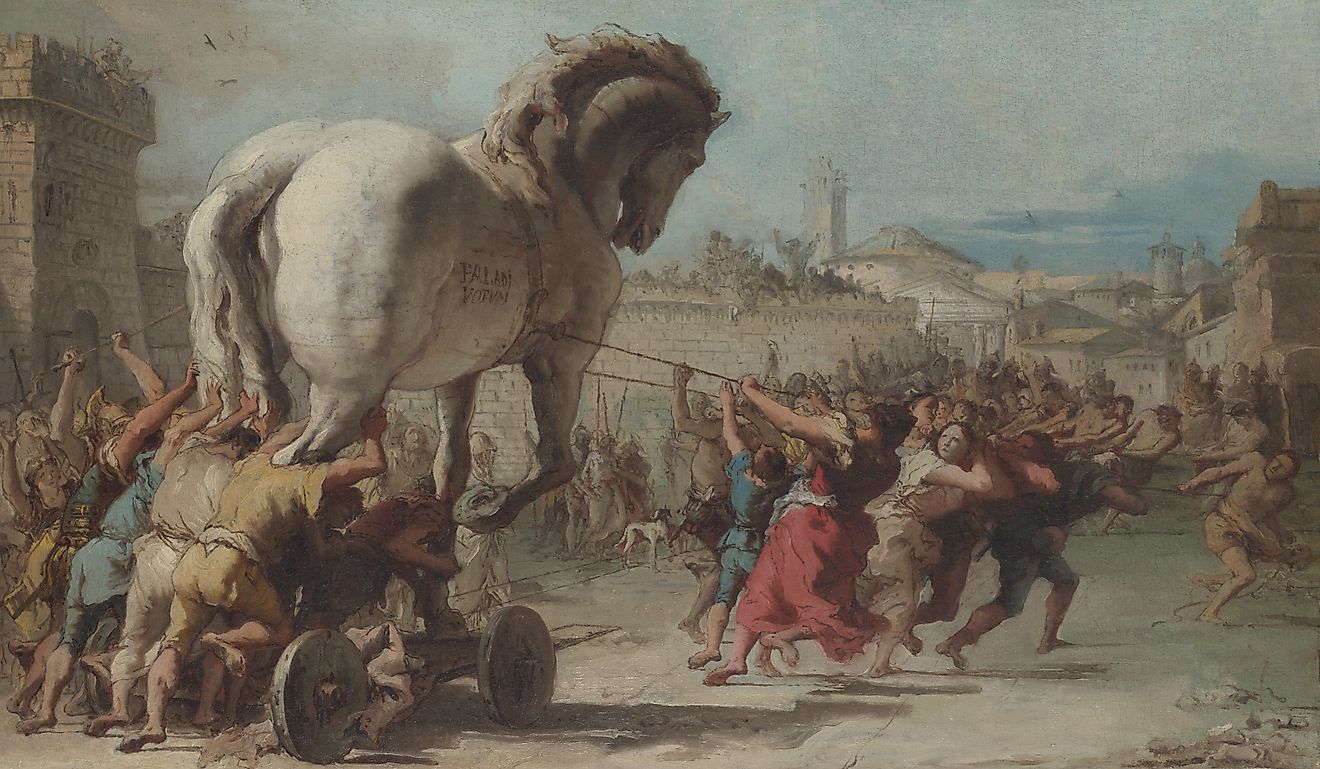
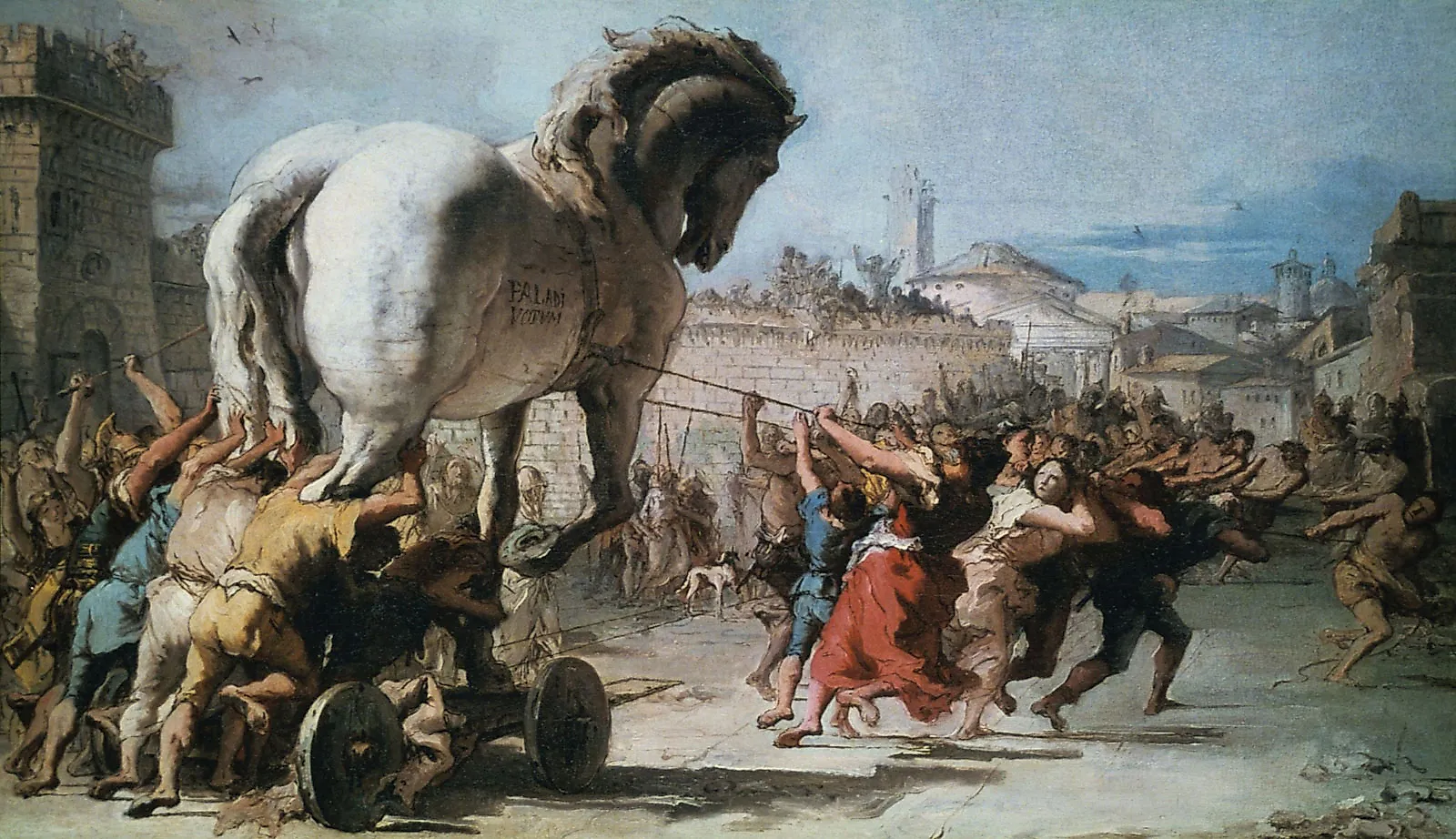
Despite these setbacks, the Greeks prevailed through a cunning trick. Later Greek tradition credits Odysseus, King of Ithaca, with devising the famous Wooden Horse, which he used to hide his best soldiers, leading to Troy's eventual downfall. While the rest of the fleet pretended to sail away, the Trojans brought the horse inside the city, believing it was a victory trophy. That night, the Greeks emerged from the horse and opened the gates from the inside, letting the rest of the army pour in. The soldiers sacked the city under cover of darkness, and after ten years the war was over.
The City Of Troy

For centuries, historians believed that the city of Troy was fictitious. This changed in the 1870s when German businessman and amateur archaeologist Heinrich Schliemann excavated the archaeological mound of Hisarlık in what is now northwestern Türkiye. There, he discovered the remains of a large city that corresponded with what ancient authors described as Troy. Modern archaeologists have since identified nine major settlement layers, along with numerous sublayers, built one on top of another. The earliest major settlement, known as Troy I, dates to around 3000 BCE during the Neolithic or early Bronze Age. The final major phase, Troy IX, flourished during the Roman period from the late 1st century BCE into Late Antiquity. As for the version that existed during the Trojan War, the scholarly consensus is that the most likely candidate is Troy VIIa. Archaeological evidence indicates that it had strong defensive walls, endured hardship, and was rebuilt after a period of destruction.
The Lack Of Evidence For Homer's Trojan War

Now that we know Troy existed, what about the evidence for the war itself? A few details described by Homer and other ancient authors are corroborated by historical evidence. Helen likely wasn't abducted by Paris, and even if she was, it probably didn't cause the war. In fact, there's no evidence that any of the major figures in the Iliad ever existed. Descriptions of divine intervention are also fictitious. Finally, there is no archaeological or contemporary evidence that the famous Trojan Horse ever existed, let alone was used to breach the walls of Troy.
What Did The War Actually Look Like

This isn't to say that nothing supports the notion that some sort of conflict occurred. Consider Troy's geography. Located on the Dardanelles Strait, it would have controlled trade between the Black and Mediterranean Seas. This chokepoint has been fought over countless times throughout history, so it's reasonable to assume that it was a source of tensions in the late Bronze Age. The fall of Troy is also traditionally dated around 1184 BCE, and archaeological evidence for the destruction of Troy VIIa dates it to around 1180 BCE. While hardly definitive proof, the coincidence is striking.
Perhaps the most convincing evidence comes from the Hittites, a Bronze Age Anatolian empire whose tablets mention a kingdom called Wilusa. Many scholars identify the Hittite kingdom of Wilusa with the Greek name Wilios (later Ilion), another name for Troy. The tablets also mention Ahhiyawa, which most historians believe refers to the Achaeans (Mycenaean Greeks). Most crucially, these tablets suggest that the Greeks and the Trojans interacted politically and militarily.
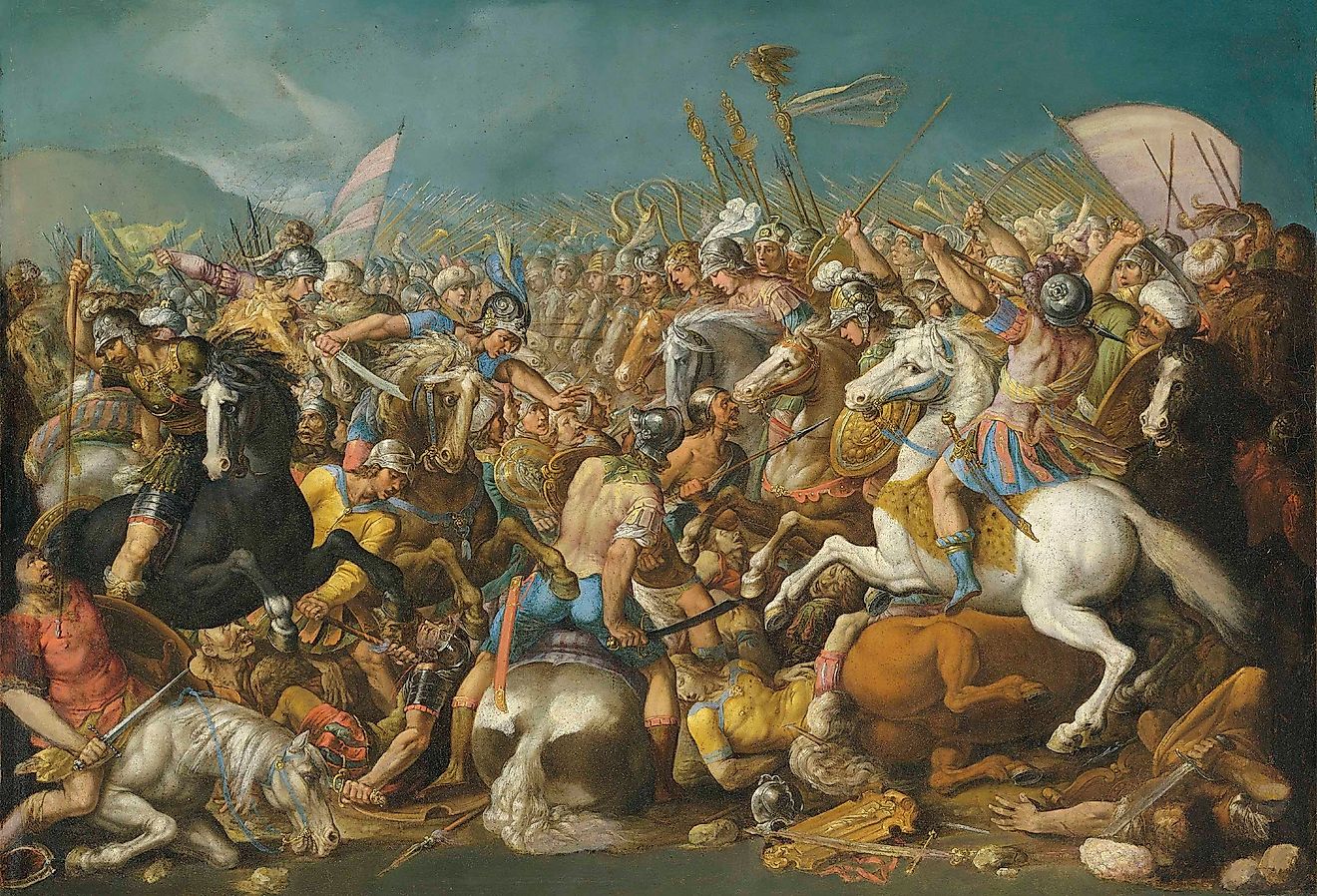
With the facts established, we can now determine what the war possibly looked like. It was probably fought between the Greeks and the Trojans. It was likely fought over geopolitical concerns, such as trade and access to vital chokepoints. Finally, Troy was probably destroyed, though whether this was due to a siege lasting exactly ten years is unclear.
A Note About Homer

Before concluding, it's necessary to make some comments about Homer. While most of his work is fictional, it is important to remember that in many ways, art imitates reality. Homer (if a single person) likely composed his poems in the 8th century BCE, about 400 to 500 years after the events he described. Moreover, his poems were originally transmitted orally. All of this to say that there was ample room for exaggeration and symbolism. Homer also existed hundreds of years before historical writing became a distinct literary tradition with authors such as Herodotus and Thucydides. This means that his poems serve as vital historical documents, even if they don't meet modern standards of accuracy and scholarship.
Impact And Legacy
The Trojan War happened, but its exact details differ from those described in ancient texts. The city of Troy existed, and archaeological evidence indicates that it experienced major destruction around the same time as the conflict described in the Iliad. Its location on the Dardanelles Strait also made it a natural source of geopolitical tensions. At the same time, there is no historical evidence that figures such as Achilles, Helen, or Odysseus were real individuals, and most scholars regard them as legendary. There is also no evidence of a Trojan Horse. This combination of fact and fiction is perhaps one of the reasons why the Trojan War continues to capture our imagination, even thousands of years later.