9 Mysterious Ancient Discoveries Scientists Can't Explain
Ancient mysteries reveal just how much of human history remains hidden and why these archaeological enigmas continue to fascinate researchers. Spread from Peru’s Nazca Desert to the depths of Lake Michigan, they encompass colossal pyramids, precise desert geoglyphs, submerged stone alignments, and a clockwork-like “computer” built long before modern electronics!
The Nazca Lines in Peru, for example, are now known to have been created in phases by pre-Columbian cultures, carefully shaped into animals, plants, and geometric forms. Yet their exact ceremonial, astronomical, or social role remains debated, even as satellite imaging and fieldwork refine the picture. At the other end of the spectrum, the Antikythera Mechanism compresses the movements of the heavens into interlocking gears, functioning as an ancient analog computer for tracking celestial cycles and eclipses, but its original maker and full range of uses are still unresolved.
Across the rest of the list, similar patterns appear: architecture aligned to the sun and stars and monumental buildings abandoned for reasons that are only partially understood.
Nazca Lines

Etched into the Nazca Desert of southern Peru, these extensive lines that are visible from space have both awed and confused those who have been studying them since their discovery in the mid-1500s. Originally thought of as simple trail markers, theories as to what these lines were used for range from religious sites to landing strips for alien spacecraft.
What we do know is that these intricate pieces of desert art were created in phases by people living in the region between 500 to 200 B.C. and that many of the lines were arranged to resemble real-world objects such as various animals and plants. Due to their importance in recognizing and understanding the complex history of Peru, the Nazca Lines have been a UNESCO World Heritage site since 1994.
Great Pyramid of Giza

Finished over 4,600 years ago near modern-day Cairo, Egypt, this extremely well-known ancient structure still perplexes archeologists and engineers alike. Considered one of the seven ancient wonders of the world and a UNESCO World Heritage Site, the Great Pyramid of Giza is a royal tomb of epic proportions, standing around 450 feet tall.
The biggest mystery of this discovery is its construction, a feat that we have still not been able to conclusively understand. Theories on how the giant stone blocks that make up the pyramid were moved and positioned range from the expert use of levers to some more eccentric explanations, like long-lost sound devices that can levitate objects or aliens offering our ancient ancestors a helping hand with advanced otherworldly technology.
Gobekli Tepe

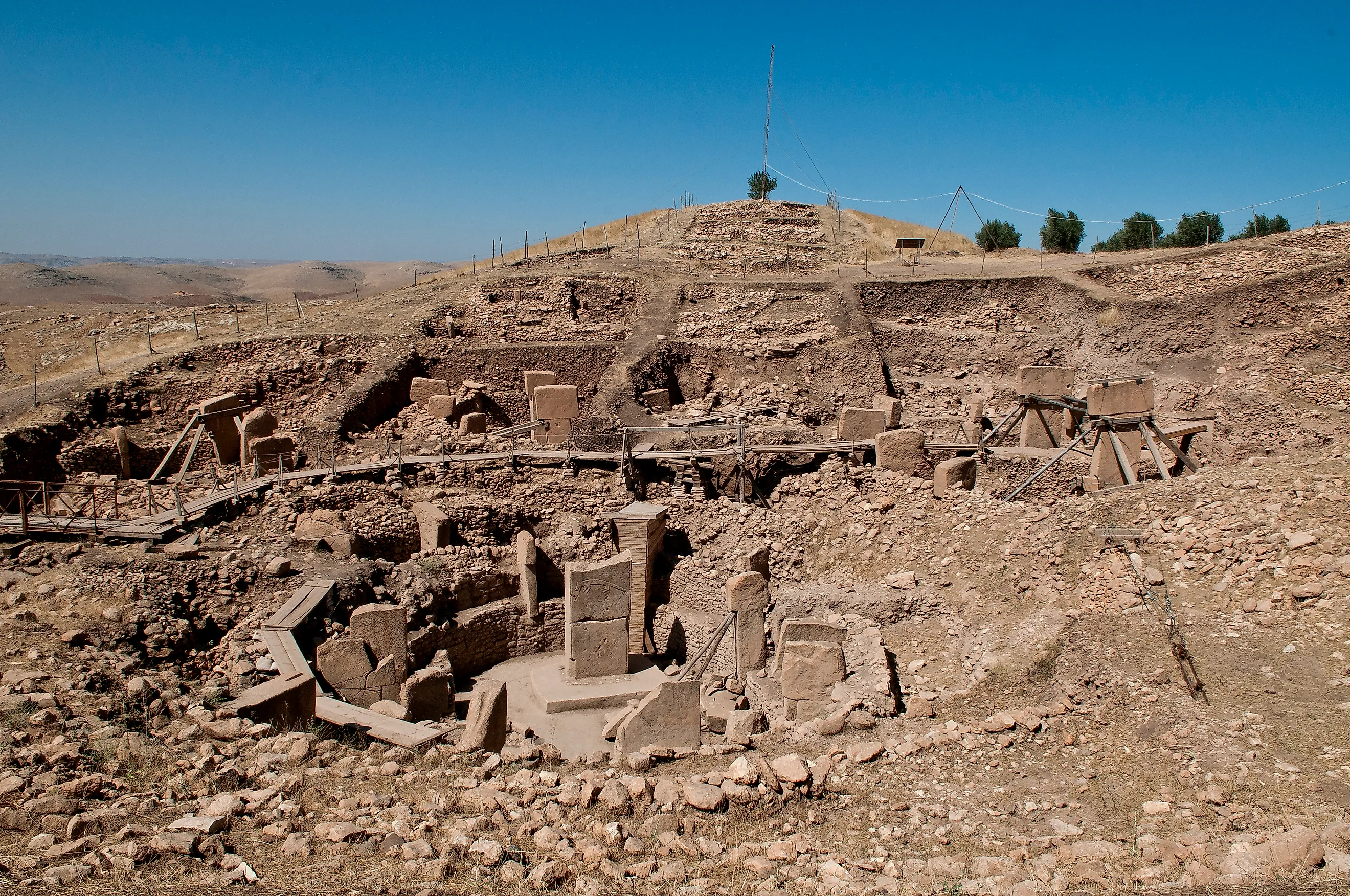
Gobekli Tepe is among the oldest ancient sites ever discovered. The extensive structure, found in southern Turkey near the city of Şanlıurfa (also called Urfa), dates back 12,000 years ago, and according to some archeologists, it is potentially thousands of years older than that.
Many structures within this site having used building techniques that predate the dawn of the first agricultural revolution (when the first real cities and permanent structures started popping up around 10,000 years ago). Gobekli Tepe has fundamentally changed our understanding of human history.
What exactly was this site used for? Possibilities that it was a town, a gathering place for hunters, a kind of temple, a structure for food storage, and many others have been proposed, with debate still burning hot.
Emperor Qin Shi Huang's Tomb

The Terracotta Army is a fairly well-known wonder of the world, with its masses of meticulously designed warriors who are perpetually guarding the tomb of the emperor Qin Shi Huang, who died in the year 210 B.C. in modern-day China. The tomb of Qin Shi Huang has not yet been explored. This is in part due to the multitude of booby traps that are mentioned in ancient texts describing these places, one allegedly entailing a "river of mercury" to be released, with others described as crossbows primed to fire at intruders, just like something you'd see in an Indian Jones Movie!
However, the main reason this tomb has not yet been fully discovered is a little more boring. Concerns over damaging this delicate site are at the forefront. However, with advancements in technology, such as ground-penetrating radar systems, more noninvasive ways to explore this ancient discovery may happen in the near future.
Stonehenge

With an ancient site this popular, in a country that is advanced and full of museums and educational institutions, one would think that there is little to no mystery in regard to Stonehenge, a man-made arrangement of giant stones in the south of England. This sentiment is wrong, however, and there are still many questions that are yet to be answered about this famous neolithic structure.
Scientists aren't fully sure when exactly Stonehenge was erected, with dates ranging from 5,000 to 4,000 years ago. The biggest questions are how it was made and who even made it. This is an ancient group of people with little to no other signs of existence, who in themselves are a bit of a mystery, as their culture and levels of advancement bear their own tough-to-answer questions.
Antikythera Mechanism

When was the first computer made? Many may give modern examples, like the ENIAC, a room-sized device from the1940s with coding made on physical punch card paper. But discoveries like the Antikythera Mechanism have made us rethink the definition of "computer," and who exactly came up with the idea for them in the first place.
Found in a shipwreck in 1901 near the Greek island of Antikythera, what at first looked like a rusted pile of gears ended up being one of the most advanced pieces of technology from the ancient world ever found. Its origins are unknown, with estimates as to when it was built dating from 87 B.C. up to 150 B.C.
Using X-ray technology, scientists have been able to look into the middle of this device without taking it apart and potentially destroying it. The intricate layout of gears witnessed within it appears to be part of a sun and moon tracking device, allowing its users to calculate upcoming events like eclipses, but its exact purpose is still unknown. A bigger question, perhaps, and one that may help answer the previous question, is who designed and built the Antikythera mechanism? We may never know the full story.
The Stone Spheres of Costa Rica

The Stone Spheres of Costa Rica, found while the forest was being cleared for fruit plantations in the 1930s and first researched in the 1940s, are an archaeological enigma. These nearly perfect stone spheres, ranging from a few centimeters to over two meters in diameter, were created by the Diquís people who called this region home between 500-1500 CE.
Despite extensive research, archaeologists have not determined why the spheres were made or how the pre-Columbian society achieved such precision without modern tools. Theories about their purpose vary greatly, depending on who you ask. Some suggest they were used as status symbols, marking tribal territories or signifying social hierarchy. Others believe they might have served a sort of astronomical or ceremonial function. Adding to the mystery is the fact that the Diquís culture left no written records, or records of any kind, as to what these stone balls truly meant.
Casa Grande Ruins

Constructed by the Hohokam people around 1350 CE, the Casa Grande Ruins in Coolidge, Arizona, feature a large, four-story structure that resembles a modern apartment building. This "Great House" is located at the center of the site and is surrounded by a complex of smaller buildings and walls, showcasing impressive native architecture that surprises many unfamiliar with North American indigenous ingenuity.
Despite extensive excavations and research, the purpose of the Great House remains uncertain. Some believe it functioned as an astronomical observatory, aligned with solar and lunar sightlines. Others suggest it was a ceremonial site, a trading center, or an administrative hub. The lack of additional records and artifacts from the Hohokam civilization leaves these hypotheses unconfirmed. An intriguing aspect of the Casa Grande Ruins is that it was abruptly abandoned around 1450 A.D., possibly due to societal unrest triggered by environmental decline.
Drop 45 Drive Lane

Although Stonehenge in England is one of the largest and oldest of its kind, several lesser-known henge-like formations exist worldwide. One such mysterious stone arrangement is located at the bottom of the Great Lakes in North America. Known to archaeologists as "Drop 45 Drive Lane," it measures 8 meters by 30 meters and consists of standing stones situated about 120 feet beneath Traverse Bay, on the American side of Lake Michigan. Its purpose remains unknown, but intriguing discoveries, such as an image of a mastodon carved on one of the stones, confirm that at least part of the structure is man-made. These findings also indicate it was created approximately 9,000 years ago, predating Stonehenge by 4,000 years. Likely built in a prey-rich hunting area, this site existed when this region of the Great Lakes was not submerged.
From the cold waters of the Great Lakes to the deserts of Turkey, there are sites and artifacts from around the world that give us a better perspective on how much we know about ourselves. Through these discoveries, however, we have a chance to take an alternate look into our past and how human civilization has gotten to where it is now. Do you think you can answer any of the questions laid out here about these nine magnificent yet mysterious discoveries?