7 Underrated Connecticut Towns Worth the Drive in 2026
If you live in Connecticut, you know it’s easy to stick to the same stops when planning a trip or even going for a drive out in the country. But if you do so, you will be missing out on underappreciated towns. That’s how unusual landmarks like the Frog Bridge in Windham, or cultural museums like Chester’s Museum at the Mill, can get overlooked. The year might be winding down, but there is still time to drive out and see a coastline dotted with pink granite islands or a town with a centuries-old tavern, still scarred from the Revolutionary War. Travel from the northwestern hills to the state’s quiet eastern corner, and these towns give you a reason to get up and go explore Connecticut.
Chester

Down by the lower Connecticut River Valley, Chester is around 40 minutes south of Hartford and a short drive from places like Deep River and Essex. During the 19th century, factories around here produced all kinds of marine hardware, which helped the community develop beyond its agricultural beginnings. Today, that history can still be seen and touched near Main Street, where buildings from the commercial past are home to businesses like the Little House Brewing Company.
One of the town’s most interesting and long-standing attractions is the Chester-Hadley Ferry, which has been carrying people across the Connecticut River since 1769. Back in the in the downtown core, the Chester Museum at the Mill teaches all about the regional industrial history, encapsulated inside a former mill site. The Norma Terris Theatre is a reason to visit on its own, with musicals held in an intimate setting. After all, its connection to Goodspeed Musicals is a big part of what makes the town a good place to visit, especially for theatre fans.
Branford

Along the state’s south shoreline, about 15 minutes east of New Haven, Branford is part of the coastal region known for its seaports and the islands scattered across Long Island Sound. The Thimble Islands, just offshore, make up a part of the town’s distinctive natural look and feel. The rock outcroppings are made of pink granite, some big enough to fit a cottage, while others barely rise out of the water. This same shoreline once supported a granite industry during the 19th century, and granite taken here helped build the pedestal of the Statue of Liberty in New York Harbor.
There are seasonal boat cruises through the Thimble Islands, as you pass through privately owned islands and historic cottages. There is no better way to get a closer look at this unusual coastal landscape. Back on land, the Stony Creek Museum analyzes and teaches about the region’s quarrying and maritime history. The town has hiking trails at Stony Creek Quarry, another way to see remnants of the granite industry while getting some fresh air and sunshine. You can check out the Branford Trolley Trail, where the former trolley route crosses over marshland and has views of the surrounding tidal waterways.
Ridgefield

Back on April 27, 1777 Ridgefield was the scene of a Revolutionary War battle, where British troops retreating towards the coast were taken on by American troops, including Benedict Arnold. The American efforts to stop the British led to fighting in what now makes up the town’s Main Street. The town’s historic centre still follows the old colonial-era layout, with buildings like the Keeler Tavern Museum keeping its ties to history and heritage alive. The museum contains an extraordinary Revolutionary War artifact, as it is still home to a British cannonball embedded in a corner post from that famous battle.
For something a bit more modern, the Aldrich Contemporary Art Museum is a great place to visit, and has rotating exhibitions of contemporary art. There is also the Ridgefield Playhouse, where you can see concerts and comedy performances, or even some film screenings. If you want to head outdoors, you can visit the Weir Farm National Historical Park, where painter J. Alden Weir started a summer retreat that became a gathering place for American Impressionist artists.
Windham

The Willimantic area of Windham became one of New England’s most important textile centres in the 19th century. That’s where the Willimantic Linen Company came from, later associated with the American Thread Company, which operated massive brick factories along the river and employed generations of workers. The town also has a quirky tie with frogs. According to a legend, townspeople mistook the sound of frogs fighting for an enemy force, which sent the town into a panic. That unusual story never went away and instead the town embraced it, and now you can see frogs all over town in a variety of public artwork.
Nothing captures this more quite like the Frog Bridge, where four enormous bronze frogs sit atop big thread spools, connecting both the town’s frog legend and its textile heritage. At the Windham Textile and History Museum, you can see exhibits that go through and explore the workers and factories that transformed the region. Another historical stop is the Jillson House Museum, which preserves local history inside the old heritage home, with the surrounding Willimantic mill district close by to see.
Middletown

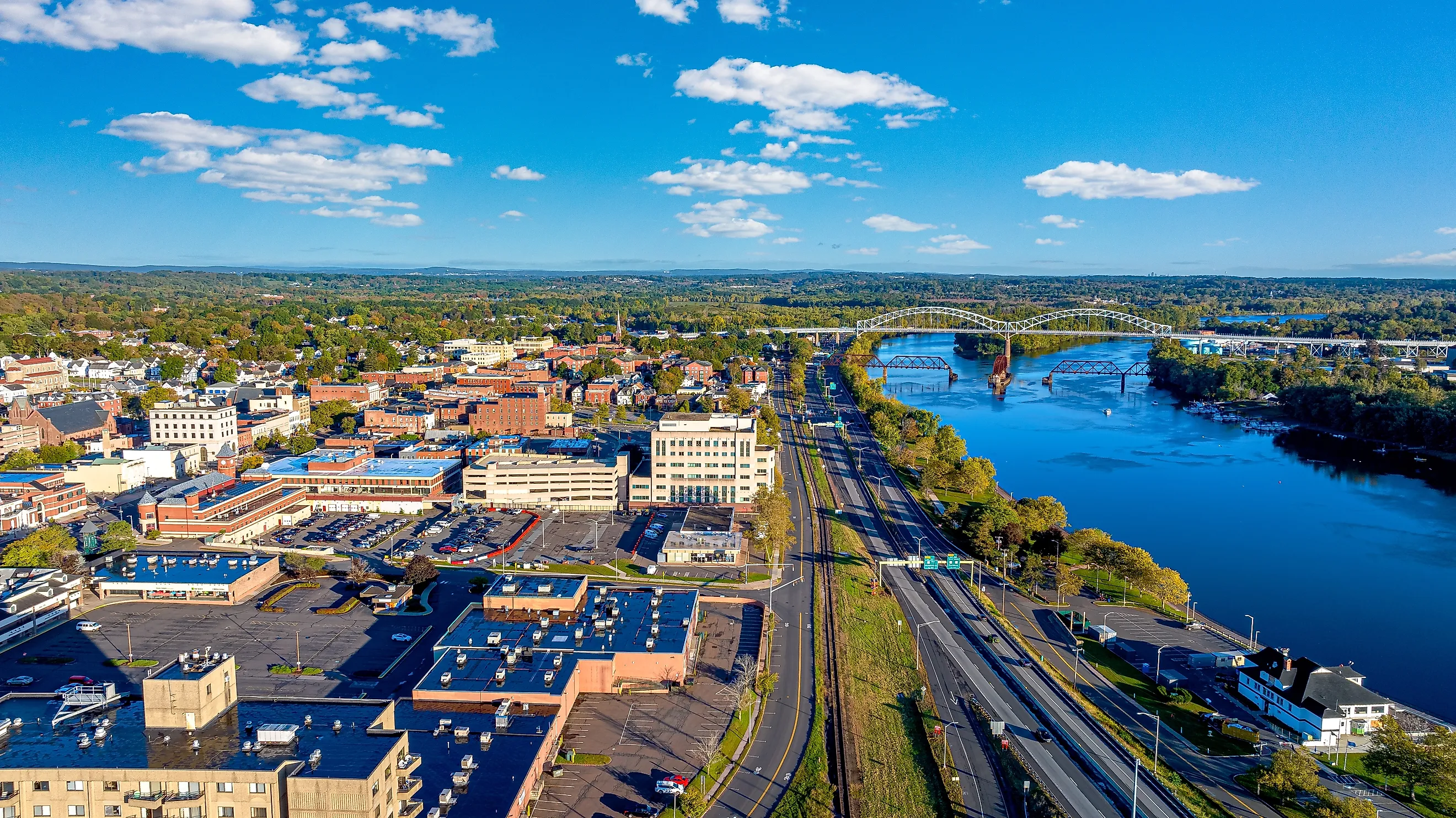
Just about 20 minutes from Hartford, Middletown was one of the state’s busiest river ports, filled with vessels that took goods between the Connecticut River and ports all over the Atlantic. This early prosperity helped pay for and build all sorts of homes and commercial buildings that still stand in today’s downtown area. The town’s Main Street stretches past old-style historic restaurants and stores, like Amato’s Toy and Hobby, a local institution since 1940. Wesleyan University, founded in 1831, rises above the commercial district, with its legacy buildings and campus giving the community an air of academic distinction. Inside the campus, the Davison Art Centre has a collection of prints and photographs to see, but make sure to check out the exhibition access before a visit.
Over at Wadsworth Falls State Park, trails lead to a broad waterfall and a series of smaller cascades to see. Nearby, the Wadsworth Mansion is a 20th-century estate with well-cared-for parkland all around, with occasional public tours available. Back on the town’s Main Street, there are some tasty restaurants to try out. For example, both Eli Cannon’s Tap Room and the Himalayan Tibetan make up some of downtown’s dining scene, part of what makes the town a place to come visit.
Norfolk

Only around an hour away from the Bradley International Airport in Windsor Locks, Norfolk sits close to the Massachusetts border. People know it as the 'Icebox of Connecticut' because its high elevation leads to a bit of chilly weather. Even with the cold weather, its cultural history alone makes it a place to visit, and it's been a destination for artists for over a hundred years. In the late 19th century, the Battell Family helped make the town a summer destination for musicians. This legacy led to the construction of the bold, wooden building known as the Music Shed in 1906, now associated with the Norfolk Chamber Music Festival, which even now still brings in musicians to the Litchfield Hills.
You also have the Infinity Music Hall, a personal, inviting venue inside a restored 1883 theatre. After some music, get out and see the outdoors at the iconic stone observation tower at the Haystack Mountain State Park, a structure that looks like something out of the English countryside. As well at the park, you can get panoramic views of the surrounding hillsides. Another outdoor option, the Campbell Falls State Park has trails through the woodland, including one that takes you to a waterfall right near the state border, where water tumbles through a rock gorge inside the northern forest.
Putnam

Putnam is in the state’s northeast corner, less than an hour's drive from Hartford. And since it is so close to the border with Rhode Island, it's only a 40-minute drive from Providence. Nearby, both Woodstock and Pomfret add to the area’s rural appeal but Putnam has enough to do on its own to warrant a stopover visit for people living nearby. As the old textile mills closed, the town transformed into a centre for antique dealers, helping establish itself as a destination for collectors. Main Street has a lot of places to come stop in and check out, like the multi-floor Antiques Marketplace, packed with all sorts of vintage collectibles and unusual finds.
For another kind of historic curiosity, the Bradley Playhouse was originally a vaudeville theatre, and still hosts live performances inside its doors. If you are a fan of theatre, the Gertrude Chandler Warner Boxcar Children Museum is a unique stop-off. It sits inside a railroad boxcar and honors the children’s author born in this very town back in 1890. After seeing some of the town’s historic sites, head out for a walk along the river on the Putnam River Trail, where you’ll pass old mills and downtown landmarks, a unique chance to see another side of the town’s history.
Going out and exploring the state doesn’t have to mean going to the same old places every time. It also doesn’t have to mean leaving Connecticut. These towns show the state’s remarkable history and its distinct cultural experiences. From old British cannonballs to local legends, there is plenty to go out and see and explore in 2026 and beyond. Just get out on the road and learn about a new corner of your home state.