These 8 Connecticut Towns Have The Best Historic Districts
Hundreds of years of history are embedded in the identity of Connecticut, one of the original 13 colonies of the United States. Visiting the state is a trip through time thanks to its spellbinding historic districts. With established summertime destinations like Mystic and Essex, as well as rural gems like Chester, you will find long stretches of land dotted with architecture from the 17th, 18th, and early 19th centuries. In Wethersfield and Litchfield, you can step inside buildings that changed the course of the country's evolution, while Ridgefield and Guilford complement their plentiful historical sites with fascinating museums and relaxing parks. Find Connecticut towns that continue to attract history-loving visitors from around the world.
Wethersfield

Founded in 1634, Wethersfield is one of the oldest towns in Connecticut, so it's no surprise that it lays claim to the state's largest historic district. Visitors can explore 50 homes built before the Revolutionary War, such as the Georgian-style Joseph Webb House, built in 1752 and one of three fully furnished 18th-century homes within the Webb Deane Stevens Museum. At this specific home, George Washington coordinated the last major battle of the war.
The Cove Warehouse, which may date from the late 17th century, is temporarily closed for renovations and is expected to reopen in spring 2027. This is one of the many historical sites you will encounter on the self-guided Wethersfield Heritage Walk, about three miles in length. When you have walked up an appetite, The Charles offers a diverse menu featuring steak, seafood, and pasta inside a building originally constructed in 1790 by Elijah Wright, a militia captain of the Revolutionary War, before it was restored in 1850 by Silas W. Robbins, a successful farmer and eventual state senator.
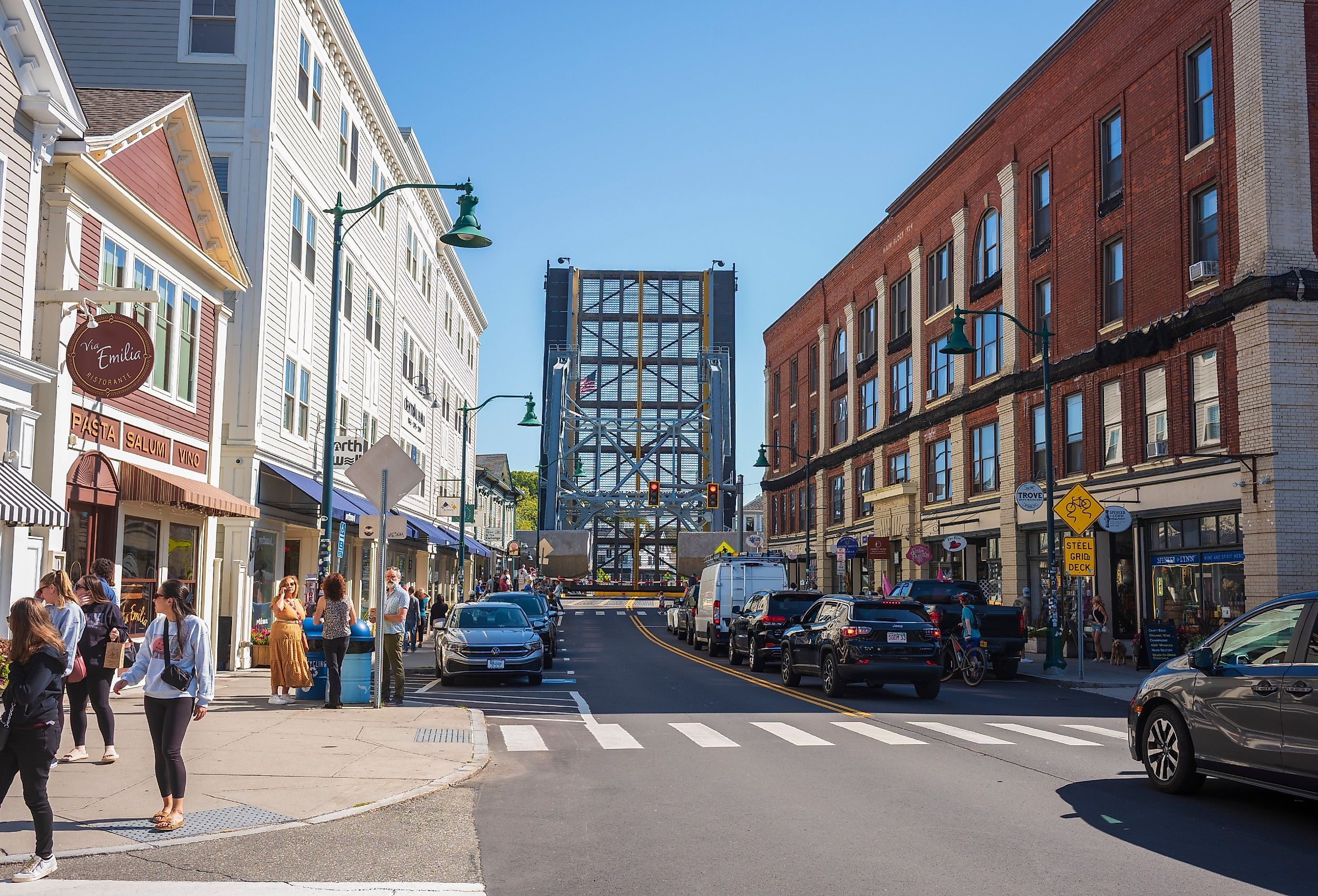
Mystic

Mystic is a scenic seaside town that originally came to prominence as a shipbuilding and whaling hub in the late 1600s. Today, its historic downtown is filled with nautical-themed shops and restaurants. Mystic Seaport Museum at 75 Greenmanville Avenue includes a recreated 19th-century seaport village and a collection of historic vessels. Visitors can even step inside the Charles W. Morgan, the last floating wooden whaling ship in the world.
Just minutes from downtown lies the Denison Homestead Museum, where generations of the Denison family have lived for over 300 years, and are decorated with furniture, paintings, and even toys from the 1600s all the way to the 1940s. Back in town near the Mystic River, the Captain Daniel Packer Inn was built in 1756, and it remains a vibrant local hangout thanks to its expansive menu and classic English pub, featuring live music from local artists multiple nights per week.
Essex

If you want to feel like you have been transported to a different century, simply take a walk down Essex's Main Street, lined with Federal and Colonial architecture along with pristine New England-style homes, complete with white clapboards and gabled roofs. Towards the end of Main Street is the legendary Griswold Inn, built in 1776 and still a popular choice for elevated regional cuisine. On the opposite end of town is the First Baptist Church of Essex, one of just three Egyptian Revival-style churches erected in the United States.
Meanwhile, the Pratt House is one of the oldest homes in Connecticut, and you can tour the interior as well as its 2 acres of soothing garden space. Built in 1701 by the grandson of one of Essex's first settlers, the building housed members of the Pratt family for over three centuries, including nine generations of blacksmiths. The history lesson continues at the Connecticut River Museum, which chronicles the region's shipbuilding heritage with eye-opening exhibits, artifacts, and model ships like a scale-size replica of The Turtle, the first American submarine used in international combat.
Chester

Nestled in a lush corner of the Lower Connecticut River Valley, Chester's historic district is small, but very easy to explore. At the center of Liberty Street lies the Chester Meeting House, built in 1793. Formerly known as the Old Town Hall, the Chester Meeting House hosted numerous iconic traveling acts throughout the 1800s, including General Tom Thumb. Continuing up Main Street, the Chester Museum at the Mill is located in a former 1860s mill overlooking a rushing waterfall, and it contains two floors of permanent and seasonal exhibits about the history of Chester, first settled in 1692.
Many thriving local businesses are also situated inside historic buildings like Little House Brewing Company, a.k.a. "The 'Cheers' of Chester." Specializing in New England IPAs, the brewery is set in a building that has previously served as a post office, barbershop, and bakery since its original construction in 1836. Likewise, Chester's culinary scene includes The Brushmill by the Waterfall, where diners can enjoy New American cuisine inside a former 19th-century mill overlooking a waterfall on Pattaconk Brook.
Ridgefield

Ridgefield is the former site of the 1777 Battle of Ridgefield, a crucial skirmish within the Revolutionary War. Located at the foothills of the Berkshire Mountains, Ridgefield preserves its history with a plethora of attractions and landmarks like the Keeler Tavern Museum and History Center, which utilizes multiple buildings to create an accurate depiction of everyday life in Connecticut from the early 18th century to the mid-20th century.
Another highlight of Ridgefield's historic district is the majestic Lounsbury House, built in 1896 by the former governor of Connecticut and designed to resemble the former Connecticut State Building with its Classical Revival architecture. Since art and history go hand-in-hand, step across the street to the Aldrich Contemporary Art Museum, the only museum in Connecticut dedicated exclusively to contemporary art, with an emphasis on emerging artists. Lastly, history buffs won't want to pass up a photo opportunity at Settler's Rock, a large boulder at the end of Fairlawn Cemetery marking the site where five men from Norwalk, Connecticut, spent the night, contemplating whether or not to turn this new, uninhabited area into a new settlement called Ridgefield.
Guilford

Guilford was founded in 1639 by English Puritans led by Reverend Henry Whitfield, who negotiated a treaty with Native Americans. The Henry Whitfield House, completed in 1639 and recognized as Connecticut's oldest surviving house, is currently closed for restoration while its visitor center remains open on weekdays. Additionally, Guilford's picturesque town green is surrounded by Federal and Greek Revival-style buildings like the First Congregational Church. Guilford even lays claim to New England's third-largest collection of historic 17th, 18th, and 19th-century homes.
Near the Henry Whitfield State Museum is the Hyland House, a circa-1713 saltbox containing furnishings and household objects associated with Guilford's colonial history. When you are ready to take advantage of Guilford's coastal location, head to Jacobs Beach, a popular swimming spot spanning 25 acres on the Long Island Sound. On a clear day, you can even see the Falkner Island Lighthouse, famously commissioned by Thomas Jefferson in 1802, and the second oldest lighthouse in the state.
Litchfield

Litchfield is among the most well-preserved colonial towns in the United States, first settled in 1719 and home to approximately 475 historic buildings. Among the magnificent white estates on the tree-lined South Street lies the Tapping Reeve House and Law School, which once housed the first law school in the country and where noteworthy individuals such as Aaron Burr and John C. Calhoun received instruction. On the similarly scenic North Street, you'll find the Benjamin Tallmadge House. Originally constructed in 1775, this Colonial-style masterpiece was built for the head of George Washington's version of the secret service during the Revolutionary War.
Moreover, Litchfield's town green is framed by the Greek Revival-style First Congregational Church, whose congregation dates to 1721 and whose present building was constructed in 1829, as well as shops, galleries, and restaurants in vintage brick buildings. The Market Place Tavern on North Street occupies a former jail, while the Lost Fox Tavern and Restaurant operates from a restored 1740s tavern at 571 Torrington Road.
Willimantic

Named after the Willimantic River running through it, Willimantic is known as the "Thread City" because it used to be the site of several textile mills belonging to the American Thread Company, which was once the largest thread company in North America. Visitors can learn all about Willimantic's groundbreaking mills and factories at the Windham Textile and History Museum, located in the former headquarters of the American Thread Company and featuring textile machines and detailed workspaces from the 1800s as well as exhibits showcasing the evolution of textile production in Connecticut.
Fans of historic architecture will be more than satisfied at Willimantic's Prospect Hill Historic District, which contains hundreds of homes displaying a variety of 19th-century styles, including Victorian, Second Empire, and Queen Anne, and in a wide range of colors like green, red, and blue. Willimantic is also home to the oldest brewery in the state: Willimantic Brewing Company, founded in 1991 and housed inside a former post office from the early 1900s. Finally, you can't leave Willimantic without taking a photo at Thread City Crossing, a.k.a. "Frog Bridge." Here, you'll see four bronze frogs perched on giant thread spools standing right above the Willimantic River as a tribute to the "Frog Fight" from the 1750s, when residents apparently went into mass hysteria over eerie nighttime noises that turned out to be bullfrogs.
Connecticut's History is Waiting for You
History comes alive in every sense in Connecticut, proving that small towns have just as much character as the cities. These towns are perfect for anyone who wants to learn about Connecticut's pivotal role in the foundation of the United States or enhance their knowledge of classic architecture. Between their churches, homes, and museums, Connecticut's historic towns are visual goldmines. They hark back to an exciting period of American history, when so much detail went into each individual structure, and early settlers were choosing locations to leave their hard-earned legacies. So, the next time you are in the mood for a life-changing blast from the past, these eight towns offer a healthy dose of vintage New England nostalgia.