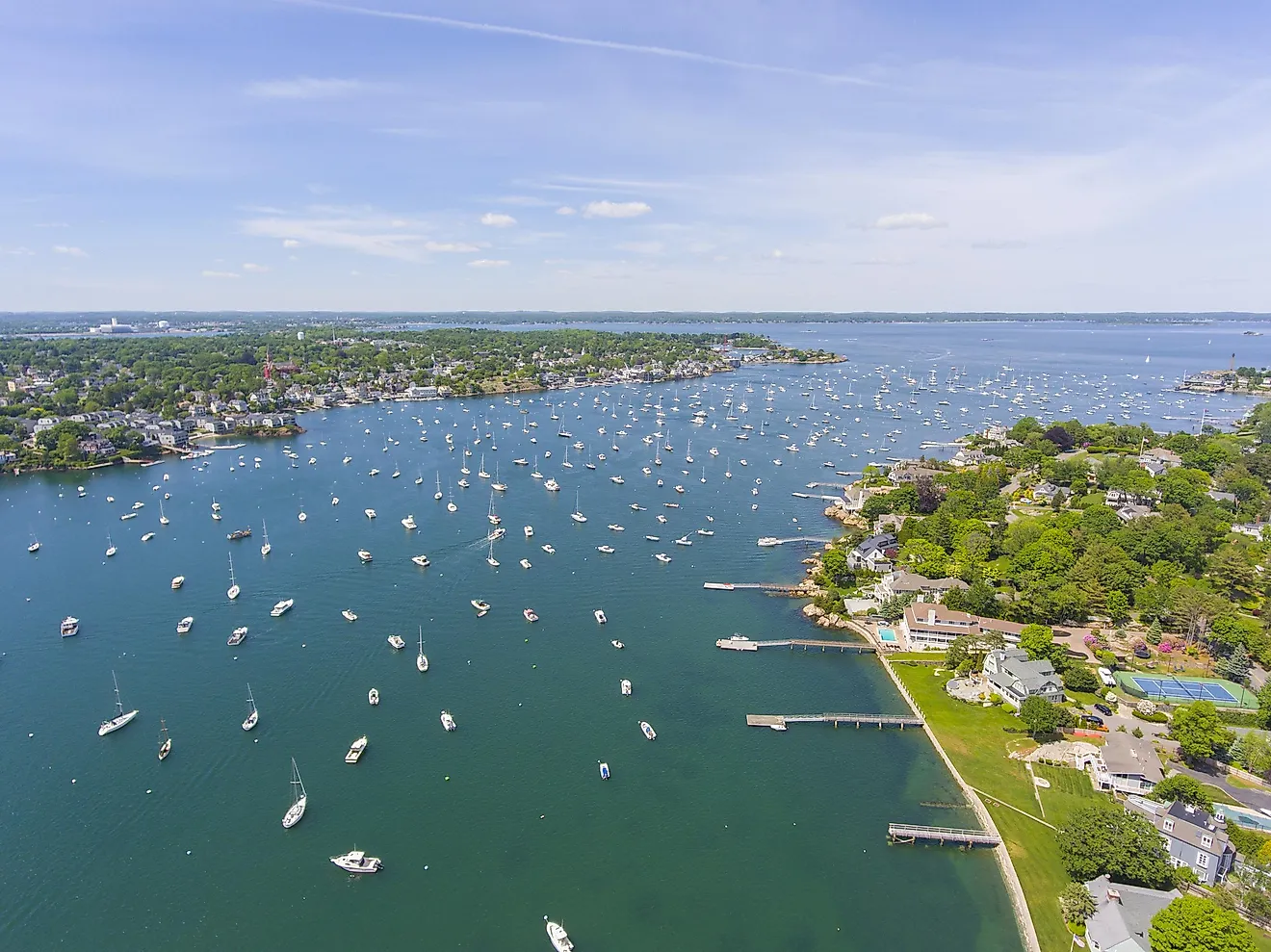
The Maryland Harbor Town That Fooled The British
Just before sunrise on August 10, 1813, a dozen British barges rowed up the Miles River to attack St. Michaels, an Eastern Shore port in Maryland that built schooners for American privateers. After a landing party knocked out the harbor battery, the British armed sloop, Conflict, opened fire on the town.
Legend has it that the townspeople had hung lanterns in the treetops, fooling the gunners into aiming too high. Though the tale earned this Chesapeake Bay harbor town its nickname, "The Town That Fooled the British," historians doubt the lantern hanging ever happened. What is certain is that St. Michaels turned back two British assaults in 16 days, and much of the town they attacked is still standing.
The British Are Coming!

The British had good reason to come calling. During the War of 1812, the Royal Navy blockaded Chesapeake Bay and regarded nearby Baltimore as a haven for pirates. The shipyards of St. Michaels built fast schooners for American privateers (privately owned armed ships licensed by the government to capture enemy merchant vessels) and blockade runners and launched at least four successful privateers. The Chausseur, built in Baltimore by St. Michaels-trained shipwright Thomas Kem, became known as the "Pride of Baltimore."
The first attack came in the early hours of August 10, 1813. Residents had already been warned, and most of the town's women, children, livestock, and valuables had been moved to safety at a spot called Onion Hill. A British landing party overran the American battery at Parrott's Point, which guarded the harbor, and spiked its cannons (driving metal spikes into the touch holes so they couldn't be fired).
The shooting alerted the town, and, with militia gathering and two more batteries returning fire, the raiders withdrew. Conflict fired several rounds into the town as the British retreated, damaging homes. Two British attackers were wounded, while a letter from St. Michaels published in Baltimore's Niles' Weekly Register reported, "We were fortunate enough not to have a man hurt."
The Second Attack

The British returned on August 26, this time with 2,100 troops aboard 60 barges. They landed six miles from town and sent 300 men to attack a nearby militia camp. A mile and a half from town, 1,800 of the attackers met 500 American defenders backed by cavalry and artillery.
The defenders were led by Brigadier General Perry Benson, commander of the Talbot County militia, and included a local company known as the St. Michaels Blues and reinforcements from Easton, the county seat.
According to the National Park Service, it was the largest battle fought on the Eastern Shore during the war, though it lasted only a few volleys before the British pulled back. St. Michaels was the only town on Chesapeake Bay that the British tried to attack twice, and one of only a few where the local militia drove them off both times.
Lanterns and Legends

So, where do the lanterns come in? According to local legend, General Perry Benson ordered lanterns hung in treetops outside town and had every other light in St. Michaels put out before the British opened fire. Fooled by the decoy lights, the story goes, gunners aimed high, and their shots sailed harmlessly over the rooftops.
The story's main source is an 1886 interview in the Baltimore American newspaper with an 86-year-old man who said he'd been in town, aged 13, the night the lanterns were hung. Newspapers repeated the tale during the battle's centennial, and it stuck. The trouble is the timing. Military accounts show that it was already light, though overcast, by the time the cannonade began, so the town would have been clearly visible to the British gunners.
And Conflict did in fact score several hits on the town, which wouldn't have happened if its gunners had been firing at lanterns. Historians Ralph Eshelman and Scott Sheads list the lanterns as a myth in their book Chesapeake Legends and Lore from the War of 1812, and author Martin Bollinger, who's writing a history of the town during this time, has suggested that a more accurate nickname should be "The Town That Defied the British."
The Cannonball That Hit A House

One of those British hits is still talked about today. Cannonball House, a brick home built in 1805 for shipwright William Merchant, is known to have been struck during the August 10 bombardment. The round shot crashed through the roof, rolled across the attic, and bounced down the stairs in front of Mrs. Merchant as she carried her young daughter.
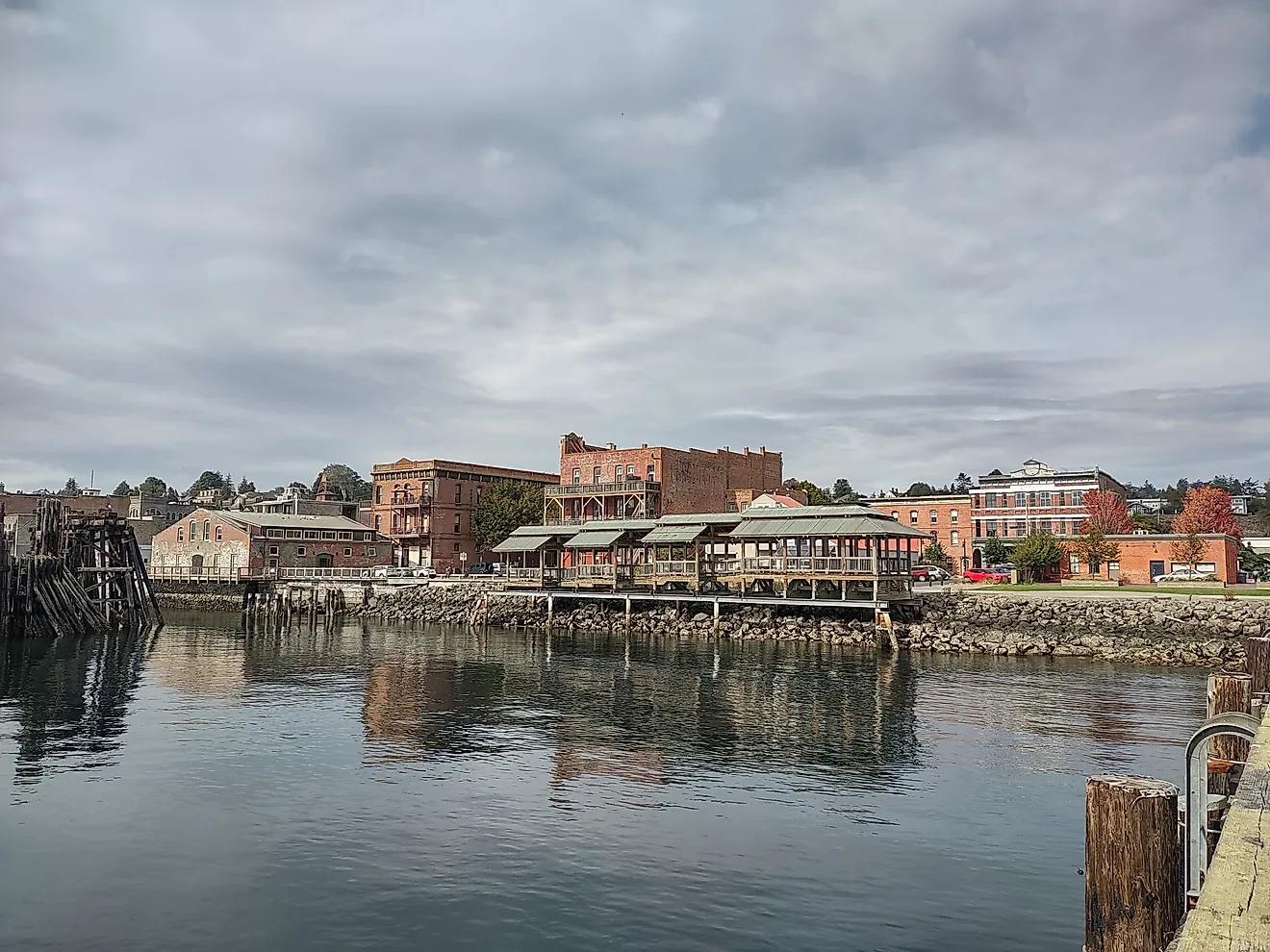
While the house is still a private residence, it can be viewed from St. Mary's Square. The town's original square, it was laid out in 1778 as the centerpiece of 58 building lots, with the town evolving around it. Across the square, St. Michaels Museum does a good job of explaining the battle and the town's role in the War of 1812.
Founded in 1964, the museum occupies three historic buildings that were relocated to the square. These include Sewell House, a waterman's home furnished as it would have been in 1865, and Chaney House, built in 1851 by three free African American brothers, George Jr., Charles, and Samuel Chaney. A third building, the Teetotum, is home to a large diorama of the August 10 attack.
From Shipbuilding To Oysters

Incorporated in 1804, St. Michaels owed its early prosperity to the shipyards that made it a British target. That prosperity didn't last long. An agricultural depression in 1819 hit the local economy hard, and the town's shipbuilding industry declined along with it. The town bounced back after the Civil War thanks to the Chesapeake's seafood trade, especially oyster harvesting and packing. Many of the historic homes in the downtown area date from that era.
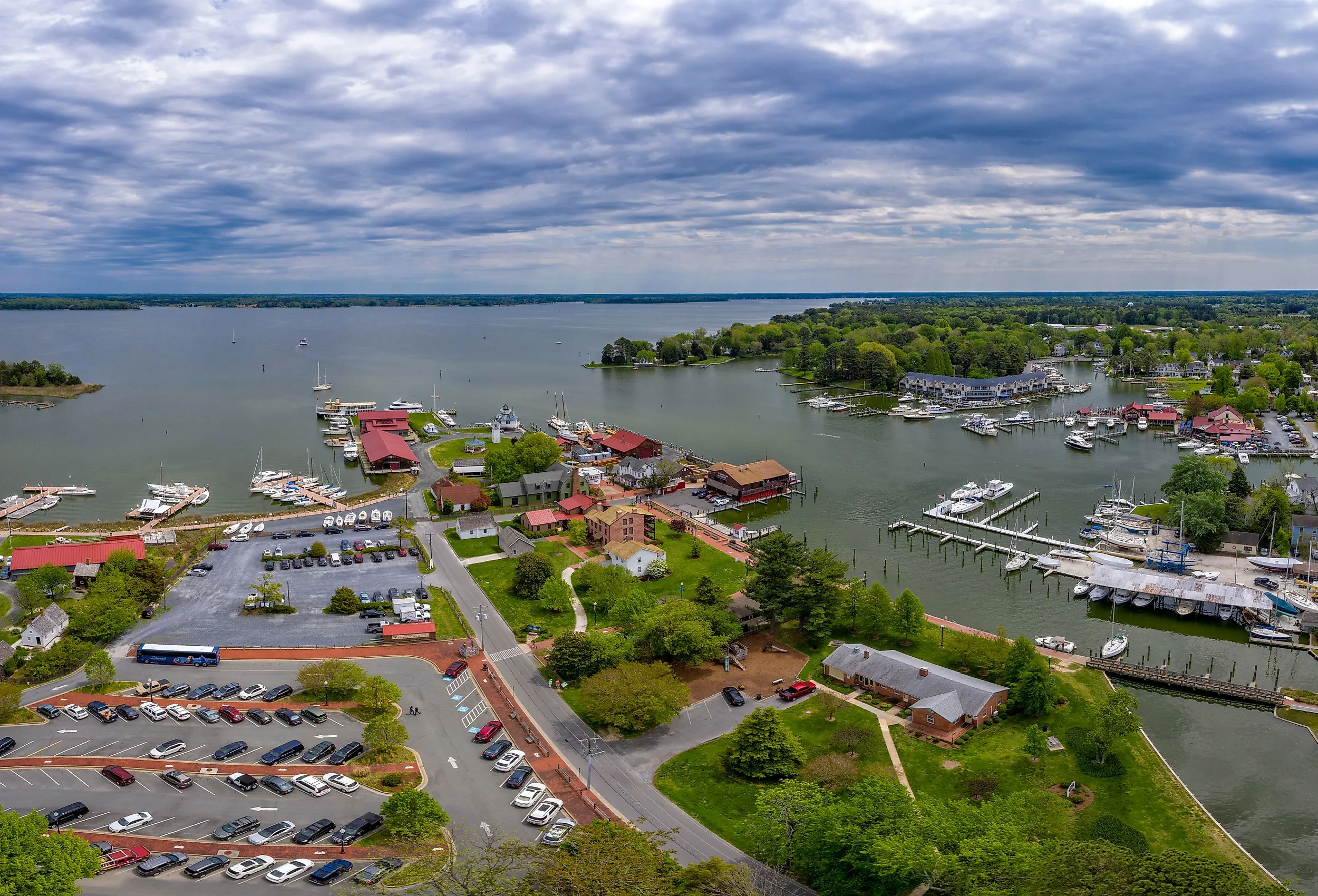
The story of the town's maritime past is told best at the Chesapeake Bay Maritime Museum. Located on Navy Point overlooking the Miles River, the museum has a collection of more than 80,000 objects, and its waterfront campus includes a replica of the shallop, a small open boat that Captain John Smith used to explore Chesapeake Bay in the early 1600s.
The museum's collection of working boats is another highlight. The skipjack Rosie Parks, built in 1955 by boatbuilder Bronza Parks in Wingate, Maryland, is one of the stars here. Skipjacks were built to dredge Chesapeake oysters, and they make up the last commercial fishing fleet under sail in the United States. The Winnie Estelle, a buyboat (a vessel that bought catches from watermen out on the water) built in 1920, is also part of the museum's floating fleet.
Lighthouses and Riverboats

The museum's best-known exhibit is the Hooper Strait Lighthouse. Built in 1879, it's a cottage-style screwpile lighthouse raised on iron piles screwed into the bay floor. The museum saved it from demolition in 1966 and moved it by barge 40 miles up the bay to St. Michaels.
To see the Miles River for yourself, book a seat on the Patriot, a St. Michaels tradition since 1969 that's now operated by the museum. Built to look like a 1930s Chesapeake steamboat, the Patriot's narrated historical cruises last 70 minutes and pass mansions that have stood along the shore for 200 years.
The museum also hosts the Antique & Classic Boat Festival and Coastal Arts Fair each June, and OysterFest each November.
The Town That (Kinda Sorta) Fooled the British
Whether or not anyone in St. Michaels actually hung a lantern in a tree back in August 1813, the town's defenders did something few other Chesapeake Bay communities managed during the War of 1812: they turned back the British twice in one summer.
Reminders of that summer are still here, from Cannonball House on St. Mary's Square to the battle diorama at the St. Michaels Museum. Add the shipyard heritage on show at the Chesapeake Bay Maritime Museum, and you've got a harbor town with plenty of stories to tell. The lantern story may be more fiction than fact, but the town that inspired it is very real, and well worth a visit.