America’s Oldest Seaside Resort
Cape May has been welcoming seaside vacationers before the United States even became a country. Located at New Jersey's southern tip, that deep-seated past gives a now familiar beach holiday an extra bit of interest for history buffs. Generations of visitors have come for all season stays, helping shape a sort of all-encompassing resort that remains a working vacation destination rather than simply a historic attraction. But above all, understanding Cape May means looking at how those two roles have continued together through numerous eras of changing tastes, transportation, and development.
How Cape May Became Such a Renowned Seaside Retreat

Cape May's reputation as America's oldest seaside resort rests on a tourism history reaching back to the 1700s. Then known as Cape Island, it attracted visitors seeking sea bathing and relief from summer heat. Early guests arrived from Philadelphia by stagecoach, wagon, or sailing vessel, staying in taverns, public houses, and private homes.
Later transportation improvements turned this seasonal trade into a larger resort industry. Steamboat service began in 1816, bringing travelers down the Delaware River and Bay. That same year, Thomas H. Hughes opened the hotel that became Congress Hall, initially called the Large House. Various ballrooms and music pavilions made the resort a social destination as well as a bathing retreat. By 1834, Cape Island had six boarding houses, and larger hotels followed as wealthy vacationers arrived from Baltimore, Philadelphia, New York, and Washington.
The railroad reached Cape May in 1863, encouraging development and summer home construction. With that, well-to-do families could establish their own seasonal residences, adding a growing cottage community to a resort previously shaped largely by hotels and boarding houses.
See the Victorian Buildings That Still Define the Town

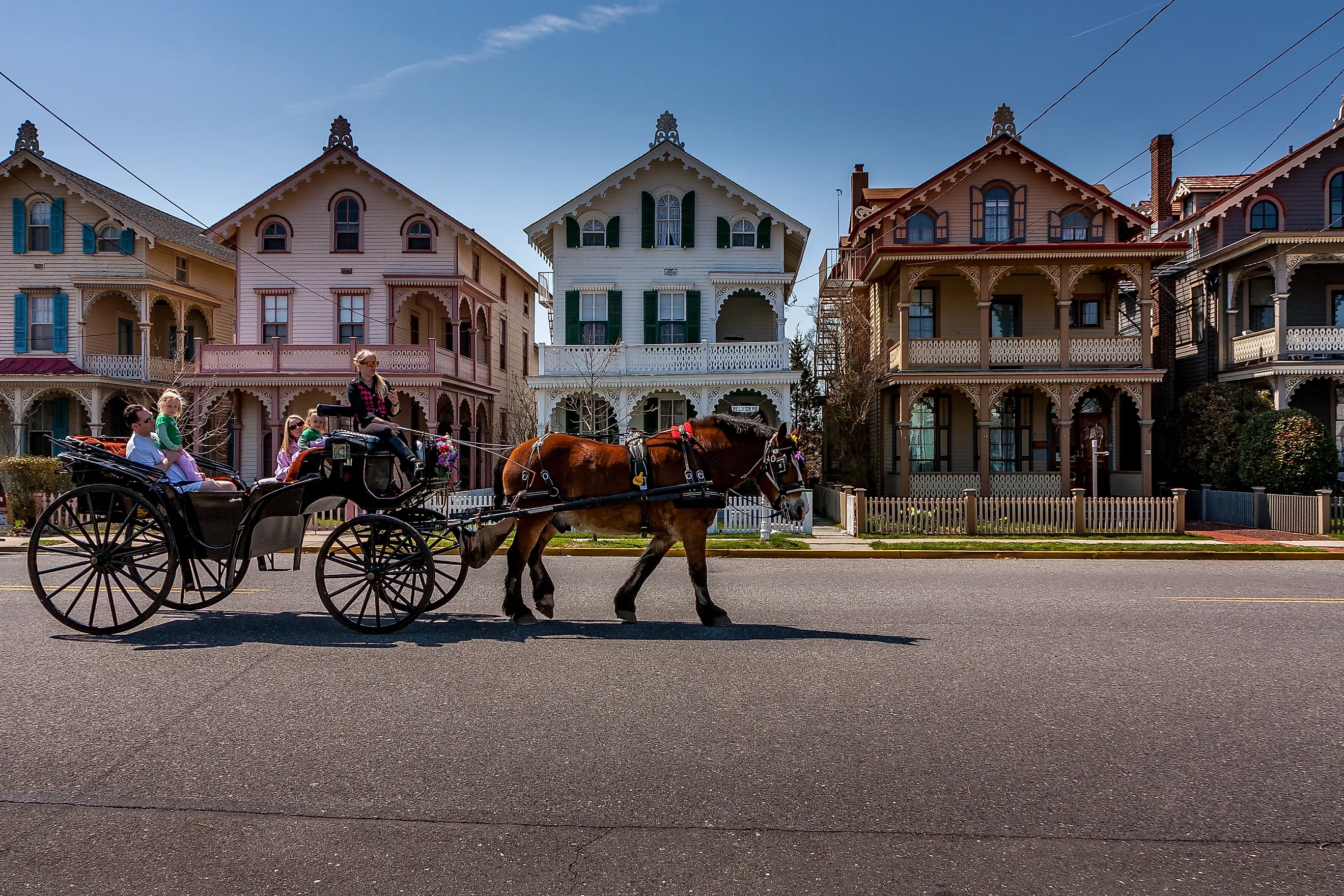
A large fire destroyed a section of Cape May in 1878, but the rebuilding helped establish the Victorian streets visitors and residents alike recognize today. Hotels, cottages, and guesthouses incorporated styles including Queen Anne, Italianate, and Second Empire, with decorative brackets, patterned woodwork, broad porches, and varied rooflines giving many of the buildings a bit of an individual character rather than a uniform appearance despite the era they were built in.
The Cape May Historic District actually received National Historic Landmark designation in 1976, recognizing the importance of this concentration of nineteenth-century resort architecture. In fact, many historic properties still remain in use as inns, restaurants, and private homes, so their preservation is very visible throughout the town.
For a closer look inside one of these residences, visit the Emlen Physick Estate at 1048 Washington Street. Erected in 1879, this 18-room house features a unique Stick Style architecture and is attributed to Philadelphia-based architect Frank Furness, with its angular woodwork offering a contrast to the ornate porches and decorative trim found on other local homes. Guided tours examine the Physick family's domestic life alongside the building itself.
Local Beaches and the Oceanfront

A lengthy slice of Atlantic shoreline stretches from The Cove to Poverty Beach, with sandy bathing beaches facing the ocean. Summer vacationers come mainly for swimming, sunbathing, and shore-side walks, with the long-standing Cape May Beach Patrol supervising designated swimming areas during the season since 1911.
But behind the sand, a paved promenade follows Beach Avenue, separating pedestrian traffic from the road. Here, walkers and runners can follow the oceanfront past Cape May Convention Hall, with benches along the route for watching the surf. The promenade also brings the beach within an easy walk of restaurants and hotels across Beach Avenue.
Then turn inland along Jackson Street to see how closely the historic resort developed beside the water. Numerous aged buildings stand just beyond the beachfront, allowing you to combine time on the sand with exploring some of the area's older residential streets.
What Else to See Beyond the Beach

Get a broader experience and check out Washington Street Mall, which occupies three pedestrian blocks in downtown Cape May with several notable shops, eateries, and ice cream counters opening onto its brick walkways. Available benches and gardens make it a place to easily take a break between browsing stores and exploring the surrounding streets.
Not too far outside the city, Cape May Lighthouse stands in none other than Cape May Point State Park in neighboring Lower Township. Completed in 1859, it remains an aid to navigation. You can climb 199 steps for views across the peninsula, Delaware Bay, and the wider Atlantic Ocean. Allow time for the park's trails and Hawk Watch platform as well.
During fall migration, the peninsula funnels southbound birds toward its tip, drawing birdwatchers looking for hawks, eagles, and falcons. Various paths around freshwater ponds offer a different perspective at ground level, where ducks and wading birds feed within sight of the lighthouse too.
Plan Your Visit to Cape May Today

It is generally best to choose summer for swimming and spring or fall for pure sightseeing, with autumn also bringing migrating birds and plentiful colorful foliage.
With its popularity, reserve summer lodging early, whether choosing a beachfront hotel, Victorian inn, or rental house. Keep in mind that staying near downtown makes the beaches and spots like the Washington Street Mall and the many old-timey streets manageable on foot. Regardless, also be sure to confirm whether accommodation includes parking if you're driving in. Seasonal meters operate beyond the summer months, so check posted restrictions, and beachgoers aged 12 and older often need beach tags from Memorial Day weekend through Labor Day.
On the other hand, before an offseason visit, check attraction schedules and restaurant hours, and bring layers for oceanfront walks when wind coming off the ocean tends to make weather conditions feel cooler.
Take the Time to Experience One of America's Most Beloved Beachfronts for Yourself
A vacation to this iconic part of Southern New Jersey rewards leaving lots of room for a plethora of planned and unplanned stops. A walk back from dinner can reveal a detail in an old building you missed earlier, while an extra morning or two allows time for the lighthouse or catching a glimpse of migrating birds. Simply put, staying beyond a quick beach afternoon makes Cape May easy to appreciate if it isn't already, especially when there is time to explore side streets and watch the busy waterfront change throughout the day.