How To Spend The Perfect Weekend In The United States
How better to spend a perfect weekend in the United States than by following in the Virginian footsteps of the country's first president? George Washington's "Old Dominion" roots run deep. So deep, in fact, that this beautiful Southeastern state is home to both Washington's birthplace and his final resting place.
Whether you do it this year or in 2026 to celebrate America's 250th anniversary, there's no better way to get a feel for the country's rich past than to enjoy a weekend road trip through George Washington's Virginia.
Day 1: Winchester and Shenandoah Valley

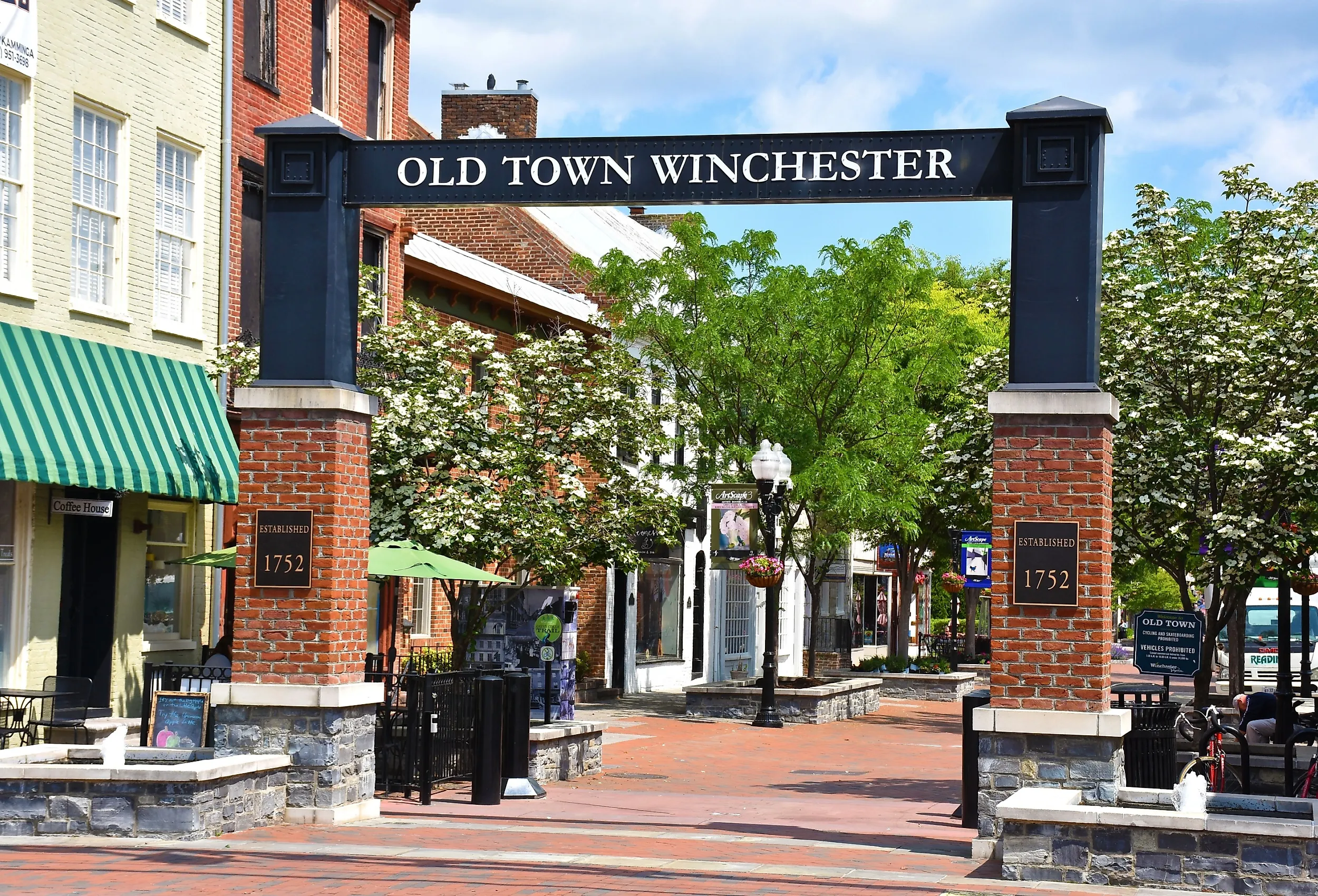
Your historical journey begins in Winchester, located at the northern tip of Virginia's Shenandoah Valley. This historic small town has strong ties to Washington, who arrived here in 1748 as a young surveyor and later commanded the Virginia Regiment from the town during the French and Indian War. Start exploring at George Washington's Office Museum, a modest log building at the corner of Cork and Braddock Streets. Washington kept his office in this 18th-century structure between 1755 and 1756, during the French and Indian War.
Inside, you'll see early surveying equipment that illustrates the challenges faced in mapping out unsettled frontiers, along with displays detailing Washington's campaigns and Winchester's strategic significance. The building itself, one of the oldest dwellings in Winchester, is historically known as the Adam Kurtz House, and tradition holds that Washington used it as both an office and living quarters at various times.

The site of Fort Loudoun, constructed under Washington's direction between 1756 and 1758, is also easy to walk to. Although the original fortifications no longer stand, portions of its foundations remain and a plaque clearly marks the spot. Erected to protect Winchester and the surrounding settlements from French and Native American raids during the French and Indian War, the fort was designed under Washington's personal direction.
To round out your first day, head to the Museum of the Shenandoah Valley. Located on the historic Glen Burnie property a short drive from downtown Winchester, this major museum complex includes galleries that cover the art, history, and culture of "The Valley," along with Washington's influence on the region. A highlight is exploring the English-style formal landscaping of grand old Glen Burnie House, built in 1794.

By late afternoon, you'll be ready to make your way to The George Washington Hotel. Completed in 1924 and recently fully restored, it's conveniently located near Old Town Winchester, a wonderful area to explore on foot as you scout out a good place for dinner. My favorite was the Union Jack Pub & Restaurant. Set in a 1900-era bank building complete with its original vault, you'll enjoy hearty British-inspired fare like fish and chips or traditional meat pies.
Ready for an early start? Begin the next day of your adventure with a stop at Bonnie Blue Southern Market & Bakery for a hearty breakfast. Famous for its authentic Southern comfort dishes, this eatery occupies a converted gas station and serves what locals claim are Virginia's best smoked brisket biscuits. Just a few doors down from the hotel, swing by Knead Bread Bakery to grab a sandwich and a sweet treat to take with you as you make the 70-mile drive east to your next getaway spot: the George Washington Memorial Parkway near McLean.
Day 2: Arlington and Alexandria

Plan to start your drive along the George Washington Memorial Parkway by mid-morning. Better still, if you're an early riser, catching the sun as it rises over the Potomac River and Washington D.C. from a scenic overlook is a truly memorable experience. Constructed in segments during the 1900s, it links some of Virginia's most significant historic sites and is especially beautiful in the fall.
Located roughly midway along this historic route, your next stop should be Arlington National Cemetery. Established in 1864, this vast cemetery is the final resting place of more than 400,000 servicemen and women. It's also where you'll find Arlington House, aka the Robert E. Lee Memorial. This elegant Greek Revival mansion was built between 1802 and 1818 by George Washington Parke Custis, the grandson of Martha Washington, America's original First Lady.

Arriving in Alexandria around midday, head first to The Alexandrian Hotel on King Street. Located in the very heart of Old Town Alexandria, even if an early check-in isn't available, odds are you'll be allowed to make use of their underground parking, so ditch the car and start pounding the pavement.
Founded in 1749 and once a major port on the Potomac River, Old Town Alexandria is so much fun to explore on foot. Original cobblestone streets and well-preserved 18th-century commercial buildings and homes here stand as shining examples of early American architecture. Wander along King Street, the main thoroughfare, and step into shops specializing in colonial-style furniture, handcrafted chocolates, and more, and grab a wonderfully exotic beverage from the Turkish Coffee Lady.

Your Old Town walking tour should include historic sites like Carlyle House Historic Park. Constructed in 1753, it was here the French and Indian War's famed Braddock Campaign was planned. George Washington often stopped in Alexandria on his way to and from his Mount Vernon estate, and visited Gadsby's Tavern regularly.
Located on North Royal Street and one of Alexandria's most famous landmarks, Gadsby's Tavern dates to the 1780s and quickly became a social and political hub. Washington, Thomas Jefferson, and John Adams all dined here, and a visit to the tavern's museum offers a fascinating look into 18th-century life with rooms furnished with period-appropriate tables, chairs, and decorative arts. Guided tours are available, and yes, you should consider staying to dinner. A few blocks from Gadsby's Tavern stands Christ Church, completed in 1773 and where Washington attended so often he purchased a family pew.

For great views over the city, head to the George Washington Masonic Memorial. Perched atop Shuter's Hill, this magnificent structure was built between 1922 and 1932 and drew inspiration from the ancient Lighthouse of Alexandria in Egypt. Inside, you'll find exhibits dedicated to Washington's role in Freemasonry, as well as artifacts such as lodge records and ceremonial regalia. The observation deck is a must-visit and provides wide views over Alexandria and across the Potomac River to the country's capital city.
After returning to The Alexandrian Hotel and freshening up, make your way down to the waterfront for dinner at Ada's on the River. This superb modern eatery is set overlooking the Potomac waterfront and features delicious wood-fired steaks, fresh crab cakes, and seafood dishes. The waterfront setting is a real plus, especially at sunset. The short stroll back to the hotel along the waterfront and lower King Street is quite a treat after dark.
Day 3: George Washington's Mount Vernon

Saving the biggie for last, day three of your Virginia adventure focuses on a visit to Mount Vernon, George Washington's spectacular estate home. Best of all, you can complete this leg of your weekend getaway with a morning drive along the even prettier southern leg of the George Washington Memorial Parkway. If you're a cyclist, following the Potomac from Alexandria along this stretch is also doable.
Acquired in 1754 and continuously expanded, Washington's mansion does get busy, so booking tickets in advance for an early start is a good idea. In addition to its distinctive cupola and colonnades, interior tours include the chance to see the formal dining room, the large central hall, and Washington's study.

Outside, the grounds reveal a working farm designed to be self-sufficient. The original 18th-century gardens still showcase heirloom vegetables and flowers, reflecting Washington's progressive approach to farming. Walk down to the Potomac River to see a reconstruction of the wharf area as it would have been in Washington's day.
Finish your Mount Vernon visit at Washington's tomb. He was first laid to rest on a quiet part of the estate in 1799, and in 1831 his remains were moved to the present brick tomb, with its wrought-iron gate, built to the specifications set out in his will. Having the chance to pay your respects to the man who helped build America will definitely be a highlight of your visit.

Heading back to the parkway, you'll pass what is perhaps one of the most unusual landmarks connected to the first president: George Washington's Distillery and Gristmill. Built in 1771, the gristmill demonstrates how grains such as corn and wheat were processed in Washington's time by using a large waterwheel.
The adjacent distillery, reconstructed on the site of the 1797 original, reveals another facet of Washington's economic ventures. Under his ownership, Mount Vernon became one of the largest whiskey producers in the nation. Demonstrations show how grain was fermented, distilled, and barreled, offering a fascinating look at the business savvy of America's first president. And yes, you can buy some to take home with you.
Tips and Tactics
A trip through George Washington's Virginia provides a fascinating journey into the earliest chapters of American history. A few well-chosen stops not only reveal the impact the first American president had on both the state and the country, they present a superb excuse to hit the road for an unforgettable weekend getaway. And given that 2026 is the year the United States celebrates its 250th anniversary, it's quite possible that this is going to be the road trip of a lifetime.
If you're able to extend your trip by a day or two, consider adding these additional Washington-related sites to your Virginia travel itinerary:
George Washington Birthplace National Monument, located in Westmoreland County and established in 1930 on the land where Washington was born in 1732.
Colonial Williamsburg, Virginia's colonial capital dating to 1699, where you'll encounter living-history exhibits and re-created colonial streetscapes that bring the 18th century to life.
For additional trip planning, check out these useful tourist resources:
Enjoy the drive!