The Fastest-Shrinking Small Towns In America
Most of America's small towns have held steady or grown a little since 2020. A handful have not. According to the Census Bureau's latest estimates, some have lost a tenth or more of their residents in just five years. The reasons vary from closed prisons and colleges to lost factories, fading farm jobs, and natural disasters. Here are the small towns shrinking fastest, and why people are leaving.
The Prison Effect

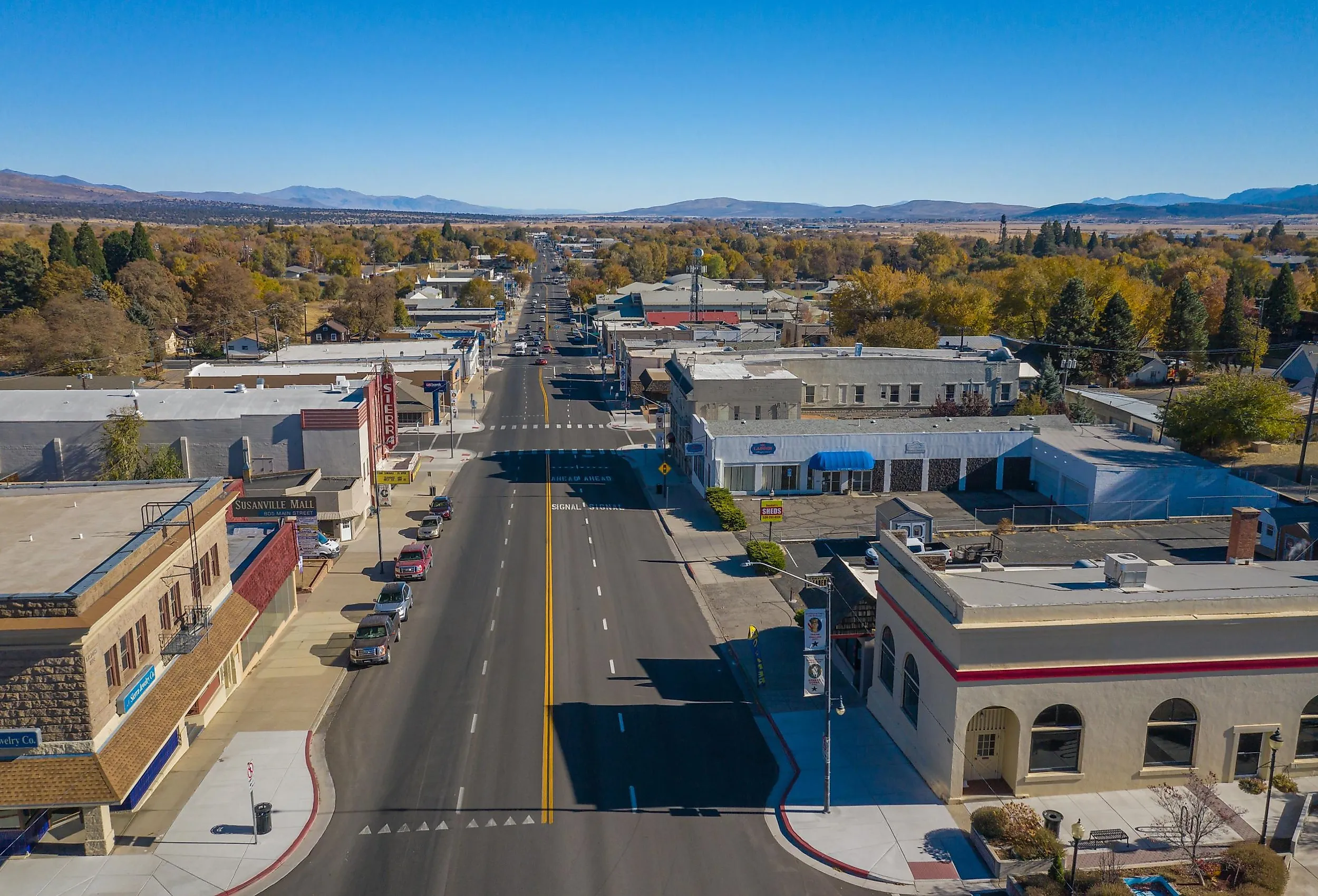
Some of the biggest population drops on paper come from a surprising source: prisons. The Census counts incarcerated people as residents of the town where they are held, so when a prison closes or downsizes, a town's population can fall sharply overnight. Susanville, California, lost nearly a quarter of its counted population between 2020 and 2025, much of it after the state closed one of the two prisons in town.
Similar drops appear in prison towns across the country, from Pecos, Post, and Big Spring in Texas to Taft, California, and Dannemora, New York. For these communities, the change is not just a number. Prisons often employ hundreds of local workers, and a closure can ripple through local businesses, schools, and tax revenue for years.
Marion, Alabama

Marion, a historic town in Alabama's Black Belt, lost about 18% of its residents between 2020 and 2025. A major blow came in 2021, when Judson College, a women's college founded in the 1830s, closed its doors after more than 180 years, taking students, faculty, and staff with it.
The town still has Marion Military Institute, and its historic buildings, including the old city hall from 1832, reflect a long history as a center of education and culture. Like much of the Black Belt, however, Marion has faced decades of job losses and outmigration that a single college could no longer offset.
Ruleville, Mississippi

Ruleville, in the heart of the Mississippi Delta, lost about 14% of its population in five years. The town is best known as the home of civil rights leader Fannie Lou Hamer, and nearby Dockery Farms is often called a birthplace of the Delta blues.
Ruleville's decline mirrors the wider Delta, where farming has become heavily mechanized and fewer jobs remain on the land. Young people often leave for cities in search of work, and businesses on Main Street have struggled as the customer base shrinks. A statue and memorial garden honoring Hamer draw visitors to town.
Helena-West Helena, Arkansas

Across the Mississippi River in Arkansas, Helena-West Helena lost close to 14% of its residents between 2020 and 2025. Once a bustling river port, it is famous for its blues heritage and hosts the long-running King Biscuit Blues Festival each fall.
The Delta's decline has hit Helena-West Helena hard, with factory closures and farm mechanization reducing jobs over decades. The town's historic downtown and Civil War sites draw visitors, but tourism has not been enough to reverse the steady loss of residents. Each closed store or plant means fewer reasons for young families to stay.
Lake Providence, Louisiana

Lake Providence, in Louisiana's northeast corner, lost about 12% of its residents in five years. The town sits on a curving oxbow lake left behind by the Mississippi River and serves as the seat of East Carroll Parish, one of the poorest counties in the country.
As in much of the Delta, agriculture once employed most of the area's workers, but modern farming needs far fewer hands. With limited jobs and services, many residents have moved away, leaving the town smaller each year. Schools and clinics have consolidated as enrollment and patient numbers fall.
Williamson, West Virginia

Williamson, on the Tug Fork River along the Kentucky border, was once a thriving coal town, and its downtown still features a building made of coal. Between 2020 and 2025, it lost close to 11% of its residents as the decline of the coal industry continued to reshape southern West Virginia.
The town has tried to reinvent itself, promoting the Hatfield-McCoy off-road trail system and the legacy of the famous feud. Still, the loss of mining jobs has made it hard to hold on to younger families. Repeated flooding along the Tug Fork has added to the challenge.
Selma, Alabama

Selma, famous for the 1965 voting rights march across the Edmund Pettus Bridge, lost more than 10% of its residents between 2020 and 2025. In January 2023, a powerful tornado tore through the city, destroying homes and businesses and pushing some residents to leave for good.
The tornado deepened a decline that had been underway for decades, driven by factory closures and job losses across the Black Belt. Selma's historic sites still draw visitors from around the world, but rebuilding has been slow, and many damaged homes still stand empty years after the storm.
Greenville, Mississippi

Greenville, the largest town on this list and once one of the busiest river ports in the Delta, lost more than 10% of its population in five years, about 3,000 people. The town was long a center for cotton, shipping, and manufacturing, and it has a rich musical and literary history.
As factories closed and farm jobs disappeared, Greenville has steadily lost residents, and many younger people have moved to larger cities in search of work. Riverboat cruises now stop at its waterfront, a reminder of the town's ties to the Mississippi.
Why Small Towns Shrink
The towns losing people fastest share a few patterns. Many are in the Mississippi Delta and Alabama's Black Belt, regions where mechanized farming and factory closures have cut jobs for decades. Others depended on a single large employer, such as a prison, college, or coal mine, and shrank quickly when it closed or downsized. Disasters like Selma's tornado can speed up a decline that was already underway. Reversing these trends is hard, but new industries, better broadband, and investment in local schools and health care give some small towns a chance to stabilize.