The Flooded Missouri Mine With A Billion-Gallon Lake Inside
For a century the St Joe Lead Company ran pumps at Bonne Terre to keep groundwater out of its mine. In 1962 the mine closed and somebody switched the pumps off. Water came in and kept coming, submerging the bottom three levels of a five-level excavation and everything left in them. What filled is now called Billion Gallon Lake, it sits directly beneath the streets of a Missouri town, and people pay to scuba dive in it.
A Century Of Digging Came First
The hole had to exist before it could fill, and it took a very long time to make.
Bonne Terre Mine was built starting in 1864 by the St Joe Lead Company, directly below what became the city of Bonne Terre. It operated for around a century, and at its height was the world's largest producer of lead.
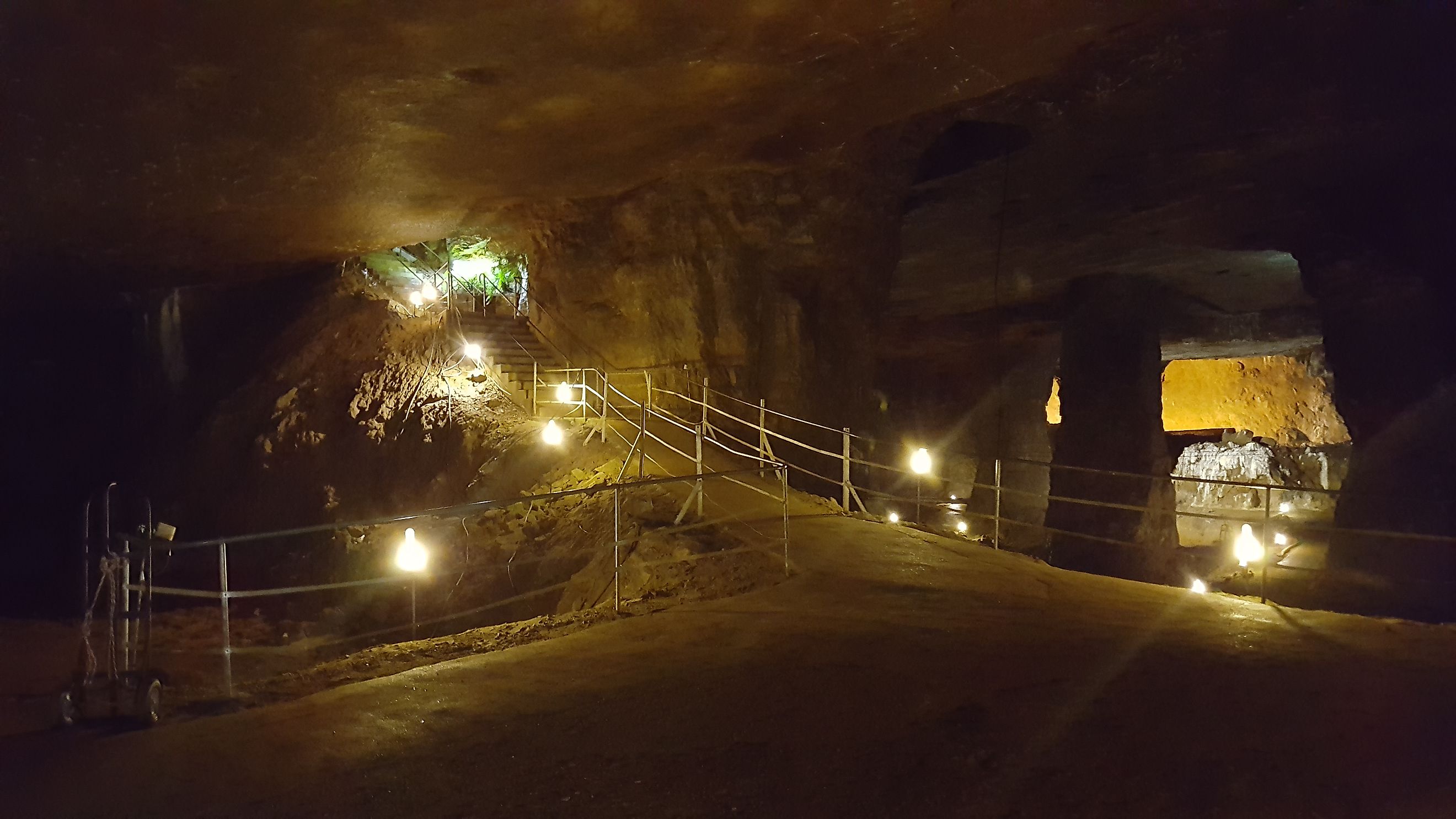
The result is described as one of the world's largest man-made caverns: roughly 1,500 stadium-sized rooms on five levels, linked by chutes, passageways and ore dumps.
Then Somebody Turned Off The Pumps
The transition from mine to lake took one decision and no engineering at all.
The mine closed in 1962, and the pumps that had held back underground springs for a century were shut off. Groundwater poured in and kept rising.
Nobody flooded it deliberately. They simply stopped stopping it, and the water went where it had always been trying to go.
Three Levels Went Under
The water found its own level and stopped, which is why the site is usable today.
The bottom three of the five levels flooded completely. The surface of the resulting lake now sits at the floor of level two, leaving the upper levels dry and walkable.
That boundary is visible underground, with the old pump marking the point where the dry workings meet the water.
Seventeen Miles Of Shoreline
Describing the size of an underground lake requires measurements nobody uses for ordinary ones.
Billion Gallon Lake has around 17 miles of navigable shoreline, roughly 200 feet beneath the surface of the earth. Depths reach about 275 feet in places, with some accounts putting the maximum over 300.
It is billed as the largest subterranean lake available for public diving anywhere.
The Scale Figures Disagree
One commonly repeated number is worth treating carefully.
Several sources describe the mine as covering 80 or 88 square miles. Others describe 88 miles of flooded passages, which is a very different claim and a far more plausible one for a mine beneath a town of under 4,000 people.
The 17 miles of shoreline and the billion-gallon volume are consistently reported. The square-mileage figure is not, and probably confuses passage length with area.
Everything Left Behind Is Still There
The flooding preserved the mine exactly as the last shift left it.
Shovels, drills, ore carts and machinery sit on the bottom where they were abandoned. Divers reaching an area called The City at 80 to 100 feet pass buildings with doors and glass still in the windows, a machine shop, a repair shop and the corrals that held the mules.
Cold, still, mineral-rich water is close to an ideal preservative. Nothing has rusted away because nothing has moved.
It Became A Dive Resort By Accident
The current use was not the plan when the site changed hands.
Doug and Catherine Goergens bought the mine in 1980 with the intention of developing it as a place to certify open-water dive students. It grew into what is billed as the world's largest freshwater dive resort.
There are now 24 mapped dive trails and more than 50 guided dives, lit by over half a million watts of stadium lighting mounted to the cavern roof.
The Water Is Clearer Than A Pool
Two conditions make the diving unusual even by cave-diving standards.
Visibility runs to 100 feet or more in natural spring water that stays at a constant 60 degrees Fahrenheit year-round. There is no current, no weather and no surge.
Jacques Cousteau dived here, and divers now come from Japan, France, Australia and Russia to a town of fewer than 4,000 people an hour south of St Louis.
It Is On The National Register
The site's heritage status came a dozen years after the water arrived.
Bonne Terre Mine, also known as the St Joseph Lead Mine at Bonne Terre, was added to the National Register of Historic Places in 1974, covering 10.5 acres.
That listing applies to the surface complex. The thing most people come to see is below it and under water.
The Lake Holds The Town Up
Living above a hollowed-out mine raises an obvious question, and locals have an answer for it.
One Bonne Terre resident, asked whether he worried the mine might collapse and swallow the town, said he had been assured the billion gallons act as a shock absorber.
Whether or not that is the engineering, water filling a void does apply pressure outward against walls that would otherwise have nothing supporting them.
Lead Is Safe Where It Sits
Diving inside a former lead mine sounds alarming and is not, for a specific chemical reason.
Lead in its natural mineral state is stable and does not dissolve into water the way people assume. Tour operators are explicit that there is no cause for concern above or below the waterline.
Galena, the lead ore worked here, is lead sulfide and is essentially insoluble. The water stays clear partly because nothing in the rock is dissolving into it.
The Short Answer
Bonne Terre Mine ran from 1864 to 1962 as one of the world's great lead producers, kept dry the whole time by pumps. When the pumps went off, groundwater filled the lower three of five levels and created a billion-gallon lake with 17 miles of shoreline, 275 feet deep in places, directly beneath a Missouri town.
Everything the miners left is still down there, preserved in 60-degree water with 100-foot visibility. It is now the largest freshwater dive resort in the world, which was nobody's intention when the switch was flipped.