The State Parks Bigger Than Some Entire States
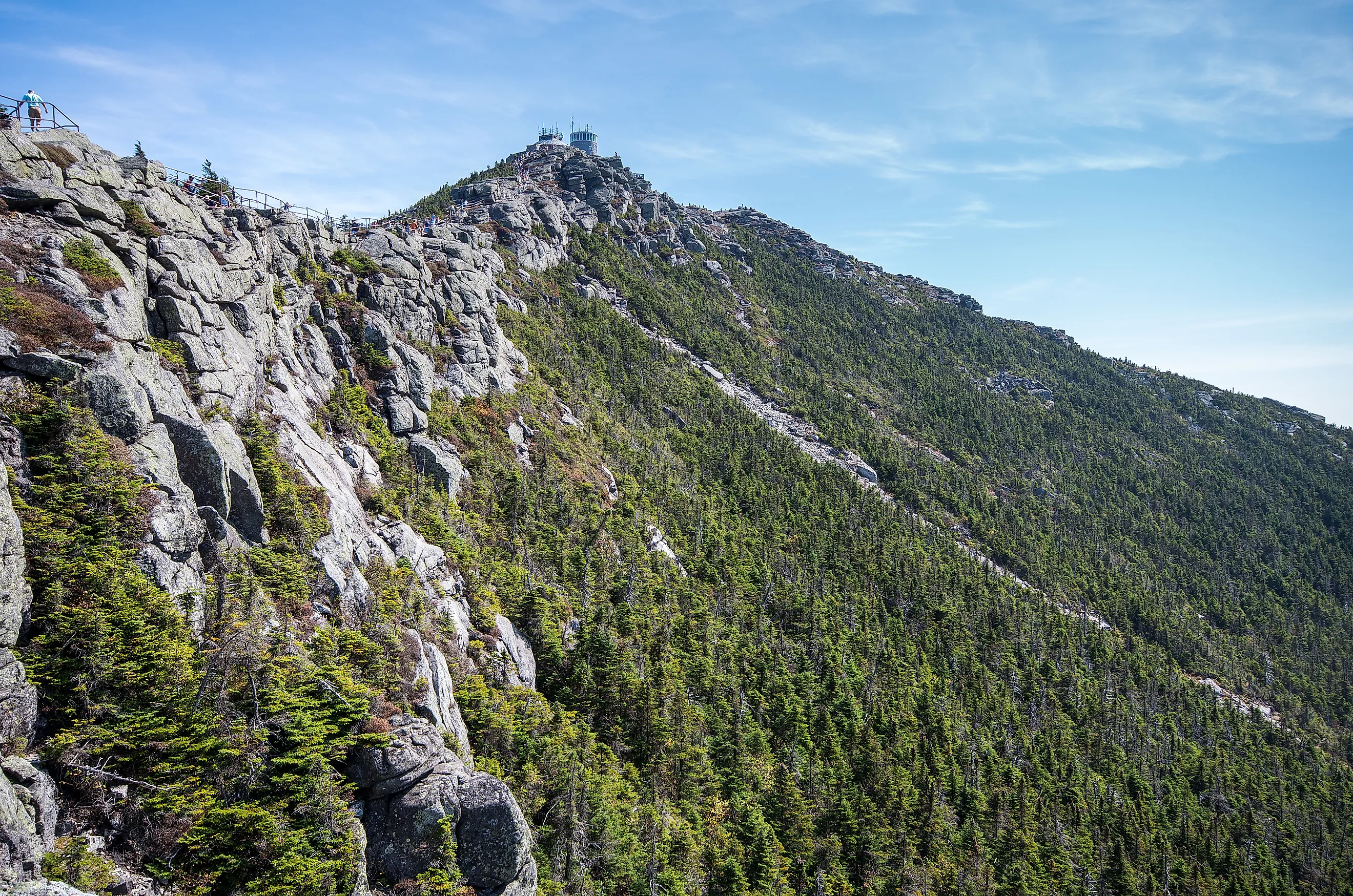
There are two state parks that are bigger than entire states. They are Wood-Tikchik State Park in Alaska and Adirondack Park in New York. Due to their vast sizes, they encompass a wide variety of landscapes, such as the 12 lakes, mountains, and rivers of southwestern Alaska in Wood-Tikchik and the isolated Adirondack Mountains in the Adirondack Park. These mountains formed a few million years ago due to thermal activity beneath the Earth. That activity is slowly raising a dome a few feet every hundred years.
Wood-Tikchik State Park

Wood-Tikchik State Park consists of almost 1.6 million acres, which translates to 2,500 square miles. This is larger than Rhode Island's total area of 1,545 square miles and around the same size as Delaware. It is the largest official state park in the U.S. and makes up half of all state-owned parklands in Alaska. The Adirondacks' status is discussed more below.
The park's name comes from its two systems of freshwater lakes, the Wood River Lakes and the Tikchik Lakes. This connectivity is what makes the park so popular among kayakers and canoeists, as they can use the shallow rivers to move about the Wood River Lakes. Overall, the Wood River Lakes are easier to access, as the Tikchik Lakes in the northern section of the park are more remote.
Across these lakes and rivers, such as the Agulukpak River, one can fish for rainbow trout, Pacific salmon, and northern pike. Both brown and black bears can be found around these lakes as well.

The park was established in 1978 specifically to protect the wildlife and fish, as well as provide recreational fishing. Today, many use these waters for subsistence fishing, hunting, and gathering.
The park itself was designed to be as wild as possible, with little development. Those who visit this park have to come prepared for long journeys and camping. One way to visit the park is by air taxi out of Dillingham, which can drop one off at Nishlik Lake and schedule a pickup at a variety of locations. One way is to float down to the village of Aleknagik, which is at the end of Lake Aleknagik, which is itself a more than 20-mile paddle journey.
There are no maintained trails in Wood-Tikchik State Park, but one can discover a trail of their own by creeks, mountains, and through tundra landscapes.
In order to visit this park, one will need to plan carefully, due to its rustic nature and its vast size. It is recommended to pack bear spray just in case you come across an aggressive bear.
Adirondack Park

Overall, Adirondack Park has 6 million acres, but a significant portion of it consists of communities and privately owned spaces. Of its acreage, 2.6 million acres are owned by the state of New York while the rest is privately owned. This makes Adirondack Park unique as the state has had to manage both public and private interests.
If counted by its total size, Adirondack Park is 9,375 square miles, which is larger than the total area of New Hampshire, New Jersey, Connecticut, Delaware, and Rhode Island. If only considering its state-owned land of 4062.5 square miles, it is larger than Delaware and Rhode Island, which have total areas of 2,490 square miles and 1,545 square miles, respectively.
The area was first created in 1892 by New York as part of an effort to protect the natural landscape. It is larger than several national parks such as Yellowstone National Park and Grand Canyon National Park. The private land here has restrictions on it to protect the environment, such as limiting buildings and roads. Public land here is also divided by use, with Wilderness areas being the most restrictive.

Throughout the park, one can choose from several different regions to explore, such as Lake George, which is known as the Queen of American Lakes due to its cleanliness. It is accessible from the town of Lake George and the historic town of Ticonderoga, home to Fort Ticonderoga, which played a crucial role in the early days of the American Revolutionary War.
Hikers can also choose from several peaks in the Adirondack Park, such as Giant Mountain, which rises up 3,375 feet on an overall 6.6-mile round trip in the Lake Placid region. Lake Placid itself was the site of the 1980 Winter Olympic Games, including the Miracle on Ice when the U.S. team defeated the Soviet Union hockey team.
The mixture of public and private land use has led to controversy both about how to categorize Adirondack Park and how to protect all of its lands, as overall it is a forest preserve, but guidelines and local interests can vary. The primary guiding principle is what was included in the New York State Constitution in 1894, namely that this preserve "shall be forever kept as wild forest lands."
These Massive Parks Are Very Different
Both of these parks are massive, but they offer very different types of experiences. Wood-Tikchik State Park is a very remote place where one has to plan carefully to avoid getting lost or running out of supplies, as there's no public road access in the park. Adirondack Park, on the other hand, provides plenty of vacation opportunities by staying in one of the towns or by venturing off the beaten path through trails and lakes.
The philosophies of these parks are different as well. Adirondack has to manage both private and public interests to keep the park forever wild, while Wood-Tikchik State Park is a wilderness park designed specifically for preservation.
What these parks share in common is that they are larger not just than some national parks but entire states.