What's the Emptiest Place in Space?
Cosmic voids are vast underdense regions that occupy much of the universe's volume (about 80% of the observable universe's volume), and astronomers have cataloged over 8,000 of them, with current and upcoming surveys expected to identify many more.
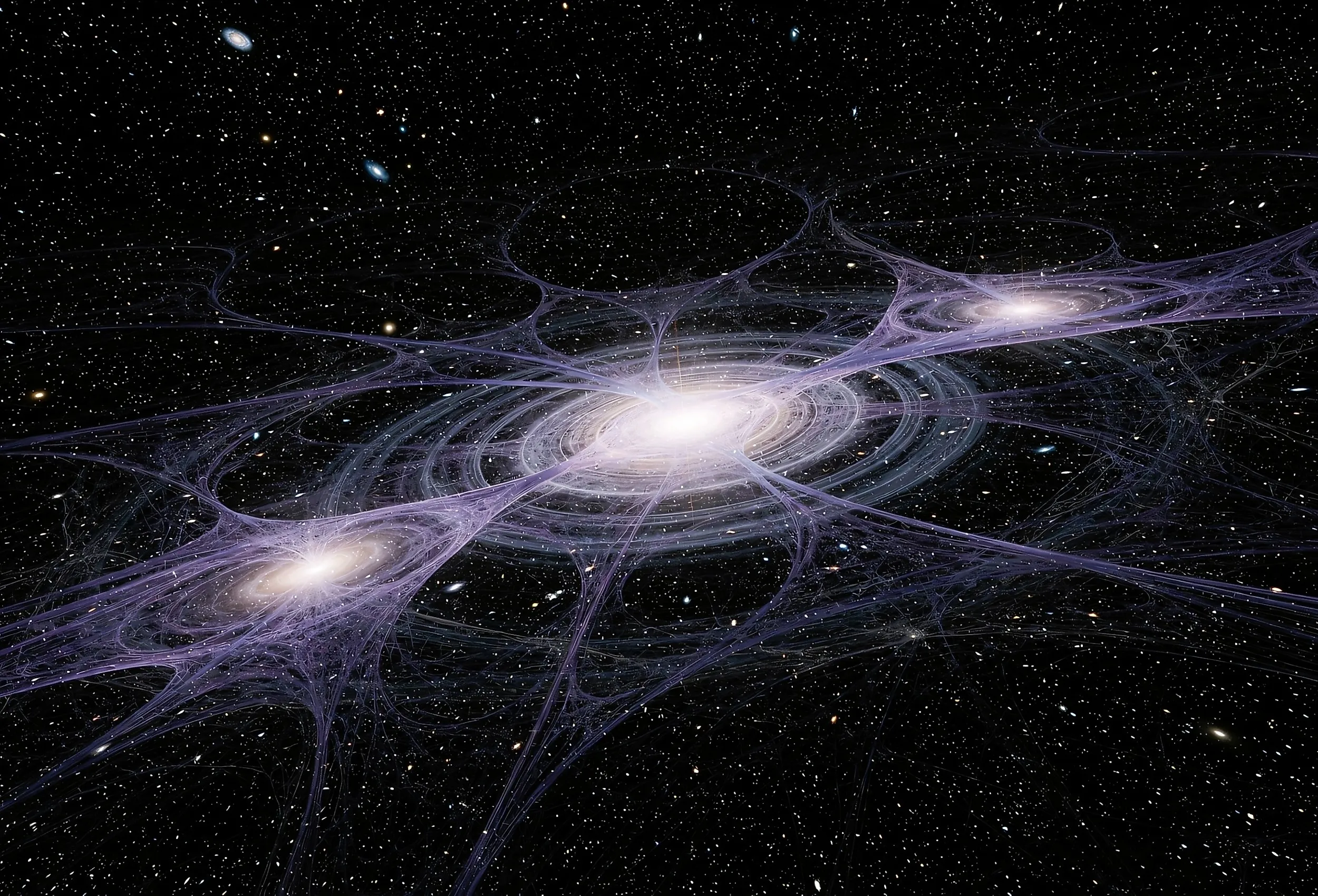
The universe is organized into a giant cosmic web, with galaxies and galaxy clusters forming long, interconnected strands known as galaxy filaments. Over billions of years, gravity pulled matter into these dense threads, leaving enormous low-density spaces between them.
Those gaps are cosmic voids: the emptiest known regions of space, and some of the most useful places for understanding how the universe formed, expanded, and continues to change.
What is the Biggest Void in the Universe?

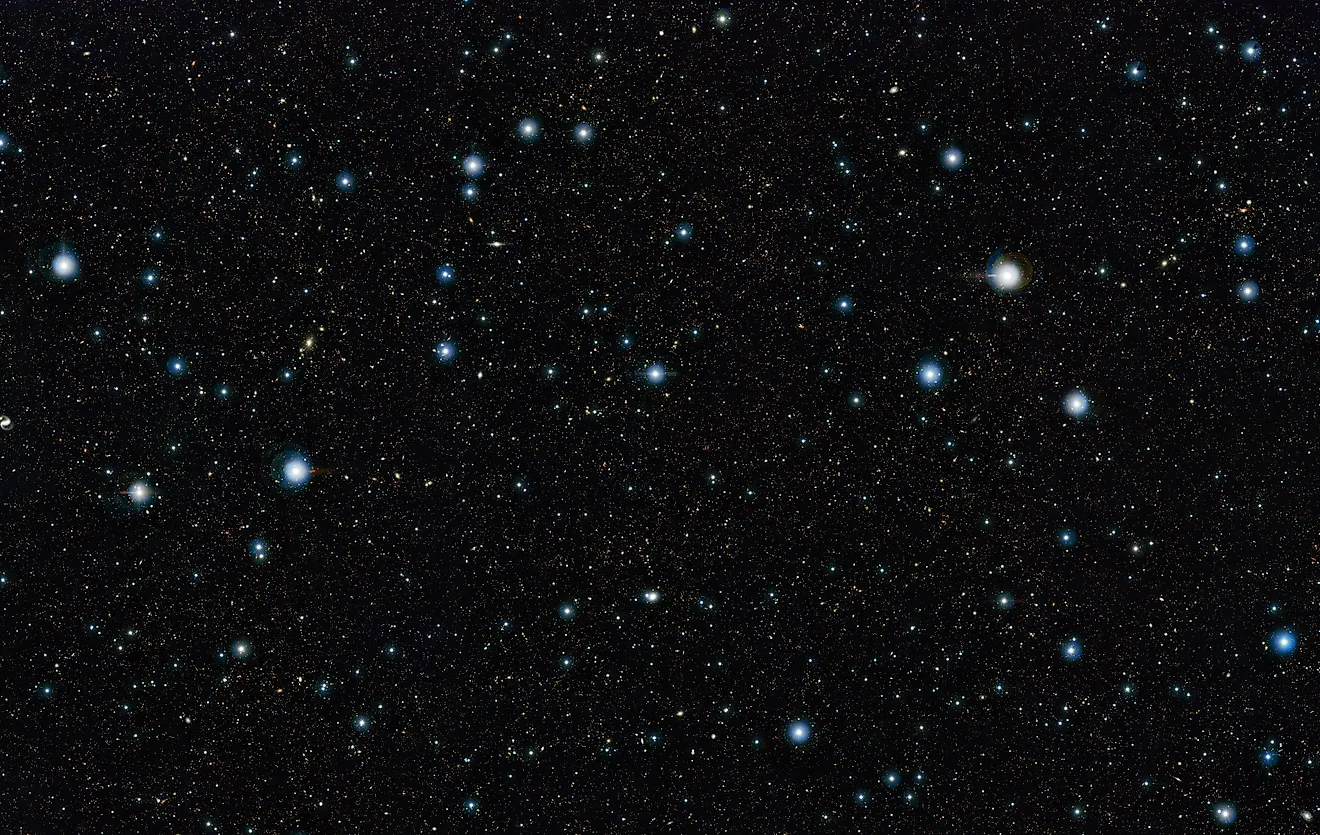
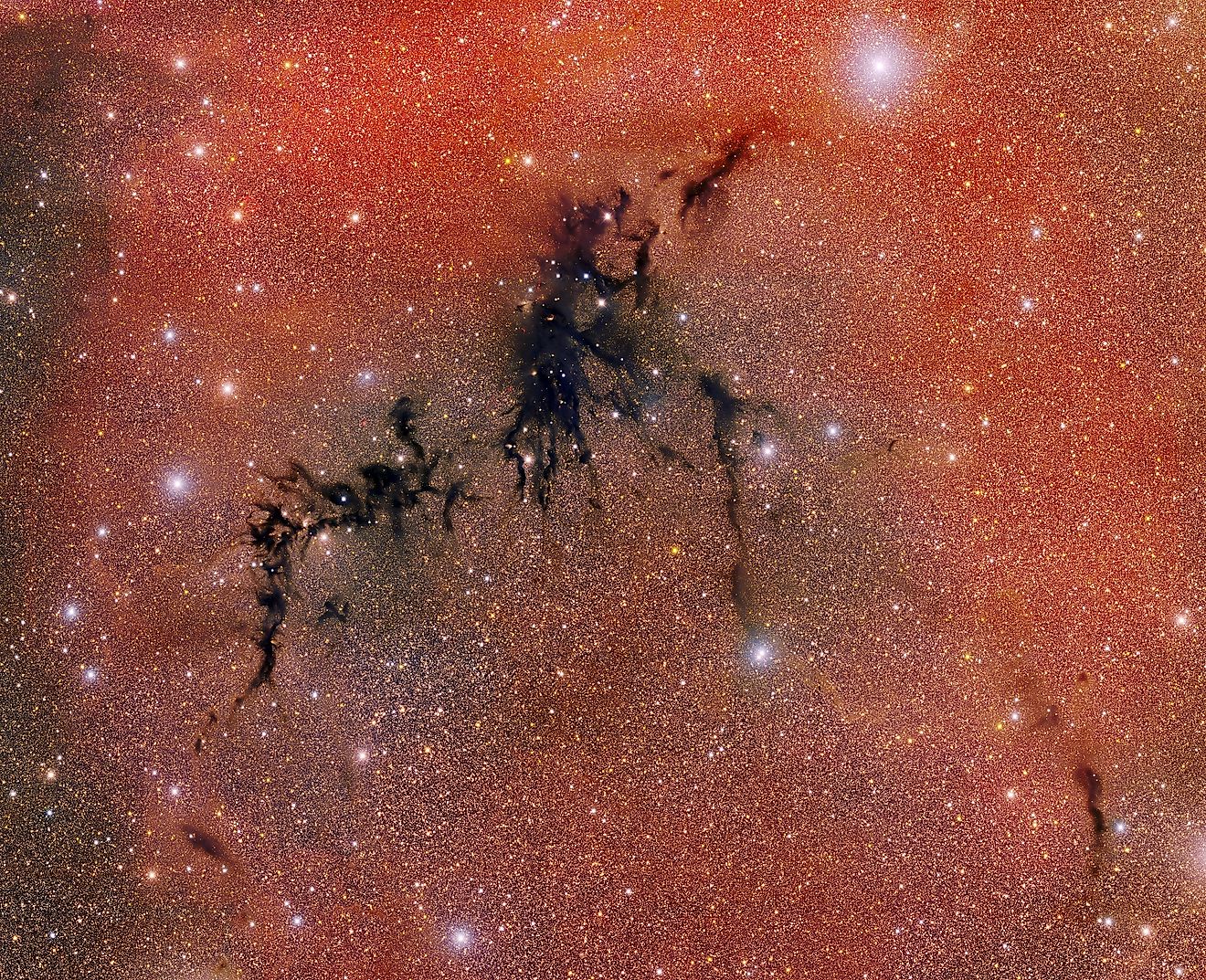
Between these strands are huge, dark, seemingly empty spaces that scientists refer to as cosmic voids. These enormous stretches of darkness sit between the "webs" of galaxies that make up the universe.
One of the emptiest places we know about is the Boötes Void, a gigantic region of space that was discovered in 1981 by US astronomer Robert Kirshner and his colleagues. They were creating a 3D map of the universe by using redshift surveys to measure the locations and distances of galaxies when they noticed a huge blank spot in their map.
This empty region was much larger than expected. While the Boötes Void does contain some galaxies, it has far fewer than scientists would expect for an area of its size.
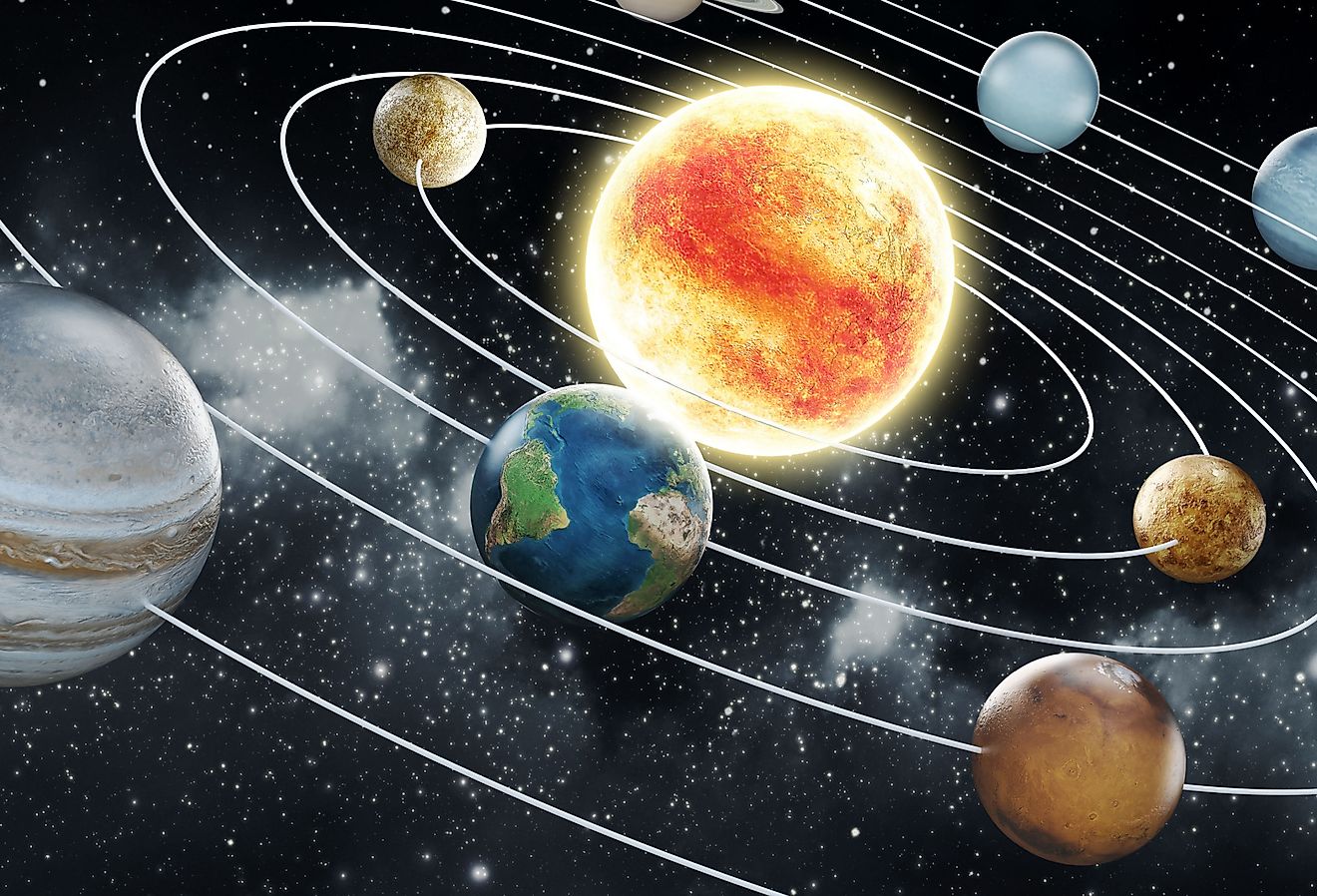
The Boötes Void spans roughly 330 million light-years and lies about 700 million light-years away from us. For context, the planetary region of our solar system is tiny by comparison, and the distant Oort Cloud only extends about 1.6 light-years from the Sun. While it is often referred to as the "Great Nothing," this mysterious void is not completely dark or devoid of matter.
Are Cosmic Voids Actually Empty?

Although they look like enormous dark pools of nothingness, cosmic voids are not completely empty. They contain particles, dark matter, radiation, and tiny particles known as neutrinos.
Some of these voids even contain their own galaxies, just fewer of them, and often at a lower mass than galaxies found in denser parts of the universe. The Boötes Void contains around 60 of these lonely galaxies, when a region of this size would usually be expected to contain closer to 2,000.
These structures are not static; they are constantly changing as the universe evolves. So why don't galaxy clusters simply fall into these giant voids? It can seem as though the voids are pushing matter away, but the opposite is actually happening. Voids contain much less matter than the surrounding regions, so they have a weaker gravitational pull. Meanwhile, the gravity from denser galaxy clusters and filaments around the edges pulls matter toward them, causing voids to become emptier over time.
How Did the Boötes Void Form?

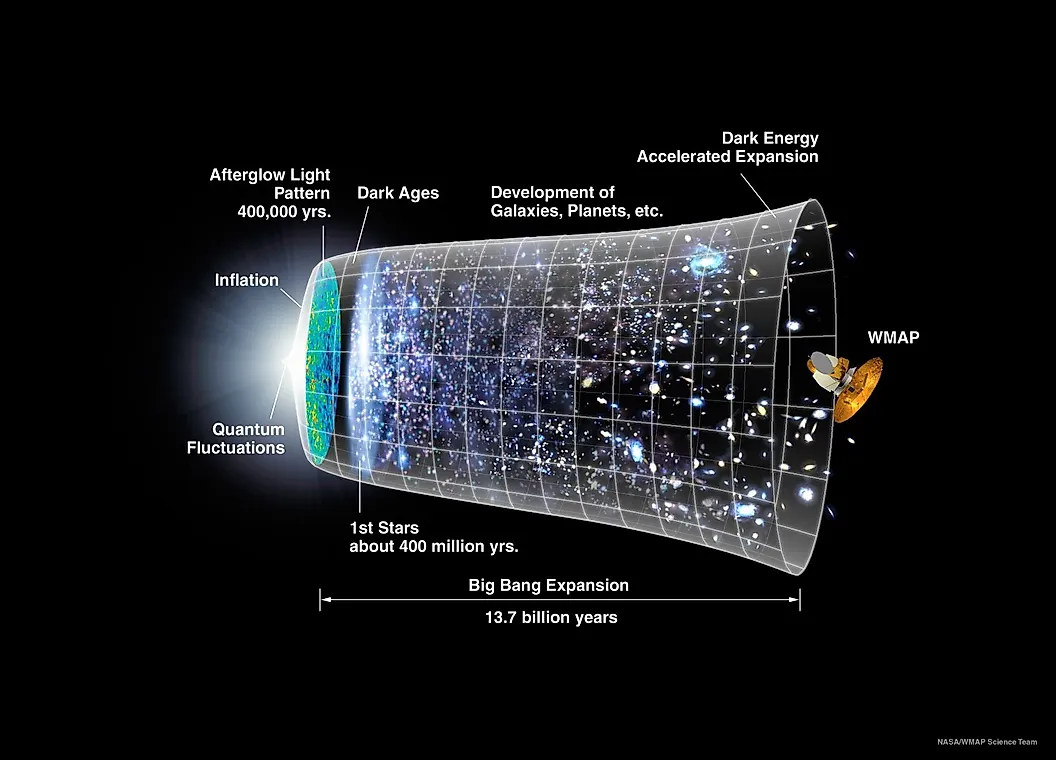
Shortly after the Big Bang, the matter that made up the universe was distributed almost evenly. However, tiny quantum fluctuations meant that some regions of space were slightly denser than others.
As the universe continued to evolve over billions of years, the denser regions attracted more matter through gravity, eventually forming galaxies and galaxy clusters, while less dense regions became emptier and developed into cosmic voids.
Gravity continued pulling matter together into the cosmic web we see today. Over billions of years, the spaces between this web (the voids) widened as galaxies became concentrated along the edges of voids rather than being spread evenly throughout space. Scientists think some of the largest supervoids, like the Boötes Void, may have formed when smaller voids merged together.
Why is "Empty Space" So Important for Science?

Despite seemingly being empty, these parts of space may hold the answers to some of science's biggest questions: What is dark matter? How does gravity behave on the largest scales? And what is behind the infamous Hubble tension?
Because voids have fewer large objects getting in the way, they can be incredibly helpful places to study gravity, general relativity, and neutrinos, which are some of the smallest particles in the known universe.
Their low density makes them especially useful for testing how dark energy, dark matter, neutrinos, and gravity shape the universe on very large scales.
Understanding how voids grow and change could help scientists better understand how the entire universe has evolved since the Big Bang.
Other Cosmic Voids
The Boötes Void may be one of the most famous cosmic voids, but it is not alone.
Some scientists think our own galaxy lies within a supervoid known as the Keenan, Barger, and Cowie (KBC) Void, which may stretch around 2 billion light-years across. This theory is still debated by scientists, but if this void is large enough, it could help explain the Hubble tension, one of the biggest questions in cosmology today.
Because a void contains less matter than other regions of space, there is less gravity slowing down expansion locally. This could make nearby galaxies appear to be moving away faster than expected, potentially affecting our measurements of how quickly the universe is expanding.
Then there is the Eridanus Supervoid, associated with the cold spot in the cosmic microwave background. It has been reported as an underdense region roughly 1.8 billion light-years wide and about 3 billion light-years away, which would make it the largest known void in the universe, though researchers still debate whether it fully explains the Cold Spot.
Closer to home is the Local Void, a vast empty region near our own Local Group of galaxies that stretches around 200 million light-years across.
New and upcoming surveys such as DESI, Euclid, and NASA's Roman Space Telescope are expected to expand void catalogs dramatically, potentially mapping more than 100,000 voids in the years ahead.
Could Voids Eventually Take Over the Universe?
The universe has been expanding since the Big Bang, and scientists have discovered that this expansion is accelerating. As galaxies move farther away from each other, the spaces between them continue to grow. At the same time, voids merge into even larger voids as matter becomes increasingly concentrated along galaxy clusters and filaments.
Eventually, voids may occupy larger and larger proportions of the universe.
In the distant future, galaxies could become increasingly isolated as the empty spaces between them grow bigger. The universe may slowly become darker, colder, and emptier, with these enormous voids taking over.
The Boötes Void may not be the emptiest or largest void in space, and like all known cosmic voids, it is not truly empty. It is difficult for our human minds to conceptualize just how enormous these voids really are, and scientists are only just beginning to understand them and the answers they may hold within their vast, dark space.