The Worst Fires in US History
The deadliest fires in American history fall into two very different kinds of catastrophe. Some were wildfires, walls of flame that swallowed whole counties of drought-dried forest and timber town in a single night. Others were building fires, a theater or a nightclub packed past capacity where a small flame near an exit turned a crowd into a death trap in minutes. Ranked together by lives lost, they make an uneasy list, but a revealing one: nearly every entry ended with laws rewritten and safety codes born from the loss. These are the ten deadliest fires in United States history, ordered by death toll.
10. Rhythm Club Fire - 209 Deaths

On the night of April 23, 1940, hundreds packed the Rhythm Club dance hall in Natchez, Mississippi, to hear bandleader Walter Barnes and his orchestra. The building had one usable entrance; the windows had been boarded to keep non-paying listeners out. When fire broke out near that single entrance, there was almost nowhere to go. Spanish moss hung as decoration and fed the flames, and 209 people died, most of them trapped against walls that grew too hot to touch. The disaster pushed cities across the country to outlaw locked and blocked exits in public venues, a reform written directly in the aftermath.
9. Brooklyn Theatre Fire - 278 Deaths

More than a thousand people filled the Brooklyn Theatre on the evening of December 5, 1876, when stage manager J.W. Thorpe spotted a small flame catch the scenery around 11:20 p.m. He and two carpenters fought it while the play went on, hoping to avoid a panic. The fire won. When it broke into the open and the audience understood what was happening, the rush for the exits turned deadly, and at least 278 people died, many crushed or trampled in the stairwells. It remained the worst theater fire in the country until an even greater one struck Chicago a generation later.
8. Thumb Fire - 282 Deaths
The Thumb Fire took its name not from a town but from the region it destroyed: the thumb-shaped peninsula of eastern Michigan, the counties of Huron, Sanilac, Tuscola, and Lapeer. On September 5, 1881, drought, high wind, and a landscape still littered with dead timber from the fires of 1871 combined into a firestorm that burned more than a million acres and killed 282 people in a matter of days. The damage ran to roughly $2.3 million at the time. The disaster earned a grim distinction of its own: it was the first to be met with organized relief from the newly formed American Red Cross, the debut effort of Clara Barton's organization.
7. Great Hinckley Fire - 418 Deaths

On September 1, 1894, a summer of drought turned the pine forests of eastern Minnesota into tinder, and several small fires merged over the town of Hinckley into a single firestorm. The blaze consumed roughly 200,000 acres and at least 418 people, generating heat so intense it was later estimated in the hundreds of degrees. Survival came down to water and rail: some residents lived by wading into ponds and the Grindstone River, while others were carried out on trains that ran the tracks with flames closing on both sides. Two engineers who backed their trains through the fire to load fleeing residents became lasting local heroes.
6. Ohio Penitentiary Fire - 322 Deaths

The fire at the Ohio Penitentiary in Columbus on April 21, 1930, remains one of the deadliest prison disasters in American history. Flames took hold in scaffolding and roofing on the west side of the overcrowded prison and spread fast, but the death toll, 322 inmates, owed less to the fire itself than to the response. Guards hesitated to unlock the cell blocks as the smoke rose, fearing an escape, and hundreds of men died locked in their cells before the doors were finally opened. The scandal that followed forced a national reckoning with prison overcrowding and fire safety behind bars.
5. Cloquet Fire - 453 Deaths

In October 1918, with the country distracted by war and influenza, sparks from a railroad line set the dry brush of Carlton County, Minnesota, alight. Fanned by wind, the fire tore through Cloquet and the surrounding towns in a single day, the deadliest day of disaster in Minnesota history. Around 453 people died, tens of thousands were left homeless, and more than 250,000 acres burned. The state later held the railroad accountable, and survivors spent years pursuing compensation for a catastrophe that arrived faster than most families could flee it.
4. Cocoanut Grove Fire - 492 Deaths

The Cocoanut Grove was the most popular nightclub in Boston, and on the night of November 28, 1942, it held perhaps a thousand people, more than double its intended capacity. When fire broke out in a basement lounge around 10:15 p.m., patrons found the exits failed them at every turn: a revolving front door jammed with bodies, side doors bolted or hidden behind drapery. Flammable decorations carried the flames across the ceiling in seconds. The 492 deaths made it the deadliest nightclub fire in the nation's history, and the disaster drove nationwide reforms to exit and occupancy codes, along with real advances in the treatment of burn victims. The club's owner was later convicted of manslaughter.
3. Great Michigan Fire - Around 500 Deaths
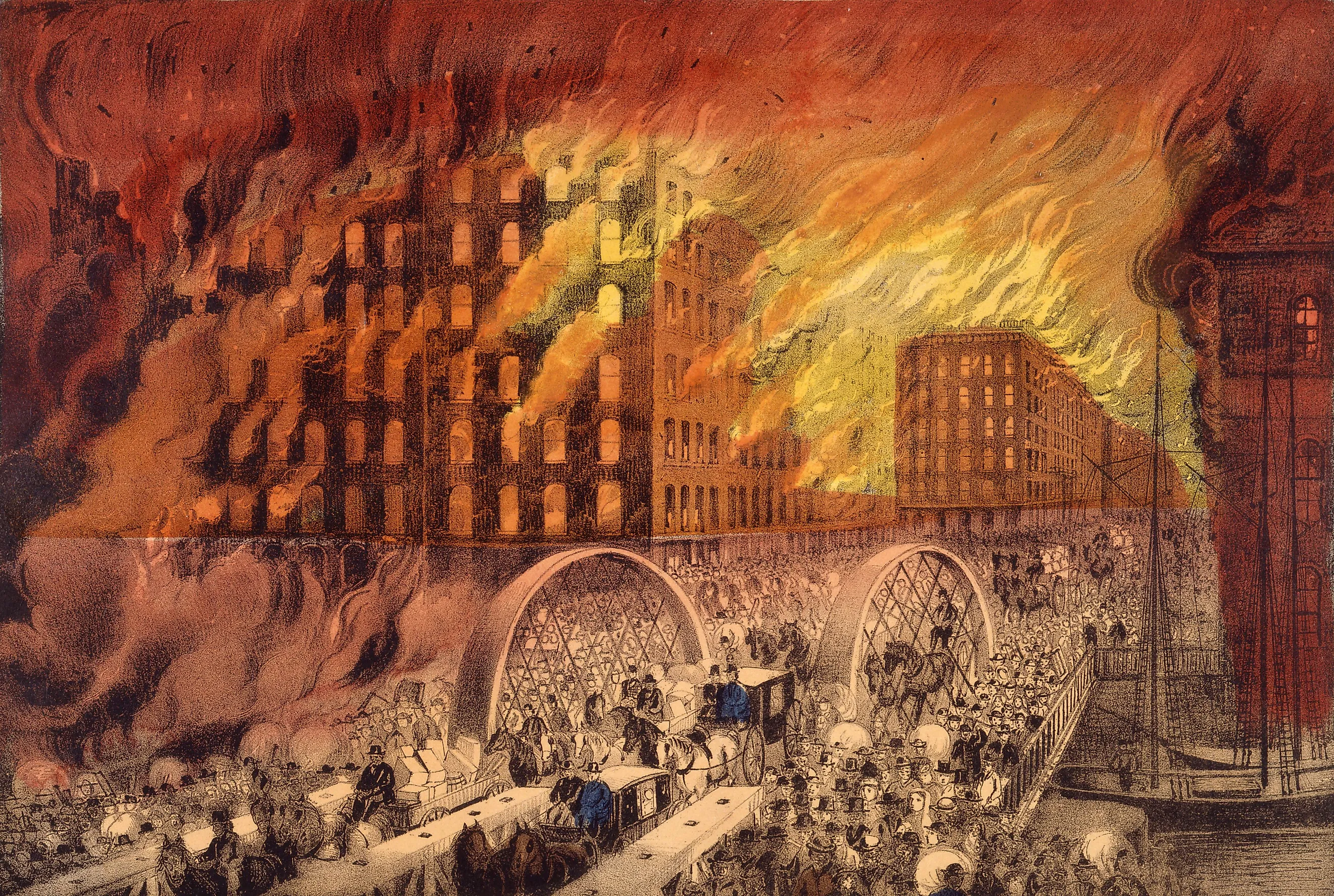
The Great Michigan Fire was not one fire but many, a series of blazes that swept the state on October 8, 1871, the very same day the Great Chicago Fire and the Peshtigo Fire were burning. Years of logging had left the ground carpeted with dry slash, and a hot, dry autumn did the rest; towns including Holland, Manistee, and Port Huron were largely destroyed, and roughly 500 people died. The simultaneity of the three fires has fed more than a century of speculation, including a persistent theory that fragments of Comet Biela sparked them all. Scientists have never found evidence for it; the far likelier culprit was a regional weather system driving wind and drought across the whole Upper Midwest at once.
2. Iroquois Theatre Fire - 602 Deaths

The Iroquois Theatre in Chicago had been open barely a month, and was advertised as "absolutely fireproof," when it caught fire during a packed holiday matinee on December 30, 1903. A spark from an arc light ignited a muslin curtain, and the flames raced into the scenery above the stage. The theater held around 1,700 people that afternoon, well beyond comfort, and its safety features failed one after another: a fire curtain that snagged, exits that were locked, unmarked, or opened inward. About 602 people died, making it the deadliest single-building fire in American history at the time, a grim record it held until the September 11 attacks. The public fury that followed reshaped theater safety codes across the country.
1. Peshtigo Fire - Up to 2,500 Deaths

The deadliest fire in American history struck Peshtigo, Wisconsin, on the night of October 8, 1871, the same night as the Great Chicago and Great Michigan fires. Logging had left the region buried in dry debris, and settlers routinely burned brush to clear farmland, but that evening a powerful wind whipped scattered fires into a single firestorm that generated its own weather. Witnesses described a roar like an approaching train and a wall of flame that leapt the waters of Green Bay. It consumed more than a million acres and razed the town in a matter of hours; only one building was left standing. The verified death toll is around 1,150, but with town records destroyed and remote settlers never counted, estimates range as high as 2,500. Because it shared a date with the more famous Chicago Fire, the deadliest blaze the country has ever seen was, for generations, the one almost no one remembered.
Two Kinds of Catastrophe, One Hard Lesson
Read top to bottom, the list splits cleanly in two. The wildfires, Peshtigo, the Great Michigan and Thumb fires, Hinckley, and Cloquet, were disasters of landscape and weather, born from drought, wind, and the flammable debris left behind by nineteenth-century logging. The building fires, Iroquois, Cocoanut Grove, Brooklyn, the Rhythm Club, and the Ohio Penitentiary, were disasters of design and neglect, where locked doors, blocked exits, and flammable interiors turned survivable flames into mass casualties. The through line is that almost none of these deaths were inevitable. Nearly every fire on this list ended with new laws, and the exit signs, sprinkler mandates, and occupancy limits taken for granted today were paid for, one catastrophe at a time.