What's the Brightest Object in the Sky?
Look up on a clear night and pick out the single brightest star overhead. That title belongs to Sirius in the constellation Canis Major. Venus often shines even brighter as the evening star. A full Moon reaches magnitude -12.6 and drowns out both. The real winner blazes in broad daylight instead. Our Sun outshines every object visible from Earth by a staggering margin. This guide ranks the brightest lights above us and explains how astronomers measure them.
What are Magnitude and Luminosity?

To fully understand how bright an object in the sky is, it's important to understand magnitude and luminosity. In terms of magnitude, you need to specifically understand Apparent Magnitude and Absolute Magnitude.
Apparent magnitude describes how bright an object appears from Earth, while absolute magnitude compares intrinsic brightness by describing how bright an object would appear from a standard distance of 10 parsecs.
Meanwhile, Luminosity is the total electromagnetic energy output of an object. This comes into play when explaining brightness: while some objects may reflect light, they do not emit their own light.
Venus

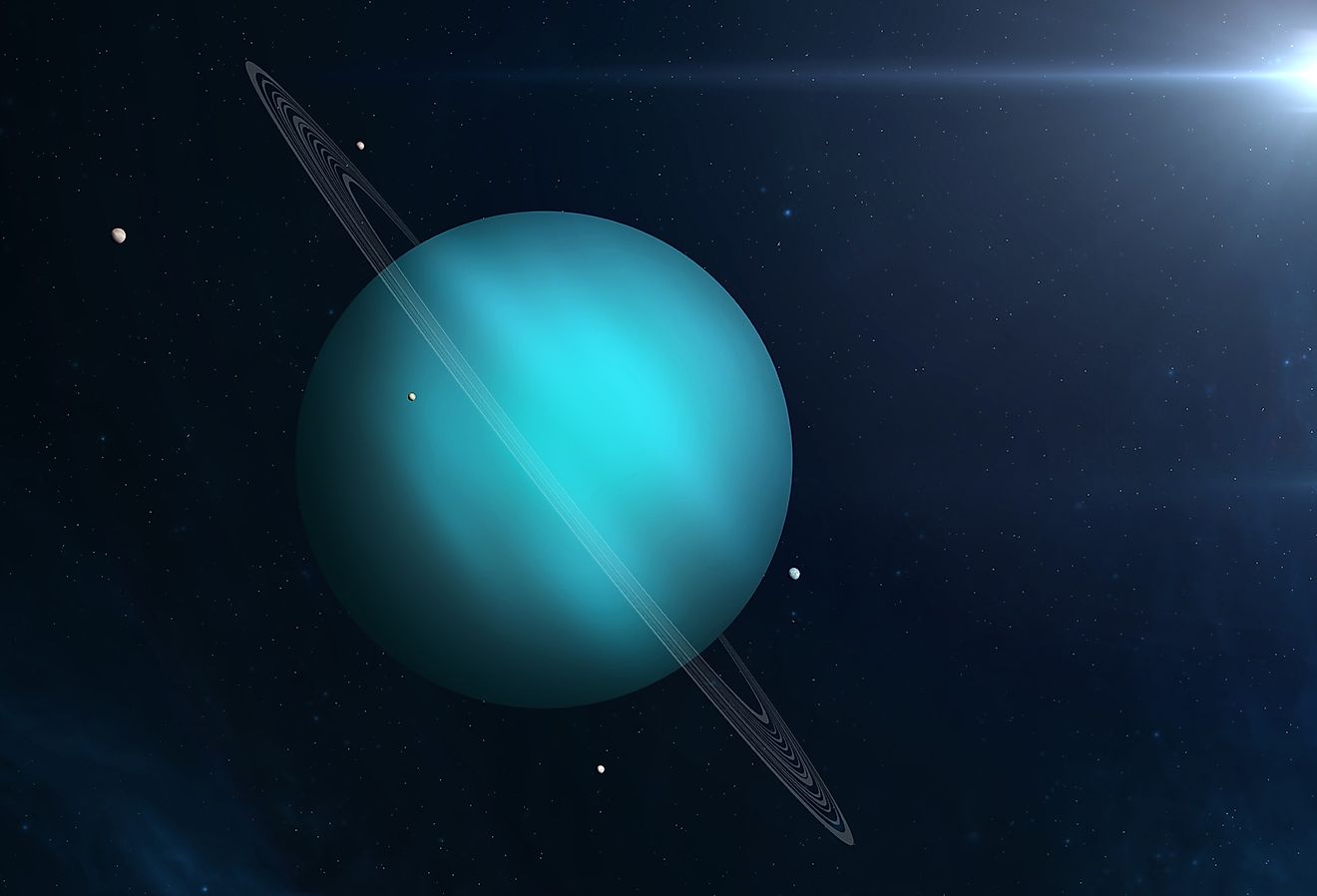
Venus can reach about magnitude -4.9, making it the brightest planet and usually the brightest natural object in the night sky after the Moon. Is this because of Venus' multiple volcanoes that make it shine so bright? Well, no. Venus does not give off its own visible light, but when its orbit places it in view from Earth, it can shine brilliantly as the "morning star" or "evening star."
Venus appears so bright because it is relatively close to Earth, has a large sunlit disk, and reflects a high proportion of sunlight from its thick cloud cover. It is the second planet from the Sun, being about 67 million miles from the Sun. The proximity to the Sun alone makes it shine brightly because it reflects that light. Think of a lightbulb. If you hold a penny next to the lightbulb, it appears brighter than if it is held further away. That same concept can be applied to Venus and the Sun.
Venus also has a very high albedo, reflecting roughly 70% to 76% of the sunlight that strikes it, largely because of its thick cloud cover. This makes Venus the most reflective major planet in the Solar System by albedo. Note that while Venus is the planet that reflects the most sunlight, it is not the most reflective object in space. That title goes to one of Saturn's many moons, Enceladus. Enceladus reflects most of the sunlight that hits it, and NASA describes it as the most reflective body in the solar system.
Even though Venus does not emit its own light, it is the brightest planet in the sky. But what about an object that emits its own light?
Sirius

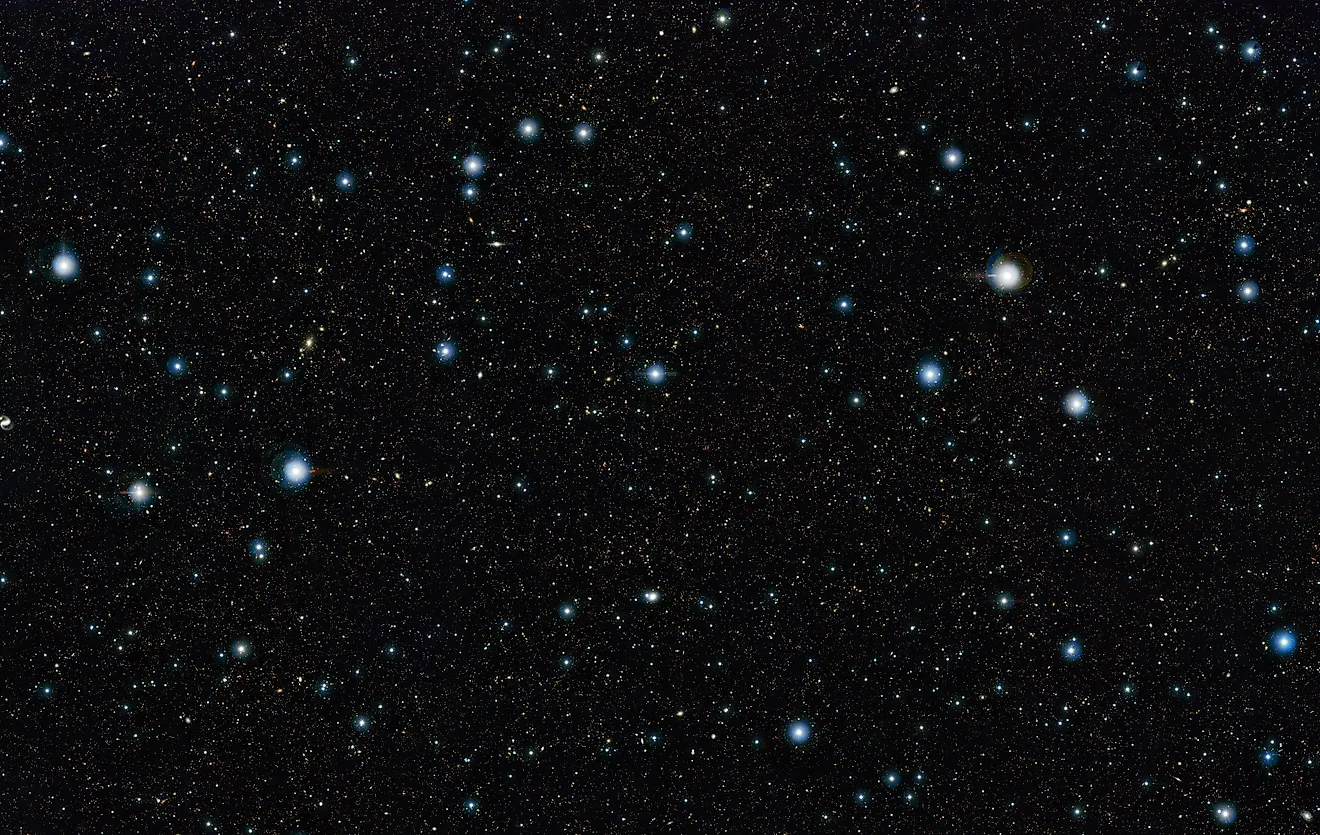
Sirius is considered the brightest star in the night sky and is about 8.6 light-years from Earth. It is also part of the constellation Canis Major. As far as stars go, Sirius is a baby compared to the Sun. While the Sun is about 4.6 billion years old, Sirius is only a few hundred million years old; as a more massive A-type star, Sirius A is also much hotter than the Sun. The surface temperature of Sirius A is thought to be around 17,000 degrees Fahrenheit.
Sirius has an apparent magnitude of about -1.46 and an absolute visual magnitude of about +1.43, making it the brightest star in the night sky, though Venus and Jupiter appear brighter, and Mars can sometimes outshine it as well.
While Sirius is the brightest star in the night sky, it is not the brightest object that can be seen from Earth.
The Moon

Similarly to Venus, the moon does not emit light, yet its apparent magnitude is around -12.6 when it is full. How does something that shines so brightly not emit its own light? In fact, the moon only reflects about 10% of the sunlight that hits it.
The Moon appears so bright mainly because it is close to Earth and presents a large sunlit disk, even though its surface reflects only a small fraction of incoming sunlight. The Moon is not intrinsically bright, but from Earth it appears radiant because it is so close.
The moon is the second brightest object in the sky while standing on Earth's surface. So what would be the brightest?
The Sun

Does it come as a surprise that the Sun is the brightest object in the sky? There is a reason parents tell children not to look at the Sun. Just staring at the Sun for several seconds can cause eye damage.
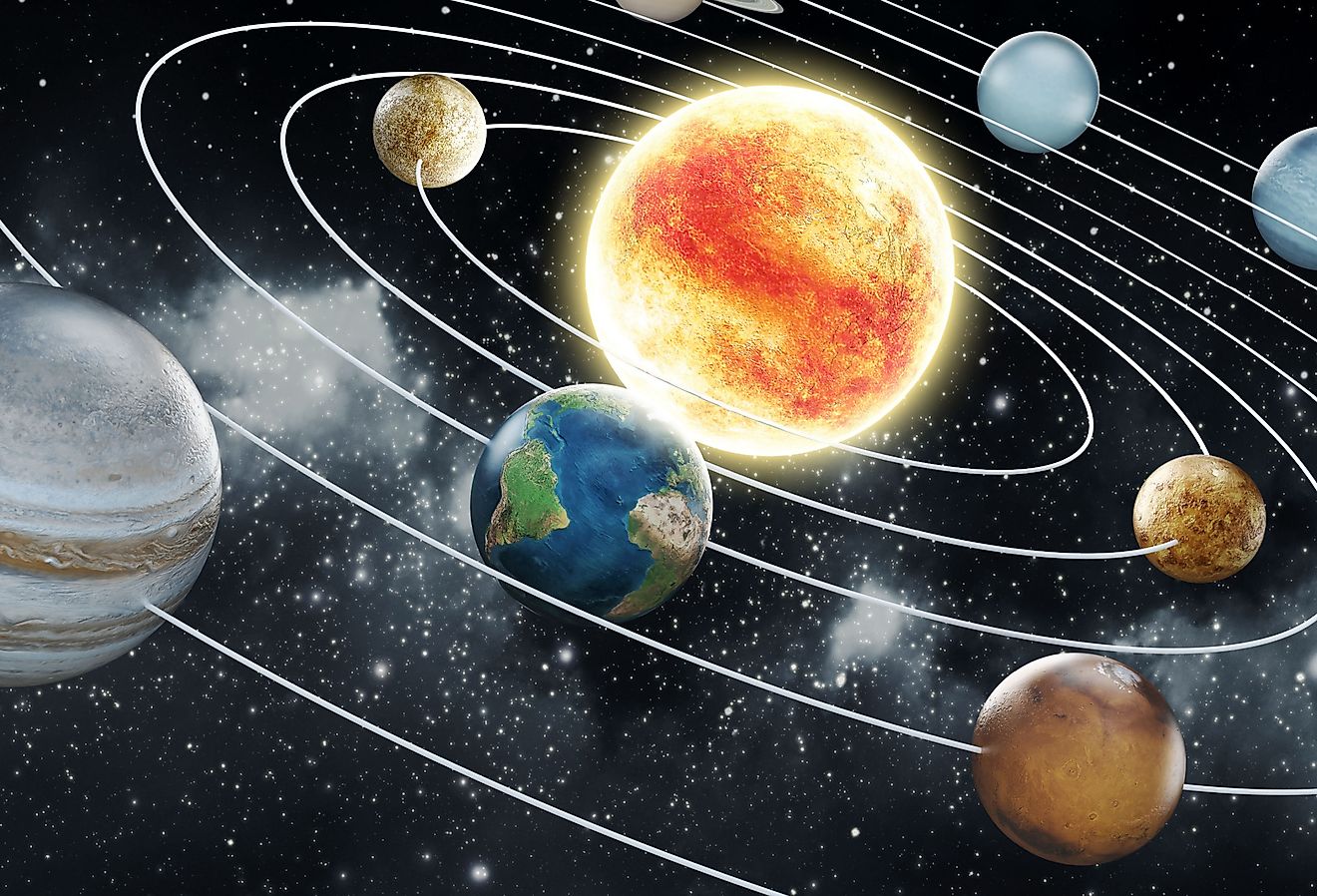
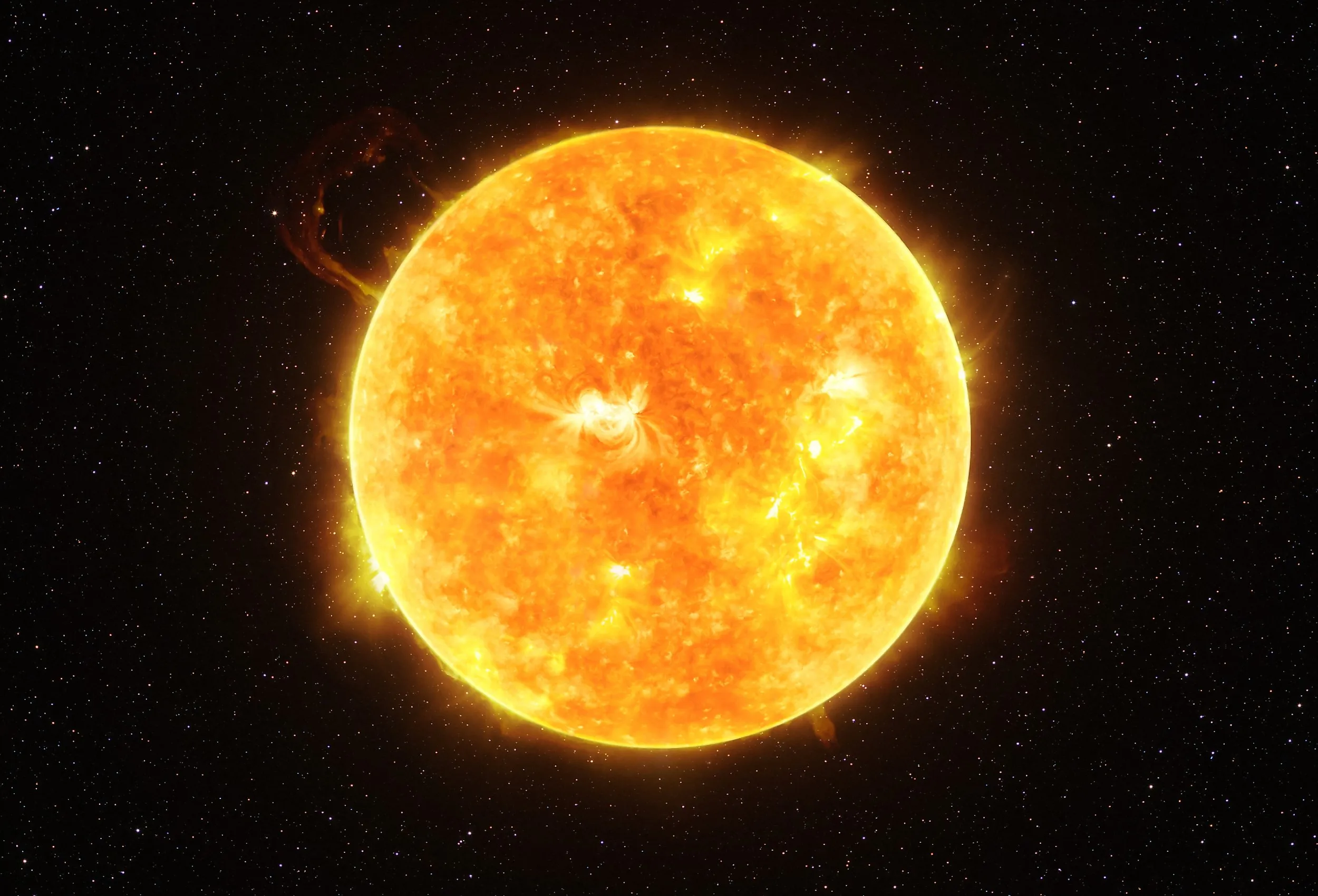
The Sun is considered a yellow dwarf star, and it is estimated to be around 4.5 billion years old. It is made up of hydrogen and helium and is held together by its own gravity. The Sun is also the center of the Solar System, with all the planets orbiting around it. Without the Sun, life could not exist, so it is only appropriate that it is the brightest object in the sky.
The Sun is about 93 million miles from Earth, and while it gives the planet life, the space that exists between us is vital. A significantly closer orbit would expose Earth to more solar energy, potentially making it uninhabitable.
The core of the Sun is the hottest part, reaching a high of 27 million degrees Fahrenheit. The surface of the Sun is cooler, relatively speaking, at around 10,000 degrees Fahrenheit. All the while, the corona of the Sun, which is its outer atmosphere, can reach up to 3.5 million degrees Fahrenheit. Why the corona is hotter than the surface is still a mystery to scientists.
The Sun's apparent visual magnitude is about -26.7, and its absolute visual magnitude is about +4.8.
Since the Sun emits its own light, it has a true luminosity: about 3.828 x 10^26 watts. Expressed as visible-light output, that is sometimes estimated at roughly 36 octillion lumens. By the time this light reaches Earth, which takes about 8 minutes, it diminishes to an average illuminance of about 120,000 lux at midday. To put this into perspective, most LED car headlights range between 3,000 and 6,000 lumens. Even the brightest car headlights are faint compared to the Sun's power.
The Sun Outshines Everything Else
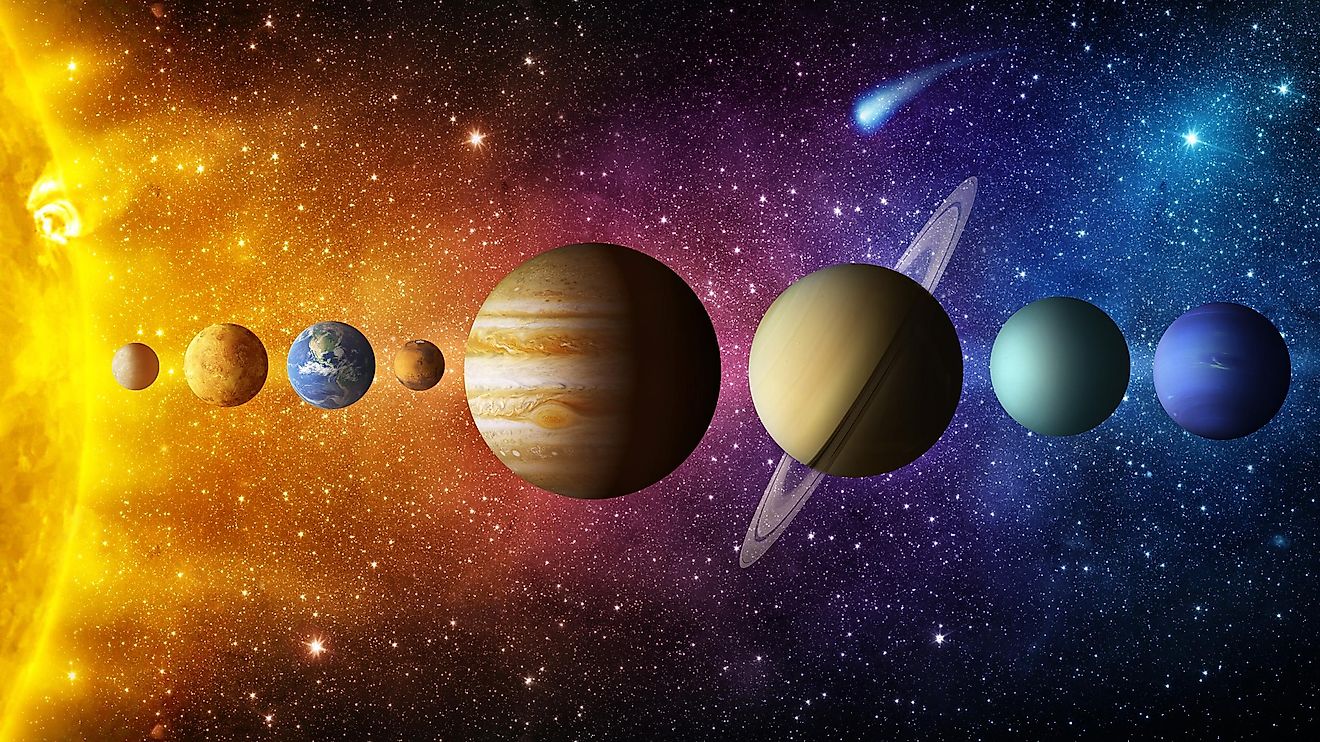
As the brightest object in the sky and the largest object in the Solar System, the Sun dominates and benefits the planet. While we can look up at the sky and be enamored by the Moon, Venus, the star Sirius, and even the International Space Station, they are all dim in comparison to the brightest object in the sky. Out of all of these objects, the Sun manages to literally outshine them all.