Which Planet Spins the Fastest?
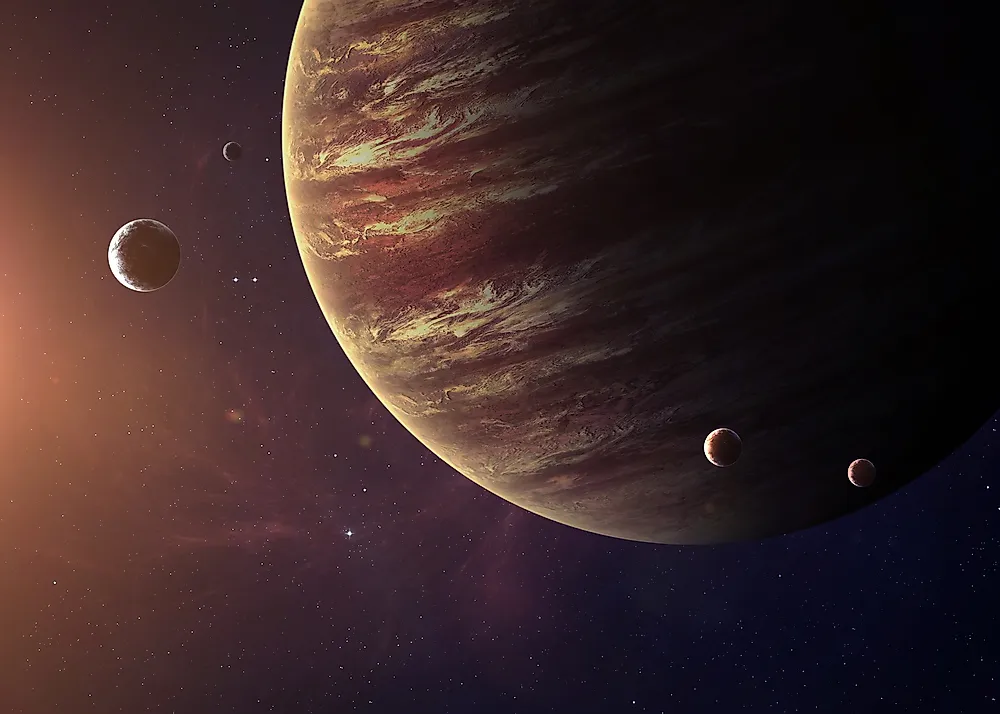
Jupiter spins faster than any other planet in the solar system. The gas giant completes one full rotation in just under 10 hours. Its equator hurtles through space at roughly 28,000 miles per hour. Earth's equator by comparison moves at a leisurely 1,037 miles per hour. Venus sits at the opposite extreme with a 243-day rotation that runs backward. The pages ahead break down Jupiter's record-setting spin, what the rotation does to the planet's shape and weather, and where each of the other planets ranks.
Jupiter's Rotation In Numbers

A single Jovian day runs about 9 hours and 56 minutes at the higher latitudes and roughly 9 hours and 50 minutes at the equator. Because Jupiter is a fluid body without a solid surface, different parts of the atmosphere rotate at different rates. The equator runs about six minutes faster than the polar regions over a single rotation, an effect known as differential rotation. Astronomers track Jupiter using three distinct rotation systems: System I covers the equatorial belts, System II covers the higher-latitude regions, and System III tracks the planet's magnetic field. System III clocks in at 9 hours, 55 minutes, and 29.7 seconds and is considered the planet's "true" rotation period because the magnetic field is anchored to the deep interior rather than the visible cloud tops.
The numbers translate into extreme equatorial motion. Jupiter's equator sweeps around the planet at about 28,000 miles per hour, or roughly 45,300 kilometers per hour. That speed is more than 27 times faster than Earth's equatorial rotation. The planet rotates in the same prograde direction as most of the planets in the solar system, including Earth. Jupiter has held this rotational pace since the early solar system, more than 4.5 billion years ago.
Why Jupiter Bulges

The combination of fast rotation and gaseous composition gives Jupiter a measurably squashed shape known as an oblate spheroid. The equatorial diameter measures about 143,000 kilometers, while the polar diameter is closer to 133,700 kilometers, a difference of more than 9,000 kilometers. The bulge represents about 6.5 percent of the equatorial diameter and is large enough to be obvious in even moderately powerful backyard telescopes.
The same rapid spin drives the planet's famous band-and-zone atmospheric structure. The cloud bands run parallel to the equator and represent regions of opposing winds, with darker belts and lighter zones alternating across the cloud tops. Where adjacent bands meet, the difference in wind speed creates enormous turbulence and long-lived storm systems. The Great Red Spot, the most prominent of these storms, has been continuously observed since at least 1830 and may correspond to the "Permanent Spot" first reported by Giovanni Cassini in 1665. The storm is larger than Earth, holds wind speeds of about 430 kilometers per hour at its edges, and has been measurably shrinking over the past several decades.
Inside Jupiter

Jupiter holds about 2.5 times the mass of all the other planets in the solar system combined, totaling 318 Earth masses. By volume, its atmosphere consists of roughly 92 percent hydrogen and 8 percent helium. By mass, the breakdown shifts to about 75 percent hydrogen and 25 percent helium, with trace amounts of methane, ammonia, water vapor, and other compounds. Despite its enormous mass, Jupiter has a relatively low density of 1.33 grams per cubic centimeter, which reflects its gaseous makeup.
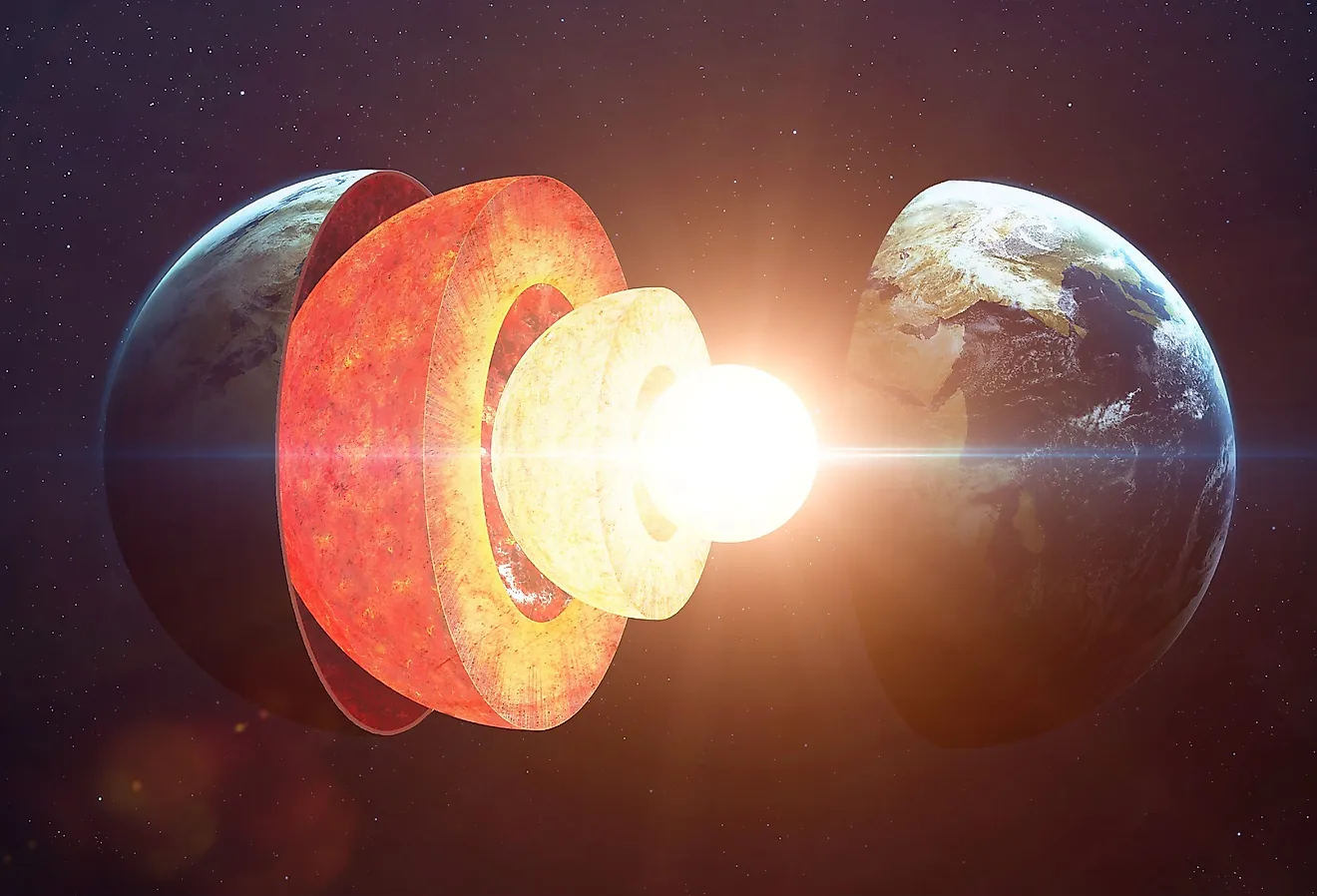
NASA's Juno spacecraft, in orbit around Jupiter since July 4, 2016, has rewritten the textbook on the planet's interior. Earlier models pictured a small rocky core surrounded by metallic hydrogen and then molecular hydrogen. Juno's gravity data instead suggests a large diluted or "fuzzy" core that gradually transitions into the surrounding hydrogen layers rather than ending at a sharp boundary. The core may extend out to nearly half the planet's radius, much larger than scientists previously assumed. Juno also confirmed that Jupiter generates the strongest magnetic field of any planet in the solar system, about 20,000 times stronger than Earth's at the cloud tops.
Moons, Rings, And The Great Red Spot

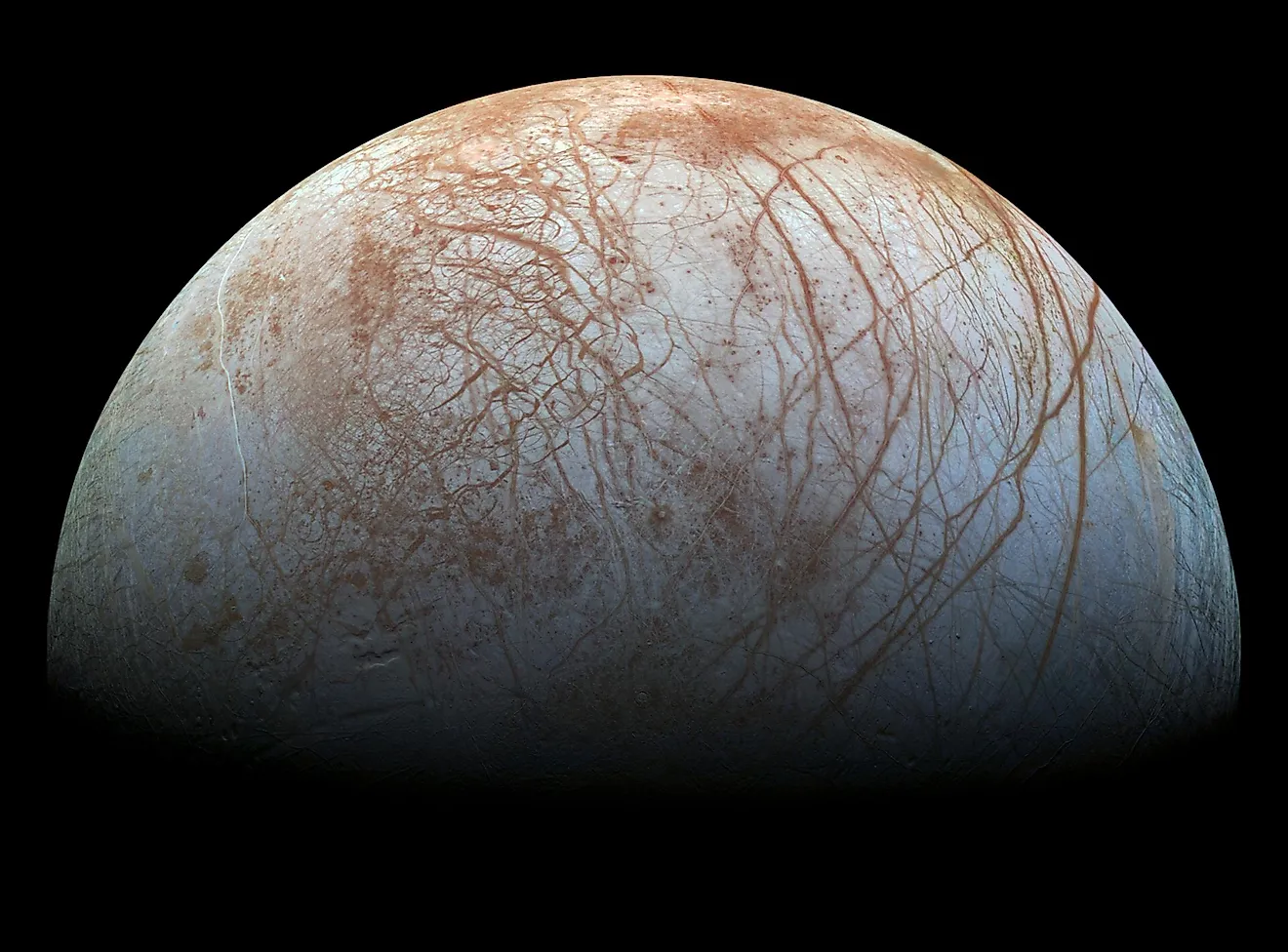
The Minor Planet Center confirmed Jupiter's count at 101 moons in March 2026, after a discovery announcement of four new outer irregular moons brought the total above 100 for the first time. Saturn leads the solar system with 285 moons after its own March 2026 announcement of 11 new discoveries. The four large Galilean moons of Jupiter (Io, Europa, Ganymede, and Callisto) were observed in January 1610 by Galileo Galilei and independently by Simon Marius, the first moons ever discovered around another planet. Ganymede is the largest moon in the solar system and is larger than the planet Mercury.
Jupiter also has a faint ring system, discovered by the Voyager 1 spacecraft in March 1979. The system contains a halo ring, a main ring, and two outer gossamer rings (the Amalthea and Thebe gossamer rings). Unlike Saturn's bright rings, Jupiter's rings are dark and made of dust and small rock fragments, continuously replenished by particles knocked off the four small inner moons (Metis, Adrastea, Amalthea, and Thebe) by micrometeorite impacts.
How Each Planet Ranks

Ordered by rotation period, the eight planets stack up as follows.
Jupiter completes one rotation in about 9 hours and 55 minutes, the fastest in the solar system, with equatorial speed near 28,000 miles per hour.
Saturn follows at roughly 10 hours and 33 minutes (System III). Saturn also exhibits differential rotation and a measurable equatorial bulge, with equatorial speed around 22,000 miles per hour. The exact rotation period of Saturn's interior remains uncertain because the planet's magnetic axis is aligned almost exactly with its spin axis, making the radio-emission "clock" used for Jupiter less precise for Saturn.
Neptune ranks third at about 16 hours and 6 minutes, with equatorial speed around 6,000 miles per hour. Despite the slower rotation, Neptune holds the fastest winds in the solar system, reaching 1,300 miles per hour in the upper atmosphere.
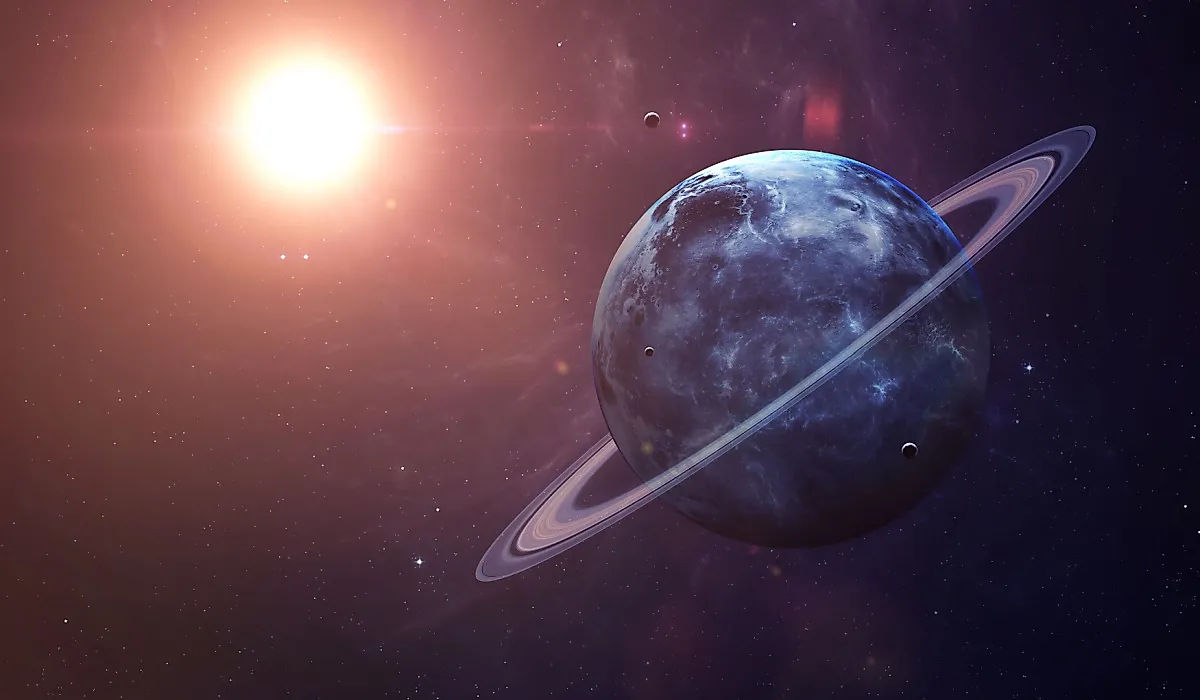
Uranus rotates in about 17 hours and 14 minutes. Uranus is technically retrograde: its axis is tilted 97.77 degrees, essentially lying on its side, so the planet effectively rotates "backward" relative to the orbital plane. Equatorial speed runs about 5,800 miles per hour.
Earth completes a sidereal rotation in 23 hours and 56 minutes (the solar day of 24 hours adds about 4 minutes to allow Earth to face the Sun again as it moves around its orbit). Equatorial speed at the surface is 1,037 miles per hour.
Mars rotates only slightly slower than Earth at 24 hours and 37 minutes, the closest match to Earth's day length of any other planet. Equatorial speed runs about 540 miles per hour.
Mercury takes about 58.6 Earth days to complete one rotation. The planet is in a 3:2 spin-orbit resonance with the Sun, meaning it rotates three times for every two orbits, an unusual configuration caused by tidal forces. Equatorial speed is just 6.7 miles per hour.
Venus brings up the rear at 243 Earth days with a retrograde spin that turns the planet in the opposite direction to most of its neighbors. A Venusian day is longer than its 225-day orbital year. Equatorial speed is only 4.05 miles per hour, the slowest of any planet.
What Fast Rotation Buys A Planet
Jupiter's place at the top of the rotation rankings comes from a combination of size and gas-giant composition. The planet preserves the angular momentum of the dust and gas that originally collapsed to form it, and without a rigid surface to dissipate energy through tidal friction, that rotation has stayed quick across more than four billion years. The fast spin also drives Jupiter's most distinctive features: the equatorial bulge, the banded cloud structure, the long-lived storms including the Great Red Spot, and the powerful magnetic field that Juno has mapped in unprecedented detail. The result is a planet that completes a full day before Earth has even finished a single morning commute.