Why Apophis Will Pass Closer Than Many Satellites In 2029
On the evening of April 13, 2029, an asteroid wider than the Eiffel Tower is tall will streak across the night sky, putting on a rare show that millions of people around the world can see with the naked eye. According to EarthSky, observers in Australia, southern Asia, southern Europe, and Africa will have a front-row seat when asteroid 99942 Apophis reaches peak brightness. This asteroid will pass Earth at 20,000 miles above its surface, closer than the orbits of many communications satellites.
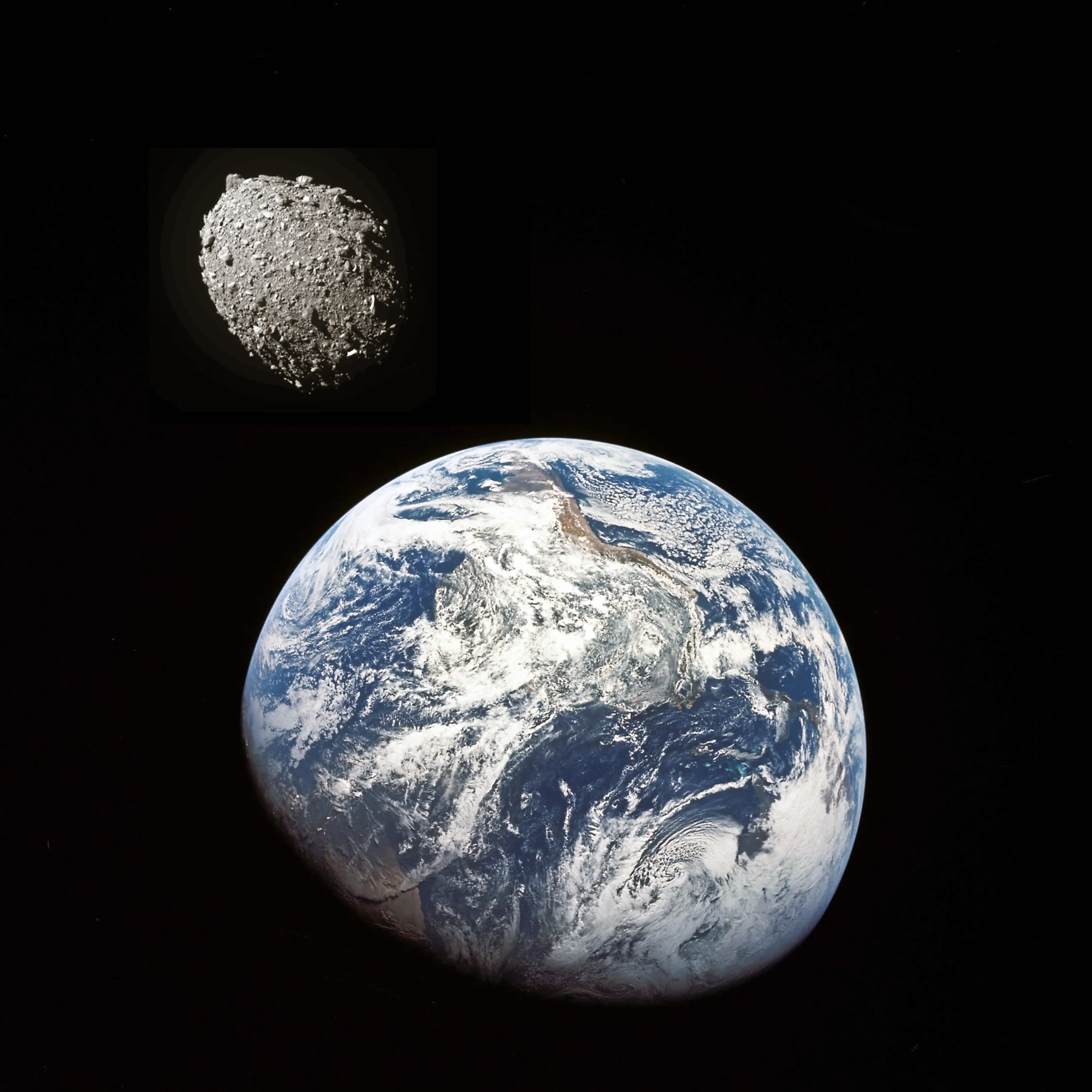
This 2029 flyby is going to be extremely well documented and tracked. Apophis, measuring approximately 1,480 feet across, about the height of the Empire State Building laid on its side, will move through the satellite belt while two dedicated spacecrafts trail behind it. On the ground, planetary radar will track every mile of the approach in real time.
Although Apophis is not going to hit Earth, the event represents a scientific opportunity to gather real-time information during an incredibly scarce celestial event.
How 20,000 Miles Stacks Up

Geosynchronous satellites, the ones carrying television signals, weather data, and GPS, orbit at roughly 22,236 miles above Earth's surface. Apophis will briefly slip inside that ring.
The US Geological Survey (USGS) confirms the asteroid poses no risk to those satellites due to the geometry of its path relative to their positions, but the distance comparison puts its path in sharp relief. This is not an asteroid grazing the outer edges of the solar system. It will rocket past Earth at a relative velocity of about 16,600 miles per hour, fast enough to cross the continental US in about 10 minutes.
The Moon, for reference, sits at an average of 238,855 miles from Earth. Apophis will come about 12 times closer than that. If you could drive to the Moon at a steady highway speed of 60 miles per hour the trip would take about 3,900 hours of driving, or about five and a half months of non stop driving. At that same speed, you would reach Apophis at its closest approach in about 333 hours, or just under two weeks.
A Discovery That Initially Alarmed Astronomers

Astronomers Roy Tucker, David Tholen, and Fabrizio Bernardi first spotted Apophis on June 19th, 2004, at Kitt Peak National Observatory in Arizona. They only had two days of observations before technical and weather problems cut the session short. A team at Siding Spring Observatory in Australia picked it up again later that year.
As the orbital picture sharpened, concern over a potential impact grew. According to NASA's Center for Near-Earth Object Studies, early calculations suggested Apophis might actually hit Earth in 2029. These initial measurements put the chance of a collision at as high as 2.7 percent. This number may sound low, but it is the highest percentage ever recorded on the Torino scale used to calculate the threat level posed by near-Earth objects. The heft of this asteroid can't be understated. Apophis weighs approximately 44 billion pounds, about as much as 90,665 Boeing 747-8 jets.
As more observations accumulated over the following years and orbital models improved, the 2029 impact probability was ruled out entirely. NASA subsequently confirmed there is no danger of Apophis hitting Earth for at least 100 years. The USGS classifies it as a potentially hazardous object, but it is clear that this one is not on a collision course. What the refined orbital data revealed instead is that the 2029 flyby would be an extraordinarily rare astronomical event that millions of people will be able to witness in real time.
What Earth's Gravity Will Do to the Asteroid

Earth is going to physically alter Apophis as it flies past. Not catastrophically, but measurably and permanently.
As the asteroid sweeps by, Earth's gravity will pull harder on the near side of Apophis than the far side. That uneven pull, the same basic tidal mechanism that drives Earth's ocean tides, will stretch and squeeze the asteroid. This will potentially trigger surface movement on Apophis including quakes and small landslides, permanently changing the way Apophis rotates, according to the European Space Agency (ESA).
The encounter will also lengthen the asteroid's orbit around the Sun. According to the ESA, Apophis currently belongs to the Aten group of asteroids. After the 2029 flyby, Earth's gravitational pull will expand that orbit enough to shift Apophis into the Apollo group, made up of asteroids that cross Earth's orbit but travel on wider paths around the Sun than the Aten group. That reclassification will be permanent.
Research modeling the encounter found that in some areas, Earth's tidal pull on Apophis will be strong enough to shake the asteroid's surface. Imagine standing on an island where Earth's pull is almost strong enough to lift you off the ground. That is the environment Apophis's loose rocks and dust will face during the flyby. Simulations estimate that roughly one percent of the asteroid's surface could be disturbed during the encounter window. Rocks, dust, and loose debris that have remained undisturbed for centuries could move, potentially exposing fresh material from beneath the weathered outer layer.
That fresh material is what planetary scientists are particularly interested in. Asteroid surface accumulate damage over time from solar wind and cosmic radiation. This is a gradual process known as space weathering that changes how the surface reflects light. Scientists currently do not have a precise measure of how fast space weathering occurs on S-type asteroids like Apophis. The before-and-after comparison from this flyby, with OSIRIS-APEX on site to document surface changes in detail, could resolve a question that researchers have worked on for decades.
What Two Spacecraft and a Radar Network Can Tell US

Two spacecraft will be there to document the asteroid up close and planetary radar facilities will map the surface of Apophis from the ground. NASA's OSIRIS-APEX spacecraft, formerly known as OSIRIS-REx, has had its mission extended to head toward Apophis after successfully delivering a sample from the asteroid Bennu to Earth in September 2023. On April 13, 2029, the spacecraft will tail Apophis past Earth by just one hour, using the planet's gravity to match the asteroid's trajectory.
Once it catches up in June 2029, OSIRIS-APEX will spend 18 months mapping the asteroid's surface, measuring its chemical composition, and documenting how the Earth encounter altered its structure and spin. During this campaign, the spacecraft will even descend within 15 feet of Apophis, using its thrusters to stir up loose surface material so scientists can study the pristine layers beneath.
ESA's Ramses mission, short for Rapod Apophis Missions for Space Safety, is planned to launch in April 2028. It should arrive at Apophis two months before the flyby. Ramses will be alongside the asteroid as it moves past Earth to observe the tidal effects as they unfold.
On the ground, radar facilities including Goldstone in California and Green Bank in West Virginia will be tracking the asteroid using planetary radar. This technique works by firing a radio signal at the asteroid and measuring the echo that bounces back. NASA has used the same facilities on previous asteroid close encounters, with Goldstone transmitting and Green Bank catching the return signal. This technology is powerful enough to produce topographic maps with resolution fine enough to see individual boulders from thousands of miles away.
What Ground Observers Will See

For many across the Eastern Hemisphere, the night of April 13, 2029, will offer a chance to witness Apophis with the naked eye. Its motion will be rapid enough to track directly against the background stars, visible for about 24 hours total as it approaches and recedes.
While Europe and Africa will enjoy the prime viewing window during the closest approach, observers in the Americas will miss the peak due to daylight hours. Although, experienced stargazers in the western United States might catch it with binoculars earlier that morning.
At peak brightness, Apophis will reach an apparent magnitude of approximately 2.8, comparable to a moderately bright star like Polaris. The view will be perfectly preserved by a moonless night sky. Rather than a blazing fireball, it will appear as a steady, moving point of light briefly slipping closer to Earth than our own orbiting satellite infrastructure.
For those using an optical telescope, Apophis will appear nearly as wide as Neptune, revealing its distinct physical shape. Powerful observatory telescopes in prime locations like the Canary Islands will even be able to resolve intricate details on its surface.
Why This Flyby is Scientifically Significant

The USGS describes close approaches of objects the size of Apophis as rare events occurring every few thousand years on average. That rarity is part of why this event is so scientifically impactful. The 2029 flyby will let scientists gather several points of data from an incredibly close encounter.
They will watch how Earth's gravity physically reshapes an asteroid in real time and compare the surface before and after tidal disturbance. Researchers will also be able to refine models of asteroid composition and internal structure. Every piece of data gathered will sharpen understanding of how to respond if a future asteroid ever does pose a genuine threat.
Apophis: A Once In A Lifetime Viewing Opportunity
What makes April 13th, 2029, genuinely worth paying attention to is the combination of factors that don't often align. An asteroid large enough to study in detail from ground facilities will pass close enough to observe without an optical aid. The scientific community has spent over two decades preparing for the encounter. Ths is the first time humanity has the technology to collect significant information from a close asteroid flyby. Anyone watching Apophis travel by Earth will be a part of a special moment.