The 10 Least Populated Countries in the World
The world's least populated sovereign states share a common pattern: small land area, geographic isolation, or unique political status combine to keep numbers low. Pacific island nations dominate, alongside three European microstates and two Caribbean island countries. Vatican City sits at the top of every list of this kind despite being a UN observer rather than a full UN member state, because it is the only fully sovereign country measured in hundreds of residents. Below are the ten least populated countries in the world, ordered smallest to largest, using United Nations 2025 mid-year population estimates (UN World Population Prospects 2024 revision) and Holy See administrative figures for Vatican City. The ranking has shifted noticeably since 2022: Tuvalu's population has fallen below Nauru's, Monaco's has fallen below Liechtenstein's, and the Marshall Islands has lost about 21% of its population since 2017 through emigration to the United States.
- Vatican City - Population: 764
- Tuvalu - Population: 9,492
- Nauru - Population: 12,025
- Palau - Population: 18,058
- San Marino - Population: 33,572
- Monaco - Population: 38,341
- Liechtenstein - Population: 40,128
- Marshall Islands - Population: 41,996
- Saint Kitts and Nevis - Population: 47,755
- Dominica - Population: 66,205
1. Vatican City - Population: 764

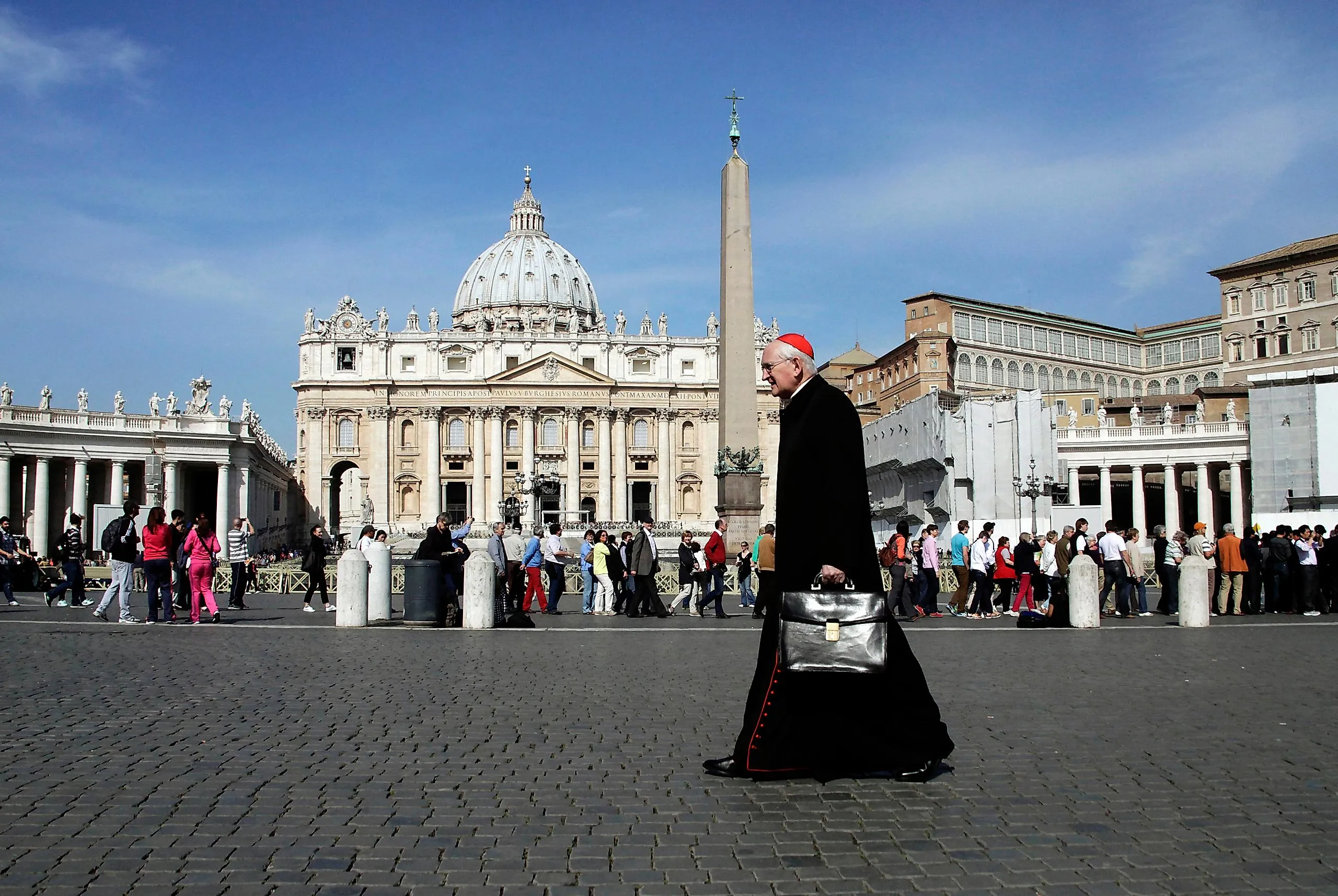
Vatican City is the smallest fully sovereign state in the world by both area (0.49 km²) and population. It holds UN Permanent Observer status rather than full membership, but it is universally included in least-populated rankings because it is the only sovereign state with fewer than a thousand residents. The country was established by the Lateran Treaty of February 11, 1929, signed between the Holy See and the Kingdom of Italy under Mussolini, which resolved the "Roman Question" that had persisted since 1870, when the newly unified Italian state annexed the former Papal States. Vatican citizenship is tied to function rather than birth: cardinals, Swiss Guards, diplomatic personnel, and members of the Roman Curia hold citizenship for the duration of their service. The state includes St. Peter's Basilica (completed 1626), the Sistine Chapel with Michelangelo's ceiling (1508-1512) and Last Judgement (1536-1541), and St. Peter's Square, designed by Gian Lorenzo Bernini between 1656 and 1667 to accommodate roughly 80,000 people for papal audiences. The Vatican Museums and Apostolic Library hold one of the most significant collections of art and manuscripts in the world.
2. Tuvalu - Population: 9,492

Tuvalu is a Polynesian nation of nine low-lying atolls and reef islands spread across roughly 1.3 million square kilometres of the Pacific Ocean midway between Hawaii and Australia. The total land area is just 26 km² (10 square miles), and the highest point is only 4.6 metres above sea level, making Tuvalu one of the lowest-lying countries on Earth and the most climate-vulnerable nation in the world by elevation. The capital, Funafuti, holds about half the population. Tuvalu has been losing population since the 2010s through emigration, primarily to New Zealand under the Pacific Access Category and the new Polynesia-region Falepili Union climate-migration treaty signed with Australia in November 2023, which provides a permanent residency pathway for up to 280 Tuvaluans per year. The country's economy runs on remittances, fishing licence revenue, and the sale of its ".tv" internet domain. Tuvalu was formerly part of the British Gilbert and Ellice Islands colony and gained independence on October 1, 1978.
3. Nauru - Population: 12,025

Nauru is a single coral island of 21 km² (8.1 square miles) in the central Pacific, the world's smallest island nation by area and the third-smallest sovereign country. It is also the only country without an official capital, though most government functions are based in Yaren District. Nauru was inhabited by Micronesian and Polynesian peoples for at least 3,000 years before European contact. The island sits on one of the world's richest phosphate deposits, formed from millennia of seabird guano on the central limestone plateau. Phosphate mining throughout the 20th century gave Nauru one of the highest per-capita GDPs in the world during the 1970s and 1980s, but it also rendered approximately 80% of the island's interior uninhabitable wasteland. The phosphate reserves are now largely depleted, and Nauru's economy depends heavily on processing fees from the Australia-funded Regional Processing Centre, which has housed asylum seekers since 2001. Nauru gained independence on January 31, 1968.
4. Palau - Population: 18,058

Palau is a Micronesian republic of about 340 islands east of the Philippines and north of Indonesia, with the population concentrated on Koror and Babeldaob. The islands were first settled around 1000 BCE. Palau was a Spanish colony from the late 1500s, sold to Germany in 1899, occupied by Japan from 1914 to 1944, and administered by the United States under a UN Trust Territory mandate from 1947 until full independence on October 1, 1994. The Battle of Peleliu in September-November 1944 was one of the bloodiest of the Pacific Theatre, with around 1,800 American and 10,700 Japanese deaths over more than two months of fighting, despite Major General William Rupertus's prediction that the operation would take four days. Palau's economy now runs primarily on tourism centred on the Rock Islands Southern Lagoon UNESCO World Heritage Site and on US economic assistance under the Compact of Free Association. The country was the world's first to declare a shark sanctuary, in 2009.
5. San Marino - Population: 33,572

San Marino is a 61-square-kilometre republic surrounded entirely by Italy in the Apennine Mountains, with Mount Titano (739 metres) at its centre. The country claims uninterrupted existence as a sovereign state since September 3, 301 CE, when according to tradition Saint Marinus, a Christian stonemason fleeing Roman persecution, founded a monastic community on Mount Titano. This claim makes San Marino the world's oldest continuously existing sovereign republic. The 1862 friendship treaty with the newly unified Kingdom of Italy formalised Italian recognition of San Marino's independence, partly in gratitude for the sanctuary San Marino offered to Giuseppe Garibaldi and his wife Anita in 1849 during the collapse of the Roman Republic. The three medieval fortresses of Guaita (11th century), Cesta (13th century), and Montale (14th century) along the Mount Titano ridge appear on the national flag and coat of arms. San Marino's economy combines banking, ceramics, and tourism, and the country has one of the highest GDPs per capita in Europe.
6. Monaco - Population: 38,341

Monaco is a 2.08-square-kilometre principality on the French Mediterranean coast and the second-smallest sovereign state in the world by area after Vatican City. It is the most densely populated sovereign country in the world, at roughly 18,400 people per square kilometre. Monaco has been ruled by the House of Grimaldi since 1297, when François Grimaldi seized the fortress disguised as a Franciscan monk, making the Grimaldi dynasty one of the longest-reigning royal houses in Europe. Roughly one in three residents is reportedly a millionaire, and there is no personal income tax for residents (a tax policy unchanged since 1869). The Monte Carlo Casino, opened in 1863 under Prince Charles III, anchored Monaco's transformation into a wealthy state during the late 19th century. The Monaco Grand Prix, run annually since 1929, is the most prestigious race on the Formula One calendar. Monaco uses the euro as its currency through a monetary agreement with the European Union, despite not being an EU member.
7. Liechtenstein - Population: 40,128

Liechtenstein is a 160-square-kilometre landlocked principality in the Upper Rhine valley of the Alps, sharing a 41-kilometre border with Switzerland to the west and a 35-kilometre border with Austria to the east, with a total border of 76 kilometres (47 miles). It is one of only two doubly landlocked countries in the world (the other is Uzbekistan), meaning all of its neighbours are themselves landlocked. The Principality has been ruled by the House of Liechtenstein since 1719, currently under Prince Hans-Adam II, who in a 2003 constitutional referendum gained extensive monarchical powers including the right to dismiss the elected government, an arrangement unusual among modern European microstates. Liechtenstein dissolved its standing army in 1868 as an economy measure and has had no military since. The country uses the Swiss franc through a customs and currency union with Switzerland dating to 1924 and is the world's largest exporter of false teeth, through the Ivoclar Vivadent dental-prosthetics company headquartered in Schaan.
8. Marshall Islands - Population: 41,996

The Marshall Islands is a Micronesian republic of 29 atolls and 5 isolated islands (1,225 individual islands and islets in total) spread across roughly 2 million square kilometres of the central Pacific. The country's population has declined by approximately 21% since 2017, primarily through emigration to the United States under the Compact of Free Association, which gives Marshallese citizens the right to live and work in the US without a visa. Majuro, the capital, holds about half the remaining population. The United States conducted 67 nuclear tests on Bikini and Enewetak atolls between 1946 and 1958, including the 15-megaton Castle Bravo test on March 1, 1954, the largest American nuclear detonation ever conducted, which contaminated inhabited atolls hundreds of kilometres away and caused acute radiation poisoning among Marshallese residents and Japanese fishermen on the Daigo Fukuryū Maru. Bikini Atoll remains uninhabitable and is now a UNESCO World Heritage Site recognising the nuclear-testing history. Independence under the Compact of Free Association came in 1986.
9. Saint Kitts and Nevis - Population: 47,755

Saint Kitts and Nevis is the smallest sovereign state in the Western Hemisphere by both area (261 km²) and population. The federation consists of the two main islands of Saint Kitts and Nevis, separated by a 3-kilometre channel called The Narrows. Saint Kitts was the first English colony in the Caribbean, established in 1623, and the first French colony, established in 1625, with the two colonial powers initially sharing the island. The British Empire abolished slavery in 1834 (with apprenticeship ending in 1838), though former enslaved labourers continued working on the sugar plantations under wage labour for over a century. Sugar production ended in 2005 after centuries of dominating the economy, and tourism and offshore banking now provide most government revenue. The country gained associated-state status with the United Kingdom in 1967 and full independence on September 19, 1983, making it one of the most recently independent countries in the Western Hemisphere. A 2022 High Court ruling decriminalised consensual same-sex relations between adults. The country maintains a Defence Force of about 300 personnel.
10. Dominica - Population: 66,205

Dominica is a 750-square-kilometre volcanic island in the Lesser Antilles, located about 200 kilometres south of Saint Kitts and Nevis between the French overseas departments of Guadeloupe to the north and Martinique to the south. The island has nine active volcanoes, the highest density of any country in the world. Boiling Lake, in Morne Trois Pitons National Park (a UNESCO World Heritage Site), is the world's second-largest hot spring after New Zealand's Frying Pan Lake. Dominica is the only Eastern Caribbean nation with a significant surviving indigenous population: roughly 3,000 Kalinago (formerly known as Carib) people live in the 15-square-kilometre Kalinago Territory on the east coast, which has been a self-governing reserve since 1903. The country was devastated by Hurricane Maria in September 2017, which damaged or destroyed roughly 90% of buildings and caused damage estimated at 226% of GDP. Recovery efforts have anchored an ambition to make Dominica the world's first climate-resilient nation by 2030, including the development of geothermal power from the island's volcanic heat. Independence from the United Kingdom came on November 3, 1978.
How The Rankings Shift
The ten countries above share three structural reasons for their small populations: limited land area (Vatican City, Monaco, Nauru), geographic isolation reducing the practical population ceiling (Tuvalu, Palau, Marshall Islands), and political-historical configuration that defines citizenship narrowly (Vatican City, Liechtenstein). The Pacific microstates face the additional pressure of emigration under preferential migration arrangements with larger neighbours: the Compact of Free Association for the Marshall Islands and Palau, the Pacific Access Category and Falepili Union for Tuvalu. The Marshall Islands has lost roughly a fifth of its population over the past decade through this dynamic, and similar pressure has dropped Tuvalu below Nauru in the rankings. The European microstates, by contrast, have stable or growing populations driven primarily by immigration tied to favourable tax regimes. The table below extends the ranking to the 20 least populated sovereign states in the world.
| Rank | Country | Population (2025 estimate) | Region |
|---|---|---|---|
| 1 | Vatican City | 764 | Europe (UN observer) |
| 2 | Tuvalu | 9,492 | Oceania (Polynesia) |
| 3 | Nauru | 12,025 | Oceania (Micronesia) |
| 4 | Palau | 18,058 | Oceania (Micronesia) |
| 5 | San Marino | 33,572 | Europe |
| 6 | Monaco | 38,341 | Europe |
| 7 | Liechtenstein | 40,128 | Europe |
| 8 | Marshall Islands | 41,996 | Oceania (Micronesia) |
| 9 | Saint Kitts and Nevis | 47,755 | Caribbean |
| 10 | Dominica | 66,205 | Caribbean |
| 11 | Andorra | 80,856 | Europe |
| 12 | Antigua and Barbuda | 93,772 | Caribbean |
| 13 | Federated States of Micronesia | 99,603 | Oceania (Micronesia) |
| 14 | Seychelles | 100,535 | Africa (Indian Ocean) |
| 15 | Saint Vincent and the Grenadines | 103,948 | Caribbean |
| 16 | Tonga | 104,175 | Oceania (Polynesia) |
| 17 | Grenada | 117,081 | Caribbean |
| 18 | Kiribati | 133,515 | Oceania (Micronesia) |
| 19 | Saint Lucia | 180,251 | Caribbean |
| 20 | Samoa | 225,681 | Oceania (Polynesia) |