
Lowest Death Rates Worldwide
The country with the lowest crude death rate in the world is not the one with the best hospitals. It is the one with the youngest population. The United Arab Emirates, Qatar, Kuwait, Oman, Bahrain, and Saudi Arabia all sit at the top of the global rankings because their populations are dominated by working-age migrant labor that arrives healthy and leaves before old age. The data below comes from the United Nations Department of Economic and Social Affairs World Population Prospects 2024 revision, the same dataset used by Our World in Data and the World Bank for 2025 demographic comparisons.

Why Crude Death Rate Misleads
Crude death rate is the number of deaths in a year divided by the total population, expressed per 1,000 residents. Our World in Data notes that the figure is not adjusted for age structure. Two countries with identical age-specific mortality, where a 75-year-old in one has the same odds of dying as a 75-year-old in the other, will report wildly different crude rates if one country's population skews young and the other skews old.
That is exactly what produces the rankings below. The Persian Gulf states host large migrant labor populations. Working-age migrants make up the majority of residents in the UAE, Qatar, Kuwait, Oman, and Bahrain. Migrants typically arrive in their 20s and 30s, work, and return to their home countries before reaching the ages at which death rates climb. The result: a population in which the elderly are statistically scarce. Old people die at higher rates than young people, so a country with few old people will report few deaths per 1,000 residents, regardless of its healthcare system.
The opposite end of the curve makes the point clearly. Japan, with universal healthcare and the world's highest life expectancy, reports a crude death rate of 12.60 deaths per 1,000 residents. Bulgaria sits near the top of the global death-rate rankings not because Bulgarian medicine is failing, but because Bulgaria has been losing young people to emigration for two decades, leaving an older population behind. Crude death rate tracks population age structure first, and healthcare quality somewhere far down the list.
United Arab Emirates: The New Leader
The United Arab Emirates reports a crude death rate of 0.96 deaths per 1,000 residents, the lowest of any nation in the world. The UAE's population of roughly 11 million is approximately 88 percent foreign-born, the highest ratio of any country tracked by the UN. The largest single cohort is South Asian working-age migrants employed in construction, hospitality, retail, and domestic labor. The country's UAE nationals also skew young, with a median age of around 31 across the total population. Healthcare access is comprehensive and universal for citizens, and the country operates major medical hubs in Abu Dhabi and Dubai, but the structural driver of the ranking is the age pyramid, not the hospital network.

Qatar

Qatar sits at second with 1.04 deaths per 1,000 residents. The country held the top global position from the late 2000s through the early 2020s on the same demographic mechanism: an extremely young, expatriate-heavy labor force. Qatar's population of approximately 3 million is roughly 88 percent foreign-born. The country's labor migration accelerated through the 2017 through 2022 buildout for the FIFA World Cup, which brought several hundred thousand additional construction workers into the country. Qatar's healthcare system is operated through the public Hamad Medical Corporation network and a growing private sector, with universal access for citizens.
Kuwait, Oman, and Bahrain
The next three positions all belong to Gulf Cooperation Council states with similar demographic profiles. Kuwait reports 1.81 deaths per 1,000 residents, with foreign nationals making up roughly 70 percent of the country's 4.9 million residents. Oman follows at 1.88, with a slightly different profile: Omani nationals make up the majority of the country's 5.2 million population, but the country still skews young with a median age of around 26. Bahrain rounds out the top five at 2.22 deaths per 1,000, with expatriates making up roughly 55 percent of the country's 1.6 million population.

Saudi Arabia and the Maldives
Saudi Arabia reports 2.33 deaths per 1,000 residents, the lowest among the world's larger nations. The country's 35 million residents include approximately 13 million foreign workers, primarily in construction, retail, and domestic labor. The Vision 2030 economic reform program has expanded both labor migration and the country's tourism and entertainment sectors, deepening the working-age population imbalance.

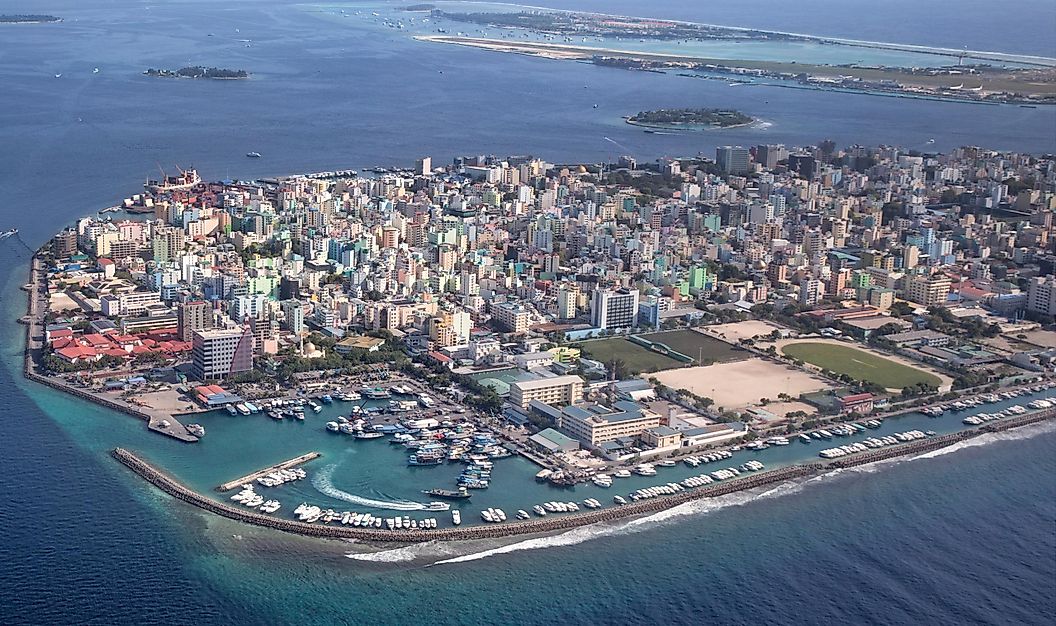
The Maldives sits at seventh in the global ranking with 2.41 deaths per 1,000 residents, and it is the only country in the top seven not located on the Arabian Peninsula. The country's 530,000 residents skew young (median age around 30), and the labor force in the tourism and fisheries sectors includes a substantial South Asian expatriate population, particularly Bangladeshis and Indians working in the resort industry across the country's 1,200 islands.
Lowest Crude Death Rates Worldwide
The table below shows the 10 countries with the lowest crude death rates in 2025, per the UN Department of Economic and Social Affairs World Population Prospects 2024 revision. Rates are expressed as deaths per 1,000 residents per year (not as percentages).
| Rank | Country | Deaths per 1,000 (2025) |
|---|---|---|
| 1 | United Arab Emirates | 0.96 |
| 2 | Qatar | 1.04 |
| 3 | Kuwait | 1.81 |
| 4 | Oman | 1.88 |
| 5 | Bahrain | 2.22 |
| 6 | Saudi Arabia | 2.33 |
| 7 | Maldives | 2.41 |
| 8 | Mayotte (France) | 2.66 |
| 9 | Jordan | 3.21 |
| 10 | State of Palestine / Iraq (tie) | 4.19 |
The global crude death rate for 2025 is approximately 7.7 deaths per 1,000 residents. Only 26 countries out of the 237 the UN tracks report rates below 5.
The Other End of the Curve
The highest crude death rates in the world belong to small territories with elderly populations and to European countries with low fertility and high net emigration. The Holy See, where the resident population consists almost entirely of elderly clergy, reports a crude death rate of 25.08 deaths per 1,000 residents (the highest in the world). Monaco, Saint Helena, the United States Virgin Islands, and Bulgaria round out the top five. Among countries with populations above 5 million, the highest rates are in Bulgaria, Ukraine, Latvia, Lithuania, and Serbia, all of which have aging populations and significant working-age emigration since the early 1990s.
Japan, Italy, Germany, and Portugal also report crude death rates above 11 per 1,000 despite ranking among the top countries in the world for life expectancy and healthcare quality. The pattern is consistent: these are countries where the median age has climbed above 45 and the number of residents aged 65 and over is approaching or exceeding 25 percent of the total population.
Reading the Rankings Right
A low crude death rate does not signal a healthy country. It signals a young one. The UAE leads the world in 2025 not because Emiratis live longer than the Japanese (they do not; Japan's life expectancy of 84.7 years is several years above the UAE's 78.6), but because the UAE's population pyramid is bottom-heavy with working-age migrant labor. The countries that genuinely produce low age-specific mortality (Japan, Switzerland, Iceland, Australia, Spain) all show up in the upper-middle of the global crude rankings precisely because their populations have aged into the years where death rates naturally climb. For an apples-to-apples healthcare comparison, the right metric is age-adjusted mortality or life expectancy at birth. For a snapshot of which populations are youngest right now, the table above is the answer.