The Most Snake Infested Rivers In South Carolina
Whether you are a snake enthusiast or someone who suffers from ophidiophobia, the extreme fear of snakes, you might be interested to know which South Carolina rivers have the most of them. There are snakes in most of the Palmetto State's rivers, but some of this state's waterways are more snake-infested than others.
You may think twice about swimming in these rivers after reading further. Many of them are dark and deep, and you never know for sure when a snake is nearby. Read on to learn more about South Carolina's most snake-infested rivers.
The Santee River

The Santee River is a 143-mile river in South Carolina. It starts in the central part of the state and is fed by several tributaries before emptying into the Atlantic Ocean between Myrtle Beach and Charleston. It is the second-largest river system on the East Coast of the United States; only the Susquehanna River is longer. The Santee River is full of snakes.

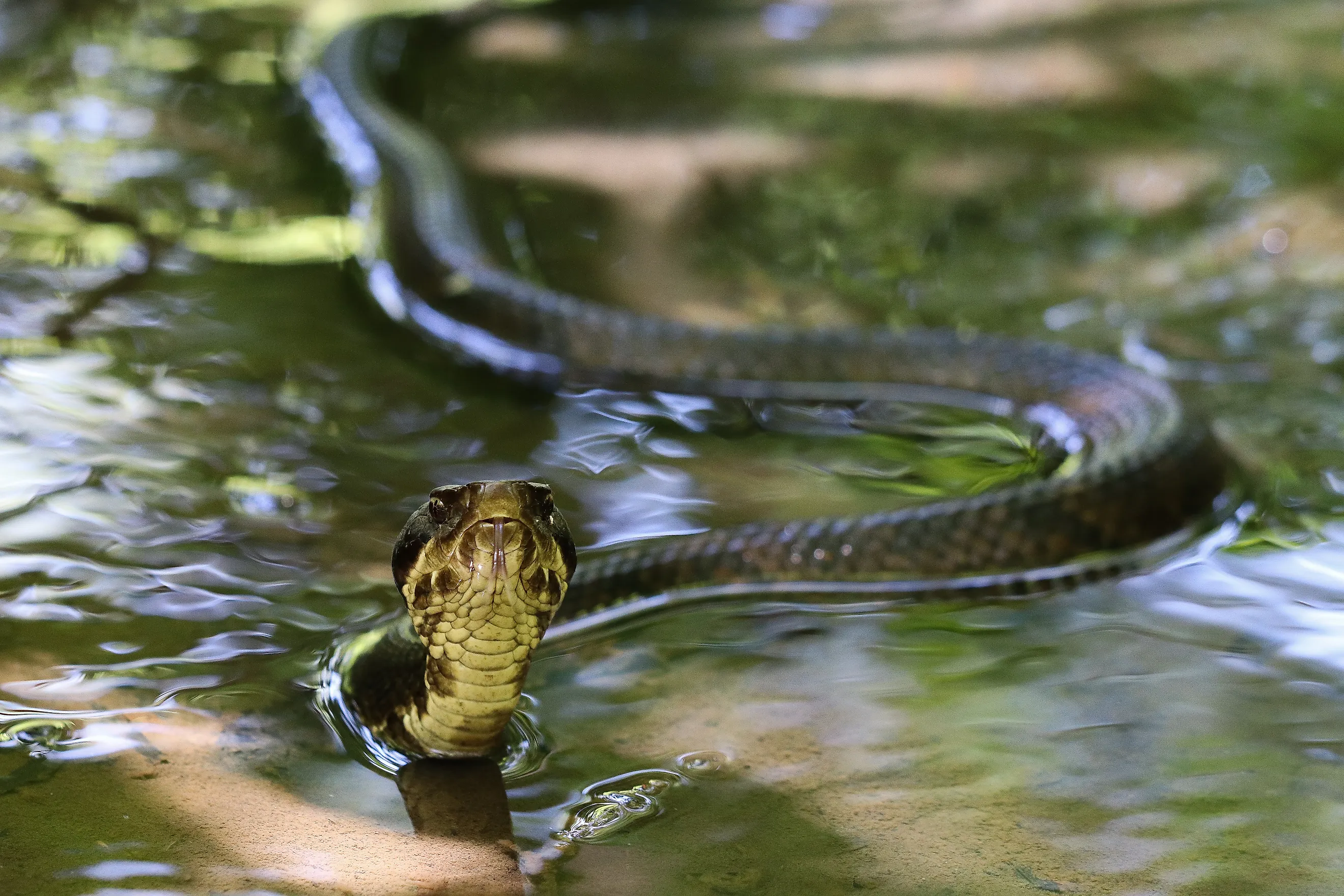
Three types of venomous snakes live in and around the Santee River, including cottonmouth snakes, also known as water moccasins, eastern diamondback rattlesnakes, and copperhead snakes. Although only the cottonmouth swims, the other two are often found along the shoreline.
There are numerous nonvenomous snakes in the Santee River as well. Northern water snakes are common and can often be seen swimming. Black rat snakes, eastern garter snakes, and eastern kingsnakes also live in the brush along the river’s shore.
The Edisto River

The Edisto River is a long, free-flowing blackwater river in South Carolina. Blackwater rivers move very slowly as they meander through forested swamps and wetlands. This type of river creates the perfect habitat for snakes. Snakes love the Edisto River.
Even though the Edisto River is the longest river system that exists entirely within the borders of South Carolina, it passes through only one major town, Orangeburg, along its 250-mile length. Because of this, the snakes in the Edisto River can avoid people for the most part, and people can avoid its snakes for the most part.

Like the Santee River, the Edisto River is home to many cottonmouth snakes that can camouflage themselves in the river’s dark water. The other two venomous snakes that depend on the Edisto River live on its shores. Eastern diamondback rattlesnakes and timber rattlesnakes hunt prey in the thick woods that border this river.
Several nonvenomous snakes live in and around the Edisto. Banded water snakes and redbelly water snakes live and swim in this river, and both are common. Near the river, black racers, corn snakes, rough green snakes, and eastern garter snakes can also be found.
The Savannah River

Anyone who fears being bitten by a venomous snake would be wise to steer clear of the Savannah River in South Carolina. This river is full of snakes of all kinds, but it is teeming with venomous snakes.
The Savannah River is known for creating much of the border between South Carolina and Georgia. It is 301 miles long. It begins in the Appalachian Mountains and ends at the Atlantic Ocean. Two of Georgia’s biggest cities, Augusta and Savannah, are located on this river, and it has been an essential factor in the growth of both since the early 1700s.
In more recent times, the river has been dammed to create reservoirs in several locations, but it still flows freely in others. The habitats in these different settings make this river a home for many snakes.

There are six venomous snake species in South Carolina, and all six can be found in the Savannah River. Cottonmouth snakes, also known as water moccasins, swim and hunt in the river. Along the shores, copperheads, timber rattlesnakes, eastern diamondback rattlesnakes, pygmy rattlesnakes, and eastern coral snakes lie in wait.
Of course, many nonvenomous snakes live here as well. The harmless common water snake can be seen frequently in the river. On the shores, black racers, corn snakes, eastern garter snakes, rat snakes, and ringneck snakes can also be found.
The Waccamaw River

People who do not mind snakes but want to avoid venomous ones might enjoy visiting South Carolina’s Waccamaw River. This river is home to many snakes, but most are not dangerous to humans. It is about 140 miles long and runs through southeastern North Carolina and eastern South Carolina. Its beginning is shallow and slow-moving, but it widens and deepens as it nears the ocean. The river runs parallel to the coast.

Although this river does contain venomous snakes like the cottonmouth in its blackwater sections, and some eastern diamondback rattlesnakes live on its shore, the majority of snakes that live in and around the Waccamaw River are harmless. Snake enthusiasts might look for banded water snakes, northern water snakes, or queen snakes in the river, or might find black racers or corn snakes along its shores.
Like the other rivers on this list, the Waccamaw River is snake-infested, but most of the snakes in this South Carolina river are nothing to worry about. The wider sections near its end are good for boating and fishing, and it is a dependable place for safe snake-spotting.
The Pee Dee River

The Pee Dee River begins in the Appalachian Mountains in North Carolina and flows south through South Carolina to Winyah Bay and then into the Atlantic Ocean. This river is 232 miles long and is an essential waterway for many reasons. It generates electrical power for residents of both states as it passes through hydroelectric dams, supplies drinking water, supports some commercial fishing, and allows for recreation.

However, this river is also infested with snakes. Five out of the six types of venomous snakes in South Carolina live in and around the Pee Dee River. Copperheads, cottonmouths, eastern diamondback rattlesnakes, timber rattlesnakes, and eastern coral snakes all live in this river or on its shores.
Nonvenomous snakes also call this river home. In and around the Pee Dee River, black racers, rat snakes, eastern kingsnakes, eastern garter snakes, rough green snakes, and northern water snakes live.
Staying Informed About South Carolina’s Snake Habitats
South Carolina’s rivers are full of snakes, but that does not mean residents and visitors should avoid them. Instead, people should be careful when spending time in and around these waterways. The fact that the state has so many beautiful rivers is a benefit, not a detriment.
For the most part, snakes do not want to be near humans, and most bite only when they feel threatened. Anyone who wants to enjoy boating, fishing, camping, or other types of river recreation in South Carolina can do so with basic awareness. It is wise to watch out for snakes, and if someone is bitten, they should seek medical attention immediately. With quick treatment, most people recover fully.