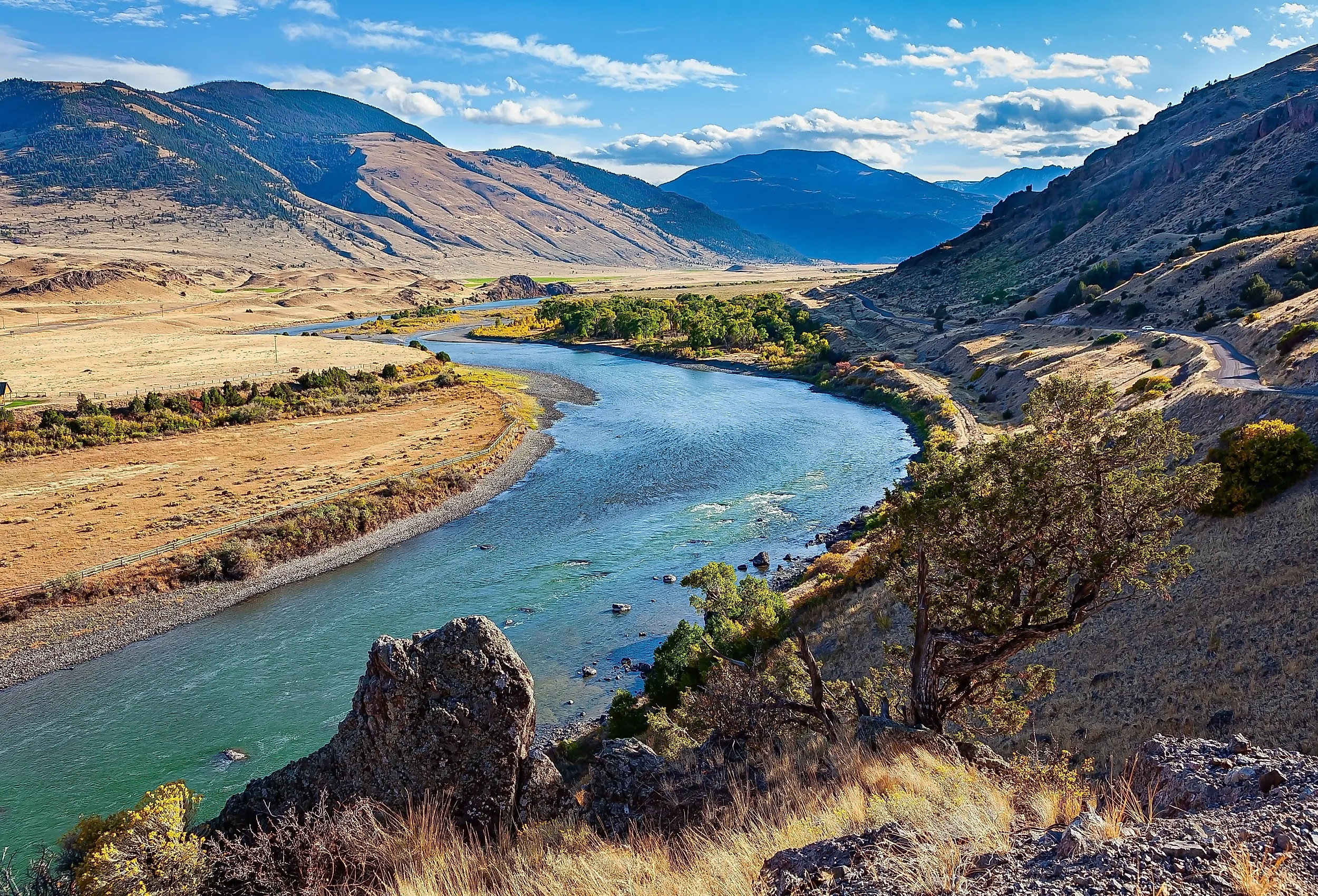
The Most Snake Infested Rivers In Montana
Outdoors enthusiasts who find themselves in Montana, hiking in places like Yellowstone National Park and Glacier National Park, should be careful if they decide to cool off in the river, as they might be stepping into the home of some of the state’s snakes. Montana is home to 10 snake species, including one venomous species. With roughly 169,829 miles of river flowing through the region, some snakes feel at home in or adjacent to the state’s waterways. Discover below the most snake-infested rivers in Montana.
Missouri River

The Missouri River is the longest tributary of the Mississippi River, which makes it the second-longest river in North America. The river is formed in the Rocky Mountains of southwest Montana by the confluence of the Jefferson, Madison, and Gallatin Rivers, and flows eastward across Montana. The Missouri River’s banks, wetlands, and associated habitats provide an ample environment for snakes to survive.

All three species of Garter Snake native to Montana are found along the Missouri River. They are: the Western Terrestrial Garter Snake (Thamnophis elegans); the Plains Garter Snake (Thamnophis radix); and the Common Garter Snake (Thamnophis sirtalis). Garter Snakes are a hardy species found across a broad area of the state. They prefer humid, wet habitats, usually along the edges of streams, ponds, and lakes. These ecosystems generally have an abundance of amphibians and insects, which make up most of their diet.
Yellowstone River

The Yellowstone River flows a total course of 671 miles from its source southeast of Yellowstone National Park. It flows north and then east across Montana before it enters the Missouri River. It is the last undammed river in the lower 48 states, making it the longest free-flowing river in the region. There is a vast array of wildlife that inhabits the Yellowstone River corridor, including Bald Eagles, Grizzly Bears, and snakes.

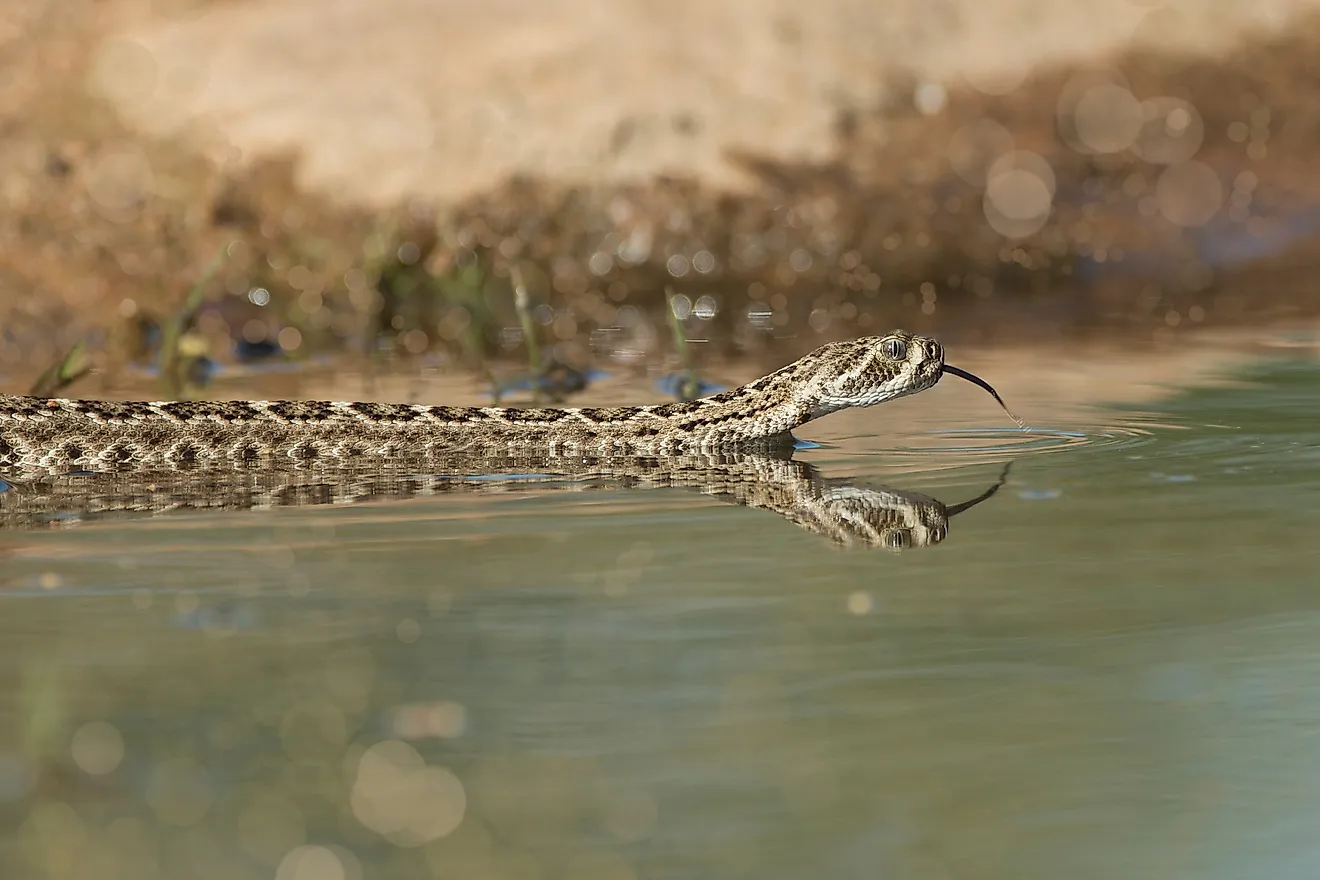
The Prairie Rattlesnake (Crotalus viridis) inhabits the lower Yellowstone River areas within Yellowstone National Park. It can specifically be found in drier and warmer areas of the park, including Reese Creek, Stephens Creek, and Rattlesnake Butte. They prefer open, arid habitats but are most likely to be found on south-facing slopes with rocky outcrops. These outcrops and rock piles allow snakes to bask in the heat of the sun, and make for a den to hibernate in over the colder winter months.
Clark Fork River

The Clark Fork River is the largest river in Montana by volume and is one of the longest rivers in the state. It rises from Silver Bow Creek in southwest Montana and flows for a total distance of 280 miles, where it enters Pend Oreille Lake in northern Idaho. For most of its course, the river is confined by mountainous valleys, with most of the river remaining in a wild and natural state. The Clark Fork River offers many wildlife-viewing opportunities and provides habitat for the unique Rubber Boa (Charina bottae).

In Montana, the Rubber Boa usually lives in forested foothills or rocky areas near water. Unlike most snakes, the Rubber Boa lacks an indentation at its neck behind the head and is uniformly thick along its body. These snakes are slow-moving and, as a result, are more active at night when they hunt small mammals such as shrews. In fact, they move so slowly that some scientists believe that if environmental conditions are adequate, Rubber Boas could live out their whole life in an area as small as 100 square yards.
Understanding Montana's Snakes
Snakes are a key part of Montana’s ecosystem, playing an important role in the environment. While many people fear snakes, only one species native to Montana poses a potential threat to humans. While Rattlesnake bites do require medical treatment, it is important to understand how snakes think. Rattlesnakes bite for two reasons: to capture prey and in defence. Since Rattlesnakes know they cannot consume people, if a bite occurs, it is because the Rattlesnake has most likely been cornered, captured, or stepped on. When recreating in or near Montana’s rivers, it is important to familiarize yourself with which animals may share the same space as you to ensure a safer encounter for both you and the snake.