How Many Reservoirs Does The Colorado River Have
Ten reservoirs make up what the Bureau of Reclamation calls Colorado River system storage, and together they hold about 59.6 million acre-feet when full. That is the operational answer, but it is not the only defensible one. Count only the main stem and you get eight major reservoirs plus seven diversion dams that impound nothing worth naming. Count every reservoir in the basin holding more than a hundred thousand acre-feet and the figure runs to dozens; include the small tributary impoundments and it reaches into the hundreds. What every version of the count obscures is the concentration, because two of those ten hold roughly 85 percent of the water and the other eight barely register.
Here is the actual chain from Wyoming to the Mexican border, and why the headline capacity figure matters far less than where that capacity sits.
Colorado River System Storage

System storage is a specific list rather than a loose description. In the Upper Basin it covers Lake Powell at 24.3 million acre-feet, Flaming Gorge at 3.75 million, Navajo at 1.7 million, Blue Mesa at 829,500, Fontenelle at 344,800, Morrow Point at 117,190 and Crystal at 17,356. In the Lower Basin it covers Lake Mead at 26.1 million, Lake Mohave at 1.81 million and Lake Havasu at 619,400.
Add those ten together and the total comes to 59,625,046 acre-feet. Most published figures round it to 60 million, and some sources push basin-wide capacity to 62 million by including reservoirs the operational list leaves out, notably those in the Gila system. The variation between published totals almost always comes down to which reservoirs a given source decided to count rather than to any disagreement about the individual numbers.
Dams Versus Reservoirs
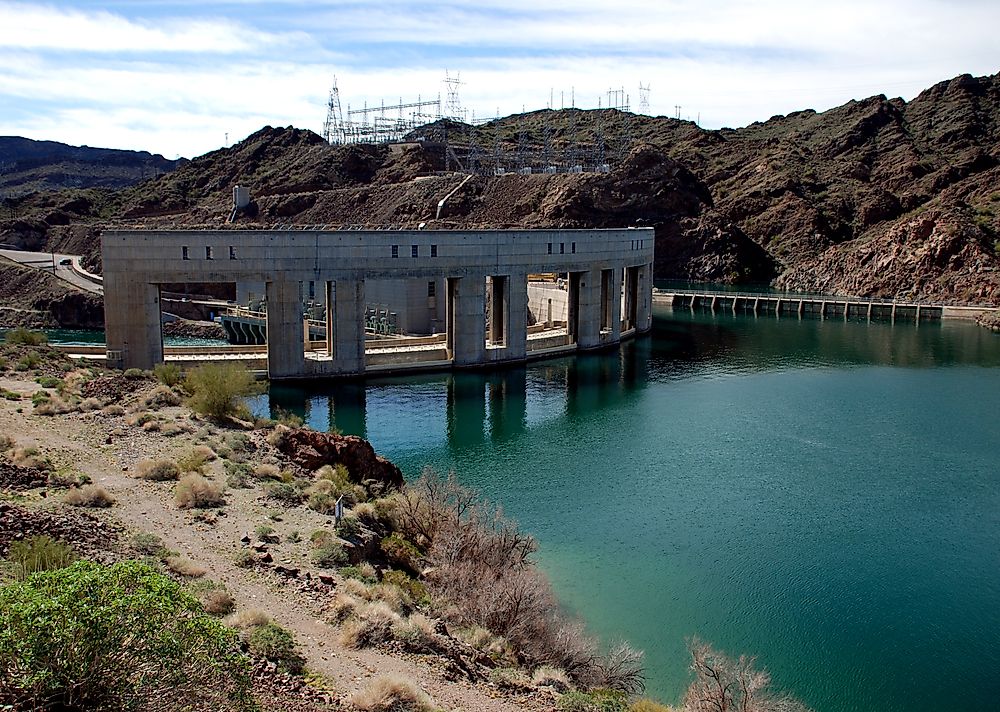
Most of the confusion around this question comes from treating dams and reservoirs as the same thing. The Colorado's main stem carries eight major dams that create genuine reservoirs and seven diversion dams that do not. A diversion structure raises the water just enough to push it into a canal without impounding a meaningful lake behind it, which is why Imperial, Laguna and Morelos turn up on every list of Colorado River dams and never on a list of Colorado River reservoirs.
So the accurate phrasing is that the river has 15 dams on its main stem and about eight main stem reservoirs. Both numbers are correct, and they answer different questions.
Lake Mead And Lake Powell
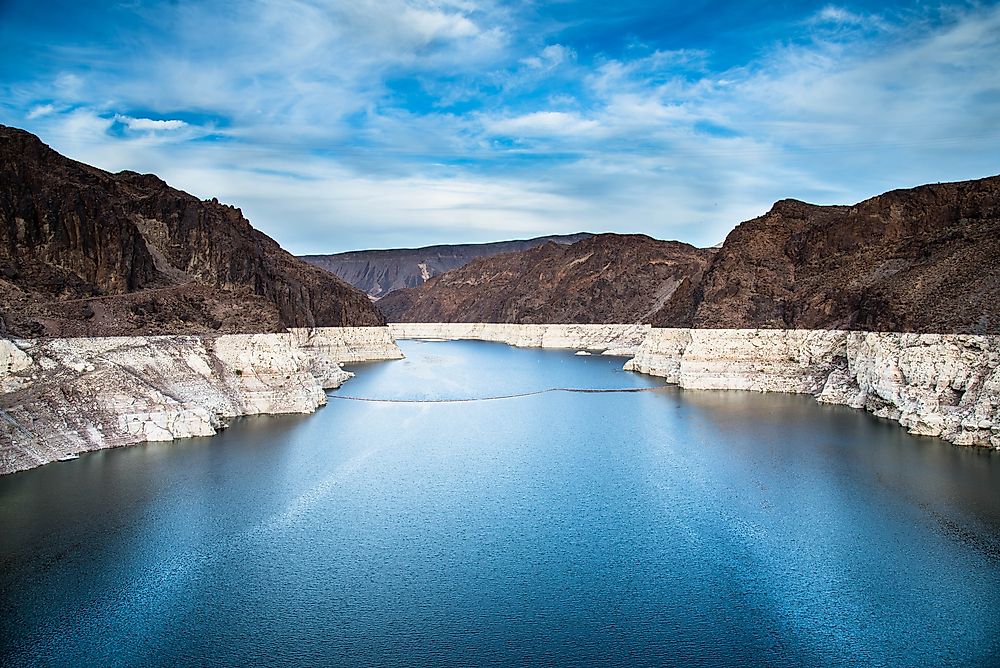
Two reservoirs hold roughly 50 million acre-feet between them at full pool, which is about 85 percent of the entire system. That concentration is why every serious conversation about the Colorado eventually collapses into two elevation readings. Reclamation's monthly 24-Month Studies report the condition of the whole basin largely in terms of Powell's and Mead's surface levels, because the remaining eight reservoirs cannot move the total enough to matter.
Mead came first, filling behind Hoover Dam from 1936, and remains the largest reservoir in the United States by capacity. Powell followed when Glen Canyon Dam closed its diversion tunnels in March 1963. Everything built since has been supporting infrastructure around those two.
The Upper Basin Reservoirs

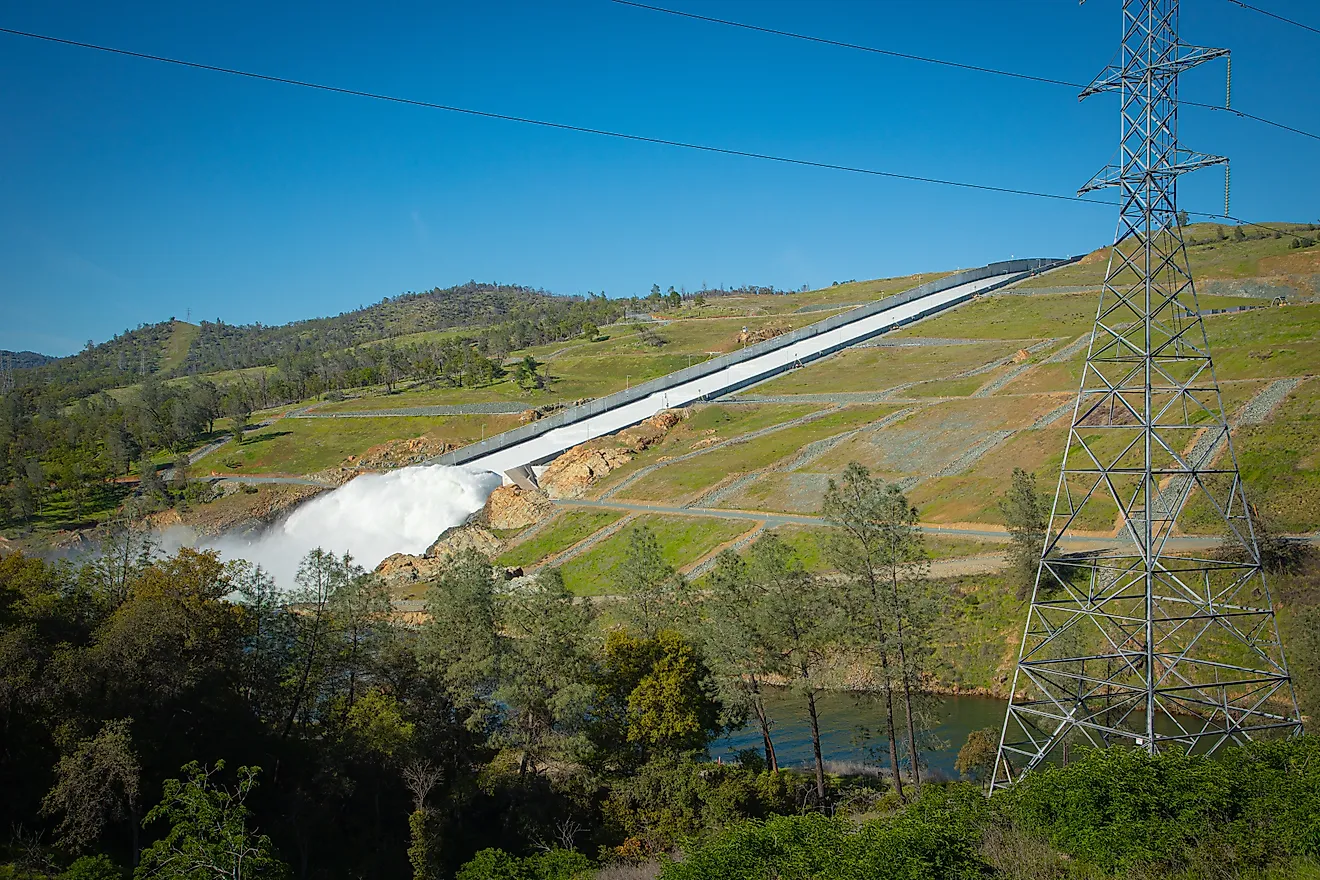
Four of the ten exist because of a single piece of 1956 legislation. The Colorado River Storage Project authorized Glen Canyon Dam on the main stem along with Flaming Gorge on the Green, Navajo on the San Juan, and the Aspinall Unit on the Gunnison, whose three reservoirs are Blue Mesa, Morrow Point and Crystal. Reclamation puts the combined live storage of those CRSP units at 30.6 million acre-feet.
Their purpose is banking rather than delivery. The 1922 Compact obliges the Upper Basin states to send a set volume downstream every year, and these reservoirs let them meet that obligation in dry years without cutting their own users off entirely. Fontenelle, on the Green in Wyoming, performs a similar regulating function at much smaller scale.
The Lower Basin Reservoirs

Below Hoover the reservoirs do a different job, and their small size is deliberate. Lake Mohave behind Davis Dam and Lake Havasu behind Parker Dam hold 1.81 million and 619,400 acre-feet respectively, which makes neither a storage reservoir in the Powell or Mead sense. They are regulating pools, used to smooth out releases and to serve as intake points for the Central Arizona Project and for the Colorado River Aqueduct that supplies Southern California.
Because they are small and in continuous use, they also sit close to capacity almost all the time. That is worth knowing when you see a reservoir table where Powell and Mead look catastrophic and the Lower Basin pools look fine: those two are not measuring the same thing.
Tributary Reservoirs

The ten-reservoir answer covers the operational system, not the basin. Compilations of Colorado River science count hundreds of dams and reservoirs across the tributaries, with dozens of major ones holding more than a hundred thousand acre-feet each, concentrated mostly in the Upper Basin. Over 90 percent of total system storage capacity sits behind dams that Reclamation either owns outright or operates in partnership.
The Gila River Basin is usually left out of these totals altogether, which is one of the main reasons published figures for the Colorado's storage capacity range between roughly 60 and 62 million acre-feet depending on the source.
Total Storage Capacity
The Colorado's storage capacity is roughly four times its average annual flow, which is unusual by global standards. Most large river systems store a fraction of one year's flow. This one was engineered to hold four, specifically because the river's output swings so violently between wet and dry years that nothing less would deliver a supply anyone could plan around.
The trouble is what has happened to the annual figure that ratio depends on. Since 2000 the river's natural flow has averaged about 12.3 million acre-feet a year, well below what the 1922 Compact assumed when it divided the water between the states. A four-year buffer is only reassuring while the annual draw stays smaller than the annual inflow, and for most of this century it has not.
Why The Storage Is Not Interchangeable

This is the point most coverage skips, and it changes how the headline number should be read. Flaming Gorge, Blue Mesa and Navajo do not sit on the Colorado at all. They hold water on the Green, the Gunnison and the San Juan, and that water only reaches the main stem by passing through Lake Powell. They are tributary accounts rather than a reserve anyone can draw on directly for Lower Basin delivery.
So 60 million acre-feet is not 60 million acre-feet of interchangeable supply. It is a set of separate pools connected by fixed plumbing, and moving water between them has required federal drought response operations and interstate negotiation to arrange. In 2021, Blue Mesa was drawn down to a record low specifically to prop up Powell, which is what that plumbing looks like in practice.
Lake Powell's Shrinking Capacity

One reservoir on the list has been quietly getting smaller, and drought has nothing to do with it. A USGS topobathymetric survey conducted in 2017 and 2018 established Lake Powell's full-pool capacity at 25,160,000 acre-feet at an elevation of 3,702.91 feet, which is 6.79 percent below its original 1963 capacity. The missing volume is sediment.
Glen Canyon Dam traps the silt the Colorado once carried all the way to the Gulf of California, and more than sixty years of it now occupies space that used to hold water. Some Reclamation documents still cite the older capacity figure, which is worth knowing when two apparently authoritative sources disagree with each other by roughly a million acre-feet.
Current Reservoir Levels

Capacity and contents are very different numbers at the moment. As of early September 2026, Lake Mead sits around 26 percent full at an elevation near 1,039 feet and Lake Powell around 22 percent full near 3,518 feet. Between them they hold roughly 12 million acre-feet, about a quarter of their combined capacity, and total system storage has dropped by nearly 4 million acre-feet over the past year.
Reclamation's May 2026 24-Month Study projected Powell finishing the water year near 4.77 million acre-feet, roughly 19 percent of its updated capacity, and Lake Mead is operating through 2026 under a Level 1 Shortage Condition. A system built to carry four years of river is currently carrying closer to one.
The Bottom Line
Ten reservoirs in the operational system, eight on the main stem, dozens of major ones across the basin and hundreds counting the small tributary impoundments. Any of those is a fair answer depending on how the question is meant.
None of them is the interesting number, though. The interesting facts are that 85 percent of the capacity sits in two lakes, that the remaining eight are either upstream accounts which can only be spent through Powell or downstream pools too small to matter, and that the whole system is holding about a quarter of what it was built to hold. The Colorado has plenty of reservoirs. What it does not have is enough water to fill them.