6 Of The Most Snake Infested Rivers In Arizona
Almost all of Arizona is located within the Lower Colorado River drainage basin, which is one of the longest rivers in the United States, supporting more than 40 million people across seven states. In Arizona, however, the Colorado River, along with its tributaries, supports the lives of more than just people. Arizona is home to many different species of snakes, a few of which are venomous, and some of which call Arizona’s waterways their home. These are the most snake-infested rivers in Arizona.
Verde River

As the fourth driest state in the United States, riparian habitat is hard to come by in Arizona, which is why the Verde River is so important. The Verde River is roughly 195 miles long, beginning near Paulden and widening as it flows south into central Arizona. In the wider area, the stream is suitable for whitewater rafting, with several segments ideal for kayaking, canoeing, and stand-up paddleboarding. The river winds through lush, cactus-covered canyons that support many species of birds and wildlife, including snakes.
The river provides crucial habitat for the Narrow-headed Garter Snake (Thamnophis rufipunctatus). Many populations within the state are in decline, and some are considered extinct. These snakes typically inhabit areas near water, such as rocky streams and rivers. They are highly aquatic, often observed foraging underwater for food such as small fish and salamanders. They usually bask on rocks and tree branches overhanging the water, and, if startled, will dive into the water and seek refuge underneath rocks on the river bed.
Salt River

The Salt River is formed by the confluence of the Black and White Rivers on a plateau in Gila County and is part of the Colorado River drainage basin. It flows west for 200 miles until about 15 miles west-southwest of Phoenix, where it empties into the Gila River. The Salt River is home to the Mexican Garter Snake (Thamnophis eques), a federally threatened species.
This snake is absent from much of its historic range in Arizona, which once included river and riparian corridors in central and southern Arizona. However, as flowing water disappears, so does the Mexican Garter Snake’s prey of fish and frogs. Due to the prey it eats, it is often found in or near rivers and streams. They are active during the day, mostly around mid-morning when they can be observed foraging for food.
Gila River

The Gila River rises in the Elk Mountains of southwest New Mexico and flows west for 649 miles across Arizona, where it joins the Colorado River in Yuma at the border between Arizona and California. The riparian area and upland canyons of the Gila River provide ample habitat for many species of wildlife, including snakes.
The Sonoran Whipsnake (Masticophis bilineatus) inhabits the cottonwoods and rocky canyons bordering the Gila River. Their preferred habitat is the flats on mountain slopes and canyons above rivers. They are a fast-moving and agile species of snake, capable of scaling trees if threatened, and known for being willing to bite if captured or cornered.
San Pedro River

The San Pedro River is one of only two rivers that flow north out of Mexico and into the United States. It flows for around 175 miles from the mountains where it originates in Sonora to Winkelman, Arizona, where it merges with the Gila River. The river is lined with shaded cottonwoods that provide crucial stopover habitat for many migratory birds. The San Pedro River drainage basin is home to many species of mammals, birds, amphibians, and reptiles.
The Ring-Neck Snake (Diadophis punctatus) is common in the San Pedro River drainage. Their optimal habitat consists of drainages, springs, and riparian corridors. However, it may also be encountered on grassy slopes and in forested areas. They are most active in early morning or just before dusk, choosing to avoid the midday heat.
Colorado River

The Colorado River rises in the Rocky Mountains of Colorado and travels 1,450 miles into the Gulf of California. For about 17 miles, the Colorado River forms the border between Arizona and Mexico. In Arizona, 227 miles of the Colorado River carve out the Grand Canyon. Although the Colorado River does not simply offer spectacular views, it is also home to a diverse array of wildlife, including snakes, which are widespread along the river corridor, where they prey on small mammals and lizards.
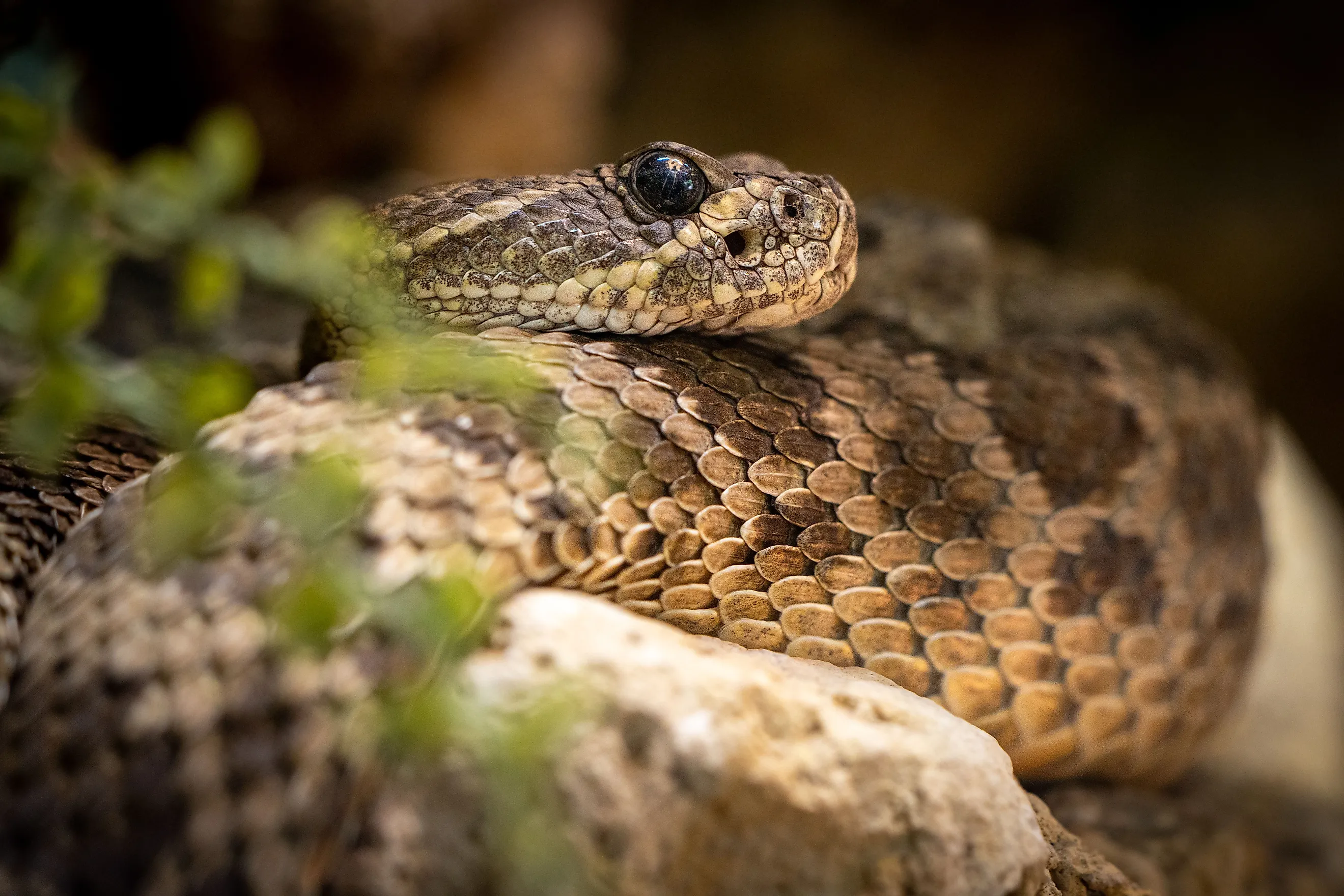
The Western Diamondback Rattlesnake (Crotalus atrox), although widespread throughout southern and western Arizona, is largely present along the Colorado River. They can be found inhabiting rocky canyons, riparian areas, grasslands, hillsides, and slopes. These snakes have retractable fangs on the roof of their mouth, which they will use to inject venom into and immobilize their prey. If this snake is encountered in the wild, it should be given a wide berth as most venomous snake bites occur when they are captured or handled.
Arizona's Snake-Filled Rivers
Arizona’s snakes have distinct characteristics and habitats, playing their own role in balancing the ecosystem. While snakes usually try to evade humans, if captured, threatened, or otherwise provoked, some of them will not hesitate to bite. When recreating in or around Arizona’s rivers, it is essential to exercise caution and wear appropriate, sturdy footwear in the event you accidentally step on a snake you do not see. In the unfortunate and unlikely event a snake bites you, it is important to remain calm and seek appropriate medical attention.