3 Of The Most Snake Infested Rivers In Iowa
Iowa is one of the only states that has rivers that are almost entirely bordered by rivers on its east and west edges: the Mississippi River on the east, and the Missouri River and Big Sioux River on the west. The rivers in the state combined total up to 70,247 miles of river. Rivers are not the only prominent feature in the state. Iowa is home to a staggering 28 species of snake, five of which are venomous. While many people use Iowa’s rivers for recreation, these are the most snake-infested rivers you need to look out for.
Mississippi River

The Mississippi River is one of North America’s longest rivers; it rises at Lake Itasca in Minnesota and flows to the Gulf of Mexico, and receives water from tributaries in Minnesota, Wisconsin, Illinois, and Iowa. The Mississippi River forms the entire eastern border of the state and drains most of the state, except for the far west and south-central areas, which the Missouri River drains. The Mississippi River flows gently through Iowa’s gently rolling hills and flat plains, making it an appropriate habitat for many of the state’s snakes.

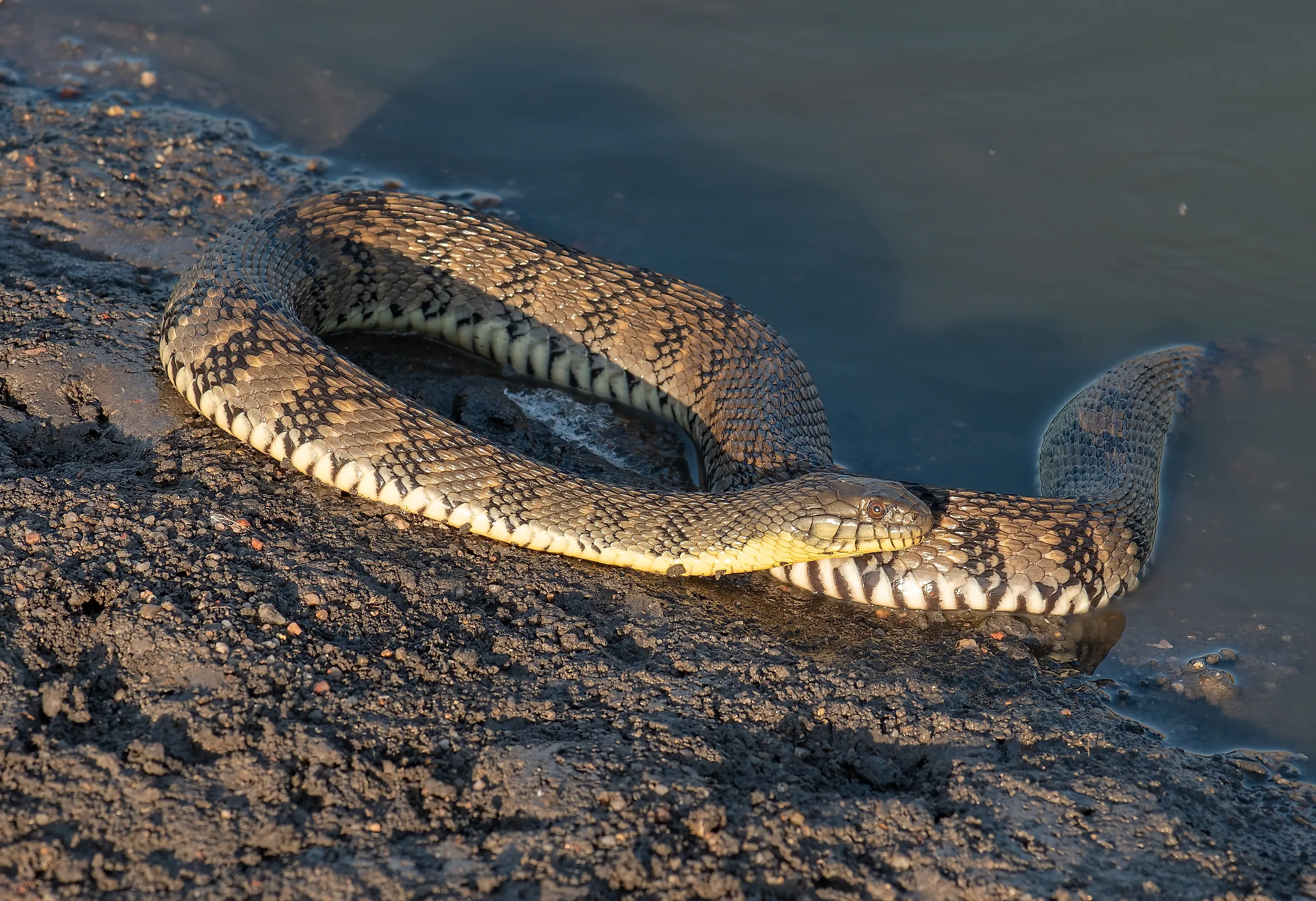
The diamondback watersnake (Nerodia rhombifer) is native to the southeastern area of the state, along the Mississippi River. They range in length from two to four feet, with dark blotches down their back that contribute to their name. Their preferred habitat is wetlands and river basins, favoring slow-moving bodies of water, making the Mississippi River an optimal environment.
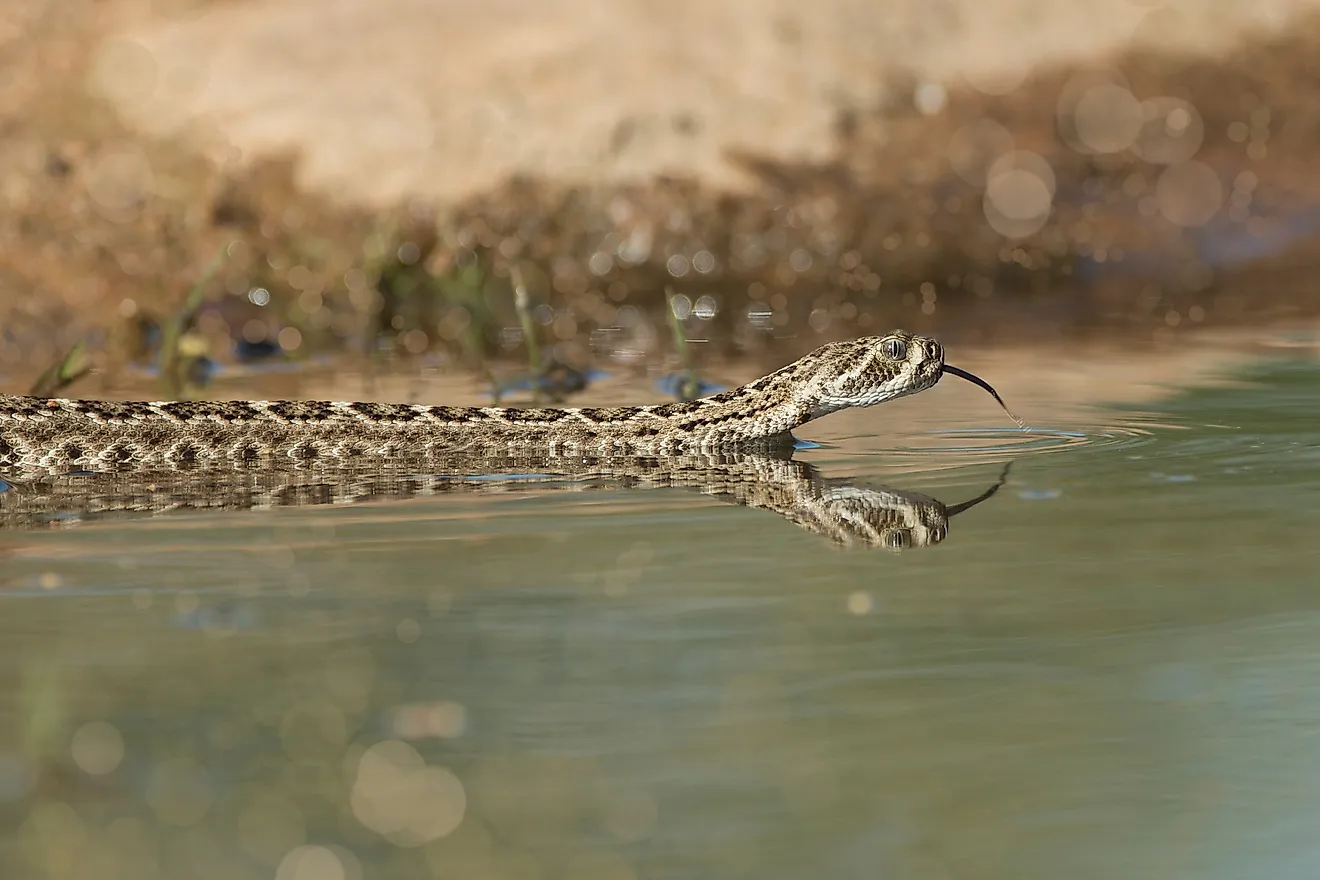
The timber rattlesnake (Crotalus horridus) is one of Iowa’s species of venomous snake and can be found inhabiting crevices in steep bluffs and rocky outcrops along the banks of the Mississippi River. They range in length from three to five feet and may be brown, tan, or grey in color, with black bands down their body.
Cedar River

The Cedar River stretches 329 miles, flowing from its origin in Minnesota and winding southeast through Iowa before joining the Iowa River. The combination of these two rivers merged into the Mississippi River approximately 20 miles from this point. The river flows through red cedar woodlands and limestone bluffs. The Cedar River’s drainage basin expands over 7,819 square miles of farmland.

The eastern hognose snake (Heterodon platirhinos) is known to inhabit corridors along the Cedar River. They average around two to three feet in length and exhibit highly variable coloration and patterns. They are capable of adapting to different habitats, such as woodlands, prairies, and grasslands. Unlike other species of hognose snakes, the eastern hognose snake prefers damp areas with sandy or loamy soil, which it can use to form burrows and feed on amphibians, which make up most of its diet.
Des Moines River

The Des Moines River rises in Lake Shetek in southwest Minnesota. It flows for a total of 525 miles and eventually joins the Mississippi River. The Des Moines River forms a western boundary between Iowa and Missouri for 25 miles of its course. The river drains an area comprising around 15,000 square miles. The eastern garter snake (Thamnophis sirtalis) is known to inhabit areas along the Des Moines River. They are a small and slender-bodied snake, so small in fact that they often consume earthworms, millipedes, spiders, and insects as their primary diet. They may appear in a solid color, with a checkered pattern, or striped.

The eastern racer (Coluber constrictor) is also found along the Des Moines River. They are a large snake capable of delivering a powerful bite if provoked, threatened, or captured. They are active between April and October, hibernating in dens outside of these times. Due to their size, they have perhaps the most diverse diet out of any snake native to Iowa, including frogs, toads, lizards, and sometimes even other snakes.
Iowa's Slithering Serpents
Snakes are an integral part of the Iowa ecosystem, serving as natural pest control for rodents, squirrels, and insects. The majority of snakes are nonvenomous and, as a result, harmless to humans. While there are venomous snakes native to Iowa, the species most commonly found around rivers, the timber rattlesnake, is rare in the state, locally protected in certain areas, and is unlikely to be encountered outside of specific denning sites. That being said, all snakes, even nonvenomous species, should not be captured, killed, or otherwise harmed. As with all wildlife, observe them from a safe distance and give them a wide berth to allow them to move on at their own discretion.