This New Mexico Scenic Byway Is The Road Trip Of A Lifetime
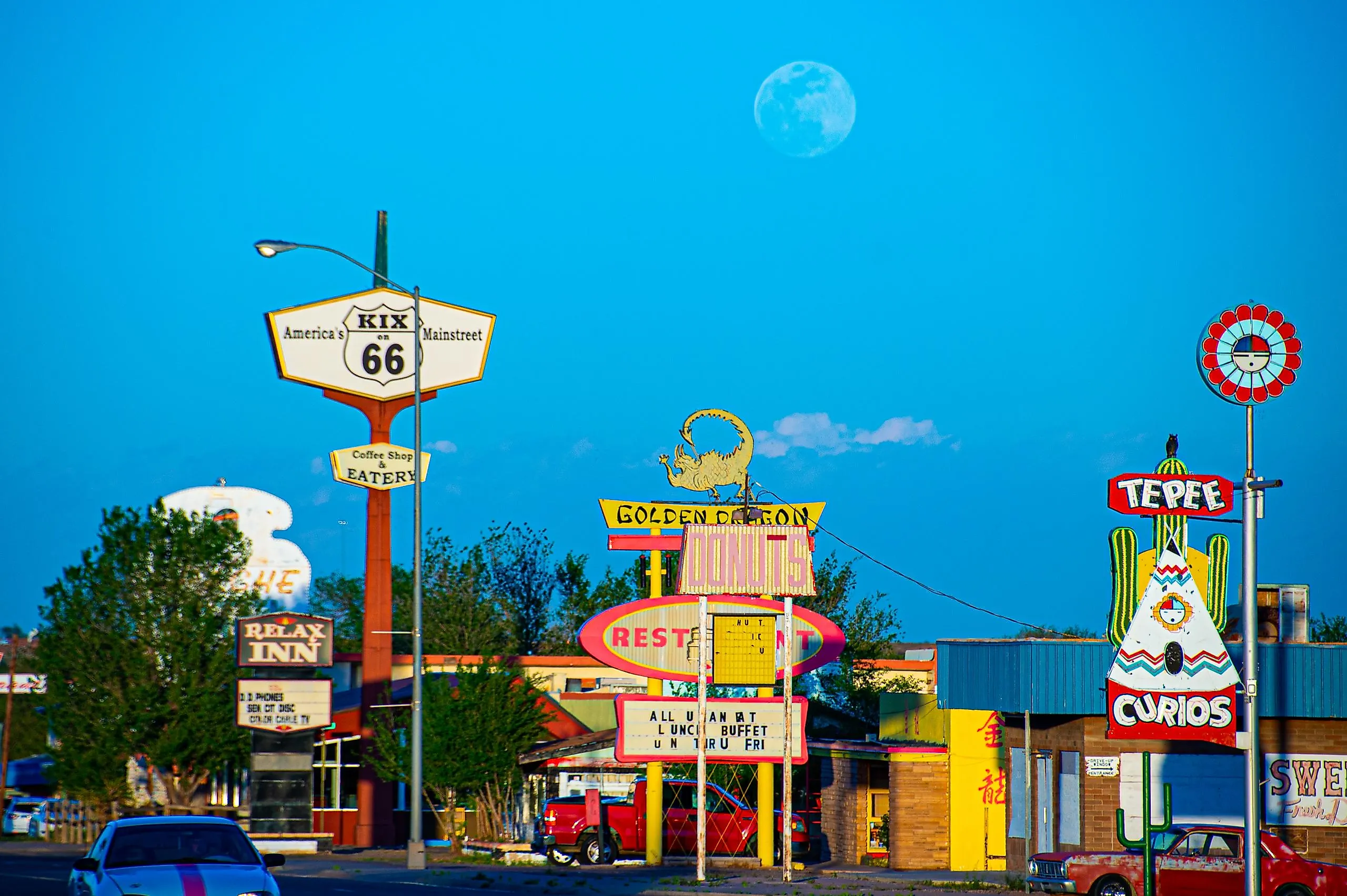
The neon still burns along New Mexico's stretch of Route 66. This year the road turns 100. It was born in 1926 and New Mexico carries one of its longest and richest runs. Five unhurried days will take you across the whole state on it. You will trace the old alignment past working diners and motels that never went dark. Every mile of this drive has a centennial reason to slow down and look.
Spring and fall are the sweet spots for this trip. Winter can throw ice and snow across the higher passes near Santa Fe, and midsummer bakes the eastern plains well past comfortable. Aim for April, May, September, or October and the driving stays easy the whole way. Time it for early October and you can fold in Albuquerque's Balloon Fiesta, which leans hard into the centennial in 2026.
Day 1: Texas Line to Tucumcari

You cross into New Mexico from Texas at Glenrio, an old border settlement where the pavement changes and the trip really starts. The welcome center here hands out maps for the road ahead. From there it is a little over half an hour to Tucumcari, and no town leans into the centennial harder. The silver sixes of the Route 66 Monument mark the way in, and the old Ranch House Café ruins tell you what the road left behind.
Tucumcari earns a full afternoon. The Mesalands Dinosaur Museum keeps full-size bronze skeletons cast from real fossils, and the railroad and history museums fill in how the trains and the highway built this place. When the light drops, the neon takes over, and the star of it is the Blue Swallow Motel. Carpenter W.A. Huggins started building it in 1939 and it has kept its arched neon swallow glowing ever since, one of the longest-running motels on the whole route. Book a room there if you can, or grab a diner supper at SideKix on 66 and turn in at the family-run Roadrunner Lodge down the street.
Day 2: Santa Rosa and the Blue Hole

An hour west lies Santa Rosa, and its calling card surprises everyone the first time. The Blue Hole is a bell-shaped artesian spring that stays a clear 61 degrees all year, drawing scuba divers to the middle of the high desert. Locals swim it in summer and divers train in it year-round. Santa Rosa Lake State Park sits just north of town for a morning of birding and walking before the heat builds.
Lunch belongs at the Silver Moon Cafe, which has fed Route 66 travelers since 1959 and still turns out the green chile that keeps regulars coming back. Afterward, the Route 66 Auto Museum packs its floor with restored chrome and street rods, plus a gift shop worth a browse. Cool off at Park Lake, then settle in for the night at one of the motels lining the old road. Santa Rosa has spent the centennial year restoring its signs and murals, so keep your camera close.
Day 3: Up to Santa Fe

Fuel up at Mr. Bee's Coffee & Teas before you leave Santa Rosa, and catch the pre-1937 Route 66 sign on your way out of town, a reminder that the road ran two different ways in its first decade. The drive northwest climbs toward Santa Fe over about two hours, threading past San Jose and Pecos as the plains give way to mountains. Pecos National Historical Park makes the ideal stop, where a Spanish mission and an ancestral Pueblo village stand together beneath the Sangre de Cristo range.
Santa Fe rewards a slow evening. The Museum of International Folk Art holds the largest collection of its kind anywhere, the Georgia O'Keeffe Museum gathers the painter who made this landscape famous, and the Railyard Arts District fills old rail buildings with galleries. For dinner, The Pink Adobe has served its green-chile-smothered Steak Dunigan since 1944, and it celebrated its 80th birthday only recently. It sits in the oldest neighborhood in the country, which feels about right for a road this old.
Day 4: On to Albuquerque

Give Santa Fe a slow start before you point the car south, and walk the half-mile of Canyon Road while the galleries open. The route to Albuquerque passes through Bernalillo, where the Coronado Historic Site guards rare painted kiva murals below the Sandia Mountains. It is one of the few places you can see original Pueblo wall paintings, and it makes the perfect midway stretch. From there it is roughly 20 minutes to Albuquerque.
Albuquerque puts Route 66 right down its main street, and Central Avenue still follows the old alignment past the 1927 KiMo Theater and blocks of vintage neon. Old Town Plaza gathers galleries and shops around a 1793 church, and the 66 Diner nearby serves malts in full 1950s dress. If your trip lands in early October, the Albuquerque International Balloon Fiesta fills the sky with more than 500 balloons, and its 2026 edition carries a Route 66 centennial theme called "The Scenic Route." Stay an extra day if you possibly can.
Day 5: West to the Arizona Line

Cross the Rio Grande heading out of Albuquerque and roll west toward Grants, a little over an hour on. Grants grew up on mining and the Mother Road both, and the Route 66 neon arch downtown makes a fine photo. Grab pulled pork for the road at the Junkyard on 66 Brewery, then watch for the shell of the Old Bluewater Motel out in the countryside, one of those quiet ruins that tells the road's whole story in a glance.
Another hour brings you to Gallup, the trading heart of the high desert and the gateway to the Navajo Nation and Zuni Pueblo. The murals here run deep, including the Navajo Code Talkers tribute, and the Gallup Cultural Center honors the region's Indigenous artistry. Stop into the El Rancho Hotel, where old Hollywood crews once bunked between Westerns. The Arizona line is about 25 minutes farther, where the Painted Cliffs and the Chief Yellowhorse Trading Post mark the end of New Mexico's century-old run.
Why This Year Is The One To Go

New Mexico holds the most soulful miles of the whole Mother Road, and 2026 is the year the state has spent restoring its signs, its diners, and its motels for the anniversary crowds. Every stop on these five days runs on something real and still open, from a 1939 motel to a 1944 steakhouse to a balloon festival that draws the world. You can turn back at the Arizona line satisfied, or keep chasing the neon another 900 miles to where Route 66 finally quits at the Santa Monica Pier in California. Either way, a century only comes around once, and the road has never looked better.