This Classic Route 66 All-American Road Is the Ultimate US Road Trip
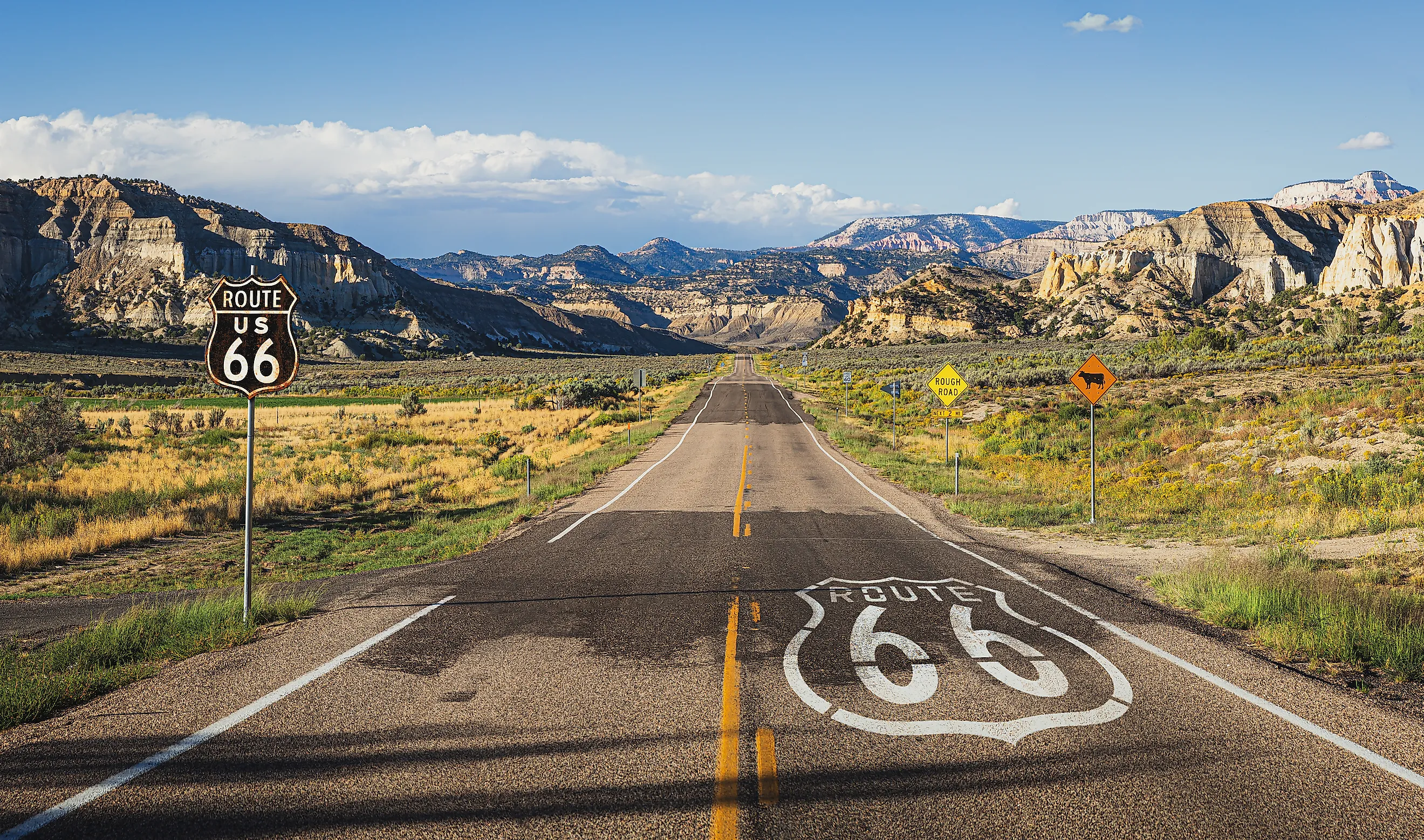
Spanning nearly 2,500 miles, Route 66 is among the United States' most referenced and well-travelled roads. Hosting a massive variety of stops along the way, from big cities and small towns to a variety of landmarks, useful amenities, and other roadside attractions, it would be hard to compile all there is to do on this historic highway in one single place. On the other hand, who doesn't love a good challenge? These recommendations consist of waypoints that appeal to a number of different interests, budgets, and needs. Read on to learn more about this legendary All-American byway, then get out there and experience it for yourself.
From Transportation Artery to Tourist Attraction

For a little background info, Route 66 was established in 1926 as one of the original highways in the United States Numbered Highway System. It connected Chicago, Illinois, to Santa Monica, California, stretching across eight states and linking countless rural towns to other major cities along the way.
During the Great Depression, Route 66 quickly became a primary path for migrants heading west, especially families leaving the Dust Bowl states in search of work and stability. The road then gained greater national recognition during World War II, serving as a key military transport route, while after the war, it acted more as a symbol of civilian freedom and mobility, lined with motels, diners, gas stations, and roadside attractions built for a population that was quickly acquiring automobiles in pretty much every home across the nation.
In recent times, you may have noticed that it is definitely not the thoroughfare it used to be, rarely being recommended for getting from point A to B on navigation apps or common road maps. Its decline actually began after the 1950s with the construction of the improved Interstate Highway System, which bypassed many of the towns on Route 66. By 1985, the highway was officially decommissioned, but its legacy endured for curious roadtrippers who still seek out its remaining drivable stretches.
Preservation efforts followed, and Route 66 continues to be a powerful symbol of American history, remembered through several historic sections, restored landmarks, and ongoing tourism initiatives that all still shape America's culture, music, and literature to this day.
Major Tourism Stops on Route 66
Given that this longstanding roadway covers a significant swathe of the country, here are some of the most interesting pull-offs you can visit in a variety of states. From lively cities with many options for resupply and accommodations, to state and national parks and quirky roadside attractions, there is something for every traveler on Route 66.
Chicago

Chicago marks the eastern starting point of Route 66 and remains one of its most important stops, being a world-class city containing just about everything you can possibly want or need as a traveler. In fact, the byway officially begins at the corner of East Adams Street and South Michigan Avenue, where a sign now marks the historic launch point.
For history buffs, Chicago provides context for everything Route 66 would come to represent: industry, migration, and mobility. For one, the city’s architecture tells a parallel story of growth during the automobile age, with districts like the Chicago Loop perfectly showcasing early 20th-century expansion. Tourists often visit other important world-class attractions, such as the Art Institute of Chicago, Millennium Park, and the Chicago History Museum, to better understand the era of forward thinking in which Route 66 emerged.
While the Windy City is far from quiet and often contrasts heavily with the rest of the iconic byway's vibe, it can also simply serve as an ideal place to spend a night or two, whether you're starting or ending your road trip here, with countless hotels, restaurants, shopping areas, and other services to be found in just about any local neighborhood.
Route 66 State Park

Route 66 State Park sits along the Meramec River in Missouri, just outside of St. Louis, and preserves a very nature-filled stretch of the highway. A must-visit for anyone looking to dig a bit deeper into the story of this historic road, the park occupies land once used for mining and later reclaimed for public access, uniquely blending an industrial past with quiet woodland surroundings.
A short section of original Route 66 pavement runs through it, giving you a tangible connection to the highway's past, while various foot trails follow the nearby river and pass through forested areas that feel quite removed from modern development. The park’s visitor center includes other curated exhibits on Route 66's past and the region’s overall role in early transportation and industry. Moreover, picnic areas and idyllic river lookout points make it a restful stop for travelers who just want to slow down, stretch their legs, and experience a calmer side of the highway.
Route 66 Museum

The Route 66 Museum in Clinton, Oklahoma, rests just over an hour west of Oklahoma City and offers a focused look at the highway’s cultural and historical impact in this highly central portion of the country. Organized by decades, visitors here are guided through the evolution of Route 66 from its early years to its decline and revival. Exhibits cover migration, renowned roadside businesses, music, and automotive travel using a cool collection of photographs, restored vehicles, and period displays.
Located directly along the historic route, this museum fits naturally into a day of driving, serving as yet another practical and informative stop for those who want a more comprehensive understanding of how Route 66 shaped Oklahoma's once far-flung communities, and why the road continues to hold so much significance for local residents to this day.
Cadillac Ranch

Cadillac Ranch can be found on the outskirts of Amarillo and stands as one of the most recognizable roadside landmarks on Route 66. Installed in 1974, the site features a series of Cadillacs buried nose-first in the ground, and unlike more traditional monuments, Cadillac Ranch invites your participation, with you being encouraged to spray-paint the cars with your own designs! This has resulted in constantly changing layers of color and messages that give this installation lots of revisit value.
Set against open farmland or northern Texas, the contrast between the flat landscape and this bold example of public artwork makes for a quick, yet incredibly memorable pull-off on an otherwise fairly desolate stretch of the road.
66 Diner

Have a meal inside a time capsule at 66 Diner in Albuquerque, New Mexico, a classic eatery that amazingly preserves the look and feel of a mid-century American diner. Located in the heart of downtown, this restaurant features chrome details, vinyl booths, neon lights, and vintage décor that reflect the highway’s 1950s golden age. Furthermore, tons of music and memorabilia from the era reinforce the nostalgic atmosphere without feeling too tacky.
The menu focuses on none other than the most traditional diner fare, including burgers, milkshakes, and comfort food staples served in generous portions. But even if you just stop by to take a look, it’s an easy-to-access blast from the past in the heart of the Southwest, and a spot that pairs well with exploring the rest of Albuquerque’s historic Route 66 corridor.
Wigwam Motel

As you pass by Petrified National Forest Park, the Wigwam Motel in Holbrook, Arizona, is among the most distinctive overnight accommodations along Route 66. Opened in 1950, the property features individual concrete rooms in the shape of a teepee or tipi (ironically, not a wigwam) arranged around a courtyard with ample parking. Each unit is furnished simply, so come expecting a unique experience and not necessarily a luxury stay, though the rooms are quite cozy.
The Wigwam Motel offers a direct connection to a time on the byway when novelty architecture was vital to catch the attention of passing motorists, something that can't be said for just about any newer highway accommodations now. Today, however, vintage cars parked on the grounds and a number of other old-timey accents only add to the mid-century roadside atmosphere of Route 66, allowing you to immerse yourself in a truly authentic piece of Americana.
Santa Monica Pier

The Santa Monica Pier marks the western endpoint of Route 66, where the highway finally meets the Pacific Ocean. It represents both an ending and a sense of arrival back to modern civilization after crossing some of the country's quietest corridors. In fact, a sign near the pier commemorates Route 66’s terminus, making it a required stop for true completionists.
The pier itself blends history with a plethora of casual entertainment, featuring an amusement park, an aquarium, and a variety of food stands. If dizzying rides and carnival treats aren't your thing, simple walkways also extend over the water, offering open views of the coastline and across the ocean that anyone can appreciate. While the surrounding cityscape of Los Angeles can be busy, you really should stay at least long enough to catch a famous Californian sunset, a beautifully fitting way to bookend your lengthy trip.
Experience America's Most Iconic Roadway Today
Route 66 is defined by its landmarks as much as its length. From major cities and museums to wacky roadside oddities and wonderful natural scenery, each location mentioned above makes up just a handful of the hundreds of worthwhile stops along the way. Together, these places tell the story of a once-vital national artery, now opening a window into everyday life in some sparsely populated parts of the continent and rewarding travelers willing to go the distance with a treasure trove of memories.