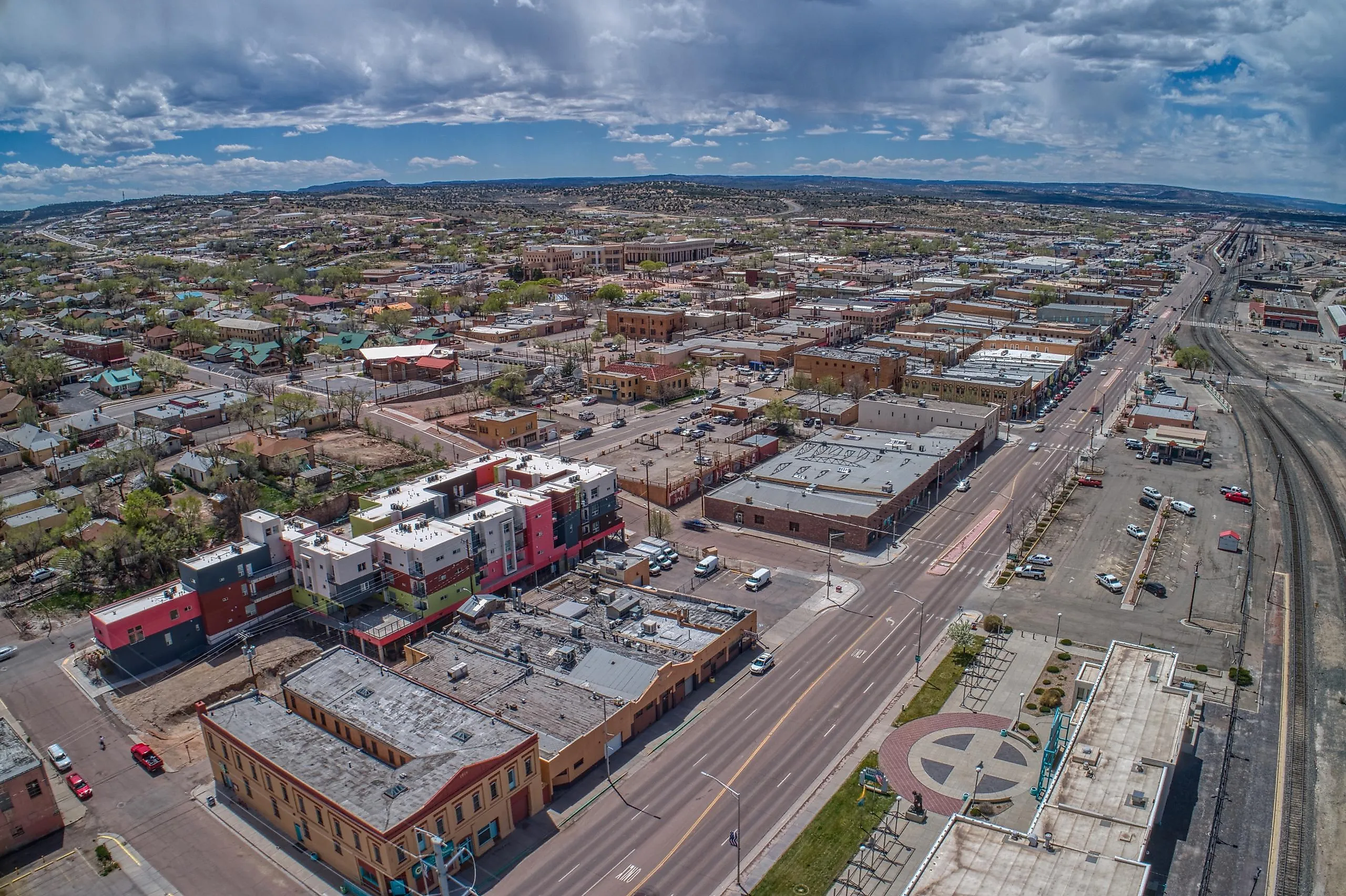
This New Mexico Town Instantly Transports You To The Past
As soon as you roll into Gallup, New Mexico, something shifts. The edges of the modern world blur, and you are walking into a bygone era of American history. Suddenly, neon signs crackle along old Route 66, lighting up motor lodges that have watched travelers come and go since the 1930s. Trading posts line the street with turquoise jewelry glinting as you pass through them, every inch packed with Navajo rugs, pawned treasures, and wares you cannot find anywhere else. Freight trains still whistle through downtown—same as they did a hundred years ago. This is Gallup, and when you come here, you can get a feeling like you just stepped back in time.
While Gallup stands out as one of the most vivid time capsules along Route 66, it is not alone. Other New Mexico towns, such as Tucumcari and Grants, preserve their own slices of railroad, mining, and highway history—a theme explored later in this article. Together, these places reveal how the Mother Road shaped communities across the Southwest.
Carbon City: The Railroad and Mining Roots of Gallup

Gallup’s story kicks off in 1880 with a railroad paymaster named David Gallup. Back then, crews laying track for the Atchison, Topeka, and Santa Fe Railroad would hike out to his makeshift office to collect their pay. They’d say they were “going to Gallup,” and when the railroad finally rolled through in 1881, the name just stuck. At first, it was a wild frontier outpost complete with wooden sidewalks, mostly fake storefronts, and a seemingly endless supply of dirt and dust. Once coal was discovered in the hills in 1885, everything changed overnight. Suddenly, more than a dozen mining camps popped up in the canyons north of town, and Gallup got a new nickname: Carbon City.
Coal and the railroad pulled in investors from the east and workers from all over—Europe, Asia, and Mexico. The town grew fast, but with this increase in population, lawlessness persisted. By the early 1900s, places like Heaton, Clarkville, and Navajo were packed with mining families. These camps had their own schools, hospitals, and company stores. The boom lasted for five decades until the mines began to shut down, and with them, the little communities that relied on Gallup to keep them going.
You can still trace this history at the Rex Museum on Main Street. The place is housed in a former brothel and is loaded with all eras of the town's history. The museum is crammed with mining lanterns, battered lunch pails, medical gear, and oddball gadgets miners used to clear coal dust from their lungs. It’s a tribute to both the industry that built Gallup and the families who endured the danger of those deep, dark shafts. Because it is volunteer-run and currently undergoing renovations, be sure to call ahead of your visit to confirm it's open.
Richardson’s Trading Company and Earl’s Restaurant

Step inside Richardson Trading Post, and it’s like time folds back to 1913—the year the place opened. The outside flashes with vintage neon and big bay windows (perfect for selfies), but inside is where things get wild. Over three thousand Navajo rugs hang from the walls and spill into rooms dedicated to them. Glass cases showcase turquoise and silver jewelry, some of it over a hundred years old. There are leather saddles, guitars with pearl inlay, and pottery stacked everywhere. The building looks like it shouldn’t be able to hold all this stuff, but somehow, it does. Richardson’s still runs a pawn service, carrying on a tradition born when Navajo families couldn’t get loans from banks. The family has kept this place going for more than a century, and their loyalty to local Native artists makes Richardson’s a destination you do not want to miss.
Just a mile east, you can grab a delicious no-frills bite to eat at Earl’s Restaurant. This is classic American diner cuisine, serving hungry travelers since it opened in 1947. The original building across the street from the current spot is long gone, but the restaurant still thrives despite its refusal to modernize its booths, fluorescent lights, and basic menu. Here you are treated to some local favorites from pancakes and steaks to New Mexican classics, all smothered in red or green chile. At Earl’s, you can taste the history in every bite.
El Rancho Hotel: Hollywood’s Western Outpost

If you want to know what “frozen in time” really looks like, just step into the El Rancho Hotel. Built back in 1937 by R.E. “Griff” Griffith—yeah, the brother of film legend D.W. Griffith—this three-story giant was Hollywood’s home base whenever they came out to film westerns in the New Mexico desert. The lobby grabs you right away: there’s this massive walk-in fireplace built from brick and stone, twin staircases made from split logs leading upstairs, and Navajo rugs draped everywhere you look. Every inch of wall space is covered with autographed photos of movie stars. Honestly, it feels more like a national park lodge that somehow landed itself along Route 66.
During Hollywood’s golden age, from the ‘30s through the ‘60s, more than 150 big-name stars checked in here. Ronald Reagan, John Wayne, Katharine Hepburn, Lucille Ball, Kirk Douglas, Gregory Peck, Humphrey Bogart, Rita Hayworth—the list goes on. You can actually book the same rooms they stayed in; the rooms now have their names on the doors. This place wasn’t just a hotel, either—it ran as headquarters for film crews, and the 49er Lounge is still famous for the wild parties cast and crew threw after sweating all day in the desert.
El Morro Theatre

Older buildings are hardly difficult to find when you are strolling through the main thoroughfare of Gallup, but these locations are not abandoned and forgotten facades. A great example of this is the El Morro Theatre, which has been here since 1928. In its heyday, the theatre was a bustling entertainment venue for all the camps and communities when the mines were booming. Following a major 1991 renovation to restore the building to its former glory, the city operates the property and uses the venue's 471 seats to show movies, plays, and concerts, and to host community events.
Beyond Gallup: Exploring Route 66 in New Mexico

Gallup is far from the only town in New Mexico to offer a time capsule vibe when you visit. Head east about 250 miles and you’ll roll right into Tucumcari, which calls itself the “Heart of the Mother Road.” While it might seem like a strange moniker, it is fairly fitting for what is going on here. If you can imagine it, think of miles of neon lights with old motels, diners, and quirky roadside stores. A good example of the old-time feel can be found at the iconic souvenir shop, TeePee Curios, with its teepee-shaped entrance. In fact, the town is such a snapshot of Route 66's prominence that it is listed among the towns that inspired Radiator Springs in Disney-Pixar’s classic Cars.
Grants is a different story entirely. This small town is halfway between Gallup and Albuquerque and has a mining history that somewhat parallels that of Gallup. As coal mines closed, uranium was discovered right near Grants, and the town exploded overnight into a mining hub. You can find out all about this explosion of activity at the New Mexico Mining Museum here in town. These days, the town is focused on art, and you can find downtown showcasing murals that illustrate the railroad days and the atomic age alike. For a photo op your family is sure to remember, check out the massive, 18-foot illuminated arch Grants installed right on Route 66, where you can drive under.
Don’t Walk, Gallop to Gallup
So many towns that found themselves along historic Route 66 have become forgotten relics of a time long before the interstates carved their way through the rustic landscape here. Some places, like Gallup, have managed to remain preserved in the aftermath, a testament to a simpler time when people enjoyed hitting the open road to discover what awaited them from one town to the next. From the iconic hotel here, once a home away from Hollywood for the top names on the silver screen, to unique shops that have been here long enough to have experienced Route 66 in its prime, Gallup is a time capsule of a bygone era.