Could Saturn's Rings Eventually Disappear?
Saturn's famous rings are so wide they would span almost 75% of the Earth-Moon distance, yet in many places they are only about 30 feet (9 m) thick. It is hard to imagine Saturn without these broad, thin, colorful bands of icy debris, yet strong evidence indicates that the planet long existed without its rings and will do so again in the future. One of the most famous features in our solar system is probably temporary, and within as few as 100 million years, Saturn could lose the rings that make it instantly recognizable.
What Are Saturn's Rings?

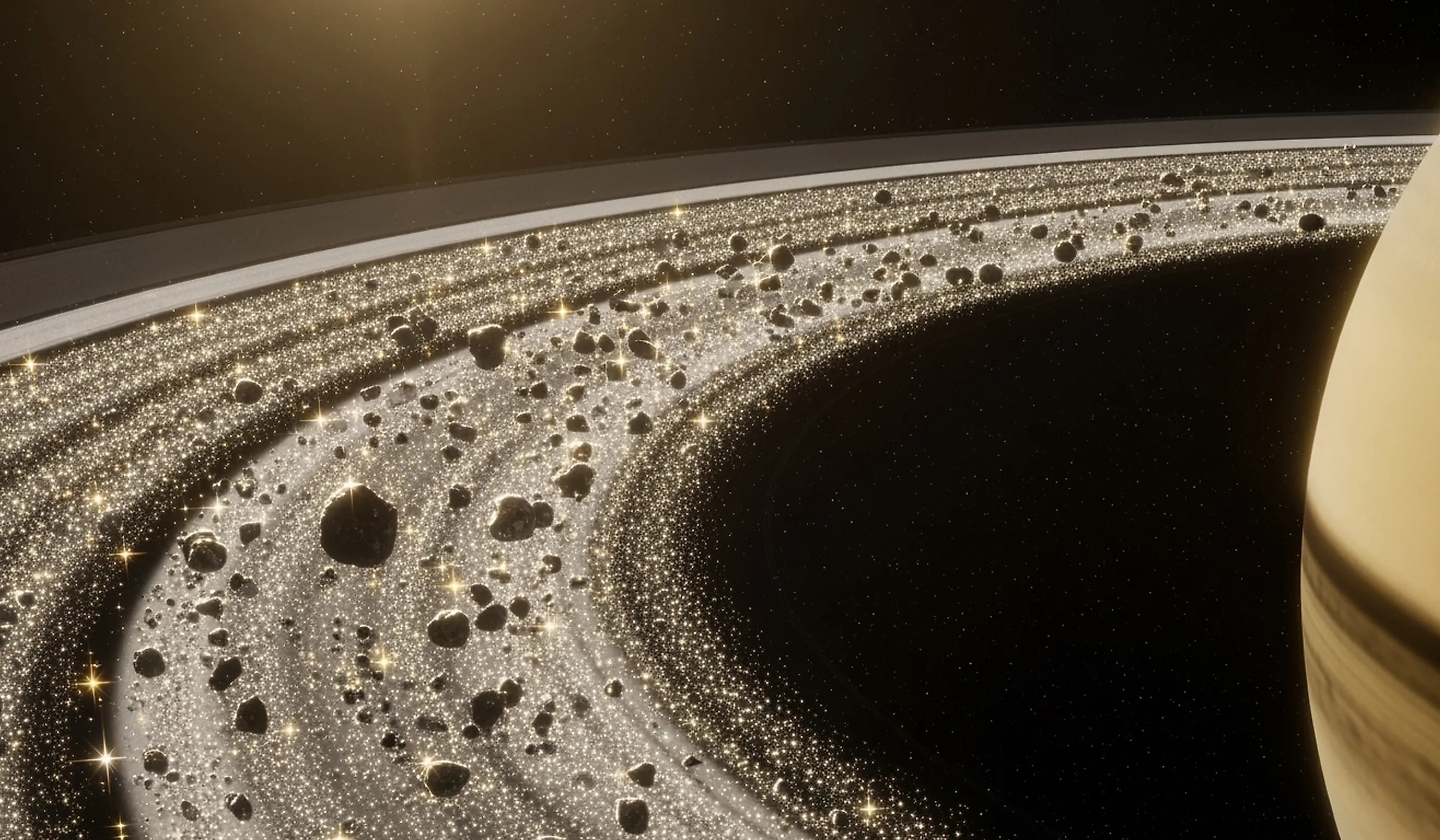
From Earth, Saturn's rings look smooth and solid, like a giant record circling the planet. In reality, they are made of countless separate pieces of material, mostly water ice mixed with dust and bits of rock. Some are as small as grains of sand, while others are larger than a school bus. Saturn's main ring system stretches roughly 170,000 miles (275,000 km) across, yet it is astonishingly flat, thinner in many places than the height of a modest house.

That unusual combination of scale and thinness is part of what makes the rings seem so improbable. If a person could somehow stand on one of the larger chunks of ring ice, the view would be surreal: a glittering field of frozen debris stretching outward while Saturn itself loomed overhead like a striped wall. The rings may look solid from a telescope, but they are really a loose, shifting swarm of orbiting material.
How and When Will They Vanish?

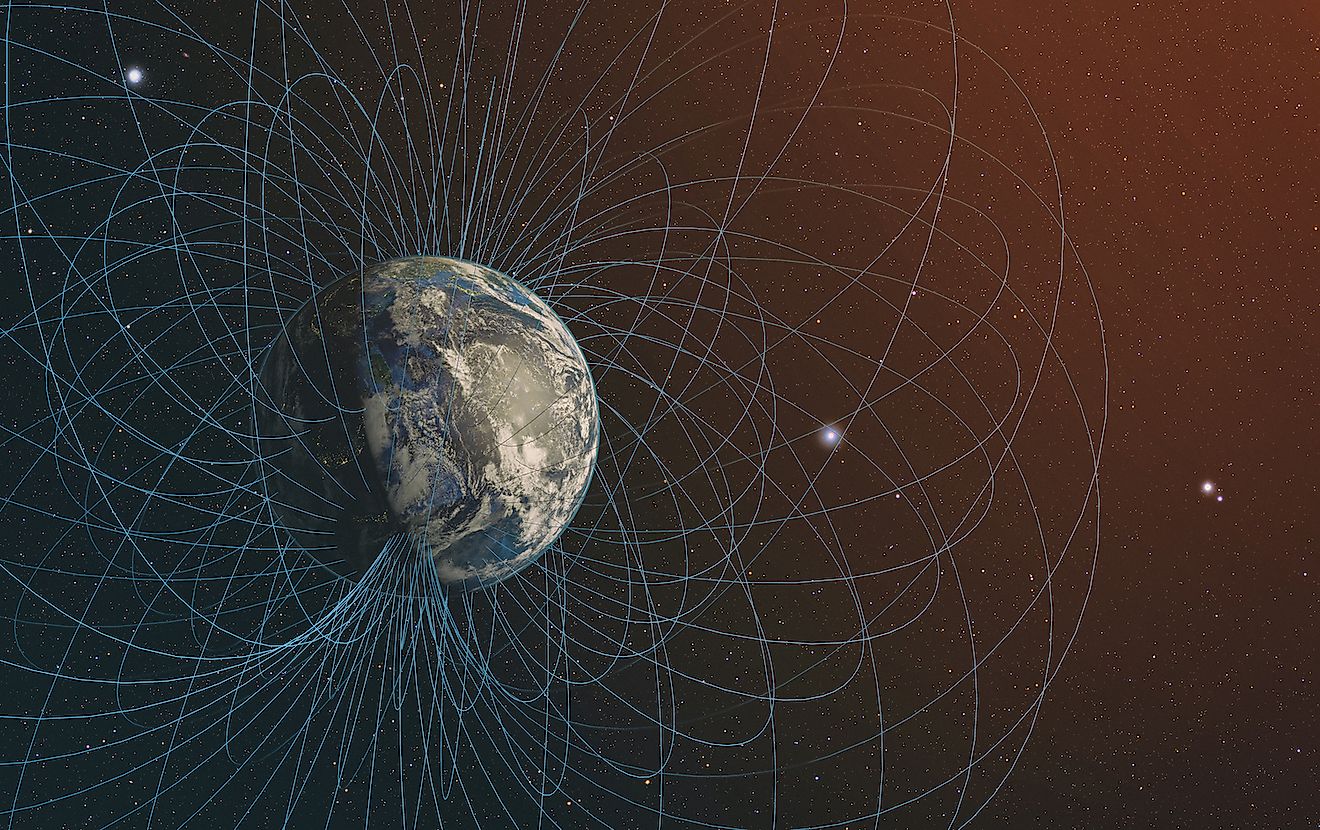
The biggest reason Saturn's rings will probably disappear is that some of their material is slowly falling into the planet. Scientists have found evidence of a process often called "ring rain," in which tiny icy particles become electrically charged and are pulled inward by Saturn's gravity and magnetic field before plunging into the upper atmosphere.
This is by no means a sudden collapse, but rather a very slow leak from an enormous frozen reservoir. NASA researchers have estimated that enough ring material may be falling into Saturn to fill an Olympic-sized swimming pool in about half an hour. At that rate, the rings may completely vanish in 100 million to 300 million years.
Recent Discoveries

Much of what scientists know about Saturn's rings comes from the Cassini-Huygens mission, which spent more than a decade studying Saturn, its moons, and its rings. During the mission's final phase, the spacecraft repeatedly dived through the gap between Saturn and the inner edge of the rings, giving scientists a much clearer picture of their mass and how quickly material is being lost.
Those close passes helped reshape the story of Saturn's rings. Instead of being permanent leftovers from the birth of the solar system, they may be much younger and more temporary than once believed. While there is still no widely accepted estimate of when the rings may have formed, many experts now believe the rings will be completely gone 100-300 million years from now. For a planet more than 4 billion years old, that would make the rings a relatively short-lived feature of Saturn.
How Did The Rings Form?

Scientists still debate how Saturn's rings formed. One leading idea is that a moon, comet, or other icy object drifted too close to Saturn and was torn apart by the planet's gravity, with the debris spreading into orbit. Another possibility is that the rings formed from leftover material that never became a moon in the first place.
Their composition helps explain why they are so bright. Saturn's rings are made largely of water ice, which reflects sunlight far better than darker rock or dust. That is why Saturn's rings look so dramatic compared with the much fainter rings around Jupiter, Uranus, and Neptune. The mystery is that they still look unusually clean and reflective, which makes it difficult to tell whether they are ancient or surprisingly young.
The Role of Saturn's Moons

Saturn's moons are not just orbiting nearby; some actively shape the rings. Small "shepherd moons" help carve gaps and keep certain ring edges sharply defined, using gravity to nudge particles into narrow bands rather than letting the whole system spread into a blur. At the same time, Saturn's moons may also contribute to the rings' instability. Impacts on icy moons can send debris into space, and collisions between ring particles can grind larger chunks into smaller ones. Over millions of years, the rings are not sitting still but shifting, thinning, and slowly feeding material into Saturn below.
A Feature Caught in Time
It seems increasingly clear that Saturn's rings are temporary features that, over the billions of years of the solar system's lifespan, happen to exist in spectacular form at the same time as humans. If scientists are right, the bright bands seen through backyard telescopes are just a very short phase in Saturn's long life. Millions of years from now, Saturn will most likely still be a giant world of storms and moons, but without the feature that now makes it the showpiece of the solar system. That possibility gives the rings a different kind of beauty: they are not just a permanent ornament, but a rare moment in time, caught in the middle of a slow disappearance.