The Largest Museums In The United States
Ask what makes a museum the biggest, and you get two answers that rarely agree. One counts the building, so the winner is whoever owns the most floor to walk across. The other counts the stuff, and a single drawer of pinned moths can outweigh a whole wing of paintings. The museums below sit at the top of one list or the other, and a few manage both. Some hold their treasures in plain sight, and most keep the real bulk in back rooms the public never sees. Here are the largest museums in the country, measured every way that counts.
Smithsonian National Museum of Natural History, Washington, D.C.
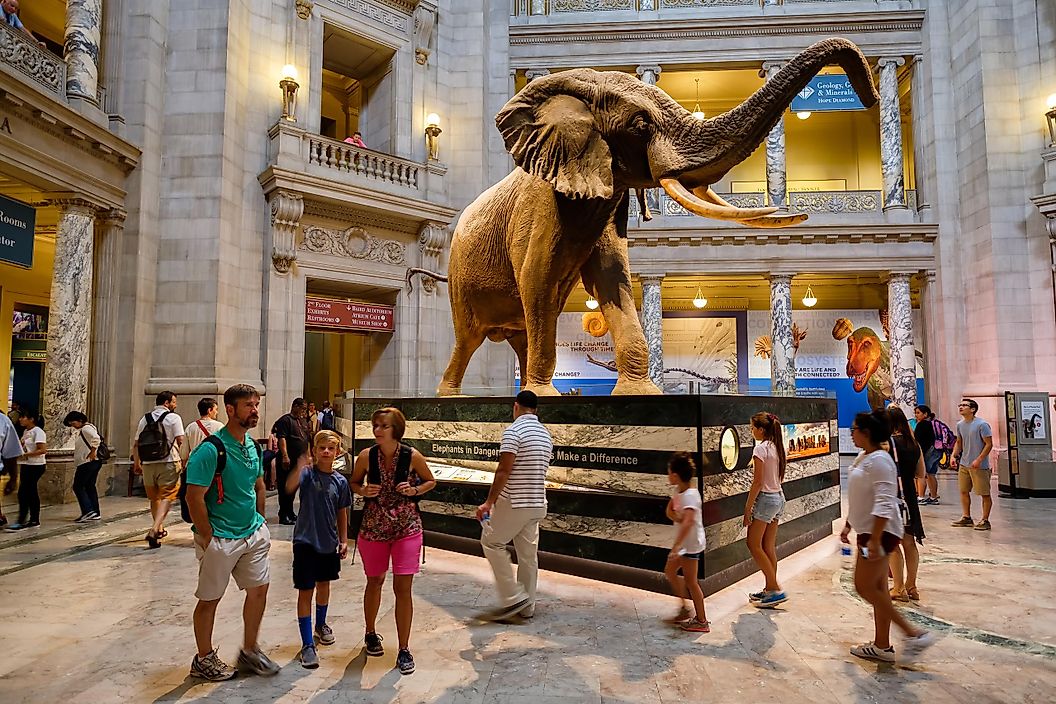
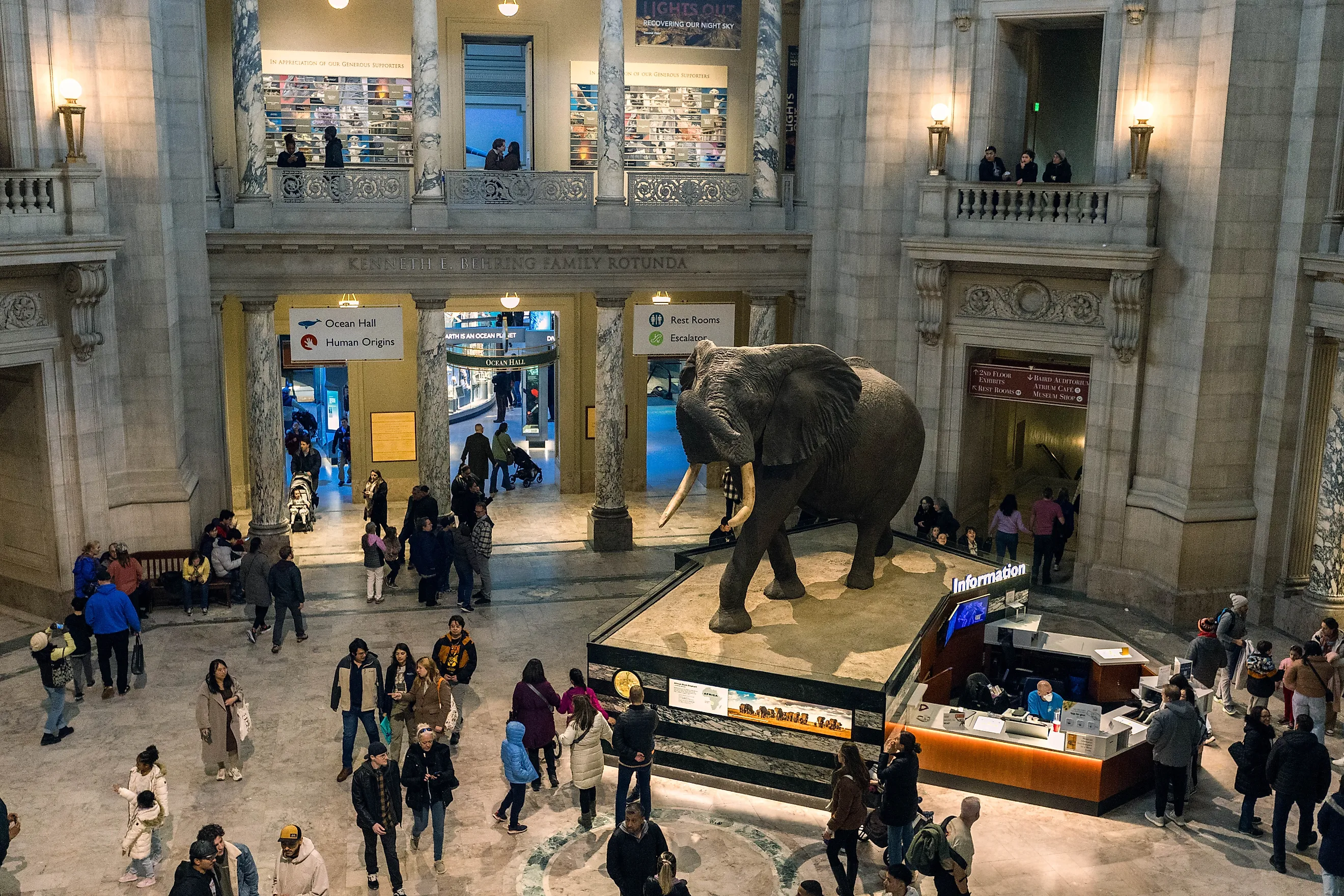
No collection in the country is bigger than this one, and the count is not close. The National Museum of Natural History accounts for roughly 148 million objects, about nine of every ten things across the entire Smithsonian. The wider Smithsonian is its own kind of giant, with 21 museums, a zoo, some 157 million objects, and around 13.6 million square feet of building spread across the country. President James K. Polk signed it into being in 1846, funded by a bequest from British scientist James Smithson, who never once set foot in America. The natural history collection alone fills a building the size of 18 football fields. The greatest hits match the count: a 52-foot model of a megalodon, a giant squid worthy of any sailor's nightmare, and a Tyrannosaurus rex that stretches close to 40 feet nose to tail.
Metropolitan Museum of Art, New York
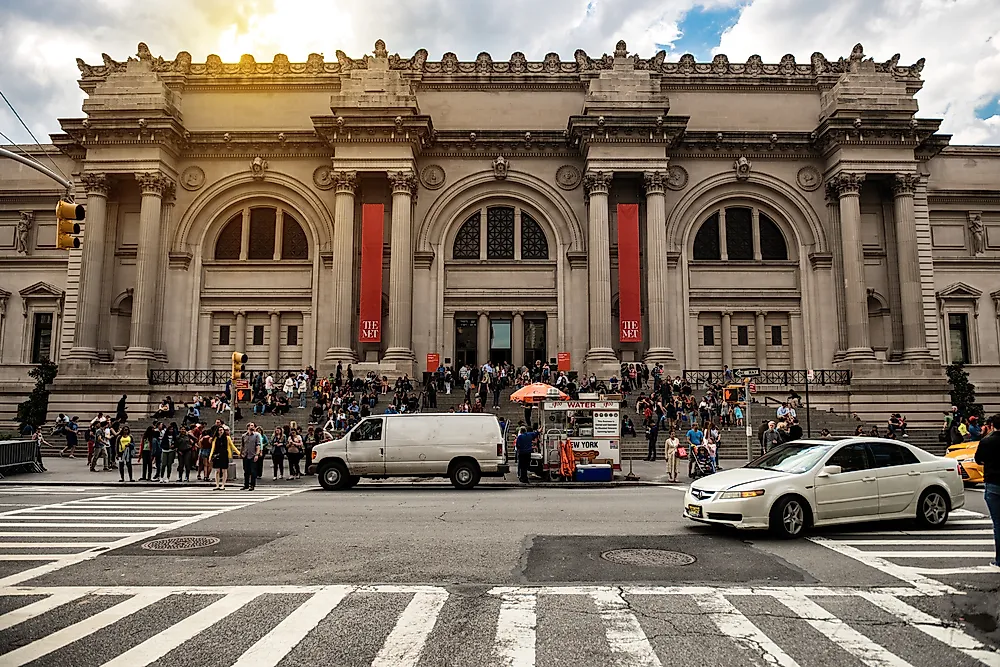
If the Smithsonian wins on sheer count, the Met wins on ground covered. Its Fifth Avenue building runs to about two million square feet across roughly 13 acres, which makes it the largest museum in the country by floor space and the biggest in the whole Western Hemisphere. The idea for it was hatched over lunch in Paris on the Fourth of July in 1866, when a group of Americans led by lawyer John Jay floated the notion of a great art museum for New York. Jay went home and rallied the money, and the museum was incorporated on April 13, 1870. The first object through the door was a Roman sarcophagus, and a gift of 174 European paintings arrived the very next year. The collection now runs to around 1.5 million works, and the honest truth is that a single day barely scratches it.
Field Museum, Chicago

The Field Museum is what stayed behind in Chicago after the world went home in 1893. Tens of millions of visitors passed through the World's Columbian Exposition that year, and when it closed, the exhibits and specimens became the raw material for a permanent museum. Businessman Edward Ayer talked department store magnate Marshall Field into a founding gift of a million dollars, and the museum opened in 1894. That pattern repeated across the country in those years, as fortunes built after the Civil War went looking for something grand and lasting to fund. Today the museum runs to more than a million square feet, and much of its real capacity sits underground in a research center packed with densely stored archives, including over 200,000 frozen DNA samples. All told, staff care for more than 40 million specimens and objects.
American Museum of Natural History, New York

This is the place that turned the glass display case into an art form. Between 1902 and 2007, staff at the American Museum of Natural History built more than 250 habitat dioramas, staging real animals and plants inside painted scenes so lifelike they read as theater. The painter James Perry Wilson and the taxidermist Carl Akeley became famous for the work, and about 210 of those dioramas are still on view. American naturalist Albert Bickmore founded the museum in 1869 after convincing a roomful of wealthy backers to bankroll it, including Theodore Roosevelt Sr., J.P. Morgan, and William E. Dodge Jr. The complex is enormous, running to 1.6 million square feet across 26 connected buildings on 16 acres, with more than 30 million objects held in some 400 storage rooms.
California Academy of Sciences, San Francisco
Twice San Francisco tried to shake this place apart, and twice it came back. The California Academy of Sciences began in 1853 as a scientific society, and over time it folded a natural history museum, a planetarium, an aquarium, and a four-story indoor rainforest under one roof. When the 1906 earthquake set the city ablaze, botanist Alice Eastwood walked into the burning building and carried out 1,497 irreplaceable specimens, saving the core of what became a herbarium of 300,000 species. A research team happened to be in the Galápagos that same year, and they sailed home with 70,000 specimens that anchored the rebuilt collection. The Loma Prieta quake in 1989 knocked down more of the campus, and the current building rose in Golden Gate Park in 2008. It now holds around 46 million specimens, enough to rank among the top five collections anywhere in the world.
The Henry Ford Museum of American Innovation, Dearborn

Henry Ford once said history was "more or less bunk," then spent a fortune proving he did not quite mean it. The museum he opened in Dearborn in 1929 traces American life through the machines and objects that shaped it, and the main hall runs to 523,000 square feet under a single roof. The collection tops 26 million items, though 25 million of those are photographs, documents, and records rather than the showpieces. The showpieces are the reason people come. Visitors can stand before the chair Abraham Lincoln sat in at Ford's Theatre, the Montgomery bus where Rosa Parks refused to move, John F. Kennedy's presidential limousine, and the very first Model T, hung from the ceiling. Just outside sits Greenfield Village, an 80-acre open-air town of more than 80 historic structures, most of them moved here piece by piece from around the Midwest and New England.
Florida Museum of Natural History, Gainesville

Ten million butterflies and moths make one point better than any statistic can: in a natural history museum, the smallest things add up to the most weight. The Florida Museum of Natural History is home to the largest collection of butterflies and moths in the Western Hemisphere, built on a 1981 gift of collector Arthur C. Allyn Jr.'s entire holdings and a 2009 donation of 2.2 million more specimens from William and Nadine McGuire, who also paid for the hall to house them. The full count runs to around 40 million objects, ranking it among the top three university natural history collections in the country. It began back in 1891 as a teaching collection of fossils and minerals assembled by biology professor Frank Pickel, joined the University of Florida in 1906, and took its present name in 1988 to stop being confused with Florida State.
Bishop Museum, Honolulu

A widower's grief built the greatest collection of Pacific culture on Earth. When Princess Bernice Pauahi died in 1883, her husband, American banker Charles Reed Bishop, founded a museum in 1889 to hold her royal heirlooms and Hawaiian treasures. She was the last direct heir of Kamehameha I, the king who unified the Hawaiian Islands in 1810, and once word spread, other royals and even the Hawaiian government began adding to the collection. What started as a pile of family keepsakes grew into the largest repository of Pacific cultural objects and natural history specimens anywhere in the world, with about 25 million items in all, most of them biological. The central buildings cover roughly 205,600 square feet on a full city block near downtown Honolulu, and researchers there now treat it as a hub for the study of the entire Pacific.
Carnegie Museum of Natural History, Pittsburgh

One newspaper story and one very rich reader gave Pittsburgh a dinosaur and a museum to match. Andrew Carnegie had founded the Carnegie Museum of Natural History in the mid-1890s, and in late 1898 he read about giant fossil bones turning up in Wyoming and scrawled "buy this for Pittsburgh" across the clipping. He financed the dig, and the sauropod his team hauled back, named Diplodocus carnegii and nicknamed "Dippy," proved too big for the existing building. So the dinosaur got its own hall in 1907, and Carnegie's paleontologists kept going, eventually pulling 350 tons of fossils from a site in Utah that became Dinosaur National Monument. The full count today stands at about 22 million objects, though 13 million of those are insects, a reminder yet again of where the real numbers hide.
The House Of The Muses
The word museum comes from the Muses, the Greek goddesses the ancients honored as the patrons of art and learning. The first true museum in anything like the modern sense stood in Alexandria in the third century BCE, a place for gathering books, relics, and specimens under one purpose. By the late 1800s, America was building its own temples of knowledge at a furious pace, and the pattern that emerges from the largest of them is clear. Measured by the building alone, art museums like the Met take the crown, and the Henry Ford proves that machines and Americana can fill a hall just as thoroughly. But measured by sheer count, the natural history collections win every time, because a tray of ten million moths outweighs almost anything hung on a wall. Both answers are correct, which is exactly what makes the question worth asking.