9 Best Towns In Spain For A Two-Day Recharge
A couple of days in these small towns will leave you wanting more, but it's enough time for a proper reset. Here, you can explore the forests and ancient caves where hermits once chipped sanctuaries from granite and early communities built beneath mountain rock shelves. In Alquézar, a fortress church sits above the town while the Vero River rushes through its canyon below. Natural swimming basins carved out of rock await visitors in Zorita del Maestrazgo, a remote settlement surrounded by forested hills. Cazorla in Andalusia is the gateway to Spain's largest protected area, home to a rich diversity of flora and fauna. Together, these nine towns offer two-day escapes shaped by distinctive landscapes, centuries-old architecture, and the natural rhythm of the Spanish countryside.
Alquézar, Aragón

You can hear the Vero River long before you see it, echoing off the canyon walls while shop doors open and neighbors call out morning greetings. This corner of the Pyrenees foothills still runs on agricultural time. Down along the river basin, families work ancient olive orchards and vineyards that yield the peppery Somontano wines central to the culinary culture of Spain. Walking through town means ducking through callizos, heavy covered stone tunnels built centuries ago to break the mountain wind. Above it all sits the 12th-century Colegiata de Santa María la Mayor, a fortress church watching over the valley. When you need to clear your head, the Pasarelas del Vero trail drops straight off the village edge onto wooden catwalks bolted over crystal-clear swimming pools and quiet caves covered in prehistoric art.
Nogueira de Ramuín, Galicia

Autumn brings the rich smell of roasting chestnuts through the mossy oak woods around Nogueira de Ramuín, situated deep in the river canyons south of regional waypoints like Sarria. For generations, this was a land of traveling stonemasons and knife-sharpeners who developed their own trade dialects while wandering across the Iberian Peninsula. That deep, patient relationship with stone is obvious at the Monasterio de San Pedro de Rocas around 20 minutes away from town, where early hermits chipped chapels and grave hollows straight into granite boulders instead of laying bricks. Dirt trails leave the stone houses and head deep into silent chestnut groves, eventually coming out at the Balcones de Madrid less than an hour away. Standing on those high stone platforms with vultures riding the thermal air currents hundreds of feet above the Sil River canyon is enough to slow your heartbeat right down.
Zorita del Maestrazgo, Valencian Community

Almost nobody stumbles across Zorita del Maestrazgo by accident. Marked as a remote dot on the regional map of Spain, this village feels like a place time overlooked, where warm afternoons mean heading down to the Río Bergantes to sit by clean, natural swimming basins carved out of the rock. Up above, the crumbled stone towers of the Castillo de Zorita overlook empty pine hills where local shepherds still herd their sheep through patches of wild rosemary and thyme. Just down the canyon sits the Santuario de la Virgen de la Balma, a medieval hermitage built inside a giant scooped-out cave where valley families have made pilgrimages for centuries. Without tourist crowds or highway noise, the only constant sound is the water rushing over smooth river rocks.
Setenil de las Bodegas, Andalusia

Laundry hangs from whitewashed balconies that look like they are being swallowed whole by the mountain. In Setenil de las Bodegas, daily life in Andalusia happens directly beneath overhangs of solid stone. Instead of building roofs, generations of residents simply built front walls beneath the cliffs, creating homes and cool cellars that stay refreshing even during the hottest summer months. Along Calle Cuevas del Sol and Calle Cuevas de la Sombra, neighbors step out to trade town news beneath massive rock ceilings. A short climb past the Moorish-era Torre del Homenaje leads out to dirt walking tracks running through rolling olive groves on the upper bluffs, giving you a quiet afternoon walk with wide views across the Andalusian countryside.
Cangas de Onís, Asturias

Sundays here revolve around wheels of pungent, cave-aged cheese and the sharp hiss of natural cider poured from arm's length into heavy glasses. Sitting at the base of the Cantabrian Mountains, Cangas de Onís is an energetic market town where the mountains are part of everyday life. Kayakers and fly fishermen work the rapids of the cold Río Sella, while elderly locals sit on park benches near the fourteenth-century Puente Romano watching the water rush by. Right in the middle of a residential street, the modest Capilla de Santa Cruz hides a surprising secret: it was built directly on top of a 5,000-year-old Celtic burial dolmen. Walking paths leave straight from town, following the riverbanks before climbing toward the high, quiet alpine pastures of the national park.
Castellfollit de la Roca, Catalonia

Looking up from the riverbank, it is hard to tell where the volcanic rock ends and the houses begin. The people of Castellfollit de la Roca in Catalonia built their homes, lintels, and streets from the very same dark basalt that makes up the narrow cliff they live on. Down in the valley, where two clear rivers meet, locals tend small plots of vegetables in the rich volcanic soil, growing the region's famous white beans. The village street ends abruptly at the old bell tower of Sant Salvador Church, opening out to sheer drops and sweeping views across the beech forests of La Garrotxa Volcanic Zone Natural Park. It is an earthy, visually striking place where church bells and the constant spray of the river set a relaxed pace.
Albarracín, Aragón

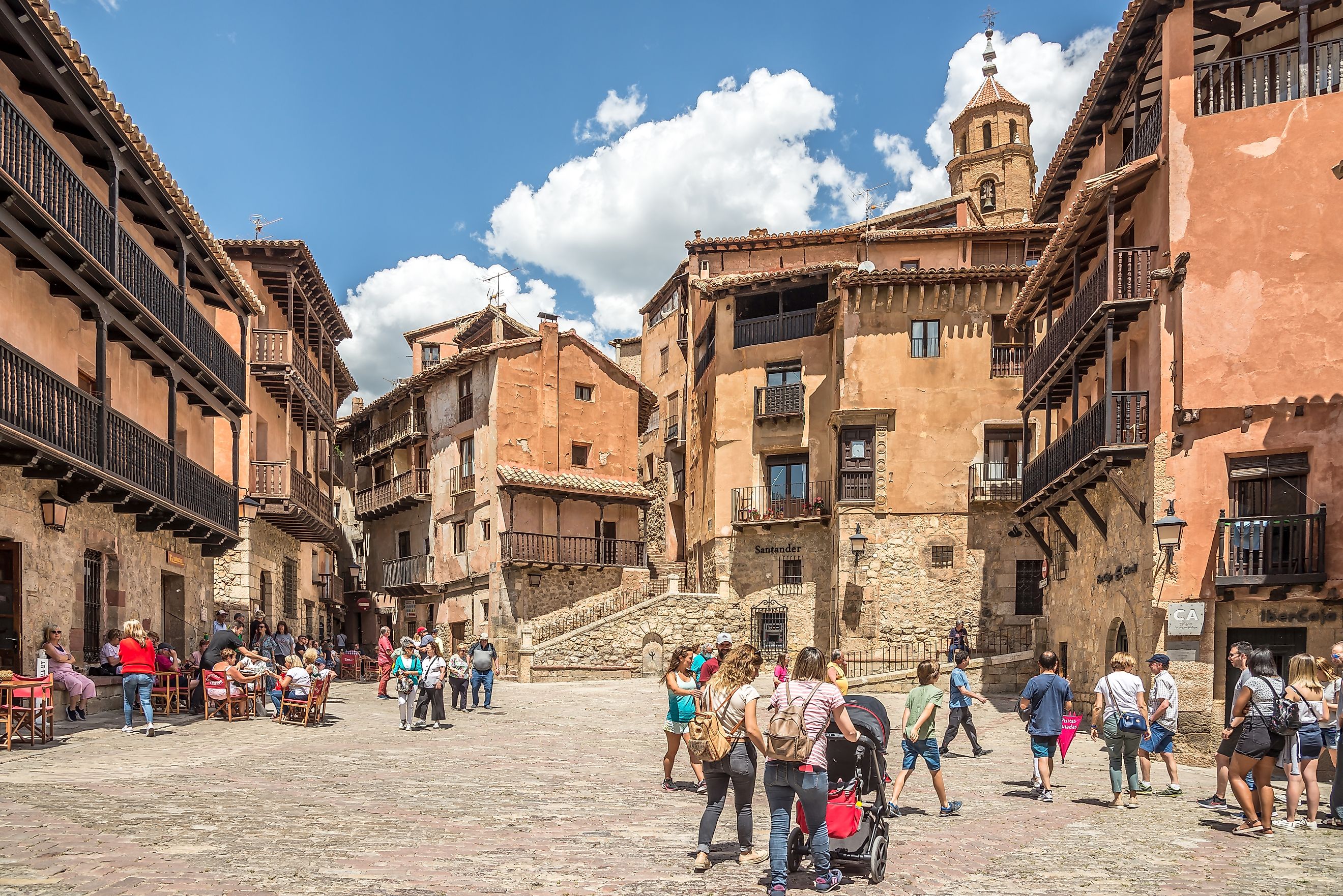
Everything here glows the warm color of baked clay and weathered timber. Set inside a looping river canyon in Aragón, Albarracín has held onto its handcrafted feel through generations of local ironworkers and carpenters. Wooden footpaths trace the edge of the Guadalaviar River at the bottom of the gorge, where families stroll along the water while the sun catches the cliffs above. Up top, ancient defensive walls run along the bare mountain ridge like a miniature Great Wall. Just outside the stone gateway, the Pinares de Rodeno offers miles of peaceful walking trails through resin-scented pine forests, where sandstone boulders hide prehistoric red-ochre cave paintings. The dry mountain air, clear nights, and absence of modern noise make it easy to completely unwind.
Siurana, Catalonia

Only a handful of families live year-round at the end of the winding single-lane road to Siurana. High in the mountain watershed that feeds the lower basin of the Ebro River, this stone hamlet is famous among world-class rock climbers, but the vibe in the village square remains quiet and grounded. Ancient stone cottages gather around the twelfth-century Romanesque church of Santa Maria, where the cliff edges drop straight toward the turquoise Siurana Reservoir. Trails lined with wild thyme and lavender wind down the plateau to quiet coves where you can rent a kayak and paddle along the canyon base. In the evening, when day-trippers head home and the limestone walls turn deep gold in the sunset, the stillness up here is total.
Cazorla, Andalusia

Water runs right under the main square in Cazorla, flowing through an underground channel built centuries ago beneath the central plaza before emerging down the hill in a rush of waterfalls along leafy walking paths. This lively mountain town in Andalusia serves as the gateway to the vast Sierras de Cazorla, Segura y Las Villas Natural Park, which shelters the official springhead of the Guadalquivir River. Locals drink morning coffee at outdoor tables before heading up into the sea of olive groves that blankets the hillsides. Stone stairways climb past the medieval Castillo de la Yedra, leading directly to trailheads that follow the river into deep pine valleys where wild mountain goats wander the ridges.
Quick Escapes in Spain's Small Towns
Whether listening to the rush of mountain water echoing off limestone walls, breathing in the scent of wild rosemary and pine, or watching the evening light warm ancient sandstone battlements, these nine towns prove that Spain's most restorative treasures are rooted in its land and people. Pack a pair of sturdy walking shoes, leave the rigid schedules behind, and let the quiet strength of these mountain sanctuaries offer the peaceful recharge you have been looking for.