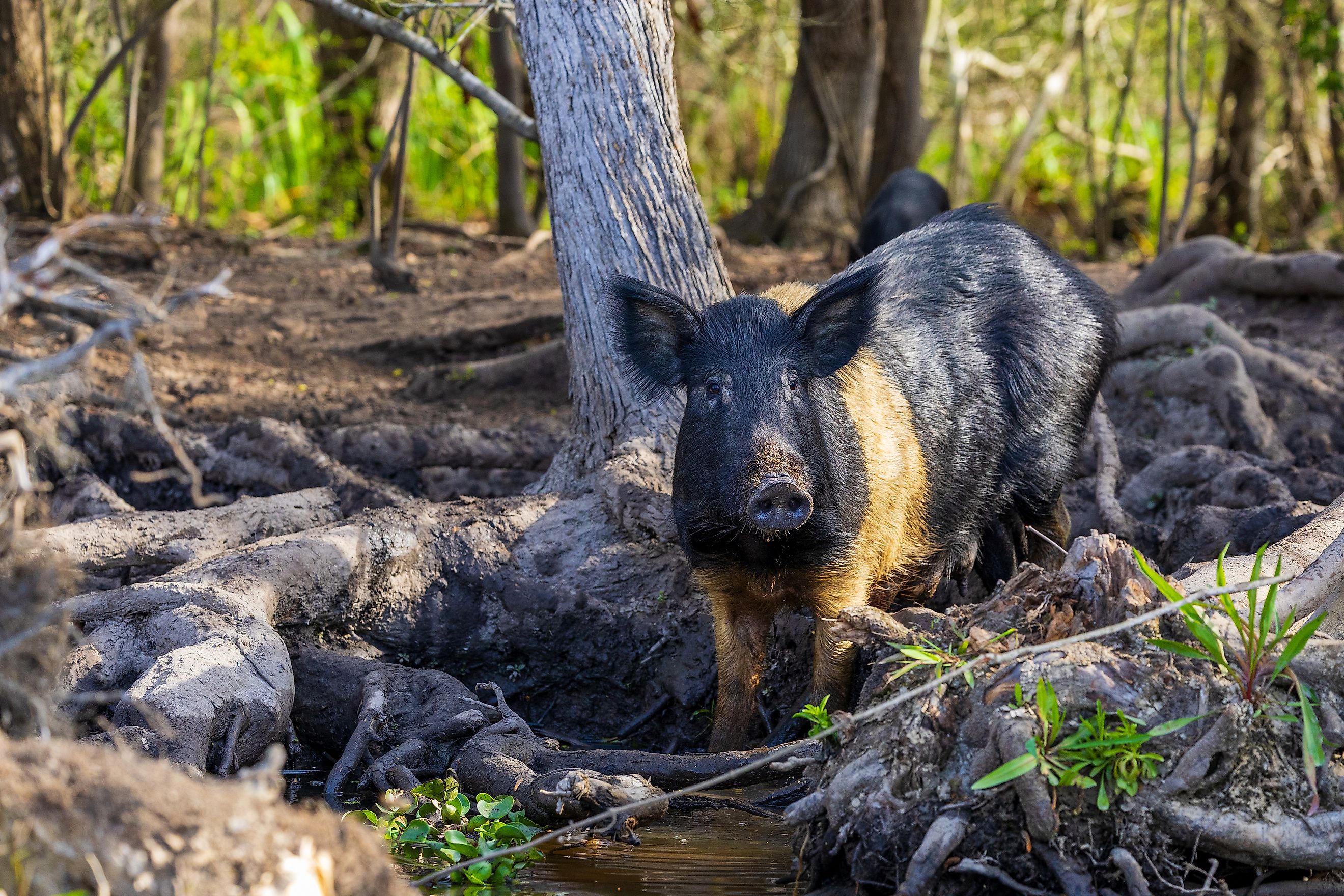
The State Parks Where Wild Hogs Have Taken Over The Trails
According to Texas Parks and Wildlife Department data, the United States wild pig population reached an estimated 6.9 million animals across 35 states by 2016. That was a sharp rise from just 2.4 million in 18 states back in 1982. The clearest evidence is on the ground. A single sounder of hogs can turn a groomed trail into a field of overturned earth overnight, root through campground turf, and send wary hikers looking for a different route entirely. State parks, without the funding or fencing of larger federal preserves, take the brunt of that damage. These six parks, from a Texas lake shore to a Missouri glade that holds a federally threatened wildflower, are where the wild hog problem has become impossible for rangers, visitors, and gawkers alike to ignore.
Lake Brownwood State Park, Texas

Lake Brownwood State Park covers 537.5 acres along the shore of Lake Brownwood in Brown County. Cabins, picnic shelters, and a recreation hall built from local stone by the Civilian Conservation Corps in the 1930s draw campers year-round. Texas carries the country's worst feral hog problem by far, with hogs confirmed in more than 230 of the state's 254 counties. As of 2018, Park Superintendent John Holland told local news he had watched the population climb steadily over his 12 years at the park, with the hogs growing bolder and turning up regularly along the hiking trails.
The damage isn't cosmetic. "They're rooting up areas along the trails where they can actually cause accidents," Holland said. He warned visitors during a spring break rush to keep their distance and treat any hog sighting like an encounter with any other wild animal. It's one more reason to plan carefully before setting out on any of Texas's scenic drives and parks in hog country: watch the ground as closely as the view.
Galveston Island State Park, Texas

Galveston Island State Park protects roughly 2,000 acres of upper Gulf Coast barrier island. This is the last stretch on Galveston Island with public access running from the beach to the bay, across dunes, coastal prairie, and salt marsh. Feral hogs are recent arrivals here. Park officials have described them as the park's "newest wildlife visitors," and the hogs began showing up in search of surface worms and insects, leaving tracks and torn-up topsoil behind as evidence. Texas holds a large share of the country's feral hogs, with state wildlife officials putting the state's 2016 population at roughly 2.6 million of the nation's estimated 6.9 million.
Rangers ask visitors to keep their distance and report sightings rather than approach, while the park's natural resource team works on a longer-term response. For now, the advice for anyone hiking the dune trails or the coastal prairie loop is the same as at any hog-affected park: stay alert, and don't assume the wildlife pictured in the brochures is limited to shorebirds. It's a strange new wrinkle for one of the state's most popular Gulf Coast getaways.
Johnson's Shut-Ins and Taum Sauk Mountain State Parks, Missouri

Johnson's Shut-Ins State Park, 9,432 acres built around a dramatic run of granite chutes and waterfalls on the East Fork of the Black River, was one of the first Missouri state parks to run into a hog problem. In 2002, then-superintendent Jerry Toops found a glade torn up along the Ozark Trail on Goggins Mountain and went on to trap roughly 200 hogs on nearby land over the following years. Next door, the roughly 7,500-acre Taum Sauk Mountain State Park, home to Missouri's highest point at 1,772 feet, protects restored glades and wetlands that have proven just as attractive to rooting hogs.
The stakes go beyond damaged scenery. A 2019 survey found that 20 to 25 percent of the known sites for Mead's milkweed, a federally threatened wildflower, on Taum Sauk's glades had been damaged by hogs within the previous year, with one site wiped out entirely. Missouri's broader elimination partnership, which uses trapping and helicopter-based removal, has cut the state's feral hog numbers by 84 percent since 2016, and both parks briefly closed for aerial operations as recently as December 2025.
Mount Diablo State Park, California

At nearly 20,000 acres and topped by a 3,849-foot summit with panoramic views across the Bay Area, Mount Diablo State Park has contended with feral pigs since the 1920s and 1930s, when European boars were brought to the nearby Monterey area for hunting. The exact size of the park's pig population is not known, but a single sow can produce two to three litters of up to a dozen piglets a year. The result is compounded damage: uprooted soil, exposed roots, and fouled creeks and ponds.
California State Parks and the neighboring East Bay Regional Park District trap hundreds of pigs a year in an attempt to manage the problem, and the East Bay Municipal Utility District spends roughly $50,000 annually trapping pigs to keep them out of the water supply. Bay Area land managers have reported the problem intensifying after several wet winters swelled the local hog population, a trend worth keeping in mind on any hike near this popular Oakland-area day trip.
Henry W. Coe State Park, California

Sprawled across 87,000 acres of the Diablo Range south of San Jose, Henry W. Coe State Park is the largest state park in Northern California. Its backcountry of oak woodlands and swimming holes like China Hole and Kelly Lake is crossed by trails such as the Live Oak Trail and the Coyote Creek Loop. Wild pigs have been rutting up those trails and wallowing in the park's ponds and roads for decades. As one park ranger put it bluntly in a 2004 interview, "I don't think we'll ever be able to eradicate the pigs from the park."
The math holds against the rangers: female pigs can start breeding at nine months old and produce up to three litters a year, with five to ten piglets each. That birth rate outruns trapping alone. Rangers there have long relied on capturing and removing the animals as the most practical control method available to a park this size. Even the wildest corners of California's state parks rarely stay pig-free once boars find their way in.
Fontainebleau State Park, Louisiana

On the north shore of Lake Pontchartrain across the water from New Orleans, Fontainebleau State Park covers 2,800 acres near Mandeville. The park's draws include the Tammany Trace, a paved rail-trail built on a former railroad line, and a shorter 1.25-mile nature trail. In a 2017 report, park rangers described feral hogs plowing up open fields near the beach so thoroughly that the ground turned uneven and unsightly; one ranger compared it to "mowing grass in hell." Officials said they had captured and relocated more than 150 hogs from the park in a single year. That strategy has not made a lasting dent in the population.
The hogs, some of the males topping 200 pounds, have also wandered close to campsites at mealtimes, prompting rangers to remind visitors that the animals are wild, not tame, and should never be fed or approached. Statewide, Louisiana wildlife officials have pegged feral hog damage at tens of millions of dollars a year. It's worth keeping in mind before pitching a tent at one of the Gulf Coast's most scenic lakeside parks.
Watch The Ground, Not Just The View
None of these parks are minor stops. Two hold the largest and highest ground their states have to offer, one protects a wildflower found almost nowhere else, and all six pull in hikers looking for exactly the kind of quiet trail a wild hog is most likely to root up. The pattern across all of them is the same: hogs follow food and water, multiply faster than most trapping programs can keep pace with, and leave a trail experience measurably worse than the one shown in the brochure. None of that means staying home. It means checking each park's current advisories before a visit, giving any hog sighting plenty of room, and watching the ground underfoot as closely as the scenery around it.