9 Of The Most Captivating Small Towns In The Ozarks
Calico Rock keeps a ghost town inside its own city limits. Twenty-odd abandoned buildings sit on the east side of the creek, the jail and the cotton gin and the funeral parlor still standing, while the rest of the town goes about its business a few hundred yards away. That is the kind of place the Ozark Mountains produce. The range covers roughly 47,000 square miles across Missouri, Arkansas, Oklahoma, and a corner of Kansas, and the towns folded into it tend to be stubborn, specific, and unlike anywhere else. These eight are the most captivating of them.
Eureka Springs, Arkansas

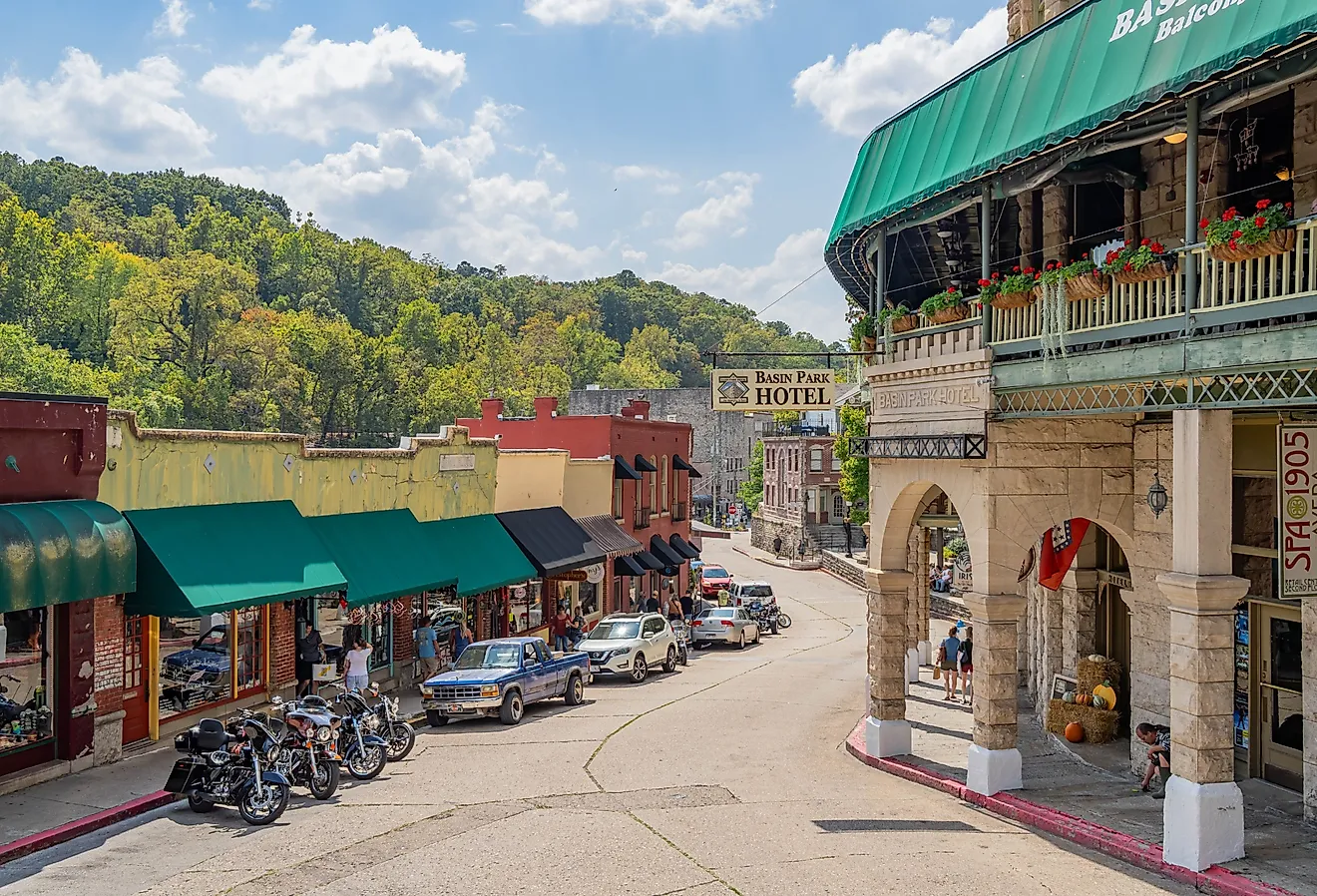
The whole downtown is on the National Register of Historic Places, and it is built into a hillside so steep that the streets loop back over themselves. The Flatiron Building holds down the wedge where Spring and Center meet. Spring Street takes its name from the water still running beneath it, which the town was founded on in 1879 when Victorian health seekers arrived believing the springs could cure them.

Some of those springs are still visible indoors. Mud Street Cafe sits below street level, a nod to the muddy 19th-century thoroughfares that later got built over, with a turn-of-the-century oak bar and local paintings on the walls. The Grotto was carved into a stone wall, and the spring runs where you can see it from the table. Up the hill, St. Elizabeth of Hungary Catholic Church is entered through its bell tower, an arrangement odd enough to have earned the church a permanent spot in local lore.
Calico Rock, Arkansas

French trappers working the White River named the place for bluffs streaked in so many colors they looked like bolts of calico cloth. About 1,000 people live here now, on a hillside above the water in Izard County. The one-and-a-half block downtown went on the National Register in 1985, and the Calico Rock Museum occupies the old Bank of Calico Rock building.

East Calico is the reason to come. Locals called the moonshine that flowed through its taverns peppersauce, and the name stuck to the alley. When the railroad arrived in 1903, respectable citizens ran the roughnecks out, business boomed, and then the trains stopped coming. More than twenty buildings still stand there in various stages of collapse, and the town reopened the district as a walkable attraction in 2007 with self-guided markers. Trout fishing on the White River fills out the rest of a visit.
Mountain View, Arkansas

Musicians show up on the courthouse square with instruments and just start playing. Mountain View calls itself the Folk Music Capital of the World and has the credentials to argue it: the Arkansas Folk Festival began here in 1963, and the state built the Ozark Folk Center around the same tradition, a park devoted entirely to Ozark music and handcraft where blacksmiths and coopers work in front of you.

Underground, Blanchard Springs Caverns is the other draw. It is a living cave, meaning the formations are still growing, and the Forest Service runs guided tours through it. The surrounding Sylamore District of the Ozark National Forest covers roughly 130,000 acres of hardwood, bluff, and river frontage.
Batesville, Arkansas

Founded in 1821, Batesville is the oldest surviving city in Arkansas, which shows in a downtown carrying layer after layer of 19th and early 20th century architecture. It also produced NASCAR driver Mark Martin, who won forty Cup races and never a championship, a record that locals will explain to you at length.
The restored Melba Theater anchors Main Street. It spent its early life as a mercantile building before opening as a cinema in 1940, and it still screens films. A few doors down, The Royal on Main is a boutique hotel inside an 1897 commercial block that pairs antiques with modern rooms. Outside town, the Batesville-Ozark Loop runs 21 miles through the rolling country where the Ozark foothills meet the White River.
Jasper, Arkansas

Jasper has fewer than 600 residents and sits at the center of the most rugged country in Arkansas. It is the Newton County seat and the practical base for the Buffalo National River, which Congress protected in 1972 as the first national river in the United States, heading off a pair of proposed dams that would have drowned the canyon.

Scenic Highway 7 climbs past the Cliff House Inn, which looks out over a gap in the hills that Arkansas markets, with some cheek, as its Grand Canyon. West of town, Boxley Valley holds the state's elk herd, reintroduced in the 1980s after the native animals were hunted out more than a century earlier. Dawn and dusk in the fields along Highway 43 are when you see them.
Branson, Missouri

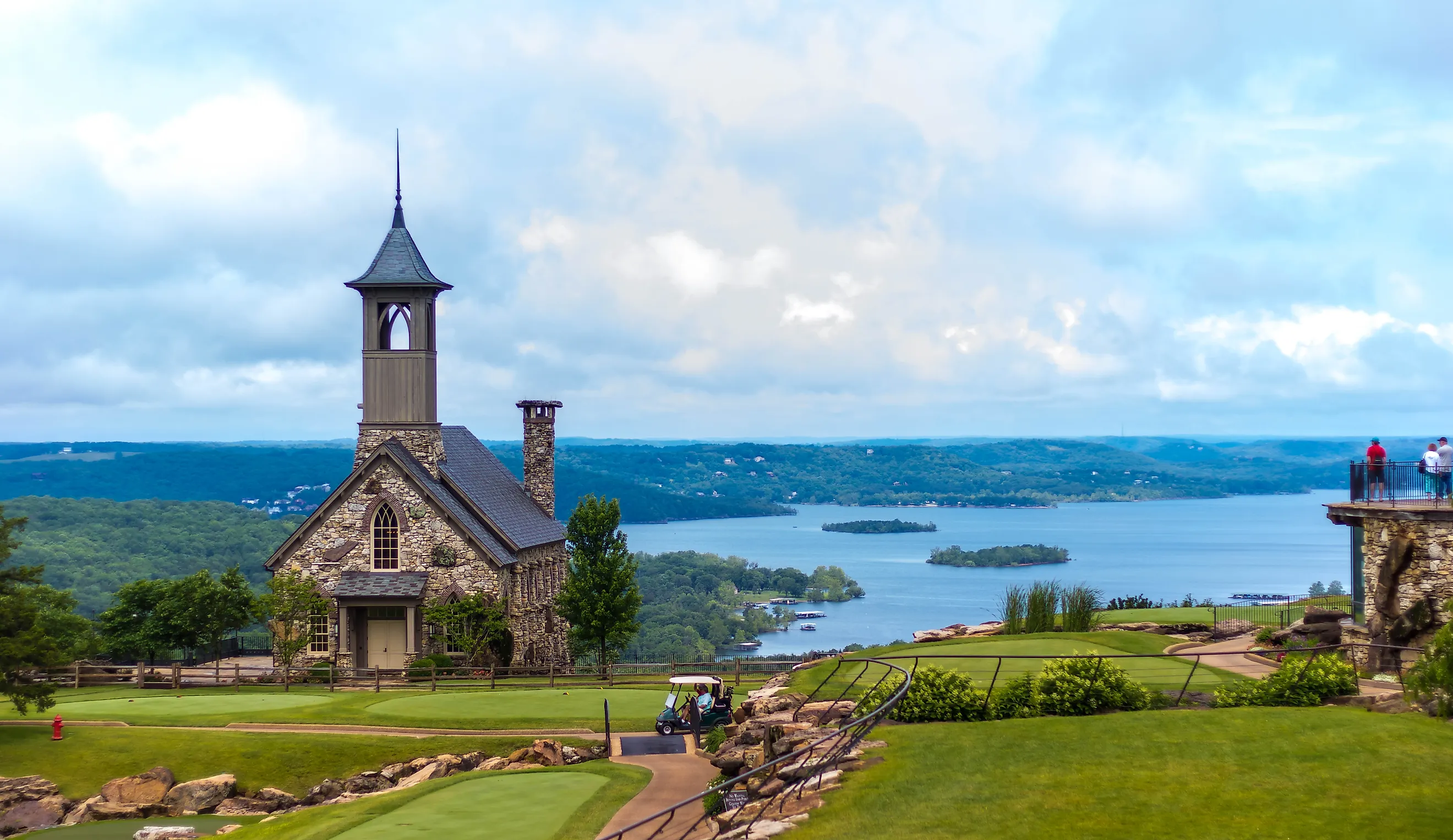
Branson is the loud one, and it is unapologetic about it. Roughly 12,000 people live here year-round and several million visit, drawn by theaters, dinner shows, and Silver Dollar City, an 1880s-themed park built over Marvel Cave that still runs cave tours below the rides. The Titanic Museum, shaped like the ship, holds more than 400 artifacts from the wreck and its passengers.

The quieter half is better than its reputation suggests. The 165 Scenic Overlook is part of a 22-mile loop taking in stretches of Route 165 and views over Table Rock Dam, and it is the best place in town to watch the hardwoods turn in October. Dolly Parton's Stampede, renamed from its previous title in 2018, still runs 32 horses through a dinner show that bills itself as the most visited in the world.
Eminence, Missouri

There are wild horses here, and they are protected by federal law. Free-roaming herds have wandered Shannon County since Depression-era farmers turned their animals loose, and when the Park Service moved to remove them in the early 1990s the county fought back and won: a 1996 act of Congress made the horses a permanent fixture of the Ozark National Scenic Riverways. About fifty remain, in four herds, most reliably spotted in the fields around Two Rivers and Round Spring.

The riverways themselves came first. Congress created the park in 1964 to protect 134 miles of the Current and Jacks Fork, four years before the Wild and Scenic Rivers Act existed. Six miles west of town, Alley Spring pushes out around 81 million gallons a day beside a red grist mill built in the 1890s, and the pairing is among the most photographed scenes in Missouri. Eminence, population around 600, also claims the largest organized trail rides in the country.
Van Buren, Missouri

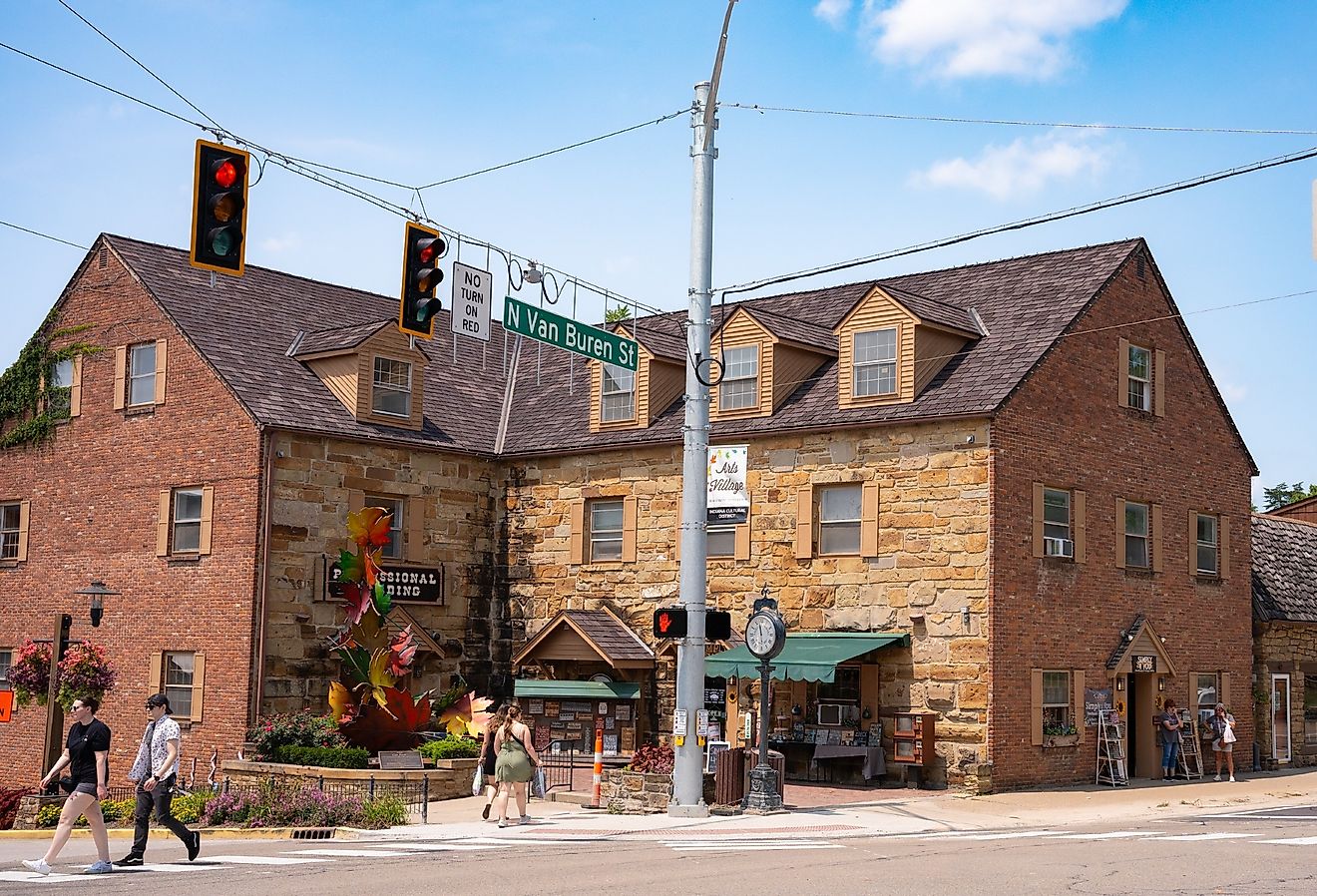
Big Spring discharges an average of roughly 286 million gallons of water a day, which makes it one of the largest single-outlet springs on the continent. It surfaces just south of Van Buren, a Carter County seat of about 800 people named for Martin Van Buren, the eighth president, and it runs a startling blue-green before joining the Current River.
The Current is the point of coming here, whether you are floating it, fishing it, or watching it. The Big Spring Historic District preserves a cluster of Civilian Conservation Corps buildings from the 1930s, hand-cut stone and timber work that has aged into the hillside. Rocky Falls, northwest of town, sends water down a 40-foot shut-in of purple-tinged rock into a pool people swim in all summer.
What Ties Them Together
Water does, mostly. Every town on this list sits on a river or a spring, because the Ozarks are limestone and limestone leaks: the plateau is riddled with caves, sinkholes, and springs that surface cold and enormous, and settlement followed them. Blanchard Springs, Alley Spring, and Big Spring are three versions of the same geology. The second thing they share is isolation, which preserved things elsewhere lost. Mountain View kept its ballads because nobody came to replace them, and Calico Rock kept twenty derelict buildings because nobody needed the land. Branson is the exception that proves it, a town that discovered what the hills were worth and sold tickets.