8 Best Attractions To Visit In The Great Lakes
Attractions across the Great Lakes region encompass a diverse range of natural landmarks, entertainment venues, and geological formations. Spanning the United States and Canada, the Great Lakes cover a combined area of approximately 94,250 square miles and form a natural border between the two countries. Some attractions center primarily on the lakes themselves, while others incorporate the surrounding natural environment into their design and activities. The dramatic dunes of Sleeping Bear Dunes National Lakeshore rise above Lake Michigan, and Niagara Falls features the powerful rapids of the Niagara River, connecting the region to Lake Ontario. In contrast, Navy Pier provides multiple recreational and entertainment activities on the Lake Michigan waterfront. These eight attractions reflect the region's broad collection of natural and cultural landmarks.
Navy Pier

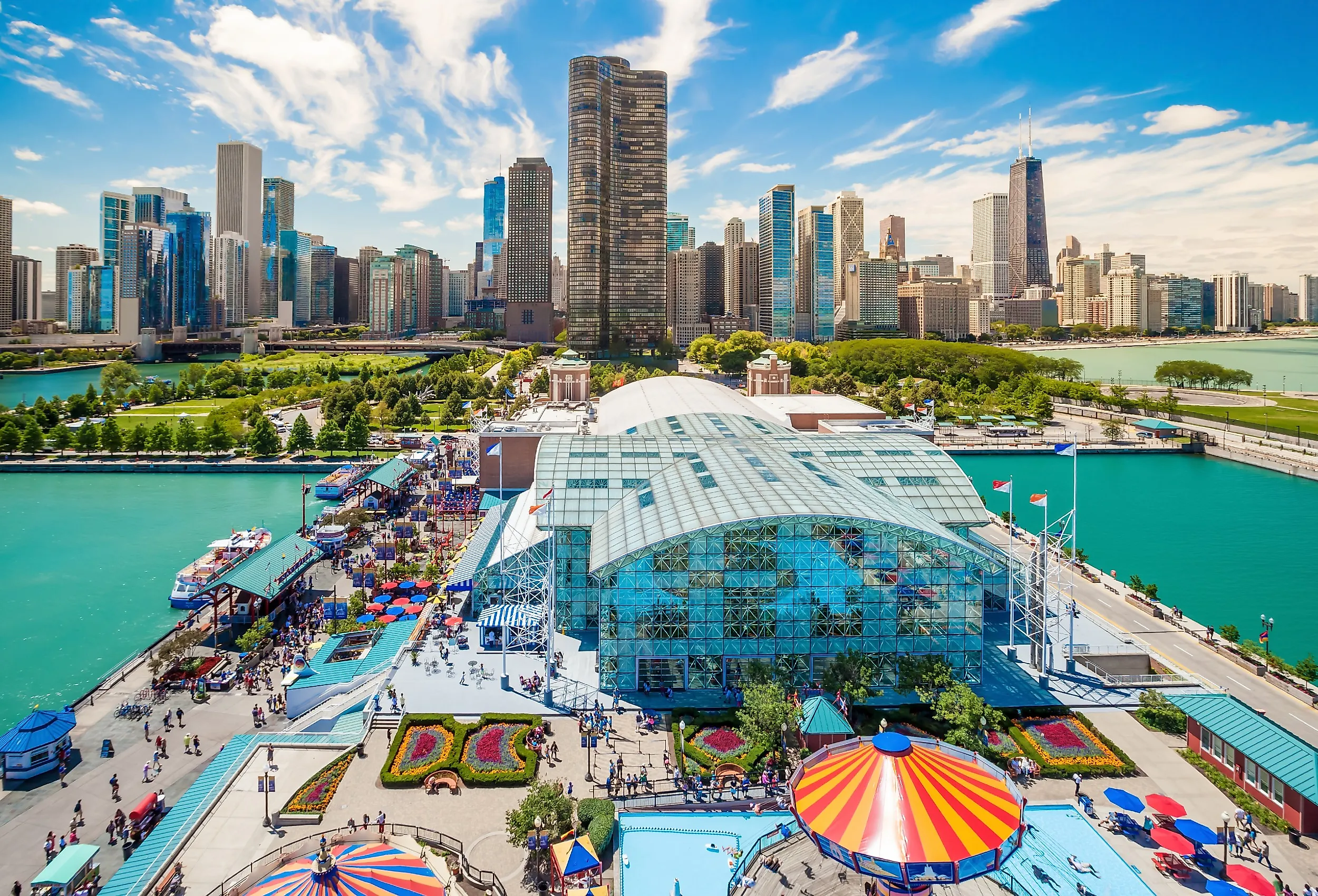
Navy Pier, in Chicago, Illinois, is a waterfront destination offering entertainment, restaurants, shopping, and public events. This Great Lakes attraction extends into Lake Michigan, covering about 50 acres and a 3,300-foot pier. It first opened as Municipal Pier #2 in 1916, designed for shipping and recreation, and was renamed in 1927 as a tribute to Navy personnel who were housed at the pier during World War I. Centennial Wheel, a nearly 200-foot-tall Ferris wheel, provides scenic views across Lake Michigan and the city skyline. Other entertainment options include rides and games, the Chicago Children's Museum, and the Chicago Shakespeare Theater, a performance venue for live plays. Sightseeing and dinner cruise operators make it easy to get out on Lake Michigan. A lakefront hotel, the Sable Hotel, and the all-transient Navy Pier Marina make visiting convenient and accessible, whether arriving by car, by boat, or on foot.
Rock And Roll Hall Of Fame

The Rock and Roll Hall of Fame, on the shores of Lake Erie, preserves music and cultural history while focusing on the local community and lakefront. In Cleveland, Ohio, the original 150,000-square-foot glass-and-steel structure was designed by architect I.M. Pei. The building, which opened to the public in 1995, is well known for its geometric shapes, often described as resembling a guitar neck and a turntable. Chronicling the history, artists, and cultural and social impacts of rock music, exhibits include handwritten lyric sheets, vintage instruments, costumes, and photographs, honoring artists such as Aretha Franklin, Stevie Nicks, Dolly Parton, and James Brown. Visitors can practice playing instruments in The Garage, an interactive area. The property also has a museum store and a café.
A 50,000-square-foot expansion is currently under construction, designed to increase live music and community programming, educational opportunities, and public access to Lake Erie. This project includes flexible indoor space for performances, the Howley Family Student Center for educational programming, and increased museum exhibit space. The Taylor Family Community Park will create additional lakefront public space for gatherings and free community events.
Sleeping Bear Dunes National Lakeshore

On the northwest coast of Michigan's Lower Peninsula, Sleeping Bear Dunes National Lakeshore sits on the eastern shore of Lake Michigan. Established as a National Lakeshore in 1970, the more than 71,000-acre park has a 35-mile shoreline set alongside historic sites and maple forests. Gigantic sand dunes, ancient glacial hills, tower up to 450 feet above the clear waters of Lake Michigan. The Sleeping Bear Heritage Trail has more than 20 miles of trails for hiking, cross-country skiing, and bicycling. Glen Haven Historic Village preserves a 19th-century cordwood station and maritime community that later diversified into farming, canning, and tourism.
Apostle Islands National Lakeshore

Apostle Islands National Lakeshore, in Northern Wisconsin, offers geologic formations and scenic beauty near the shores of Lake Superior. Located at the northern tip of the Bayfield Peninsula, the site has 21 islands and a 12-mile shoreline. Established in 1970, the park has sea caves, beaches, and multiple lighthouses, including the Michigan Island Lighthouse, the Raspberry Island Lighthouse, and the Outer Island Lighthouse. Waves, freezing, and thawing of Lake Superior water carved sandstone cliffs into arches and sea caves, which visitors can explore by kayak. In winter, the caves can become spectacular ice formations under the right conditions. Camping, kayaking, and fishing are other popular activities.
Pictured Rocks National Lakeshore

Pictured Rocks National Lakeshore is a scenic location on Lake Superior, the deepest, largest, and coldest of the Great Lakes. The Upper Peninsula lakeshore extends for about 42 miles along Lake Superior and includes sand dunes, beaches, inland forests, and sandstone cliffs. The name comes from the colorful sandstone cliffs that hover about 50 to 200 feet above the water. As groundwater seeps through cracks, it creates striking vertical streaks of color in the rocks. The colorful cliffs extend for about 15 miles of that shoreline. Established in 1966, Pictured Rocks was the first of the US national lakeshores and now offers nearly 100 miles of hiking trails, along with historic sites such as Miners Castle, a cliff formation, and the circa-1874 Au Sable Light Station.
Niagara Falls

One of the Great Lakes region's most well-known natural attractions, Niagara Falls sits at the border of Canada and New York and shares a connection with both Lake Ontario and Lake Erie. Water from Lake Erie flows down the Niagara River, crashes over Niagara Falls, and rushes toward Lake Ontario. From there, it heads to the St. Lawrence River and continues to the Atlantic Ocean. Canada's side of the falls, known as Horseshoe Falls, drops about 188 feet and is approximately 2,200 feet wide at the crestline.
On the US side in New York, American Falls is 188 feet from the top to the river, with a crestline of about 850 feet. With a crestline of about 50 feet, the adjacent Bridal Veil Falls is the smallest of the three principal falls and is separated from American Falls by Luna Island. Both are within Niagara Falls State Park. The water is used for recreation, drinking, fishing, and hydropower generation.
Turnip Rock

Set in Port Austin, Michigan, in the waters of Lake Huron, Turnip Rock is situated just offshore from Pointe aux Barques at the tip of the "thumb" area on the state's peninsula. Centuries of wave erosion have sculpted the sandstone base, leaving a narrow base and a wider tree-covered top that creates the shape of a turnip. The area has sea caves and cliffs, and eagles and migratory birds have been seen. The site is accessible only by water, whether by kayak or boat, as the surrounding land is privately owned. A popular kayaking route covers a seven-mile round-trip excursion. Launch points include Bird Creek Park and Eagle Bay Public Access.
Cedar Point

Cedar Point incorporates its Lake Erie setting into its entertainment structure, set on more than 360 acres on a peninsula. Part of the Six Flags family of amusement parks, the Sandusky, Ohio, attraction features roller coasters, family rides, shows, and more. The second oldest continuously operating amusement park in the US, the area opened in 1870 as a public beach. Today, the park has 18 roller coasters, including Millennium Force, with its 300-foot drop, and Blue Streak, which opened in 1964. The park also has a lakefront hotel, the Hotel Breakers, and a mile-long beachfront on the shores of Lake Erie.
Great Lakes Attractions
The most notable attractions in the Great Lakes region provide opportunities for outdoor recreation, leisure, and cultural education. Many highlight the region's natural resources while creating ways for visitors to connect with the community. For example, Cedar Point offers family-oriented entertainment and a variety of waterfront activities on Lake Erie. Apostle Islands National Lakeshore adds kayaking, hiking, and swimming to its Lake Superior activity index. Another Lake Erie venue, the Rock and Roll Hall of Fame preserves decades of music history and incorporates green space and public access to the lakefront into its footprint. These attractions illustrate how the Great Lakes' natural and cultural resources can support tourism, community engagement, and economic development.