Why The Ozarks Have So Many Copperheads
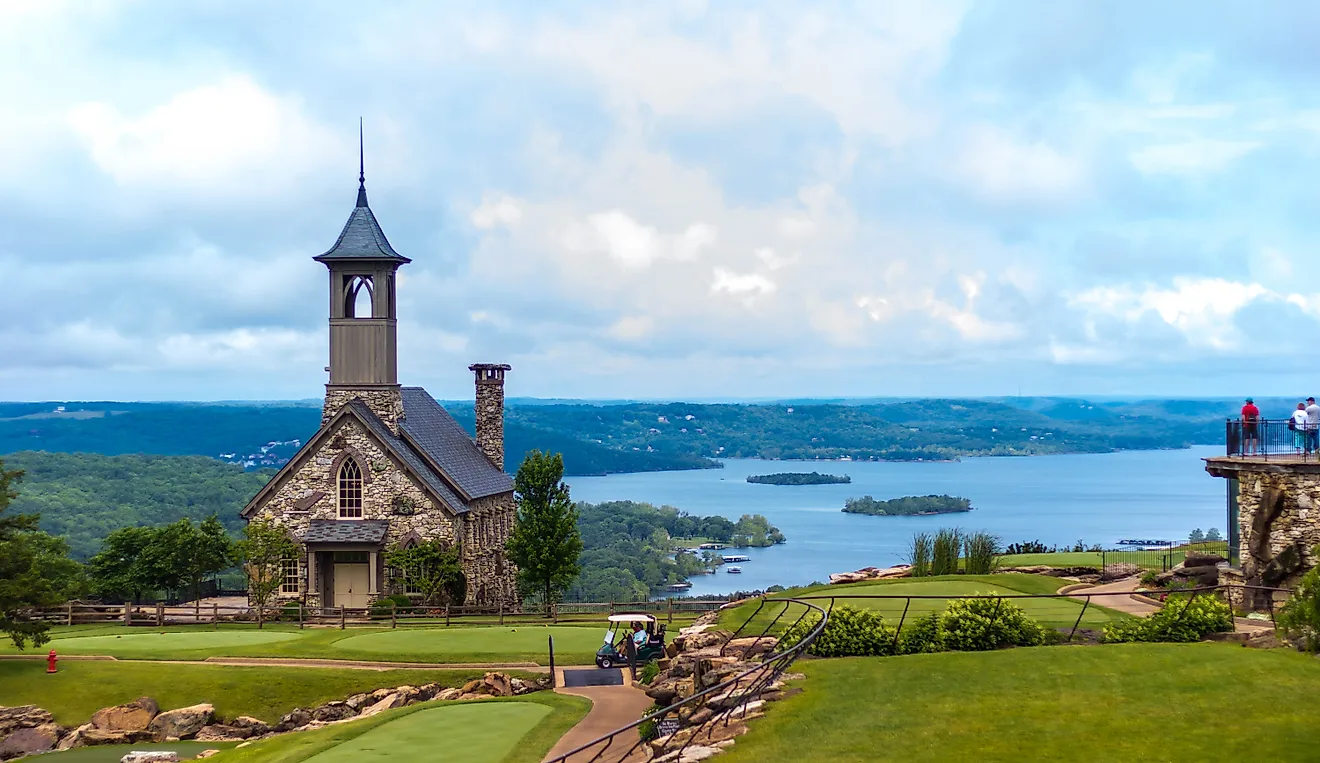
The Ozark Plateau is an ancient unglaciated dome of limestone and dolomite, which is a geologist's way of saying the ice sheets never arrived to flatten it. Hundreds of millions of years of water cutting into soluble rock produced a landscape of dissected hillsides, exposed ledges, talus slopes, caves and sinkholes. Missouri alone has more than 7,500 documented caves. If you set out to design terrain for copperheads, you would build something very close to this and then stop.
They Are The Region's Default Snake

The Missouri Department of Conservation does not hedge on this point.
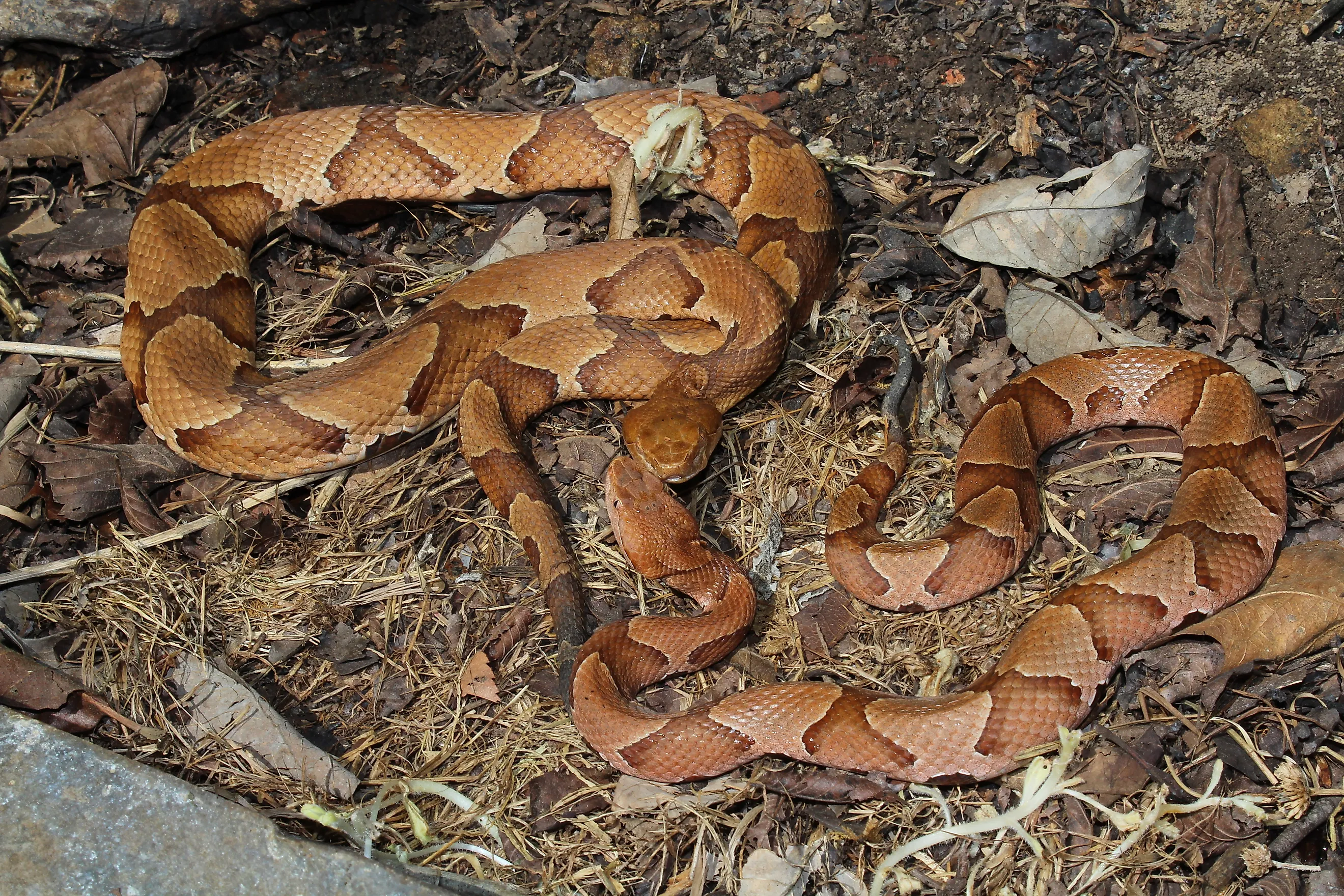
The eastern copperhead is the most common venomous snake in Missouri, found statewide except along the extreme northern border with Iowa. The department describes it as common in suitable habitats.
Missouri holds five venomous species, and the copperhead causes most of the state's venomous bites, estimated at 100 or more people a year, with a fatality rate around 0.01 percent.
The Habitat Description Is Just A Map Of The Ozarks

Read the official habitat requirements and then read a description of the plateau. They are the same paragraph.
Missouri lists copperhead habitat as open rocky wooded hillsides, brushy areas along creeks, and ground offering abundant cover such as scattered rocks, crevices along rock ledges, logs and brush piles.
The Ozark Plateau consists of oak-hickory and shortleaf pine forest over limestone and dolomite, with sinkholes, caves, glades and spring-fed streams. There is no gap between what the snake needs and what the region is.
Ice Never Reached It

This is the structural reason the Ozarks differ from the land immediately north of them.
North of the Missouri River the landscape is glaciated till plain, scraped and smoothed by ice and historically prairie and oak savanna. The Ozark Plateau south of it was never glaciated.
An unglaciated dome has had uninterrupted time to erode into ridges, bluffs and ravines. Glaciation fills valleys and rounds edges. The Ozarks kept every edge they ever made.
Glades Are The Key Feature

One habitat type in the Ozarks matches copperhead requirements almost exactly, and it has a name.
Ozark glades are open, rocky, desert-like openings on south-facing dolomite slopes, maintained historically by fire and now by active management. They are hot, exposed, thin-soiled and full of loose rock.
South-facing, rocky, open and warm is the precise specification for a copperhead basking site and a copperhead den. The Ozarks have these scattered across the whole plateau.
South-Facing Ledges Are Where They Winter

The overwintering requirement is the narrowest constraint on the species, and the Ozarks satisfy it repeatedly.
Missouri's field guide states that copperheads overwinter singly or congregate at favorite sites, typically south-facing rocky ledges. They also use abandoned rock quarries, rocky lake spillways, animal burrows, hollow logs and stumps, and caves.
A dissected limestone plateau produces south-facing rocky ledges by the thousand. Most landscapes offer a handful. This one offers them on every valley side.
Talus Is A Recognized Habitat Here

People associate talus with alpine country, and Missouri classifies it as one of its own natural communities.
Limestone and dolomite talus forms where fragments break off cliff faces, producing slopes where loose rock covers more than half the surface with little soil and sparse vegetation. The state notes that talus offers excellent habitat for small agile animals, with cool moist pockets among the boulders.
Talus is what rattlesnakes and copperheads den in across the Appalachians. The Ozarks generate it from their own bluffs continuously.
The Karst Adds Another Layer

Soluble bedrock does something underground that no other rock type matches.
Missouri is called the Cave State for its 7,500-plus documented caves in Ozark limestone and dolomite, alongside some of the largest single-outlet springs in the world. Water dissolves its way through the rock and leaves voids behind.
Every one of those fissures, sinkholes and cave mouths is a potential route below the frost line for an animal that cannot dig. Karst hands copperheads a ready-made network of winter shelter.
Edge Habitat Is Everywhere
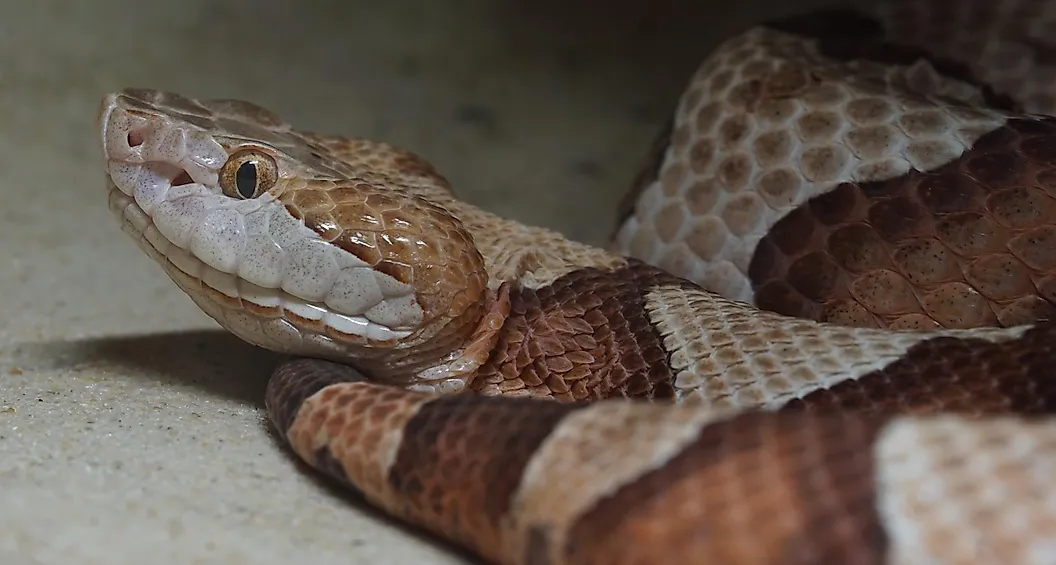
Copperheads are an edge species rather than a deep-forest one, and dissected terrain is nothing but edge.
Missouri's guidance puts them on rocky hillsides and along forest edges, in wooded stream borders, old fields and meadows where they hunt rodents. The species wants the seam between cover and open ground.
A plateau cut by thousands of streams produces that seam on both sides of every valley. Flat farmland produces one edge per field.
Two Subspecies Met Here

The region sits at a taxonomic boundary, which says something about its position on the map.
Missouri historically recognized two copperhead subspecies: the Osage copperhead across the northern two-thirds of the state and the southern copperhead in the southern third. Recent taxonomy has consolidated these into a single species, the eastern copperhead.
The old split marks a genuine transition zone. The Ozarks sit where northern and southern populations meet rather than at the margin of either.
Fire Suppression Changed The Glades

The glade habitat is not self-maintaining, which has consequences for everything living on it.
Glades were historically kept open by fire and are now maintained by deliberate management. Where fire was suppressed, cedar and brush closed them in. Missouri had to reintroduce the eastern collared lizard to Ozark glades by translocation after fire suppression eliminated it from many sites.
Copperheads are generalist enough to persist through that change in a way the collared lizard was not. The species tolerates the degraded version of its own habitat.
The Short Answer

The Ozarks hold so many copperheads because an unglaciated limestone and dolomite plateau produces more of what the species needs per square mile than almost anywhere else in the country. South-facing rocky ledges for denning, talus slopes, glades, 7,500 caves, oak-hickory forest for summer and endless edge between the two.
Missouri's own field guide calls the eastern copperhead the most common venomous snake in the state and lists its habitat in terms that describe the plateau itself. The snake is not unusually abundant there by accident. The ground was already the right shape.