America's First National Wildlife Refuge
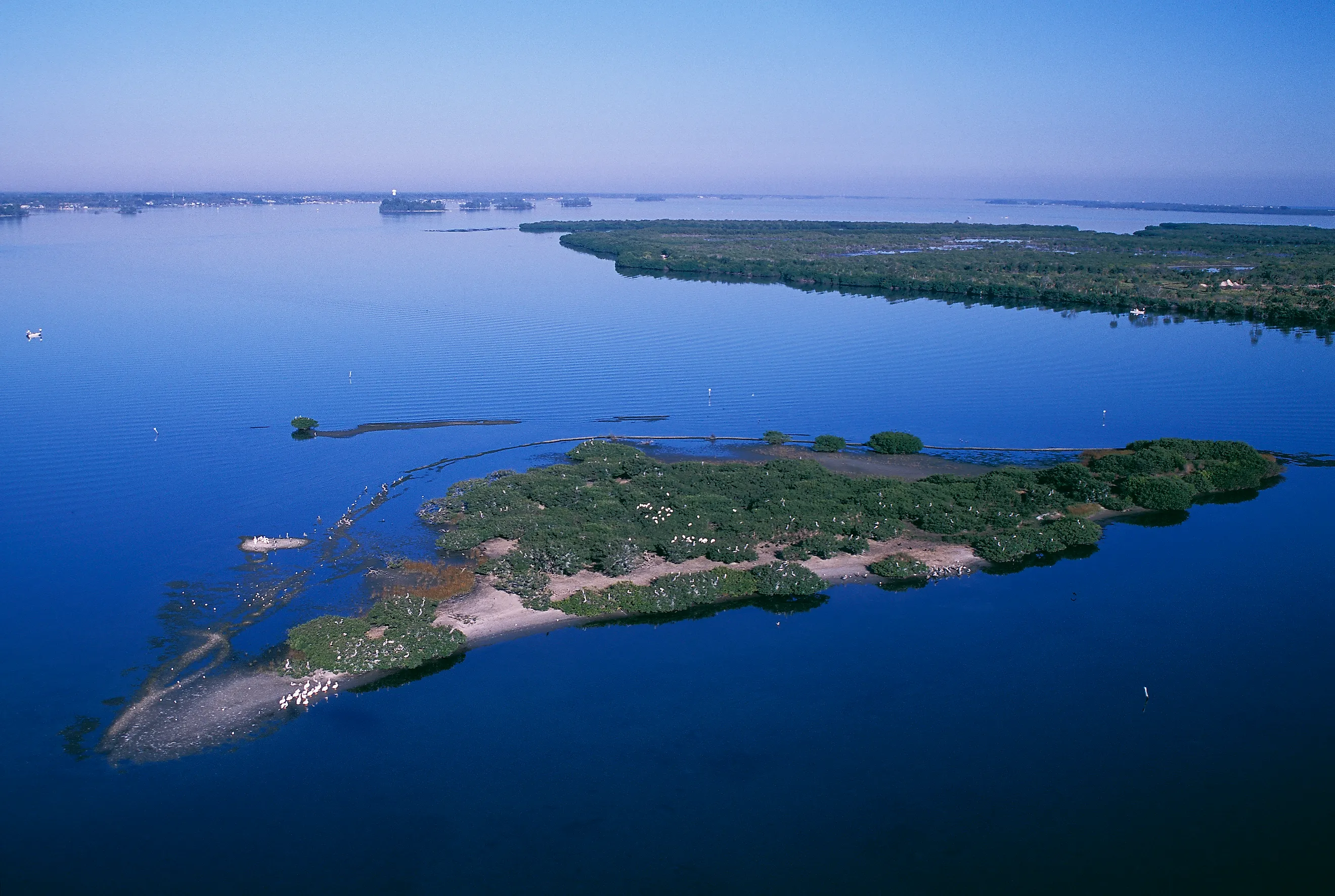
The first warden of America's first national wildlife refuge was paid only $1 per month. But Paul Kroegel, a German immigrant and boat builder, guarded Pelican Island with a shotgun long before he was given the job. Thanks to his efforts, the Pelican Island National Wildlife Refuge in Florida remains protected and is still off-limits to the public.
Why Pelican Island Is Considered The First National Wildlife Refuge

Pelican Island was set aside as a parcel of land with wildlife that needed protection in 1903. It was the first piece of land given explicit federal executive attention to protect wild animals, in this instance, nesting pelicans. President Theodore Roosevelt signed the order in response to a massive decline in local bird populations.
Other reserves and federal lands existed before 1903, most notably Yellowstone National Park. But even though Yellowstone was established in 1872, it opened as a recreational site, not strictly as a sanctuary for wildlife. It is also true that there were state game laws prior to 1903. However, these laws were not dedicated solely to wild bird protection.
A Plume Hunting Crisis That Nearly Wiped Out Florida's Birds

President Theodore Roosevelt was a hunter, but even he was dismayed by the number of birds being slaughtered at the time. Even worse, flamingos, pelicans, great blue herons, snowy egrets, and roseate spoonbills were killed because of the huge demand for feathers on women's hats and dresses. It was a horrific time, with hunters decimating thousands of these birds at the same time, leaving their chicks to starve.
When ornithologist Frank Chapman took a walk in the streets of Manhattan in 1886, he saw the feathers on more than 500 of the roughly 700 hats he counted. Florida's birds were not safe anywhere, except on Pelican Island along the Atlantic Coast. They were being hunted all over the wetlands of the American South, purely for profit. But when thousands of nesting brown pelicans descended on Pelican Island, they too became a target.
The Arrival Of Paul Kroegel

In 1881, when 17-year-old Paul Kroegel arrived in Sebastian, Florida, he could see Pelican Island from his house on the west bank of the Indian River. He soon saw the threat to the birds and decided to start sailing out to the island, shotgun in hand. Kroegel single-handedly kept many of the hunters at bay, never asking for backup or reward.
Fortunately, his efforts did not go unnoticed. Frank Chapman, as well as the Florida Audubon Society and the American Ornithologists' Union, started advocating for laws that would curb bird hunting in Florida.

Together, these advocates ensured that the executive order signed by Roosevelt would declare Pelican Island the first federal bird reservation. That significant step would result in the island eventually becoming the island eventually becoming the first National Wildlife Refuge System in America.
The Audubon Society hired Kroegel, paying him a salary of only $1, to be Pelican Island's first warden. Ten years later, he became a federal employee of the Bureau of Biological Survey. Pelican Island became the model for more than 50 bird reservations Roosevelt went on to create. Pelican Island was designated a National Historic Landmark in 1963, affording it even more protection.
Pelican Island National Wildlife Refuge Today

Pelican Island is a tiny destination, only 3 acres, but it also includes more than 5,400 acres of protected lands and waters under the banner of wildlife refuge. The island itself is off-limits to protect the birds, but there are two loop trails that take visitors around the salt marsh and mangrove forests.
There is also the Wildlife Trail, which gets visitors closer to the wildlife without disrupting them. The refuge features a boardwalk and observation tower from which visitors can see Pelican Island. In winter and spring, nesting brown pelicans share the lagoon with migrating white pelicans. Kayaking and boating are allowed in the water surrounding the island. The waters are also home to protected species like the green sea turtle, wood stork, reddish egret, and Florida manatee.
More Contenders For Protected Land

As alluded to earlier, there are other locations in the US that claimed early protected status. Congress started moving towards land reservation in 1832 when it created the Hot Springs Reservation in Arkansas. While this was done long before 1903, the land was set aside to protect thermal waters for public health, not for the protection of plants or animals.
Yosemite Valley received state protection via a congressional grant signed by President Abraham Lincoln in 1864. The grant set aside public land for preservation, but the goal was to preserve natural wonders and encourage recreation.

Oakland, California's Lake Merritt became the country's first official municipal wildlife refuge in 1870 to protect migrating waterfowl and other birds. However, the sanctuary was established by the city and state without federal involvement, unlike Pelican Island.
President Benjamin Harrison created the Afognak Forest and Fish Culture Reserve in Alaska in 1892. The reserve was set up to protect both timber and salmon spawning grounds. It was the first federal biological reserve and Alaska's first forest reserve, but it focused on fisheries and natural resources, not land animals or birds.
Protecting America's Wild Places
What would have happened if Paul Kroegel had not literally taken matters into his own hands? Would Florida's bird population have been completely wiped out? Would there even have been a legal precedent for the protection of wild birds? We will never know the alternative, and luckily so, because Kroegel's efforts ensured that Pelican Island still stands today and still protects the birds that were so brutally killed more than 100 years ago.