The State Parks Older Than The National Park System
Niagara Falls was protected 31 years before the National Park Service existed. In 1885, after a decade-long fight against the mills and factories crowding its banks, New York set aside the land around the falls as the Niagara Reservation.
In the years that followed, other states rushed to create their own state parks. These were not simple endeavors: citizens and prominent leaders had to lobby for years to protect crucial historical and natural landmarks from development. From the largest waterfall in the US to an old-growth forest at the headwaters of the Mississippi, here are the state parks that became a state park before the National Park Service existed: from newest to oldest.
McCormick's Creek State Park

McCormick's Creek State Park predates the Organic Act by a single month, as it was established on July 4, 1916, in Indiana in celebration of the state's 100th birthday. Its first resident also arrived in 1816, a homesteader named John McCormick.
Settlers tried to carve out a living via logging or quarrying, but the steep cliffs and low water levels made such activities a major challenge. The area gained a reputation as a nature getaway in 1888 when physician Frederick Denkewalter established a sanatorium here to allow patients to relax by the gentle creek or go walking through the canyons. When he passed away in 1914, the state of Indiana purchased the land and transformed it into Indiana's first state park, holding a dedication ceremony on July 4, 1916.
Today, the park is known for its 100-foot-deep canyon and limestone outcrops, and the hiking trails that cross through it. People can also wade through McCormick Creek itself.
Fort Abraham Lincoln State Park

Fort Abraham Lincoln State Park is the oldest state park in North Dakota, dating to 1907, nine years before the NPS was founded. Its history is considerably more controversial than the others listed, due to its role in the Indian Wars in the 19th century.
The fort itself was set up in 1872 by the 6th Infantry. It would be expanded the following year with a cavalry post, which would house the 7th Cavalry under Lieutenant Colonel George A. Custer. This would serve as the center for Custer's efforts to combat the Sioux, who were resisting the arrival of prospectors eager to mine the Black Hills for gold. It was also from this fort that Custer would take his last journey in 1876 into Montana Territory, where he was defeated and killed by a Native coalition at the Battle of the Little Bighorn.

The fort was abandoned in 1891, but was reestablished as a state park 16 years later. The park aims to tell both sides of the story through restored buildings such as the Central Barracks, Granary, Commanding Officer's Quarters, and the On-A-Slant Indian Village.
This village is a recreation of a Mandan village, which was abandoned in the early 18th century due to smallpox epidemics. The village has six reconstructed lodges to enable visitors to explore Mandan culture and lifestyles.
Mackinac Island State Park

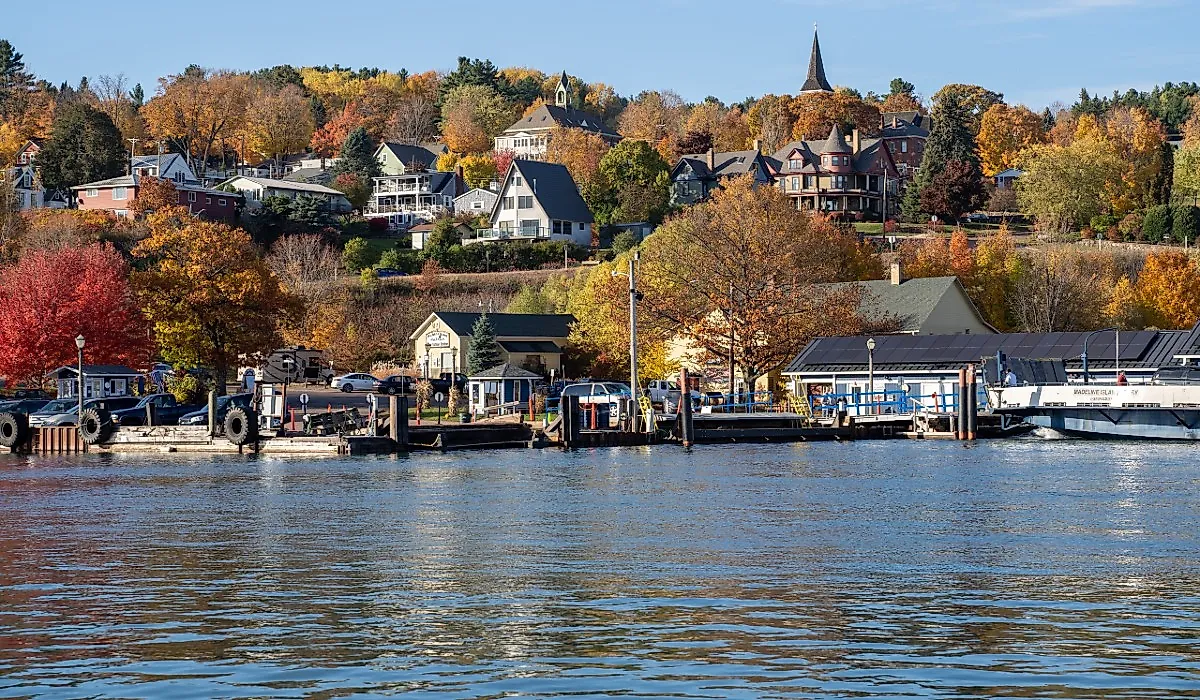
Many national parks start as state parks, but Mackinac Island is unique in that it began as a national park. In 1875, President Ulysses S. Grant established the Lake Huron island as Mackinac National Park, making it the second after Yellowstone.
The island had already impressed visitors for decades, as steamships on the Great Lakes would stop there to refuel. They noted its wooded paths, bluffs, and historic importance as a battle site in the War of 1812.

The early national park would be managed by the War Department from Fort Mackinac, but a lack of money and complications over jurisdictions made the park unfeasible to manage, especially as soldiers were not paid for extra duties of maintaining the park. In 1895, the federal government transferred the land to Michigan, which redesignated it as Mackinac Island State Park.
This state park covers more than 80% of the island's total area, including the impressive Arch Rock, a 50 feet limestone arch offering a "window" view into Lake Huron. Or the 145-foot-tall Lover's Leap. The entire island bans cars, meaning the only way to get around is by horse-drawn carriage, foot, or bicycle.
Itasca State Park

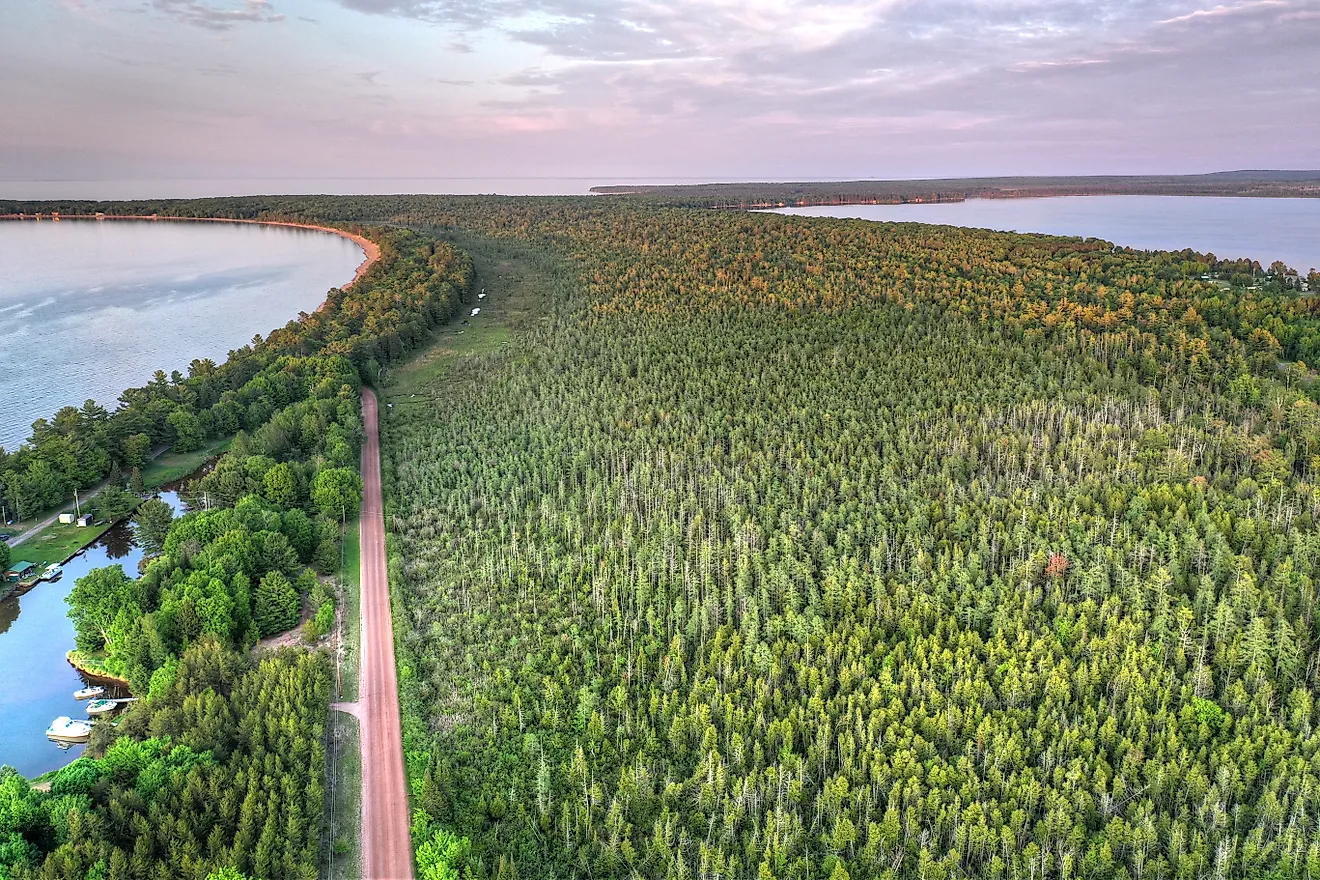
As the second oldest state park in the nation, Itasca State Park is situated at one of the most important headwaters in the United States: Lake Itasca. From this Minnesota lake, the Mississippi River winds all the way down through the center of the U.S. to the Gulf of Mexico.
The Minnesota Historical Society officially confirmed this lake as being the source from 1889 to 1890 thanks to the work of surveyor and historian Jacob Brower. Lumber companies arrived in larger numbers, cutting down the large white pine trees. Brower himself would join alongside other notable figures to lobby to protect the lake, especially the 100 to 120-foot-tall pines.

The proposal met stiff arguments in the Minnesota legislature, with some arguing for preservation and others for lumber interests. The conservationists won out in 1891 with the establishment of a five-by-seven-mile park known as Lake Itasca State Park, although logging wouldn't officially end in the region until 1920.
Visitors to the park can see several historic sites, including the 1905 Douglas Lodge, which was used to greet guests, climb up a fire tower, or view some of the rare old-growth forest that was protected from loggers.
Niagara Falls State Park

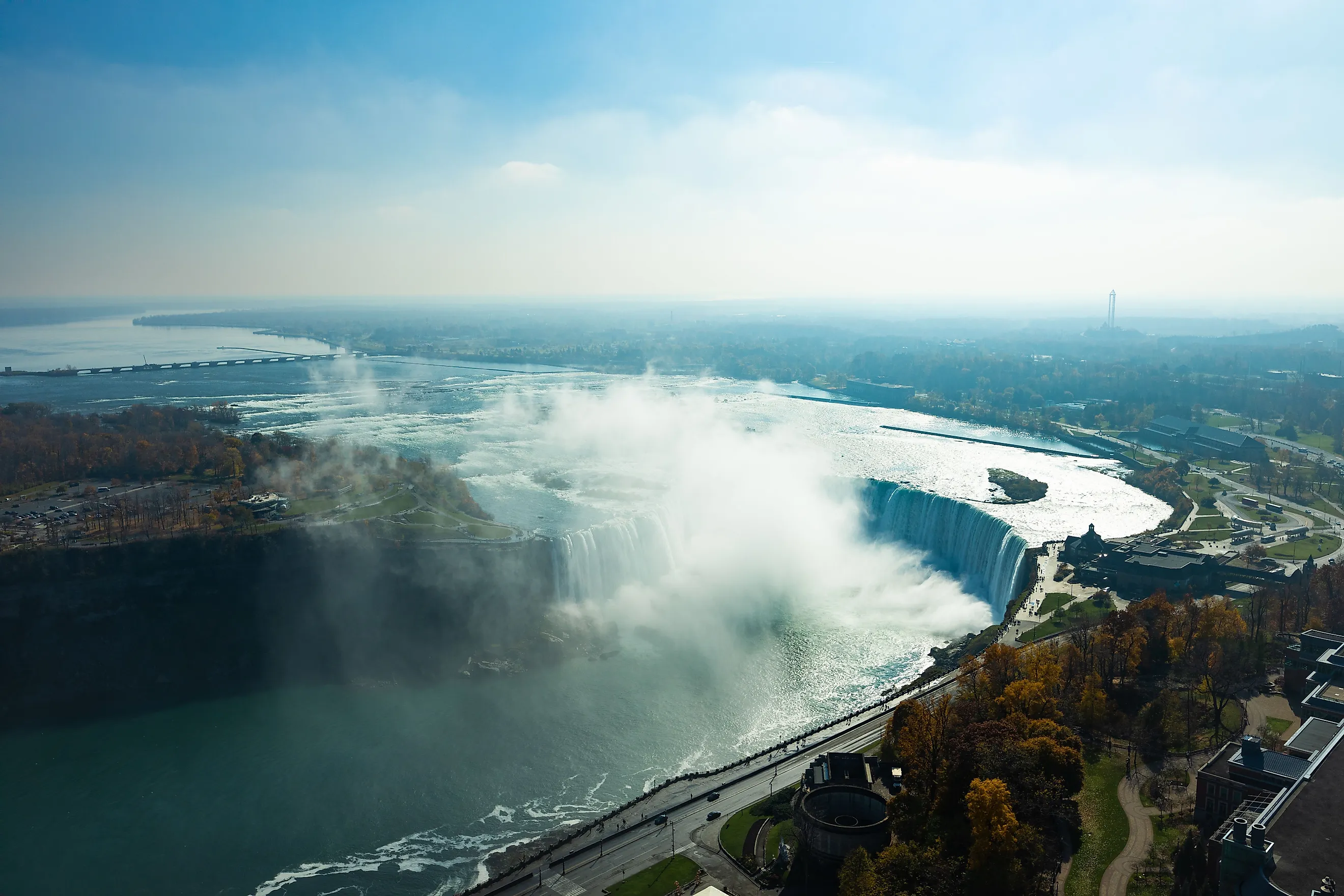
Niagara Falls State Park marks the spot where the Niagara River brings water from Lake Erie to Lake Ontario down three huge waterfalls; also known as Niagara Falls. It is also the oldest state park in the US, dating back to 1885, just 13 years after the establishment of Yellowstone.
This park was made possible through the Free Niagara Movement, which opposed the vast amount of industrialization around the falls, including mills and factories. The trailblazer in this movement was Frederick Law Olmsted, who was tasked with building parks for Buffalo. He, along with William Dorsheimer, visited Niagara Falls and was shocked when he saw just how many smokestacks and industrial centers were surrounding the American side of the falls.

The Free Niagara movement would draw the attention of many prominent names such as the writer Ralph Waldo Emerson and Charles Darwin. When Grover Cleveland became New York governor in 1883, his friend William Dorsheimer convinced him to establish an act to preserve Niagara Falls. The Canadian side would establish its own park two years later, known as Queen Victoria Niagara Falls Park. Both parks worked together to purchase private land and tear down industrial buildings.
Niagara Falls height is more than 176 feet at its highest section, and it delivers more than 700,000 gallons of water every second, making it the largest waterfall by volume in the U.S. It is actually three waterfalls, including the Horseshoe, American, and Bridal Veil Falls. Today, the state park receives more visitors than most national parks, with more than 8 million visitors annually.
When did the national park system begin?

One of the oldest state parks in the US began as the second national park. But this phrase needs some qualification, as there is a difference between a national park and the National Park System (NPS) created to manage them in 1916.
The first national park was declared in 1872 as Yellowstone National Park, but it was originally envisioned as a place that would require no federal spending to manage. It was placed under the control of the Secretary of the Interior.
The NPS notes that this event sparked a major wave of conservation efforts, including official national parks and Presidential declarations under the Antiquities Act of 1906, which gave the President authority to set aside land of historical or cultural significance to protect from treasure seekers or those who would otherwise harm the "antiquities" there.

By 1916, 14 national parks and 21 national monuments, with all 14 parks located in the western US or Hawaii. However, there was no single government agency that managed all of these, as some were handled by the Department of the Interior and others by the Department of Agriculture. Yellowstone National Park in particular was run by the War Department to protect the land from poachers and squatters.
Conservators, including the famed John Muir, pointed out that this lack of central authority left many of the monuments and parks vulnerable. In response, Woodrow Wilson signed the National Park Service Organic Act on August 25, 1916, stating that "there is hereby created in the Department of the Interior a service to be called the National Park Service."
It further added that the National Park service will be responsible for protecting and managing national parks, monuments, and reservations, while allowing people to enjoy them without compromising their future.
The oldest state parks protect historic places
All of these state parks protect some place of great historic importance to their states or the US more generally. Niagara Falls State Park and Itasca State Park sit on immeasurably valuable waterways, from the birth of the Mississippi River to the most dramatic connection point on the Great Lakes.
Fort Abraham Lincoln State Park and Mackinac Island State Park, meanwhile, sit at important connection points for the development of America and the associated conflicts that came as a result.
What these older state parks reveal is that conservation was a multifaceted project that took many forms, from large-scale pushes to establish the NPS to smaller localized efforts to preserve historic places and natural landmarks for recreation, rather than just business.