6 Most Rattlesnake Infested Areas in Oklahoma
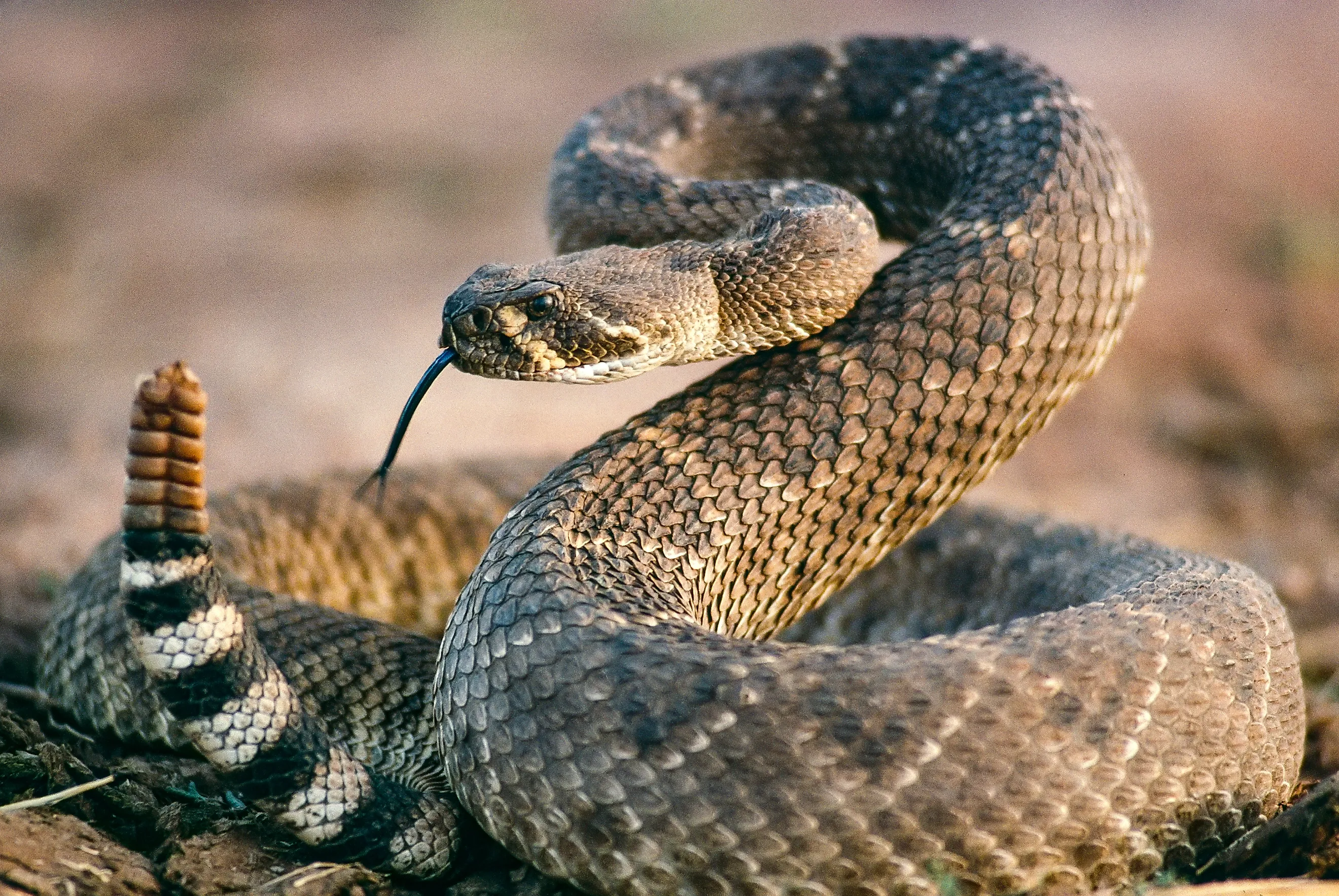
More than 40 species of snakes are found in Oklahoma, including five species of rattlesnakes typically found in regions with rocky terrain, grasslands, and woodlands: the timber rattlesnake (Crotalus horridus), western diamondback rattlesnake (Crotalus atrox), western massasauga rattlesnake (Sistrurus tergeminus), western pygmy rattlesnake (Sistrurus miliarius streckeri), and prairie rattlesnake (Crotalus viridis). Annually, about 7,000 people to 8,000 people are bitten by venomous snakes in the U.S., though the likelihood varies state by state. North Carolina has the highest incidence of snake bites, followed by West Virginia and Arkansas. Oklahoma ranks fourth in the United States. Despite the incidence of bites, rattlesnakes do not tend to bite unless they feel threatened or provoked, as they primarily use their venom for hunting rather than self-defense. Still, visitors to the Sooner State should practice common sense when exploring the six most rattlesnake-infested areas in Oklahoma.
Wichita Mountains Wildlife Refuge

Located in southwestern Oklahoma, the Wichita Mountains Wildlife Refuge near Medicine Park is a must-see destination for hikers, wildlife enthusiasts, and photographers. The refuge spans 59,000 acres and is home to wildlife from tiny prairie dogs, elk, white-tailed deer, and Texas longhorn cattle to the stars of the refuge’s conservation efforts, a large herd of free-roaming American bison. The refuge provides ideal rocky habitats for rattlesnakes, who use the ledges to bask in the sun and the crevices as shelters. Hikers in this region should stay alert when traversing trails. The refuge lists three species of rattlesnakes in the park: the timber rattlesnake, the Western diamondback rattlesnake, and the prairie rattlesnake.
Gloss Mountain State Park

Gloss Mountain State Park is located in northwestern Oklahoma. It features the Gloss Mountains—sometimes referred to as the Glass Mountains due to their high selenite content that creates a reflective, glass-like appearance. Covering 640 acres, the park's main attraction is hiking up Cathedral Mountain, where the trail winds across the wide mesa. At the summit, which has a flat, table-like top, visitors are treated to stunning views of the valley below and the nearby Lone Peak Mountain—the tallest among the park’s mesas and buttes. Wildlife sightings are common, including lizards known as mountain boomers, turkey vultures, black-tailed jackrabbits, and prairie rattlesnakes, all drawn to the park’s mesas and arid landscape.
Tallgrass Prairie Preserve

In northeastern Oklahoma, the Joseph H. Williams Tallgrass Prairie Preserve is the largest protected area of tallgrass prairie in the world, encompassing 39,650 acres. Once, the tallgrass prairie ecosystem covered over 142 million acres across North America, spanning 14 states from Texas to Minnesota. Today, less than 4% remains due to agricultural development and urbanization. The prairie is a top destination for wildlife enthusiasts, nature lovers, and photographers who come to see the more than 2,000-strong herd of free-ranging bison, over 700 plant species, 300 bird species, and 80 mammal species that call the prairie home. Visitors can take a 15-mile bison driving loop to see the shaggy, majestic bison, or park the car and take the two-mile Prairie Earth Trail hike through the preserve. The tall grasses provide perfect cover for prairie rattlesnakes and Western Massasaugas, so hikers should be alert for their distinctive rattling sounds.
Black Mesa State Park

Black Mesa State Park in the Oklahoma Panhandle, along the tri-state border with Texas, Colorado, and New Mexico, derives its name from a layer of black lava rock that covered the mesa more than 30 million years ago. The 1,600-acre park features the namesake Black Mesa, the state's highest point at 4,973 feet. The remote region of Oklahoma offers hikers trails of varying lengths and difficulty. The hike to the top of Black Mesa is about 8.5 miles, so adventurous outdoor enthusiasts should be prepared for three to five hours of hiking with little to no shade. Hikers should also watch out for rattlesnakes, especially at night, as the park is a hotspot for prairie rattlesnakes due to its semi-arid, rocky terrain.
Great Plains State Park

Great Plains State Park is the perfect destination to explore Oklahoma’s diverse landscape, with a unique blend of rugged mountains, sprawling grasslands, and pretty lakes. Located in southwestern Oklahoma near the Wichita Mountains, the park offers hiking, biking, and plenty of campsites with breathtaking views. With 31 miles of shoreline along the 6,400-acre Tom Steed Reservoir, anglers can fish for catfish, bass, and crappie, while sailors can launch boats for a day of paddling or water skiing. Rock climbing in the granite boulder fields is also a favorite pastime in the park. History buffs can explore the remnants of the 1904 Gold Bells Mill and Mine, but should use caution, as rattlesnakes are known to inhabit the abandoned mine.
Lake Eufaula

Located about two hours from Oklahoma City, the state capital, Lake Eufaula is the largest lake in the state, with over 800 miles of shoreline, and it attracts close to 2.5 million visitors annually. There are plenty of opportunities for outdoor activities at the lake, which is the centerpiece of the Lake Eufaula State Park, including boating, waterskiing, fishing, and swimming. The lake is included on several lists of snake-infested lakes in the state, and there have been numerous rattlesnake sightings in and around the lake’s marshy shores. Recently, a dog was killed by a Western diamondback rattlesnake in a resort community on Lake Eufaula.
Oklahoma's diverse geography, from rocky mountains to expansive prairies and desert-like mesas, provides ideal habitats for rattlesnakes. The Wichita Mountains Wildlife Refuge and Black Mesa State Park offer rocky, sunlit ledges perfect for rattlesnakes to bask on, while the grasses of the Tallgrass Prairie Preserve hide species like the prairie rattlesnake. The dry, open landscapes of Gloss Mountain State Park and Great Plains State Park further attract rattlesnakes, making the state a prime destination for both outdoor enthusiasts and wildlife observers in these six most-rattlesnake-infested areas of Oklahoma.