Towns Founded by Freed Slaves
Communities founded by formerly enslaved Africans are often called Freedmen's Towns. They served as catalysts for social justice, cultural richness, and economic success. For nearly 250 years millions of Africans and their descendants were enslaved in the colonies and United States. Many formerly enslaved African Americans used their newfound freedom to confront racial injustice and pursue the promises of the American Dream after the 13th Amendment was ratified on December 6, 1865. In New York brownstones and the bayous of Mississippi they showed what it means to be an American. In their self-made communities they raised families and preserved traditions while pursuing their aspirations.
Here is a look at some of these great American towns:
Freedman's Village

Freedman's Village is a historic site marking the legacy of an influential Black community. Established in 1863 by the U.S. government, it served to house, educate, and protect formerly enslaved people. The settlement, located in today's Arlington National Cemetery, boasted Black-led schools, hospitals, churches, and neighborhoods. At its height, thousands of formerly enslaved people lived, worked, and thrived. It housed several famous residents, including Sojourner Truth, who worked as a teacher and activist in the lively community. Though many fought hard to remain, the village was dismantled in 1900 to expand the Arlington National Cemetery we know today. Despite its removal, its influence lives on and is remembered for its precedent and American aspiration. History lovers can visit The Black Heritage Museum of Arlington to learn more about the historic town and the people who lived there.
Fort Mose, Florida

Fort Mose, originally called Gracia Real de Santa Teresa de Mose, was a town chartered by the Spanish governor of Florida as an escape from slavery and injustice. Though the town was a safe haven, it did come with a few caveats. To live in the town and acquire freedom, enslaved African Americans had to declare loyalty to the Spanish crown, become Catholic, and defend the fort against English troops. With about 100 residents, they forged their own free militia and fought vigorously in the Battle of Bloody Mose. Though the town did not survive, its resilient culture and stories of its past remain. Visitors enjoy the Fort Mose Museum, featuring exhibits showcasing the settlement's history and traditions. There is also a trail called "Flight to Freedom," which takes visitors through the journey of the formerly enslaved who lived and fought for their honor and freedom.
Mound Bayou, Mississippi

Mound Bayou is a Southern city located in the Mississippi Delta. Founded and led in 1887 by Isaiah T. Montgomery and other formerly enslaved people, it is one of the earliest Black incorporated communities in the United States. From its founding to its enduring presence today, it has exemplified Black survival and excellence. Known as "The Jewel of the Delta," it played a key role in the Civil Rights Movement. Heavily inspired by Booker T. Washington and his call for Black self-sufficiency, it held its own despite the tumultuous reality of the Deep South. Residents founded and ran their own businesses, schools, churches, and banks. The Taborian Hospital was especially influential because it was run by all-Black doctors and staff. Because of this fervent independence, Mound Bayou was able to support and fund the well-being of many activists during the Civil Rights Movement, including the likes of Emmett Till's mother, Mamie Till-Mobley, and Dr. T.R.M. Howard. Today, the town is listed as a National Historic District, with the vibrancy of its founding still remaining. Landmarks, restaurants, and performance arts centers light up the town. Though there is a lot to explore, the Mound Bayou Museum of African American Culture and History is a great place to learn about this long-standing landmark town.
Weeksville, New York

Weeksville is a Black community located in Brooklyn's Crown Heights. Founded by James Weeks in 1838, it became one of the largest Black-led communities in the country. Serving as a haven against slavery and racism, Weeksville paved the way for other freed-slave towns. It was one of the few places where freed Blacks owned land. Since landownership was a requirement for men to vote, town leaders held affordable plots for residents. With these plots, they built churches, stores, and schools. Today, many of these establishments still stand alongside soul food restaurants, Lincoln Terrace Park, and restored Hunterfly Road Houses. The Weeksville Heritage Center is also open to visitors. The Heritage Center showcases its storied history, perseverance, and contribution to American society.
Africatown, Alabama

Africatown is a small town with a lot of history. Just 3 miles from Mobile, Alabama, it is most known for its famous leader, Cudjo Lewis. Lewis, whose African name was Oluale Kossola, arrived with members of his community on the Clotilda, the last known illegal slave ship to reach the United States, in 1860. After being freed, Lewis and other formerly enslaved people bought land from their enslavers to establish their very own town. Despite being excluded by neighboring cities like Mobile, they launched their own schools and principles. Inspired by the likes of Booker T. Washington, they worked manual jobs to buy and maintain their own land. In doing this, they preserved their traditions, languages, and identities as formerly enslaved people. Their achievements were so remarkable that many believed Africatown was a myth. However, campaigns to preserve and share its history heightened in the 1980s. The result is the Africatown Heritage House, which is open to visitors Tuesday through Saturday. It features exhibits on Clotilda, their perseverance, and the town where they celebrated and maintained their freedom.
Allensworth, California

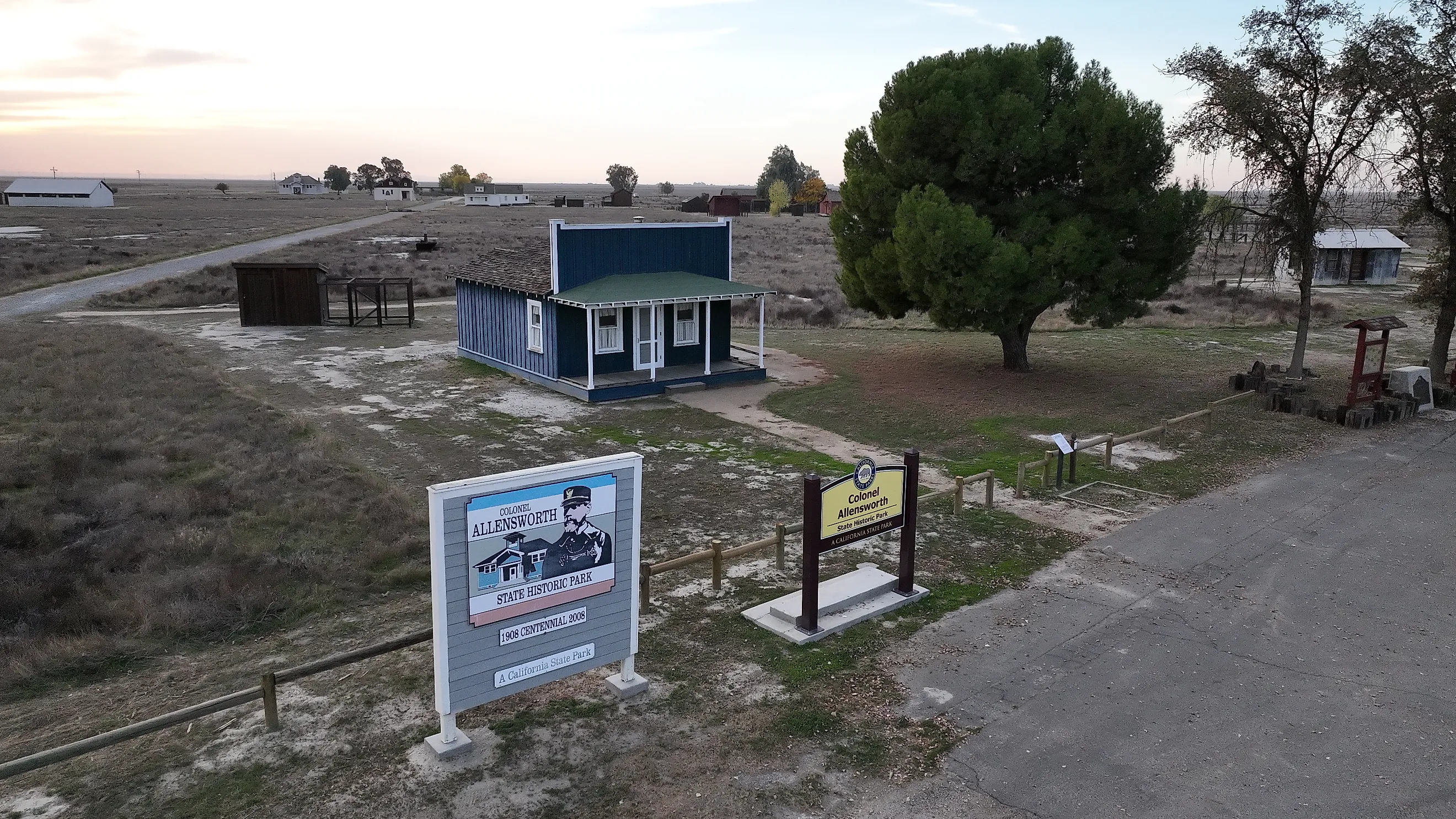
Allensworth is California's first town to be founded, financed, and governed by African Americans. Founded in 1908 by Allen Allensworth and a group of business partners, it served as an escape from the ills of racism and injustice in the Deep South. Allensworth, who was the highest-ranking Black Army officer of his time, dedicated his life and vision to Black self-sufficiency. With this in mind, his namesake town built and maintained libraries, schools, a judicial district, and several businesses. Though the town declined after Allensworth's death, residents still carry on the town's legacy. The town's Colonel Allensworth State Historic Park is open to visitors daily. It holds restored buildings, including a store, the old town library, and the home of Colonel Allensworth.
Parting Ways, Massachusetts

Parting Ways, located in Plymouth, Massachusetts, is one of the earliest African communities in the United States. Founded in 1792 and notable for existing decades before the Emancipation Proclamation, the land was granted to Black soldiers who fought in the Revolutionary War. With 94 acres of land, Prince Goodwin, Plato Turner, Quamony Quash, and Cato Howe created one of the earliest Black settlements. Originally called "New Guinea," the formerly enslaved built homes, created businesses, grew crops, and raised families on their own terms. Though the area struggled with racism and poverty, they pushed forward in the pursuit of their independence. Proof of their efforts is evident in archaeological findings, such as their West African clothing, food, and ceramics. Highlighting their traditions, these artifacts are proof of their enduring presence. Though much of the town was lost due to economic hardship, the Parting Ways Cemetery showcases their lasting contribution. In the cemetery, the founders' graves are decorated with military honors and revered. Now listed on the National Register of Historic Places, visitors walk the woodland trail, paying respects to its founders and past inhabitants of this exceptional Northeastern community.
Timbuctoo, New Jersey

Timbuctoo is a historic neighborhood located in Westampton Township, NJ. Founded in 1826 by formerly enslaved people, it is known for its place in African American history. The 52-acre settlement is believed by many historians to be a stop in the Underground Railroad, helping enslaved people escape to freedom and providing a safe haven for their dreams. More than 120 residents worked to create and maintain their homes, a church, school, and a cemetery for their loved ones. While Timbuctoo has a small population of just 100 residents today, it remains an essential part of American history. The Timbuctoo Historical Society continues to preserve and share its history. The Timbuctoo Cemetery is a memorial dedicated to their lives. It celebrates eight Black soldiers who fought in the Civil War's Colored Troops. Students of all ages visit to learn about Timbuctoo's influence and enduring heritage.
Independence Heights, Texas

Incorporated in 1915, Independence Heights is a Freedmen's Town that has survived the ups and downs of American history. The historic neighborhood, situated just north of Houston, showcases the perseverance and spirit of its founding people. As Texas' first Black incorporated town, it remains a historic staple for the surrounding area with Black businesses, beautiful parks, and well-known restaurants. Visitors and residents enjoy its McCullough Park for scenic views and time with families and friends. Historic restaurants and businesses offer its signature community and Texas spirit. Still a thriving community, it lives up to its name as independent, aspirational, and free.
Wrapping Up
Towns founded by formerly enslaved people showcase the beauty of tenacity and the will to thrive. Once-enslaved people pushed forward to create communities, meaning, and generational success. History, culture, and creativity are what each Black community exemplifies. From the self-sufficiency of Mound Bayou to the honor of Fort Mose, these towns showcase the potential, independence, and the pursuit of the American Dream.