5 Rattlesnake Hotspots In Oklahoma
Oklahoma's varied landscape might surprise some people. In addition to the sweeping tallgrass prairie that makes this state so iconic, its topography also includes salt flats in the north-central region, swaths of wooded hills in southwestern sections, and rugged ranges like the Ouachita Mountains, all of which support several rattlesnake species adapted to very different environments.
Seasonal temperature shifts, abundant prey, and wide stretches of undeveloped land allow populations to remain stable, and while encounters are uncommon for most residents, certain popular parks consistently report run-ins with rattlesnakes. Let's take a deeper look at these destinations, explaining why snakes love them so much, as well as some other tidbits that might be helpful to know before visiting.
Wichita Mountains Wildlife Refuge

The Wichita Mountains Wildlife Refuge in southwestern Oklahoma is perhaps the best place in the state to encounter rattlesnakes while out in the wild. This refuge supports multiple species, including the western diamondback, prairie rattlesnake, and massasauga rattlesnake, drawn by the region's abundant rocky outcrops, grasslands, and food sources, including small mammals, birds, and other reptiles. A warm spring and early summer bring increased snake activity throughout the year, especially along hiking trails and near sunny granite slopes.

Beyond the snakes, the Wichita Mountains (more like large hills, in reality) are notable for their free-roaming bison and Texas longhorn cattle. The area also protects some of the oldest exposed rock formations in North America, estimated at over 500 million years old! Popular with hikers, climbers, and wildlife photographers, the park's natural beauty and genuine wildness are the result of a huge variety of flora and fauna that remain a visible and functioning part of the broader Oklahoma ecosystem.
Ouachita Mountains

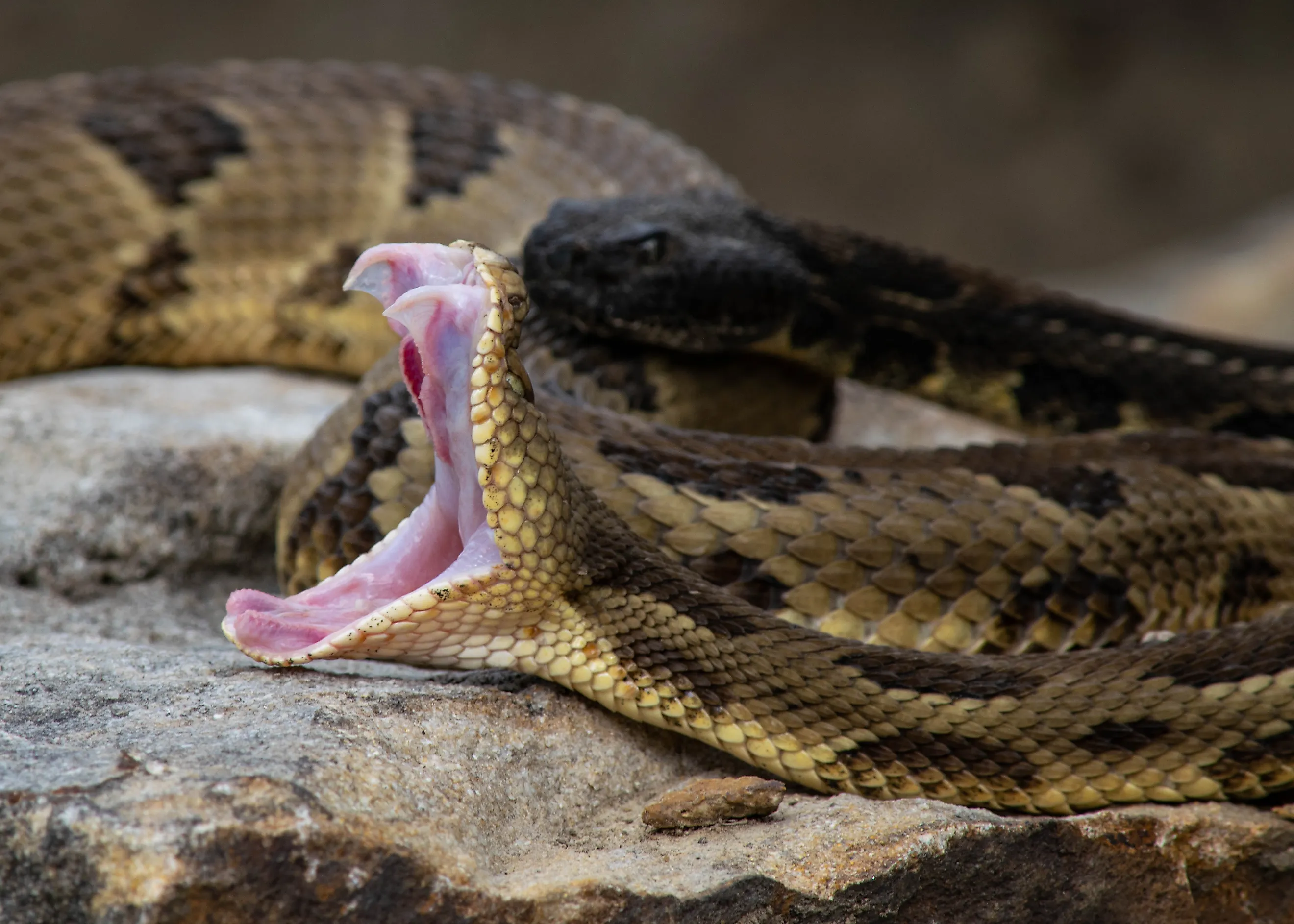
Not to be confused with the previous entry, southeastern Oklahoma’s Ouachita Mountains, particularly in McCurtain County, are also home to rattlesnakes. This region supports significant numbers of timber rattlesnakes and western diamondbacks, both well adapted to its dense forests, high ridges, and humid climate. Local snakes are most active from late spring through early fall, often encountered along forest roads, creek edges, and sunlit clearings. Nearby Beavers Bend State Park, a big draw for local hikers and anglers, also sits squarely within prime rattlesnake habitat.

Visually, the Ouachitas stand apart from Oklahoma’s flatter regions, with their east-west-running ridgelines that create cooler hollows and warmer slopes, ideal for cold-blooded animals when it comes to thermoregulation. Interestingly, the area also provides habitat for much larger predators, namely black bears, as well as clear-flowing mountain streams and some of the state’s most remote backcountry.
Great Salt Plains State Park

Great Salt Plains State Park in the north-central edge of the state is defined by open salt flats, sandy prairies, and sparse vegetation. This park is nationally known for its selenite crystal digging area, where visitors can legally collect unique hourglass-shaped crystals found almost nowhere else. It also sits along the Central Flyway, attracting large numbers of migratory birds and making it a popular birding destination.

When it comes to reptiles, prairie rattlesnakes often use rodent burrows along the margins of the salt flats and nearby grasslands for shelter. Activity increases during mornings and evenings, when the area's desert-like temperatures are less extreme. These are also the best times for hiking, so unless you plan on carrying copious amounts of water and sun protection to travel during mid-day, be very aware of where you step.
Black Mesa

Deep in Oklahoma's Panhandle, Black Mesa is maybe one of the state’s most overlooked outdoor attractions in general. This ruggedly beautiful high desert landscape, protected by the Black Mesa State Park & Nature Preserve, hosts populations of prairie rattlesnakes, which favor its rocky fields, lava-capped mesas, and open grasslands near the Colorado and New Mexico borders. Moreover, cooler nights and hard-hitting daytime sun create idyllic conditions for these cold-blooded creatures to bask, especially along exposed slopes and cattle trails.

Perhaps most notably, Black Mesa is Oklahoma’s highest point, rising to 4,973 feet, while the surrounding preserve is also known to protect shortgrass prairies found nowhere else in the state. Prehistoric fossils have been recovered from nearby sediments, too, further highlighting the area’s deep natural history. If you want to really get off the grid, human presence here is remarkably limited, with few close-by towns and long stretches of undeveloped land. That isolation allows rattlesnakes and other wildlife to persist with little pressure or predation, making Black Mesa a peaceful but significant stronghold. Just be sure to come prepared with the necessary supplies for a wilderness outing and lots of gas in your vehicle!
Arbuckle Mountains

The Arbuckle Mountains are yet another long-established range that provides the ideal living conditions for rattlesnakes, shaped by craggy limestone hills, caves, and spring-fed creeks. Western diamondbacks and timber rattlesnakes are both present here, with the former being more common and both taking advantage of the region's numerous exposed ledges, brushy slopes, and abundant small mammals for prey.

The Arbuckles are geologically significant in a multitude of ways, containing some of the oldest surface rock in the state and forming a sharp break from the surrounding plains. To add to that, mineral-rich springs, sinkholes, and dense oak forests support a wide range of plants and animals beyond snakes, including deer and wild turkey. Turner Falls Park and Chickasaw National Recreation Area, located roughly halfway between Oklahoma City and Dallas, Texas, draw the highest amounts of sightseers to the mountains, yet large sections of the range still remain significantly quiet if you're in search of a truly peaceful outing in nature.
Watch Your Step in The Oklahoma Wilderness
Rattlesnakes remain a natural and enduring part of Oklahoma’s ecosystems, where unique geology and climates create the ideal conditions for these hardy critters to survive and multiply. Whether in the mountains, prairie, or desert, these predators occupy specific niches that have changed little over time in this frankly underrated state. Understanding where and why they occur can both protect you from a venomous bite and ensure the well-being of the snakes, which is a win-win for everyone.