7 Snake Infested State Parks In Nebraska
Nebraska’s State Parks are established in prime snake habitat, including Platte River State Park, which encompasses the southern bluffs of the Platte River, or Fort Robinson State Park in the state’s Pine Ridge Region. Regardless of whether you enjoy hiking, biking, swimming, or fishing in Nebraska’s State Parks, you are doing so in snake country. Nebraska is home to 29 different species of snake, four of which are venomous, and some of which call Nebraska’s state parks their home. Learn more about the most snake-infested parks in the state.
Indian Cave State Park

Indian Cave State Park is named after the large sandstone cave that is within the boundaries of the park. The park itself spans 3,052 acres with forest-covered bluffs overlooking the Missouri River floodplain. The Indian Cave has prehistoric Native American petroglyphs of unknown date and origin on the walls, which can be seen from a boardwalk below the deck with seating, informative displays, and a viewing deck. Other than the cave, visitors to the park have access to 22 miles of hiking and biking trails and 16 miles of horseback riding trails. The park is particularly eye-catching in the fall when the autumn colors come out on the trees of the hardwood forest.

The Timber Rattlesnake (Crotalus horridus) is present in the extreme southeast corner of Nebraska, and is found in Indian Cave State Park, particularly around the Missouri River and Indian Cave Bluffs.
Niobrara State Park

Niobrara State Park is positioned on bluffs overlooking the confluence of the Niobrara River and the Missouri River. Accommodation in the form of camping and cabins is available year-round. The park permits different outdoor recreational activities such as hiking, biking, and horseback riding in the summer, while in winter, the trails are open to cross-country skiers. Due to the absence of city noise and light pollution around the park, it has become a premier destination for stargazing on clear nights. But the park is not always peaceful.

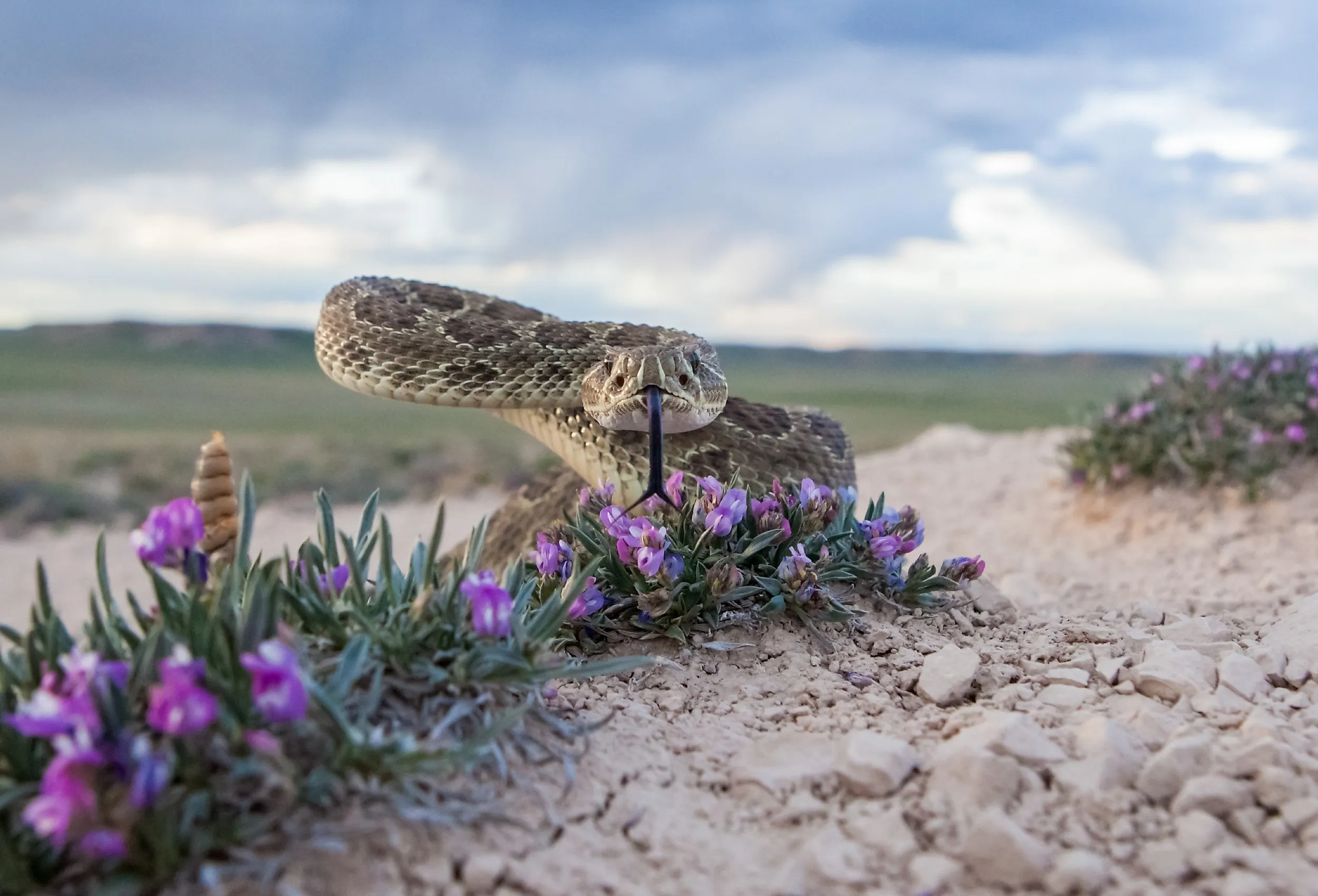
One of the most common snakes seen in the park is the venomous Prairie Rattlesnake (Crotalus viridis). It is most active from late March to mid-November and hibernates in the colder winter months. Their diet primarily consists of small mammals, but occasionally they will consume birds and lizards.
Ponca State Park

Ponca State Park is one of Nebraska’s most visited State Parks, popular among outdoor enthusiasts and nature lovers alike. Its proximity to the Missouri River allows for fishing, kayaking, and canoeing, whereas the spring months see the arrival of many migratory bird species at the park’s wetlands, which in turn lures in bird watchers. However, they are not the only species in the park that favors its wetlands.

The Eastern Hognose Snake (Heterodon Platirhinos) is commonly associated with river floodplains and riparian woodlands, where it burrows in sandy soil and in areas with abundant frogs and toads for it to prey on. While they are not harmful to humans, Eastern Hognose Snakes possess mild venom delivered by their rear fangs, which is only strong enough to immobilize their prey.
Eugene T. Mahoney State Park

Eugene T. Mahoney State Park is located between Omaha and Lincoln, Nebraska’s two largest cities. The park is excellent for year-round fun with the whole family. Peter Kiewit Lodge is within the boundaries of the park, complete with 40 guest rooms, most of which are equipped with balconies overlooking the Platte River valley. When the weather is good, visitors can hike and bike through the trails, and when the weather turns bad, there is an activity center with indoor rock climbing, sledding, and ice skating.
Common Garter Snakes (Thamnophis sirtalis) have been recorded in the park, and are widespread throughout the entire state. Common Garter Snakes are extremely hardy and can live in almost every habitat imaginable, including areas shared with people, though they are often found near bodies of water. Unlike other snakes, Common Garter Snakes are active every month of the year in Nebraska.
Platte River State Park

Platte River State Park consists of 450 acres on the edge of the Platte River, and from the top of the Lincoln Journal Tower, the river’s entire valley can be seen for miles. As for outdoor activities, Platte River State Park has a smorgasbord of them, from hiking and biking on a 6.7-mile loop trail to canoeing and kayaking on the river to a one-of-a-kind stay in nature at one of the park’s three glamping cabins.
The Red-Bellied Snake (Storeria occipitomaculata) is found in Nebraska and is limited to areas along the Platte River. These snakes are partial to lowland habitats, including streamside and riparian woodlands, where they seek refuge under rocks, logs, leaf litter, and other debris piles. Here, it will forage for slugs, earthworms, and sometimes insects.
Fort Robinson State Park

Unlike the other State Parks on this list, Fort Robinson State Park contrasts with them by revolving around Old West history, complete with a museum and buffalo herd. What was once a military post is now Nebraska’s largest State Park at 22,000 acres. Visitors of today can join historic tours, take stagecoach rides, and visit the viewing pasture of the buffalo herd.
Keeping in theme with the Old West, the Prairie Rattlesnake is also present within the park. The open landscape of the surrounding prairies and grasslands makes for a comfortable home for these snakes. Although the park is rooted in history, it also boasts 60 miles of hiking trails and 20 miles of biking trails that run through open meadows, valleys, and Pine Ridge region terrain, creating the possibility of an encounter with the Prairie Rattlesnake.
Chadron State Park

Nebraska’s largest species of snake, the Bull Snake (Pituophis catenifer), has found a home in Chadron State Park, which also happens to be Nebraska’s oldest State Park. This 972-acre park is surrounded by the Nebraska National Forest. Despite being established in 1921, the park is equipped with a modern campground, swimming pool, game courts, paddleboats, fishing, and horseback trail rides. The Bull Snake can reach 70 inches and, due to its staggering size, take down birds, rabbits, and large rodents. Even though they are not venomous, they are often mistaken for Rattlesnakes as they will wiggle their tail and make a loud hissing noise if threatened in an attempt to ward off predators.
Snakes Abound in Nebraska's State Parks
Although Nebraska’s State Parks are filled with snakes, that doesn’t necessarily mean there is anything to worry about. The state’s venomous Rattlesnakes are found in limited areas of the state and are often shy and elusive, avoiding contact with humans. While Garter Snakes may dart across the ground next to your feet, and the sheer size of the Bull Snake may be intimidating, they are completely harmless and, just like most species of wildlife, will choose to evade humans rather than approach them.