11 Undisturbed Towns To Visit In Virginia
Virginia spans five distinct geographic regions from the Atlantic Coastal Plain and Chesapeake Bay to the Blue Ridge Mountains and Shenandoah Valley. In every corner of the state, undisturbed towns provide access to geologic wonders, historic battlefields, and pristine waterways without the congestion of larger destinations. These communities balance natural attractions, like the Appalachian Trail that runs through Damascus and Fort Royal's Skyline Caverns, with preserved landmarks, like Colonial Williamsburg and Fredericksburg's Sunken Road, allowing visitors to explore Virginia's geographic, historic, and cultural diversity through small towns that maintain their character and accessibility.
Cape Charles

Perhaps Cape Charles' greatest allure is its direct access to the Chesapeake Bay through a free public beach with peaceful, shallow waters ideal for families. Cape Charles Beach stretches along Bay Avenue with designated swimming areas and wooden overlooks for scanning the flats at low tide, when Eastern Mud Snails emerge by the thousands. Cape Charles Fishing Pier extends 300 feet into Cape Charles Harbor with alternating high and low sections that provide easier fishing access to deeper water. Common catches include drum, sea mullet, flounder, croaker, and speckled trout.
Kiptopeke State Park offers 5 miles of trails, including the Baywoods Trail through hardwood forests and the Brown Pelican Trail with extensive boardwalks over coastal habitats. Nine World War II concrete ships stand offshore as a breakwater, and the park also features a fishing pier, beach access, and serves as a hawk-watching site from September through November when the Coastal Virginia Wildlife Observatory conducts raptor migration counts. Meanwhile, Cape Charles Natural Area Preserve protects 50 acres of critical habitat for the northeastern beach tiger beetle (federally threatened) and is a staging area for migratory songbirds and raptors each fall. An elevated boardwalk winds through the park for safe and accessible viewing.
Luray

Luray is a hotspot in the foothills of the Blue Ridge Mountains, acting as a gateway to Shenandoah National Park. In the Luray Caverns, towering stalactite columns shimmer, and its enormous chambers boast crystal-clear pools. The Great Stalacpipe Organ uses rubber-tipped mallets to strike stalactites tuned to concert pitch across 3.5 acres of the cavern, making it the world's largest musical instrument and truly something to see - and hear!
The Luray-Hawksbill Greenway runs 2 miles along Hawksbill Creek through downtown, featuring a wide, paved surface that is accessible for wheelchairs and strollers. The trail intersects with the Virginia Birding and Wildlife Trail, which has documented over 200 species along the creek, including green heron, belted kingfisher, and migrating warblers. Just east of town, Lake Arrowhead spans 39 acres with a trail circling the water and additional marked paths throughout the popular park. The lake is stocked with catfish, and six picnic shelters, a softball field, horseshoe pits, and playground equipment also fill the grounds, making it a family-friendly spot to spend a day in and around Luray.
Damascus

Damascus sits at the intersection of seven major recreational trails in southwest Virginia, earning it the nickname, "Trail Town USA." The Virginia Creeper Trail stretches 34.3 miles from Abingdon through Damascus to Whitetop Station, and crosses 47 trestle bridges alongside the South Fork of the Holston River. Meanwhile, the famed Appalachian Trail enters Virginia just south of Damascus and runs through the town park down the Main Street sidewalk, filling local inns and restaurants with through-hikers and their stories.
Another significant attraction for outdoor enthusiasts is Mount Rogers National Recreation Area, which borders Damascus and boasts more than 400 miles of trails, including the Iron Mountain Trail for singletrack mountain biking and hiking. For something a bit more low-key and accessible, the Damascus Town Pool operates daily during the summer months, weather permitting.
Front Royal

At the northern entrance to Shenandoah National Park, Front Royal is where the Skyline Drive begins before running 105 miles along mountain ridges through Shenandoah National Park. Seventy-five overlooks provide views of the Shenandoah Valley and Blue Ridge Mountains. Skyline Caverns is a stunning attraction with its anthodite formations, called "orchids of the mineral kingdom" for their delicate, needle-like clusters. A 60-minute tour will take travelers on an adventure to discover the Grotto of Nativity, Rainbow Trail, Fairyland Lake, the Capital Dome, the Painted Desert, and several other highlights. For another immersive and interactive experience, Front Royal River Adventures offers a range of trips on the Shenandoah River. Whether alone or with family, visitors can choose between overnight river floats, guided tours, river tubing, an hourly flatwater paddle, or camping in a riverside tent.
Williamsburg

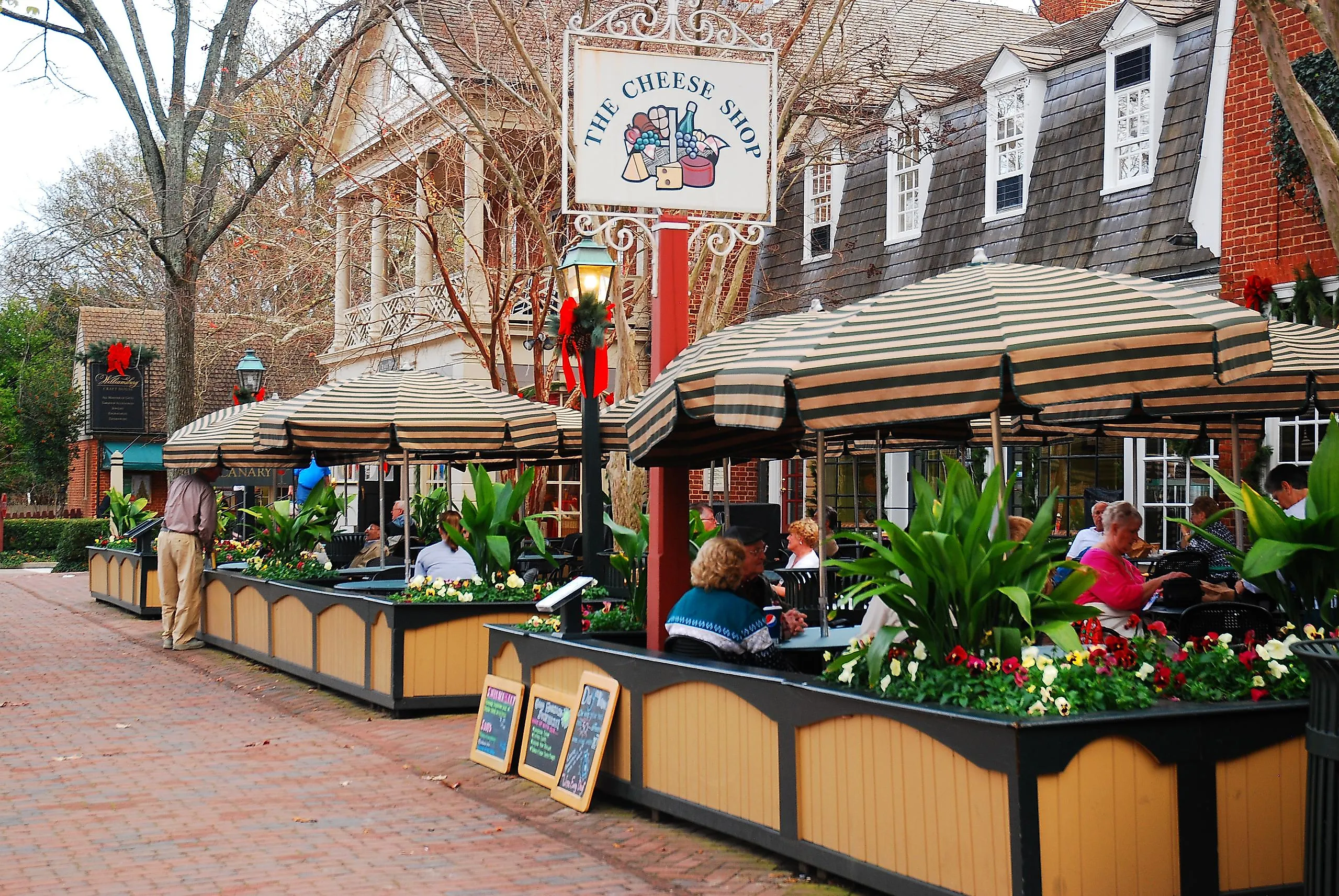
Williamsburg marks its 250th anniversary of independence in 2026 alongside America's own celebration. Colonial Williamsburg spans 301 acres where more than 80 structures still stand on their original 18th-century foundations. For instance, the Governor's Palace is central for the grand ballroom where colonial Virginia's elite once danced, the supper room with original 18th-century wallpaper patterns, and bedchambers reconstructed from Thomas Jefferson's 1770s floor plan sketches. Meanwhile, Jamestown Settlement reconstructs three ships that carried 104 colonists in 1607. Visitors board the 116-foot Susan Constant, 68-foot Godspeed, and 49-foot Discovery to examine crew quarters where sailors slept in shifts, navigate the ship's whipstaff steering mechanism, and climb below deck to cargo holds.
Birders and nature lovers will appreciate Greensprings Interpretive Trail, which covers 3.5 miles through several interconnected loops with a 1,000-foot boardwalk over a lovely beaver pond. Its observation deck is particularly popular for spotting red-headed woodpeckers nesting in dead snags flooded by beaver activity. Likewise, Waller Mill Park encloses 2,705 acres surrounding a large reservoir. The Boathouse Store rents kayaks, canoes, pedal boats, and jon boats, as well as fishing gear, bait, and tackle, for those keen to get out on the water.
Strasburg

Strasburg straddles the divide between the North Fork and Passage Creek in the northern Shenandoah Valley. The town has long been known for its pottery, with some of the first examples dating back to 1761, and the Strasburg Museum is housed in the former Strasburg Stone and Earthenware Manufacturing Company, which later became a train depot. Displays include examples of Strasburg pottery and equipment, as well as a model railroad exhibit and a caboose. More artifacts and vintage treasures can be found and even purchased at the Strasburg Emporium, a 52,000-square-foot complex with over 60 antique dealers whose collections include pottery, Civil War memorabilia, Victorian furniture, rare coins, and jewelry.
Hupp's Hill Civil War Park preserves earthwork fortifications from Major General Philip Sheridan's army, which constructed trenches on the property in late October 1864 that remain visible today. A half-mile nature trail winds through the grounds, highlighting Civil War earthworks and geological formations. The museum showcases a mural and a diorama from the Kehoe collection, excavated from Cedar Creek battlefield sites.
Fredericksburg

Fredericksburg sits on the Rappahannock River at the fall line, where four major Civil War battlefields shaped American history. Fredericksburg and Spotsylvania National Military Park preserves and commemorates the Sunken Road, where over 8,000 Union soldiers fell attempting 14 separate charges against Confederate forces positioned behind a 4-foot stone wall on December 13, 1862. Visitors can walk the 0.8-mile loop, touching the one remaining block of the original stone wall, or admire the Kirkland Monument, which marks where Confederate Sergeant Richard Kirkland crossed the wall under fire to give water to wounded Union soldiers.
The Rising Sun Tavern interprets 18th-century tavern life through costumed guides portraying tavern wenches who explain colonial drinking customs, including flip (heated beer mixed with rum and sugar), the role of taverns as gathering places for political discourse, and sleeping arrangements where travelers shared beds with strangers. The 1760 building served as the residence of Charles Washington, the youngest brother of President George Washington, before becoming a pub. Today, Fredericksburg has a wealth of bars and eateries, including Park Lane Tavern, which invites guests to savor European-inspired food and drinks in the heart of downtown.
Woodstock

Woodstock delivers photogenic charm on the Seven Bends of the Shenandoah River. Seven Bends State Park provides water access, hiking trails, and picnic areas, as well as 8 miles of trails that traverse forests and riverbank with varying difficulty levels. Birdwatching opportunities include spotting bald eagles and great blue herons. Just south of town, Muse Vineyards operates an estate winery on nearly 30 acres. The award-winning vineyard is prized for its blends, and the tasting room offers food and wines by the glass or the bottle on a patio overlooking the valley.
The Woodstock Museum is spread through two 18th-century buildings on South Muhlenberg Street near the Shenandoah County Courthouse. The Marshall House displays Civil War relics, Hugh Morrison Jr.'s photography collection from the turn of the 20th century, local pottery, quilts, coverlets, frakturs, and a complete moonshine still recovered from surrounding hills. The Wickham House and adjacent Carriage House contain the Baughman Family Collection’s 400-piece collection, which represents an 1807 estate checklist.
Yorktown

Yorktown was the historic site of British General Cornwallis's surrender, which secured American independence. Yorktown Battlefield holds reconstructed Redoubts 9 and 10, where Alexander Hamilton led American light infantry in a nighttime bayonet assault on October 14, 1781. Visitors walk trenches and siege lines 2,000 yards long, built within 400 yards of British positions. The American Revolution Museum at Yorktown picks up where the battlefield leaves off, presenting original artifacts, notably a Brown Bess musket and an immersive film called "The Siege at Yorktown."
The Yorktown Trolley easily connects the battlefield sites to the town's attractions and amenities. One common stop is Yorktown Beach, which features a swimming area with a Mobi-Mat pathway allowing wheelchair users to reach the water's edge. Visitors can take a break from all that history to build sandcastles, swim, sunbathe, or fish. Riverwalk Landing is a hub for culture and entertainment, with local shops, restaurants, cafes, and pubs along the York River waterfront. Weekly Yorktown Market Days run from April through the fall, every Saturday, with Virginia farmers selling produce, baked goods, and crafts, while Thursday evening Sounds of Summer concerts feature regional musicians performing on an outdoor stage.
Onancock

Onancock wears its history with pride. Ker Place is a 1799 Federal-style mansion that serves as the headquarters of the Eastern Shore of Virginia Historical Society. Tours showcase period furnishings and a fragrant herb garden, framing an authentic visualization of early American life, while a gift shop featuring local literature is an added bonus.
From May through October, Tangier-Onancock Ferry departs from the Town Wharf daily for trips to Tangier Island, a low-lying fishing village where residents still converse in an "Elizabethan" dialect with an accent unique to the island. Back in town, Onancock Landing provides kayaking and canoeing access next to the Town Marina, where visitors can paddle the Onancock Creek Loop Trail, stretching 14 miles, to explore the town from a different vantage point.
Elkton

In the middle of Shenandoah National Park and Massanutten Mountain, Elkton was designated the 50th Appalachian Trail Community in 2021. Not surprisingly, the town's identity is steeped in mountain culture and outdoor recreation. Elk Run Trails encompasses a network of more than 18 miles through hemlock and pine forests, with a range of options for walking, hiking, and mountain biking.
For a longer, more dramatic excursion, Swift Run Gap Entrance provides access to Shenandoah National Park and Skyline Drive, eight miles east of downtown Elkton at mile marker 65.5. Here, visitors can travel north toward Big Meadows with its visitor center and scenic meadow, or south through quieter sections with numerous overlooks. The South Fork Shenandoah River also flows directly through Elkton with a public access point at Riverside Park for fishing, kayaking, and canoeing. The section features Class I-II rapids appropriate for beginners and is stocked with smallmouth bass.
These destinations demonstrate how Virginia's small communities preserve both natural landscapes and cultural landmarks. From the Shenandoah Valley's caverns and vineyards to the Chesapeake Bay's ferry landings and tidal beaches, each location offers distinct experiences. Undisturbed towns to visit in Virginia provide trail systems, museums, and waterfront access without requiring reservations or navigating crowds. Whether exploring Civil War battlefields, paddling wild rivers, or sampling estate wines, visitors find authentic environments where local character remains intact.