4 Rattlesnake Hotspots In Kentucky
For many people, rattlesnakes are linked to the dry, rocky places of the West. You'll find them there, but also across much of the American South and Midwest. Kentucky sits smack dab at the intersection of both of those regions, and it has its fair share of rattlesnakes. The state offers some ideal habitat: large unbroken stretches of forest, rocky uplands, and water sources that attract prey, all of which give rattlesnakes the space they need to hunt, den, and overwinter.
This is interesting information for people who live and travel there, but it's also vitally important information, as these snakes are venomous and people need to use caution when entering their habitats in wild areas. That having been said, rest assured that although thousands of people are bitten by venomous snakes in the U.S. every year, only a small percentage actually die from snake venom. That's because medical care is generally close by so that victims can get lifesaving antivenom in time.
So whether you're seeking out snakes or avoiding them, here are four places in Kentucky that rattlesnakes like to call home.
Daniel Boone National Forest

Daniel Boone National Forest is one of the most consistent areas for rattlesnakes in Kentucky, largely because of its size and terrain. Much of the forest remains steep, rocky, and difficult to develop, which has helped preserve suitable habitat across wide areas. The Red River Gorge section draws attention for its cliffs and narrow valleys, but those same features also create reliable shelter and basking areas for snakes.
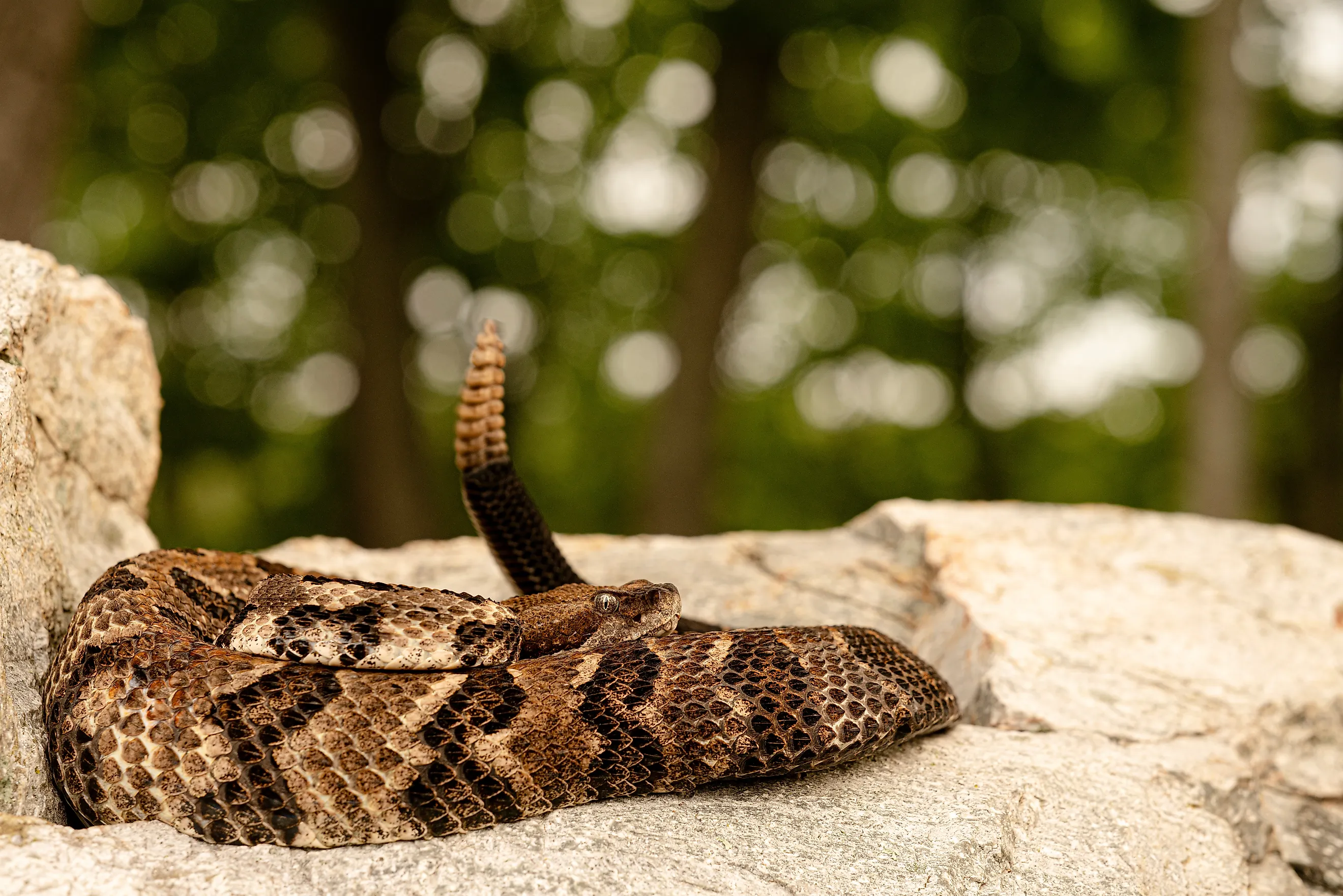
Covering more than 700,000 acres of federally owned land within a broader proclamation boundary, the forest contains extensive ridgelines, talus slopes, and south-facing exposures that warm quickly during much of the year. Timber rattlesnakes tend to use these ridges for denning and spend warmer months moving along forest edges where rodents are active.

The forest supports far more than snakes. Black bears, elk reintroduced to eastern Kentucky, endangered bats, freshwater mussels, and bald eagles all persist here in part because large tracts of habitat remain uninterrupted. In that sense, rattlesnakes are simply one visible indicator of a much larger system that’s still holding together.
Land Between the Lakes National Recreation Area

Land Between the Lakes National Recreation Area stretches across a long strip of forest and hills in western Kentucky and supports one of the state’s steadier rattlesnake populations. Timber rattlesnakes are common here, and in a few areas, the rare western pygmy rattlesnake can also be found. Rocky high ground gives snakes safe places to den, while nearby lowlands provide plenty of food during the warmer months.
More than 170,000 acres are protected, so development pressure stays low. Rodents are plentiful, sunny slopes help snakes warm themselves, and the long growing season keeps them active for much of the year. This lets rattlesnakes follow their normal seasonal routines with fewer disruptions.
The area’s past matters too. Towns were cleared out in the mid-1900s to create the recreation area, leaving a large, unbroken stretch of land behind. Today, that connected habitat supports wildlife and gives people space to hike, hunt, and spend time outdoors.
Big South Fork National River and Recreation Area

Big South Fork National River and Recreation Area is a rugged stretch of land shaped by deep gorges, tall cliffs, and narrow ridges cut by the Cumberland River and smaller streams. That rough terrain suits rattlesnakes well. Timber rattlesnakes and copperheads use sunny rock ledges to warm themselves, then retreat into cracks in the cliffs where they can rest and stay hidden above the river.
The steep ups and downs of the land create warmer spots that let snakes stay active later into the fall than in nearby areas. Roads are limited, and development is sparse, so snakes here are disturbed far less often than in more developed parts of the state.
Big South Fork matters for more than reptiles alone. The area includes miles of backcountry trails, remnants of old coal mines, and one of the region’s few remaining free-flowing rivers. The same isolation that allows rattlesnakes to persist has also helped keep the landscape largely unchanged.
Mammoth Cave National Park

Mammoth Cave National Park supports timber rattlesnakes across its forests. The park may be famous for the huge cave system underground, but the snakes spend nearly all their time above it. They stick to rocky hillsides, exposed outcrops, fallen logs, and open patches of forest where they can hide, warm up, and hunt for food.
Rattlesnakes are usually found along ridgelines and in sunny clearings where the ground stays warm for much of the day. These spots help them regulate their body temperature and hunt more easily. The nearby Green River adds to this habitat by supporting large numbers of small animals and giving snakes natural paths to move through the area.
Because the land here has been protected for a long time, wildlife has been able to survive while nearby areas were cleared for farming. Rattlesnakes share the park with dozens of threatened species and more than 170 kinds of birds. That mix of protection, food, and space has helped keep this area one of Kentucky’s strongest remaining pockets of native wildlife.
Preserving Kentucky’s Remaining Wild Habitats

Rattlesnakes still live in Kentucky, but only in places that haven’t changed much. They stick to big forests, rocky hills, and areas with fewer roads and buildings. Timber rattlesnakes are the most common, and in a small part of western Kentucky, western pygmy rattlesnakes are still around too. These snakes don’t live just anywhere. They need steady food, safe hiding spots, and land that hasn’t been broken into pieces. When people see a rattlesnake in these areas, it doesn’t mean danger has moved in. It means the land is still doing what it’s supposed to do.