The US Coastlines Where Jellyfish Are Worst
Jellyfish are having their moment on American beaches, and not the good kind. Warming ocean water, shifting salinity, and calm summer surf have combined to fuel some of the largest blooms in recent memory, across the mid-Atlantic and the Gulf of Maine. Scientists say warmer ocean temperatures may be contributing to the surge, though they caution that the cause is not yet settled. Some coastlines simply get hit harder than others, whether because of the species that gather there, the shape of the shoreline, or the time of year. The stretches of US coast below are where swimmers, snorkelers, and beachgoers are most likely to feel the burn. Knowing where and when the worst blooms arrive is the best way to keep a beach day from ending at the first aid station.
The Chesapeake Bay, Maryland and Virginia

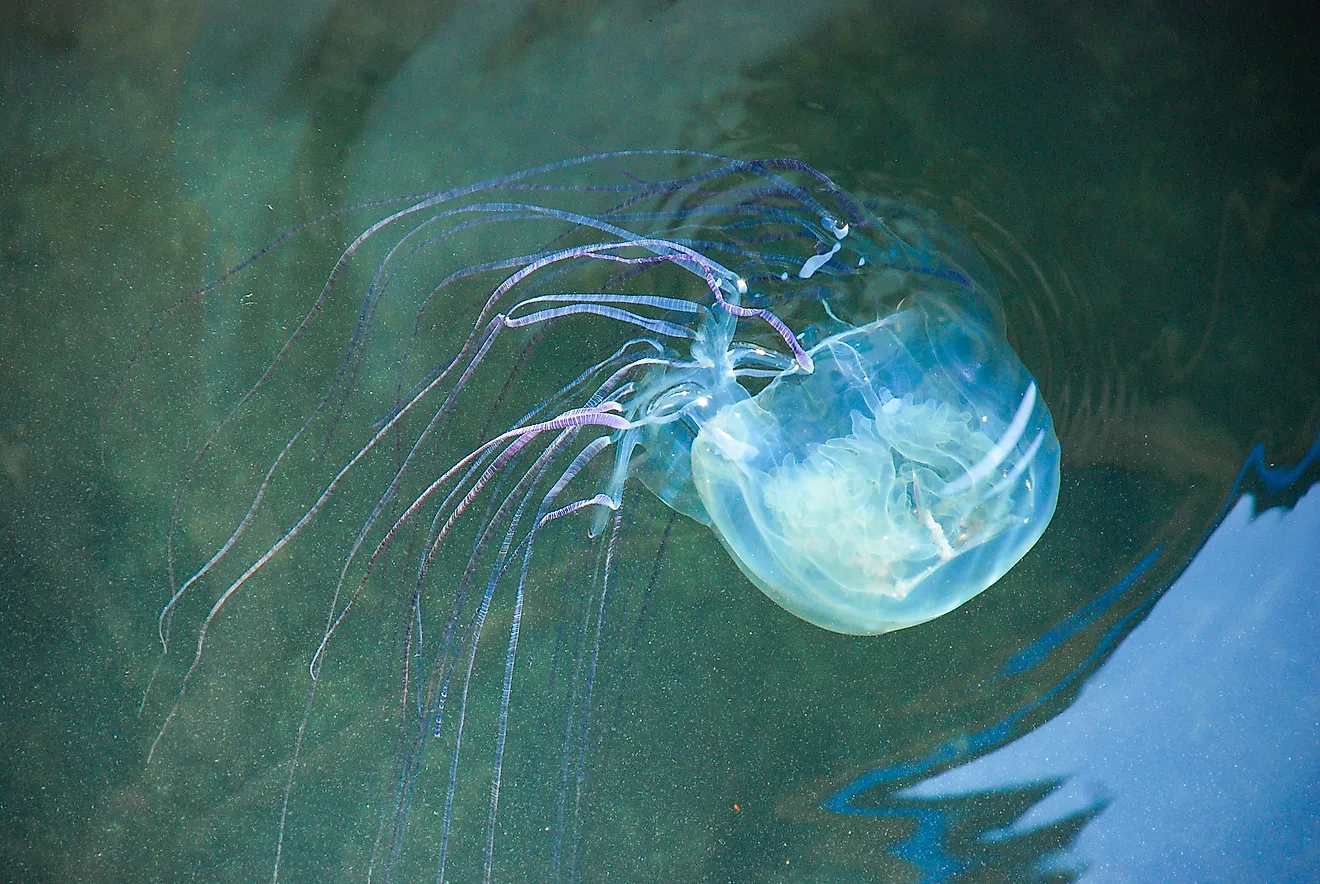
The Chesapeake Bay is the closest thing the United States has to a jellyfish capital. Its brackish, slow-moving water is the ideal nursery for the Chesapeake sea nettle, or bay nettle (Chrysaora chesapeakei), the species most responsible for summer stings across the region. Nettles thrive when water temperatures sit between 78 and 86 degrees Fahrenheit and salinity hovers around 13 parts per thousand, conditions that describe much of the middle Bay and its tributaries from May through September. Their milky-white bells trail tentacles that can stretch five to six feet, and a cluster of them, fittingly called a smack, can turn a swimming cove into a no-go zone. The problem is so predictable that the National Oceanic and Atmospheric Administration and the Virginia Institute of Marine Science publish a daily sea nettle forecast that maps where stings are most likely. If you plan to swim in the Bay in high summer, checking that forecast first is simply a must.
The Delmarva Beaches, Delaware and Maryland

Just east of the Bay, the open Atlantic beaches of the Delmarva Peninsula have endured record-breaking blooms two summers running. In Ocean City, Maryland, roughly 2,000 beachgoers were treated for stings during a single two-week stretch in August 2026, which the veteran captain of the Ocean City Beach Patrol called the worst jellyfish season he can recall. Lewes Beach in Delaware saw a fourfold jump in sting calls the previous summer, with Rehoboth and Bethany Beach reporting sharp increases of their own. The most common culprit is the Atlantic sea nettle (Chrysaora quinquecirrha), though the lion's mane jelly (Cyanea capillata) and moon jellies (Aurelia aurita) turn up here too. All are drawn in by warm water, favorable salinity, and unusually calm surf that lets them linger close to shore. Blooms typically build in late July and peak in August, and the biggest threat often comes from the jellyfish just below the surface that swimmers never see coming. A rash guard and water shoes go a long way here.
South Carolina's Grand Strand

The 60-mile Grand Strand around Myrtle Beach draws millions of summer visitors, and by late summer they share the water with waves of migrating jellyfish. Beach patrol in North Myrtle Beach logged more than 200 stings in a single 48-hour span in August 2026, a pattern local supervisors describe as an annual event as August turns to September and currents carry the animals up the coast. Most of the offenders here are southern moon jellies and the cannonball jelly (Stomolophus meleagris), which deliver only a mild prickle to a light burning sensation, along with sea nettles that pack a sharper sting. Because these jellyfish drift with the current rather than swim against it, blooms can concentrate and disperse quickly, so a beach that is clear in the morning may not be by afternoon.
The Florida Panhandle

Along the sugar-white sand of the Florida Panhandle, a purple flag is the sight beachgoers dread. Counties such as Walton fly them across all 26 miles of their shoreline when sea nettles and moon jellies drift in on southerly winds, which can happen anytime from late spring through summer. The jellies are often drawn in when the drifting plankton they feed on accumulates near shore, and the shape of the coast tends to keep the blooms concentrated in the same stretches between Pensacola and Panama City. Of the two, the sea nettle is the one to respect, since its sting is sharper than the mild brush of a moon jelly. When the purple flags are up, it is wise to stay out of the water and to give any drifting jelly a very wide berth.
Florida's Atlantic Coast

Florida's Atlantic side has its own trouble spot in Volusia County, home to Daytona Beach and New Smyrna Beach. Over Memorial Day weekend in 2025, lifeguards there treated hundreds of jellyfish stings in a matter of days, an influx officials attributed mainly to moon jellies. Volusia is one of the busiest beach-rescue jurisdictions in the country, and its warm, current-swept water makes it a reliable landing zone for drifting jellies through the warm months, with moon jellies the usual offenders. Just inland, the warm, shallow Mosquito Lagoon behind New Smyrna holds the upside-down jelly (Cassiopea xamachana), a true jelly that rests bell-down on the bottom and can leave the water itself faintly stinging. Beach flags and lifeguard advisories are your best friends here.
Southern California

The West Coast stings less often than the Atlantic, but Southern California has its moments, and when the jellies move in they can catch a crowded beach all at once. The main offenders are the purple-striped jelly (Chrysaora colorata), a silvery bell banded in deep purple that ranges along the coast between Monterey and San Diego, and the giant black sea nettle (Chrysaora achlyos), whose bell can span three feet with tentacles trailing far behind. Both deliver a sting that is painful, though rarely dangerous. Warm currents pushing up from the south tend to sweep them toward shore in summer, and the blooms can arrive with little warning. Lifeguards in Encinitas once treated 135 stung swimmers in a single Sunday, and as recently as spring 2026, Malibu and other Los Angeles County beaches posted warnings after surfers were stung. If you are hit, get out of the water calmly, have a lifeguard help lift away any tentacles, and resist the urge to rub the skin.
New England
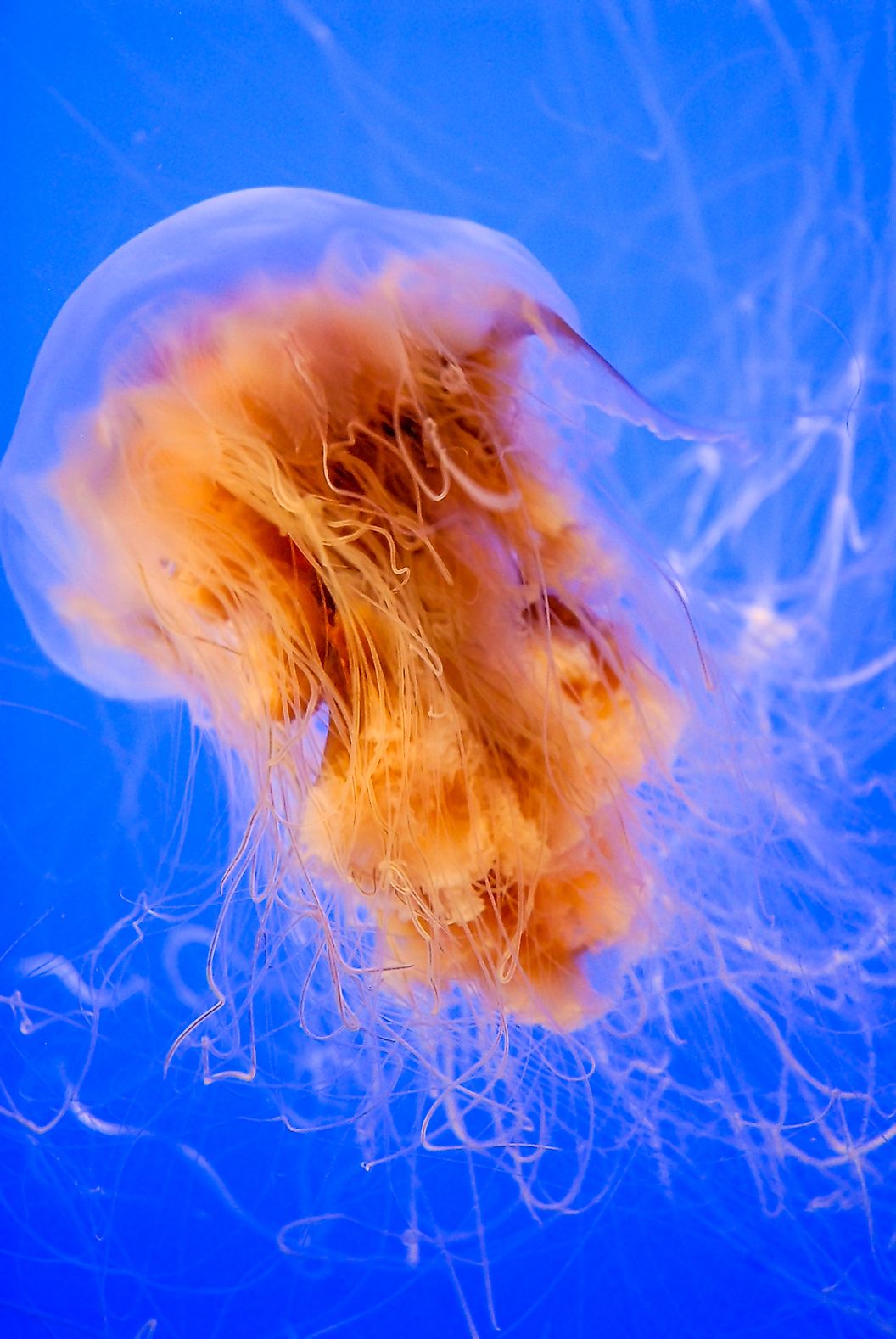
New England waters are cold, but that does not spare them. Cape Cod Bay and the Gulf of Maine have seen enormous blooms of the lion's mane, one of the largest jellyfish species on earth, with the summer of 2026 producing the biggest surge since 2020. These reddish giants, whose fleshy tentacles can stretch for many feet, have drifted ashore along the North Shore of Massachusetts, the Cape, and the coast of Maine, with towns between Gloucester and Ogunquit issuing warnings after clusters of stings. Because the animals ride so close to shore and strand on the sand, more swimmers and waders end up in contact with them. Other regulars include moon jellies and sea nettles, along with the tiny but potent clinging jelly (Gonionemus vertens), which anchors to eelgrass in the calm salt ponds around Cape Cod and delivers a sting well out of proportion to its size. If you are stung, resist the urge to rinse with fresh water, which causes the stingers to fire off even harder. Cool seawater and careful tentacle removal are the safer response.
Oahu's South Shore, Hawaii

Hawaii offers the most predictable jellyfish hazard in the country, and also one of the most painful. On Oahu's south-facing shores, including Waikiki, Ala Moana, and Hanauma Bay, box jellyfish (Alatina alata) arrive like clockwork about 8 to 10 days after each full moon, drawn near shore to spawn. Honolulu Ocean Safety posts warning signs during these windows, which recur every lunar month and can bring hundreds of stings when a heavy influx lands on a busy weekend. On Memorial Day in 2019, lifeguards logged more than 900 stings at Waikiki alone in a single day. The box jellyfish delivers a genuinely dangerous sting, so the smart move is to check a Hawaii box jellyfish calendar before booking a south-shore swim and to shift snorkeling to the safe days, generally the first week after a full moon.
The Bottom Line
Jellyfish blooms are hard to predict day to day, but the pattern holds: warm water, calm surf, and the right salinity bring the stingers in, and they run thickest from summer into early fall. Before you swim, a quick look at local beach flags, lifeguard advisories, or a regional jellyfish forecast is the simplest way to judge the water, and painful as a sting is, rip currents remain the far deadlier hazard. If a sting does happen, skip the folk remedies, because fresh water and urine only make it worse. Watch for delayed reactions over the next few hours, and seek medical care for symptoms such as chest pain, difficulty breathing, abdominal pain, profuse sweating, or nausea.