7 Most Beautiful Historic Towns in Florida
Florida's story did not start with the theme parks. St. Augustine, founded in 1565, is the oldest continuously occupied European-established settlement in the continental US. Key West still has the house where Hemingway wrote, Apalachicola preserves the lab where a local doctor built the first ice machine, and Micanopy has looked much the same since the 1820s. In town after town, the past is still standing, in Victorian storefronts, brick depots, and Civil War forts.
Micanopy

Micanopy is one of Florida's oldest inland towns, established in 1821 and named for the Seminole chief Micanopy. It stretches less than 2 miles across the rural north-central part of the state, but it packs in antique shops, boutiques, small museums, and local eateries. Live oaks draped in Spanish moss shade the downtown along Cholokka Boulevard, which brings browsers and collectors year-round.
The Micanopy Historical Society Museum, in a vintage brick building, lays out the town's two centuries of history, including its Native American roots and its days as a pioneer trading post. Just north of town, Paynes Prairie Preserve State Park spreads across more than 21,000 acres of wetland and prairie, home to wild horses, bison, and alligators.
Mount Dora

Lake Dora, 4,500 acres of water about an hour north of Orlando, is the center of Mount Dora's calendar of boating, fishing, and festivals. Founded in 1880, it has a walkable downtown of independent boutiques, galleries, and outdoor cafes, with a local art scene to match.
The Modernism Museum shows off a collection of modern American design, and the Mount Dora History Museum traces the town's story since the 1870s. The historic Lakeside Inn, opened in 1883, is the oldest continuously operating hotel in Florida, and it still takes guests by the night or the week.
Flagler Beach

Flagler Beach occupies a low-key stretch of the Atlantic coast between St. Augustine and Daytona Beach, with a retro main street of one-off boutiques, galleries, and restaurants. The town dates to the early 1900s and bills itself as the Jewel of Florida's East Coast. The Flagler Beach Historical Museum maps a self-guided walk through downtown, flagging the landmarks along the way.
Beyond the beach, the Bulow Plantation Ruins Historic State Park has a nearly 7-mile trail through old-growth forest, part of it along an original Native American path. The ruins themselves are the remains of a 19th-century sugar plantation, a reminder of the coast's earlier industry.
Fort Pierce

A working fishing town on the Atlantic coast, Fort Pierce still leans on the water, but its downtown carries plenty of history too. The Sunrise Theatre, built in 1923, stages live theater and music. On the third Friday of each month, the Downtown Fort Pierce Art Walk brings local art to the streets.
Other stops trace the town's past: the A.E. Backus Museum and Gallery, the National Navy UDT-SEAL Museum, and the Pineapple Playhouse, which opened in 1949. For time outdoors, Avalon State Park and the Indian Hills Recreation Area are both a short drive away.
Key West

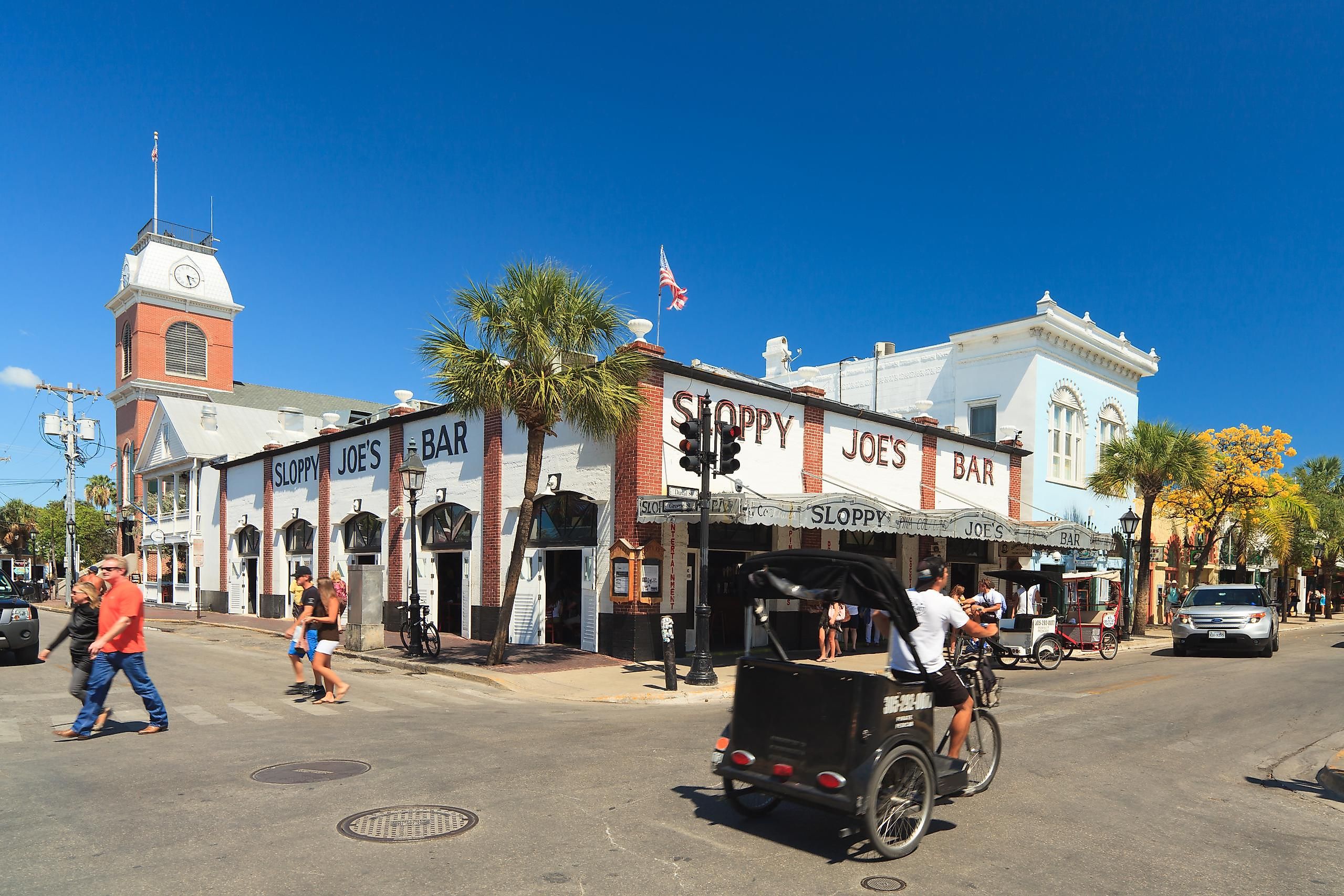
Key West marks the far end of the Florida Keys as the southernmost city in the continental US, a tropical island town with deep literary roots. Ernest Hemingway wrote here for years, and his former house is open for tours, cats and all. The Oldest House, built in the Bahamian style in the 1820s, gives another window into the island's 19th-century life.
History reaches offshore, too. Dry Tortugas National Park, reachable by boat or seaplane, is built around Fort Jefferson, a massive brick fortress that served as a Civil War prison. The park also brings snorkelers, campers, and birdwatchers to its reefs and islands.
Apalachicola

On Florida's Forgotten Coast, Apalachicola lines the bay of the same name, a Gulf of Mexico inlet. Once a busy cotton and oyster port, it now trades on seafood restaurants, independent shops, and a walkable historic district. Many of the Victorian homes lining its streets date to the 1830s, and a self-guided walking tour connects them.
The John Gorrie Museum State Park honors the local doctor who built the first ice machine, with a replica on display. The Raney House Museum and the Orman House Museum, both preserved 19th-century homes, round out the town's historic sites.
Milton

Milton, just north of Pensacola in the Panhandle, goes by the Canoe Capital of Florida. The Coldwater, Sweetwater, and Blackwater waterways wind through the area and pull paddlers from across the country. The 9-mile Blackwater Heritage State Trail adds a flat route for walking, biking, and birding.
The town's past shows up in its museums. The West Florida Railroad Museum tells its railroad story through a restored depot, memorabilia, and model trains.
Where the Past Still Shows
The through-line is that Florida's history did not stay in St. Augustine. It shows up in Mount Dora's 1883 hotel, in the sugar-plantation ruins behind Flagler Beach, in the paddling town Milton has been for a century, and in Fort Pierce's 1923 theater. None of these towns is large, which is exactly why the past is still easy to find on their streets.