6 Strange Discoveries About Earthquakes Scientists Can’t Explain
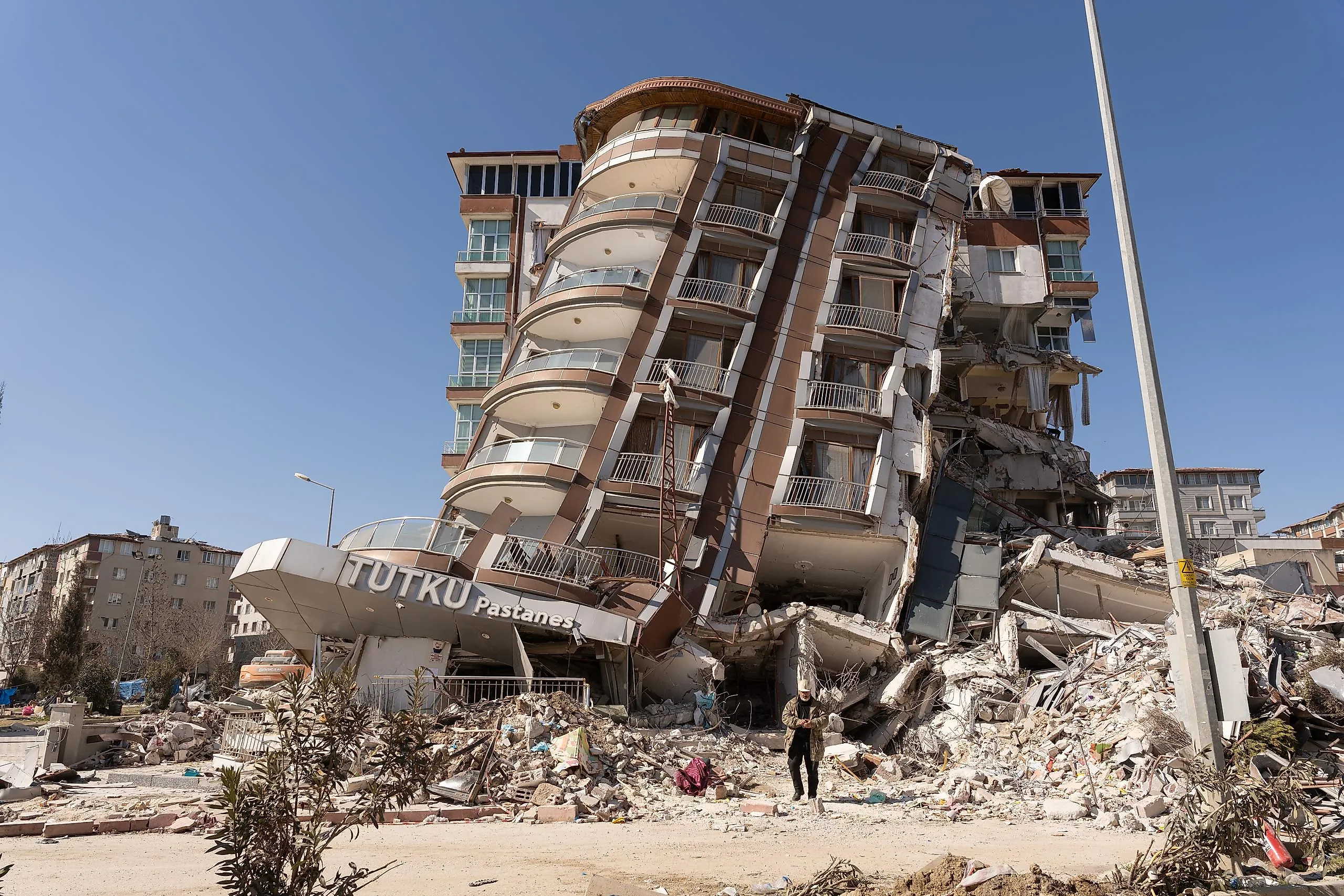
There’s a good chance you’ve experienced an earthquake and didn’t even notice it. An estimated 500,000 quakes occur across the world every year, but only 100,000 of those are felt, and 100 cause any damage. The ones that do make the headlines are often terrifying in their power and unpredictability, opening up gaping sinkholes, triggering crushing landslides, and causing giant tsunamis. The deadliest earthquake on record occurred in 1556 in China and killed around 830,000 people. In more recent years, the 2004 Indian Ocean quake unleashed towering waves that swept over Indonesia, killing around 230,000.
Earthquakes cause untold devastation, kill thousands, and impact the entire planet, but there’s still so much scientists don’t know about these natural disasters despite centuries of study. Humanity has been mystified and captivated by quakes since civilisation began. Early societies often attributed them to gods or spirits. The ancient Greeks blamed the nautical god, Poseidon. Native Americans believed it was the movement of a giant turtle. The Norse thought it was the god Loki, imprisoned on Earth.
With advances in physics, geology, and geophysics, we know now that earthquakes are caused by shifts in the Earth’s outer layers (crust/upper mantle lithosphere) along fault lines, but our knowledge hasn’t progressed much beyond that. Below, we examine some of the most mysterious phenomena associated with earthquakes and how they highlight key gaps in this fascinating area of science.
Mysterious Flashes of Light in the Sky Just Before Some Big Quakes Hit
In 2008, a powerful magnitude eight earthquake ripped through Sichuan, China. Just 30 minutes before it hit, people noticed multicolored glowing clouds rippling through the sky. Known as Earthquake Lights (EQL), this phenomenon has been observed several times before earthquakes and sparked imaginative explanations ranging from UFOs to falling stars.
To make matters more complicated, EQLs are rarely alike. They can come in several forms, from glowing orbs to fiery lights and luminous clouds. Science didn’t really take the lights seriously until 197,3 when a Japanese geologist caught them on camera. In the years since, photographic evidence has accumulated, but scientists are still puzzled by their exact origins and nature.

One theory suggests that EQLs are caused by electrically charged glowing gases, while another hypothesis attributes them to the electrical charge absorbed by rocks as they shift under pressure. A 2014 paper noted that 80% of EQL instances preceded quakes with magnitudes greater than 5.0, and EQLs are more likely to occur on or near rift valleys. With further research, scientists hope to eventually unlock the mysteries of earthquake lights and utilize them to predict the occurrence and intensity of earthquakes better.
Animals That Freak Out and Flee Hours Before the Ground Starts Shaking

From dogs that won’t stop barking to birds flying in odd patterns, there are plenty of anecdotal reports of animals ‘sensing’ earthquakes, but little scientific evidence to back them up. The earliest record of this unusual behavior comes from Ancient Greece, where, in 373 BC, rats, weasels, snakes, and centipedes were observed fleeing their dens before a major earthquake struck.
![Velocity of seismic waves in the Earth versus depth.[2] The negligible S wave velocity in the outer core occurs because it is liquid, while in the solid inner core the S wave velocity is non-zero.](https://www.worldatlas.com/r/w960-q80/upload/88/6e/6f/pwave-s3cdn.png)
Velocity of seismic waves in the Earth versus depth.[2] The negligible S wave velocity in the outer core occurs because it is liquid, while in the solid inner core the S wave velocity is non-zero. Wikimedia Commons.
It might be tempting to think of your pet as an early warning system, but no reliable studies have confirmed that animals can sense an earthquake in the days or weeks before it occurs. There is some logic to the idea, however. Vibrations caused by earthquakes travel at different speeds. Primary, or P-wave, vibrations move twice as fast as Secondary, S-wave, vibrations, which are the ones felt by humans. P-wave vibrations usually go undetected but may be felt by animals, giving them a two-minute heads up before the quake unleashes its full power.
Booming Sounds Even When No Shaking is Felt

Earthquakes are sometimes heard more than felt. The mystery of so-called ‘Earthquake Booms’ goes back to 1857, when observers of an Italian quake reported hearing ‘explosive’ and ‘rushing and rolling’ sounds. Also likened to rumbling noises, detonations, and roaring sounds, earthquake booms are now a well-documented phenomenon, but one that still baffles scientists.

Studies show that earthquake booms are associated with minor, shallower quakes and are caused by high-frequency vibrations. Sometimes booms can be heard even when the vibration isn’t felt on the surface. However, scientists don’t know why some shallow quakes produce a booming sound while others remain silent, and they lack sufficient reliable information about the noises to utilize them in earthquake prediction.
Quakes Heating the Atmosphere

In 2011, Japan suffered its strongest earthquake in history, a 9.1 magnitude powerhouse that struck off the northeast coast of Honshu, generating a 130-foot-high tsunami that killed over 18,000 people. In the aftermath of the disaster, NASA scientists noticed something unusual in their data. In the days before the quake, the atmosphere above the earthquake’s epicenter saw a sudden and significant spike in temperature.

Upon closer analysis, it appears that both infrared emissions and electron content peaked before the quake, potentially providing scientists with a significant clue in earthquake prediction. Researchers theorize that the atmospheric changes are due to a release of radon gas. This gas, produced when tectonic plates are under pressure, ionizes the air, which in turn causes water condensation, a process that produces heat. However, further study is needed to determine if these atmospheric changes occur elsewhere, allowing scientists to establish a clear link between them and earthquakes.
“Boomerang” Quakes Reversing Direction
A relatively new area of earthquake research, “boomerang” quakes only caught the attention of scientists in 2020 when the term was coined by a group of researchers from the University of Southampton and Imperial College London. The team tracked a 2016 earthquake in the Atlantic Ocean and was stunned to discover that the quake appeared to reverse course, moving one way along the fault line before abruptly turning and racing in the other direction. This erratic behaviour essentially allowed the earthquake to strike twice, with terrifying implications for a similar event on land. The 2020 study remains the only one to measure this rare and unique type of earthquake, making it an emerging area of research for geologists.
Quiet Quakes That Happen Without Anyone Noticing

We’re used to thinking of earthquakes as huge events that unleash extreme destruction within minutes, but tectonic plates can often shift below the earth’s surface undetected, and these ‘slow’ earthquakes can last for days, months, and even years. Also known as slow slip events, scientists first discovered this new type of earthquake around 20 years ago, but still don’t know their exact relationship to more destructive quakes.

The first documented slow earthquake occurred off the Pacific coast of North America in 1999, when geophysicists noticed spikes in plate movement over a period of weeks as the North American plate and the Juan de Fuca plate slightly slipped against each other, but without causing any perceptible shaking. Further research has proved difficult due to the subtlety of the slips and their depth below the earth. Scientists are working to improve monitoring and detection so they can better understand the complex behaviour of slow earthquakes.
Scientists can forecast earthquakes, but they can’t predict them. While it’s possible to identify the areas of friction in the earth’s crust and say with some accuracy where a quake may occur, it is currently impossible to accurately predict when it will hit and how big it will be. Given the massive cost to life, infrastructure, and the environment, it’s no wonder that earthquake science is primarily focused on solving this problem. As advances in technology provide researchers with more tools to track earthquake behavior, we are drawing ever closer to solving one of nature’s greatest mysteries and building reliable earthquake warning systems.