The National Parks With The Oldest Trees On Earth
A handful of national parks protect trees that were already ancient when the parks around them were drawn. In the high desert of the Great Basin, bristlecone pines have kept growing for more than 5,000 years, longer than any other non-clonal tree on Earth. Farther west, giant sequoias and coast redwoods count their ages in millennia rather than centuries. The parks below are ordered by how old their signature species is known to grow, starting with the oldest and working down toward trees that reach a mere thousand years.
Great Basin National Park, Nevada

Great Basin bristlecone pines (Pinus longaeva) can live past 5,000 years, and Great Basin National Park in Nevada protects some of the oldest of them. The trees cling to rocky, high-elevation ground, with sizable stands at groves such as Mount Washington. Part of the reason they last so long is a growth habit the National Park Service calls sectored architecture: a strip of living bark can feed just the branches directly above it, so a tree keeps parts of itself alive even as the rest dies back.
The park's most famous bristlecone no longer stands. In 1964, geographer Donald R. Currey was studying a tree named Prometheus in the Wheeler Peak grove when it was cut down; its stump held 4,862 growth rings, which put the tree near 4,900 years old. The oldest bristlecone ever dated is older still, a roughly 5,065-year-old pine confirmed in 2013, though that one grows in California's White Mountains rather than inside the park. What Prometheus proved is that trees of comparable age are almost certainly scattered across these ridges, most of them never measured.
Bryce Canyon National Park, Utah

Bristlecone pines grow at Bryce Canyon National Park in Utah as well, most visibly near Yovimpa Point at the southern, highest end of the park. A tree there is estimated at more than 1,600 years old, which counts as young for the species. The park does not publicize where its oldest specimens stand, a common practice meant to keep them safe from vandalism. Bryce also holds a wide population of ponderosa pines (Pinus ponderosa), a species that can pass 500 years, filling the slopes below the rim.
Sequoia National Park, California

Giant sequoias (Sequoiadendron giganteum) are the headline trees at Sequoia National Park in California, and the oldest of them have been standing for well over three millennia. They grow on the western slopes of the Sierra Nevada, with the densest concentration in the Giant Forest. Careful ring counts put the maximum age of the species around 3,200 years. Many of these trees carry fire scars buried deep in their rings, some dating back 2,000 years, a record of how many wildfires a single sequoia can survive and keep growing.
Kings Canyon National Park, California

The General Grant Tree draws most of the attention at neighboring Kings Canyon National Park, also in the Sierra Nevada. For decades it was thought to be well over 2,000 years old. A U.S. Geological Survey study published in 2000 revised that figure sharply downward, estimating the tree at roughly 1,650 years, younger than its enormous size had long suggested. It remains the second-largest giant sequoia on Earth by trunk volume, standing in Grant Grove.
Yosemite National Park, California

Yosemite's sequoias cluster in Mariposa Grove, at the southern end of Yosemite National Park, where more than 500 mature trees grow. The best known is the Grizzly Giant, the oldest tree in the grove. Its age is genuinely uncertain: a 2019 estimate put it near 2,995 years with a margin of several centuries, while the park's own signage and other researchers place it closer to 1,900 to 2,400 years. Whichever figure holds, it predates the founding of Rome. Yosemite's higher elevations also support whitebark pine (Pinus albicaulis), a hardy tree that can reach 1,000 years.
Redwood National Park, California

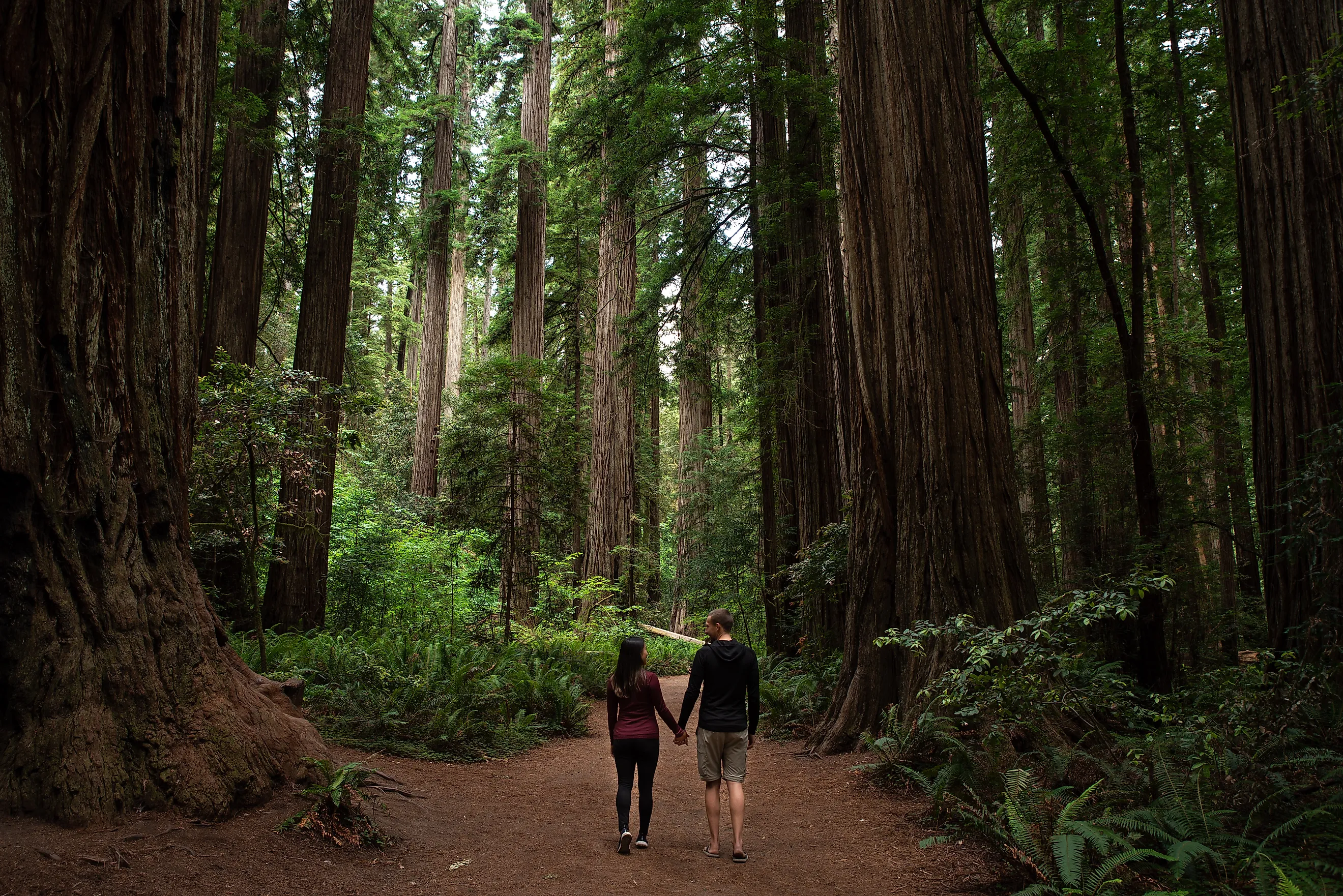
On California's northern coast, well away from the Sierra Nevada, Redwood National Park shelters coast redwoods (Sequoia sempervirens). These are the tallest trees on the planet, and they draw their longevity from the Pacific: fog and cool sea air keep the ground damp even through summer droughts, which is why the species stays within a narrow band along the coast. Coast redwoods commonly pass 600 years, and the oldest confirmed specimens approach 2,000.
North Cascades National Park, Washington

Western redcedar (Thuja plicata) trades the dry heights of Nevada and California for the wet lowland valleys of North Cascades National Park in Washington. The old growth survives in damp river bottoms, notably along Big Beaver Creek, where some of the largest trees have stood for more than 1,000 years. Moisture does for the redcedar what aridity does for the bristlecone: both extremes, in their own way, slow a tree down enough to let it last.
Trees That Outlast the Record Books
Every tree on this list was alive before the National Park Service existed to protect it, and several were alive before the parks had names or borders. Their value now runs past their age. The rings inside a bristlecone or a fire-scarred sequoia hold a year-by-year record of drought, wildfire, and shifting climate reaching back thousands of years, which makes these trees not just survivors but archives that researchers are still learning to read.