8 Most Walkable Town Centers In Tasmania
Given Tasmania's generally laid-back vibe, it's no surprise that so many of its small towns are best explored on foot at a leisurely pace. A historic jailhouse, a convict-built bridge, and a church dating back to the 1830s make a walk through Richmond's town center feel like a step back in time. Waubs Beach, the fishing boats at The Gulch, and the Bicheno Blowhole are all within walking distance of Bicheno's cafes and bakeries. Further inland, galleries and craft stores line Emu Bay Road in Deloraine, a short walk from the riverside paths along the Meander River. These eight Tasmanian towns offer distinct reasons to leave the car behind, slow things down, and discover the region's character one street at a time.
Richmond

This town is one of Tasmania's most recognizable historic towns, known for its Georgian architecture, sandstone buildings, and streets that preserve the character of early colonial Australia. The town is small enough to explore on foot, with many of its main attractions clustered around the village center. Start at Richmond Bridge, a convict-built stone bridge completed in 1825 that remains one of the town's most photographed landmarks. From the bridge, follow the streets toward St John the Evangelist Catholic Church, another important historic building dating to the 1830s. Both stops provide a glimpse into Richmond's early settlements and make an easy starting point for a walking tour.
Continue toward the center of the village to visit Richmond Gaol, built in 1825 and known as Australia's oldest intact gaol. Its preserved cells and historical displays offer insight into the lives of convicts who lived there. Afterward, walk back toward the main shopping streets to browse local galleries, craft stores, and cafes housed in historic buildings. Visitors can also stop at Old Hobart Town Model Village, which recreates Hobart as it appeared in the 1820s. These attractions can be combined into a leisurely walking outing, although visitors should check the model village's location and allow extra time if they wish to explore beyond the immediate center.
Stanley

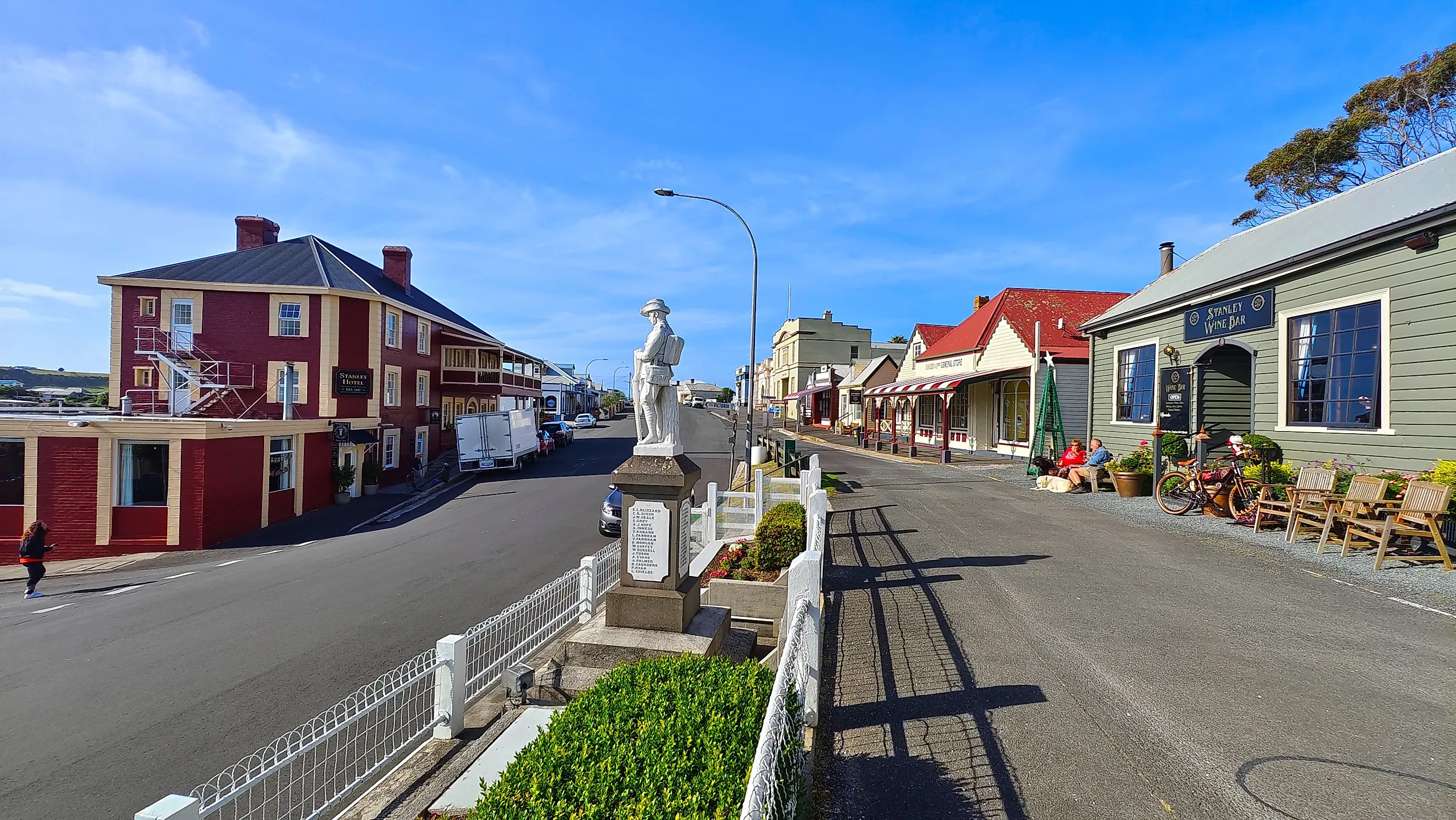
This is a small coastal town in northwestern Tasmania, recognized for its historic cottages, working harbor, and dramatic backdrop of munatrik, also known as The Nut. Its compact layout makes it a rewarding destination for visitors who want to combine sightseeing with coastal scenery. Begin near the harbor, where fishing boats and waterfront views introduce the town's maritime character. From there, walk toward Alexander Terrace and the historic village streets, where traditional buildings reflect Stanley's development as a fishing and trading settlement. The gentle streets around the center offer opportunities to admire the architecture and take photographs of the headland rising above the rooftops.
Next, follow the village streets toward Church Street, where historic homes, shops, and community buildings create a distinctive streetscape. Continue exploring the heritage trail, which connects 15 notable locations throughout the village and takes a little over an hour to complete. Visitors can pick up a printed guide from the Stanley Visitor Information Centre or use the online walking guide to learn about the buildings along the route. Finish with views of The Nut from the lower village, or walk to the designated access point if you want to tackle the steeper climb to the summit. The summit walk requires more effort than the flat village route, so comfortable shoes are recommended.
Bicheno

This is a relaxed seaside town on Tasmania's east coast where a walk through the center can easily lead to beaches, rocky shorelines, and ocean viewpoints. Rather than concentrating on colonial architecture, Bicheno offers a walking experience shaped by its coastal environment. Start around the town center, where cafes, bakeries, and small shops provide a convenient place to grab breakfast before heading toward Waubs Beach. From the beach, follow the coastal footpaths toward The Gulch, a sheltered harbor area where fishing boats and rocky formations add to the scenery. The route lets visitors experience the town's connection to the sea without needing to drive between every stop.
Continue along the foreshore toward Bicheno Blowhole, where waves force seawater through openings in the granite rocks, sometimes sending spray into the air. Along the way, look out for Rocking Rock, a distinctive granite boulder balanced near the coast. After exploring the shoreline, head back toward town and follow the uphill route to Whalers Lookout, which is about a 10-minute walk from the center and offers sweeping views of Bicheno and the surrounding ocean. The foreshore trail links several of these sights, although the full coastal walk is longer than a quick town-center stroll. Check the weather and sea conditions before approaching exposed rocks near the water.
Swansea

This is a small east-coast town overlooking Great Oyster Bay, with views toward the Freycinet Peninsula and a town center that combines local history with seaside scenery. Its modest size makes it suitable for visitors who prefer to explore without a packed itinerary. Begin at East Coast Heritage Museum, where exhibits cover the region's history, including its Aboriginal heritage, convict era, and maritime industries. From the museum, individuals can walk through the nearby streets to browse local shops and cafes before heading toward the waterfront. The short distances between the central streets and the coast make it easy to combine sightseeing with a relaxed stop for lunch or coffee.
For a longer outing, follow the signed loontitetermairrelehoiner coastal walk, a roughly 2.3-kilometer circuit that starts in the town center and travels around Waterloo Point, an area associated with Swansea's early European settlement. The route offers views across the bay and opportunities to appreciate the coastline at a slower pace. After completing the circuit, return toward the center along the same approach and stop at one of the local cafes or food shops.
New Norfolk

This is a historic town in the Derwent Valley, northwest of Hobart, where heritage buildings, riverside scenery, and local shops create a pleasant setting for walking. The town developed along the Derwent River, and its central streets retain traces of its early settlement history. Start along High Street, the main commercial area, where visitors can browse antique stores, independent shops, and cafes. From there, walk toward St Matthew's Anglican Church, one of the town's notable landmarks. The streets are worth exploring at a relaxed pace, with older buildings and traditional shopfronts offering plenty of opportunities for photographs.
After exploring the town center, head toward Arthur Square, a central green space that provides a place to rest before continuing to the Derwent River foreshore. Walk along the accessible riverside areas to enjoy views of the water and the surrounding valley landscape. Visitors interested in local history can also look for Willow Court, a former psychiatric hospital complex with a long and complicated history; check access arrangements before planning a visit, as not every building or area may be open to the public. These stops can be combined into a town-center walk, with the river providing a scenic finish. New Norfolk's compact central area makes it easy to return to High Street for a meal or coffee afterward.
Deloraine

This is an attractive town in northern Tasmania, known for its heritage streets, arts and crafts, and setting beside the Meander River. Its central area is compact enough to explore on foot, making it a good choice for travelers who enjoy combining small-town shopping with scenic walks. Begin along Emu Bay Road, where shopfronts, galleries, and local businesses give the town its character. Continue through the central streets to admire the older architecture and look around the stores featuring handmade goods and regional products. Deloraine is especially known for its arts and crafts scene, so visitors may find locally made artwork, textiles, and other creative pieces while wandering through the center.
From the main shopping area, make your way toward the Meander River, which provides a peaceful contrast to the busier streets. Follow the riverside paths where available, taking time to enjoy the water, greenery, and views of the landscape. You can then walk back toward the town center to visit the Great Western Tiers Visitor Centre, a useful stop for information about the area's natural attractions and local history. If time allows, individuals should definitely keep exploring the historic buildings around the central streets before returning to a cafe for a break. The river and town center work well together as a walking route, although visitors should follow marked public paths rather than assuming every riverside section connects continuously.
Ross

This is a small village in Tasmania's Midlands, celebrated for its sandstone buildings, traditional streets, and convict-era heritage. Its compact layout makes it well suited to exploring on foot, as several major sights are located close to one another. Start at Ross Bridge, a sandstone bridge completed in 1836 and recognized for its detailed stone carvings. From the bridge, follow the streets toward the village center, where unique buildings and quiet roads reflect Ross's development as an important stop along the old road between Hobart and Launceston. The bridge is an excellent starting point for photographs, especially when viewed from the riverbanks.
Continue toward Ross Female Factory, a former convict site that provides insight into the lives of women transported to Van Diemen's Land. Check opening arrangements before visiting, as access and interpretation options may vary. From there, walk through the village to see Ross Uniting Church and the buildings around the main streets. Finish at Ross Village Bakery, a well-known local stop where visitors can take a break before continuing their journey. The village's small scale makes it possible to connect the bridge, heritage streets, church, and bakery in a single outing, although the former factory is farther from the central cluster than the main village sights. Allow extra time to read the historical displays and appreciate the craftsmanship of the old stonework.
Oatlands

This is a Midlands town known for its sandstone architecture and one of Tasmania's most recognizable landscapes. Its long main street is lined with old buildings, many constructed during the nineteenth century, making it an appealing destination for visitors who enjoy exploring history at a slower pace. Start along High Street, where former inns, cottages, shops, and civic buildings create an impressive stretch of architecture. Walking along this road allows visitors to appreciate the different building styles and the way the town developed around an important route connecting Tasmania's northern and southern settlements. Small shops and local businesses provide convenient stops along the way.
Continue toward Callington Mill, a restored Georgian windmill that stands among Oatlands' best-known landmarks. From the main street, follow the local pedestrian routes toward the mill, taking care when crossing roads and checking the site's current visitor access. Afterward, go back to the center to explore the area around Oatlands Court House and the town's other buildings. You can also visit Lake Dulverton, just beyond the main streets, for a quieter walk beside the water and views back toward the town. The combination of High Street, the mill, and the lake offers a varied walking itinerary, although the lake adds distance and may be better suited to visitors with extra time.
Walking Around Tasmania Is Good Exercise And A Lot Of Fun
It is a great way to get exercise while discovering the island's historic towns, coastal scenery, and local attractions. From exploring Richmond's streets to enjoying the waterfront in Bicheno and admiring the sandstone buildings in Oatlands, each town offers a different experience for visitors. Walking between attractions also allows travellers to notice small details they might miss when driving, such as historic architecture, local shops, and scenic viewpoints.
These eight towns show that exploring Tasmania does not always require a car or a descriptive itinerary. With comfortable walking shoes and some time to spare, visitors can enjoy fresh air, stay active, and experience the local character of each place. Whether strolling along a river, wandering through a village, or following a coastal path, walking around Tasmania makes sightseeing both enjoyable and rewarding.