The National Parks Where People Get Lost Most Often
Some U.S. national parks practically guide visitors between overlooks. Others expect you to navigate trail-less wilderness, maze-like canyons, dense forests that swallow GPS signals, or coastlines where the tide can erase your route home. The National Park Service doesn't rank any of their 63 official parks by how often people get lost nor publish data that any one place poses a significantly greater threat than another. However, certain parks repeatedly warn that navigation is one of the greatest hazards visitors face. And the true stories of hikers going missing prove their point. From the North Rim of Arizona's Grand Canyon National Park to the frigid backcountry of one of Alaska's largest parks, here's where hikers and campers are most likely to become the focus of a search-and-rescue operation.
Grand Canyon National Park

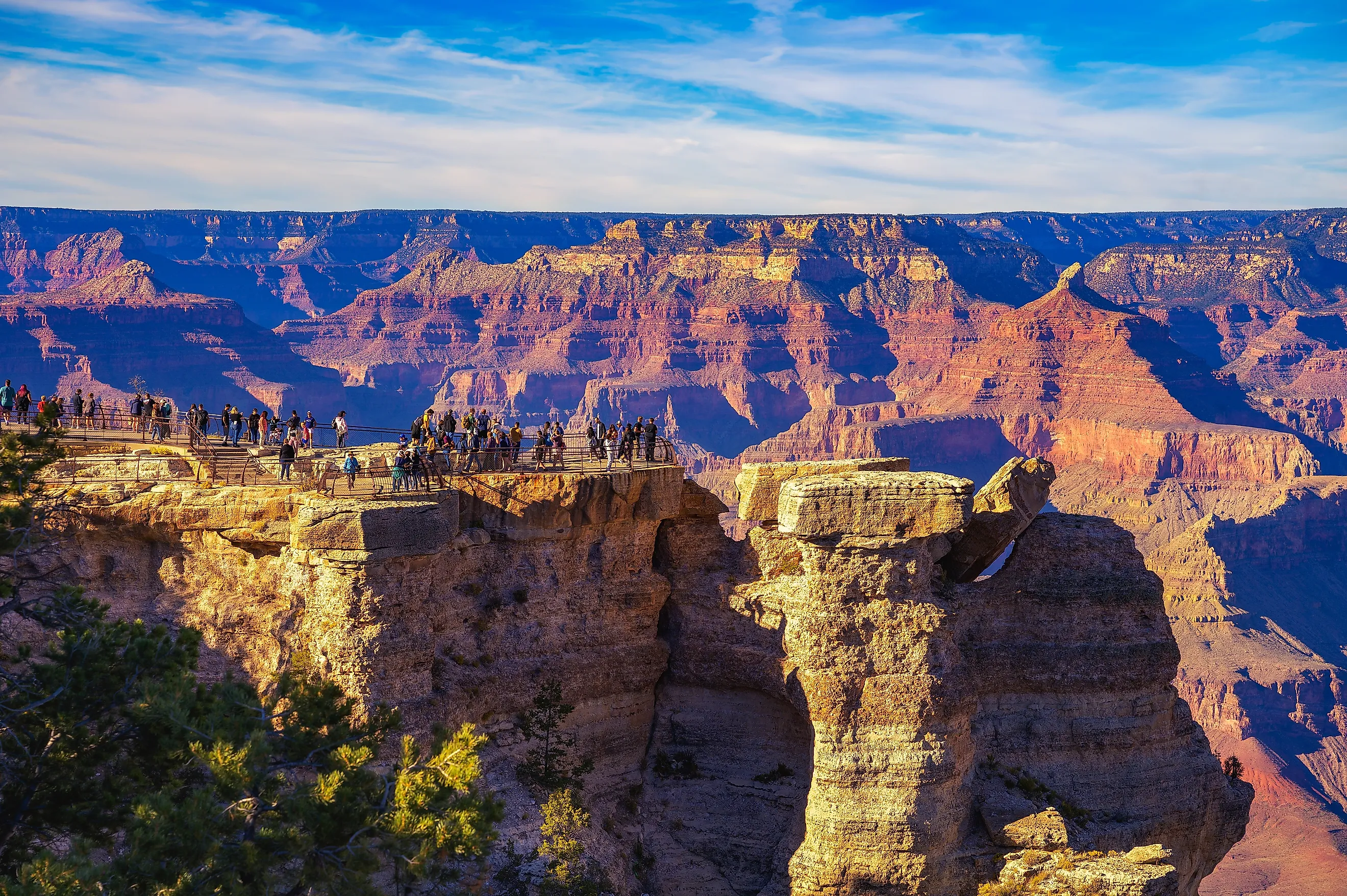
On July 21, 2026, 83-year-old Gerald Guinn became separated from his hiking partner in a remote section of Grand Canyon National Park's North Rim near the park's northeastern boundary. Guinn was carrying no hiking or camping equipment. Ground teams, drones, and helicopters searched for him until a helicopter crew spotted him the following evening approximately 2.5 miles from where he had last been seen. Guinn is far from the only person to get lost in Grand Canyon, which the National Post called America's "deadliest" national park.
While numbers pertaining to just how many missing people's reports there have been fluctuate, there's no doubt that getting lost in the Grand Canyon carries unusual consequences. The park's inner canyon combines steep elevation changes, limited water, extreme temperatures, and long climbs back toward the rim. Summer temperatures below the rim can exceed 110°F, while some routes offer almost no shade or dependable water. There are still multiple unsolved cases of missing hikers in the park, including Floyd E. Roberts III, who vanished in 2016 after he was separated from his companions on the Shivwits Plateau, a remote portion of the western Grand Canyon.
The NPS warns that hikers requesting assistance have often underestimated the canyon's difficulty and overestimated their ability to manage its conditions. There is also no formal public check-in system for backcountry hikers. Visitors must leave their route and expected return time with someone else, carry navigational tools, and remain with their group.
Canyonlands National Park

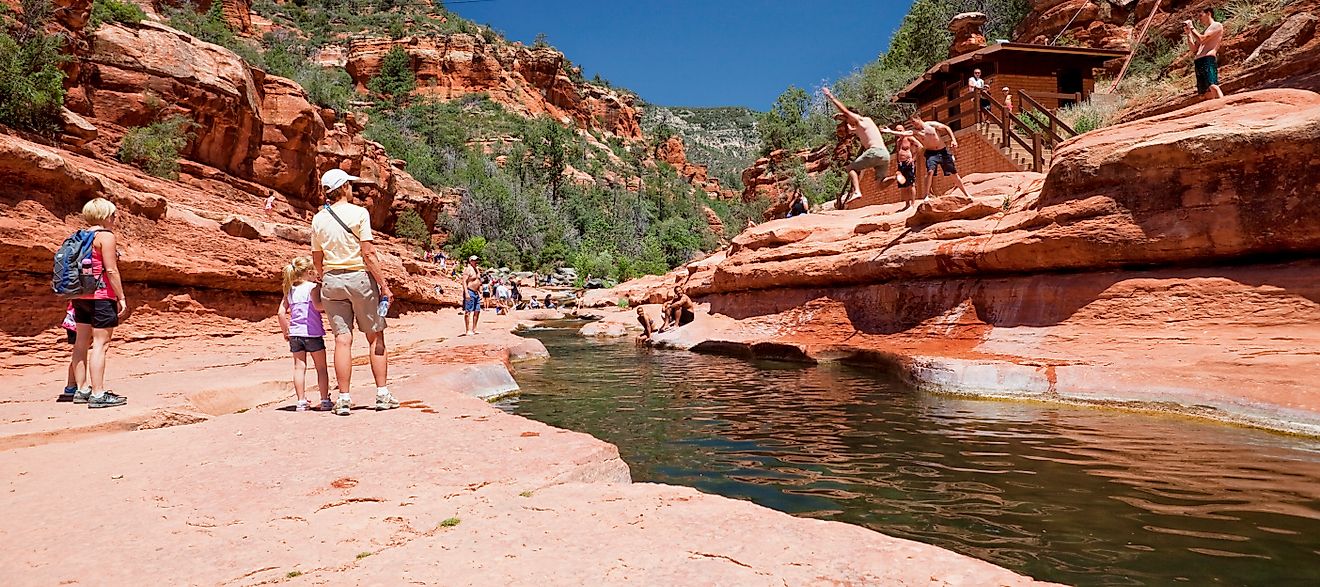
The Maze District in Canyonlands National Park in Utah is so remote that the National Park Service warns it is not suitable for inexperienced backcountry travelers. There are no services, few route markers, little reliable cell coverage, and many roads require high-clearance four-wheel-drive vehicles. Even experienced hikers can struggle to navigate a landscape where sandstone fins, dry washes, and twisting slot canyons often look remarkably similar. If something goes wrong, help may be many hours away.
The true story that inspired Danny Boyle's 2010 film 127 Hours unfolded in Bluejohn Canyon, on public land just outside the park near its detached Horseshoe Canyon Unit. But Aron Ralston's 2003 incident is far from the only time someone has gotten lost, trapped, or injured while hiking in this landscape. In July 2024, rangers discovered the bodies of two adults, a father and a daughter, who had gotten lost and run out of water on the Syncline Loop Trail in the Island in the Sky District. While the Syncline Loop is far more accessible than The Maze, the incident illustrates how quickly navigation problems can escalate in Canyonlands' broken landscape. The National Park Service recommends carrying detailed topographic maps, knowing how to use a compass, bringing extra food and water, and never relying solely on a phone or GPS device for navigation.
Denali National Park

Unlike most national parks, Denali National Park expects many backcountry visitors to create their own routes. Outside a handful of developed trails near the park entrance, there is no maintained trail network across most of its six million acres in Alaska. Instead, hikers navigate cross-country through tundra and mountain passes where weather can change within minutes. Avalanches, airplane crashes, grizzly bear attacks, and climbing injuries tend to result in numerous search and rescue operations within the park, according to NPS. But simply getting lost is also common.
In June 1987, a search was conducted around South Buttress, Mt. McKinley, in Denali after two British climbers failed to return. It took four searches via airplane and helicopter for them to be located alive and well. Similarly, an aerial and ground search was conducted in July 2011, when a hiker went missing while climbing Denali Pass on the West Buttress route, according to NPS. Before entering the backcountry, Denali requires overnight visitors to attend a backcountry orientation, obtain a permit, and discuss their planned route with park staff.
Great Smoky Mountains National Park
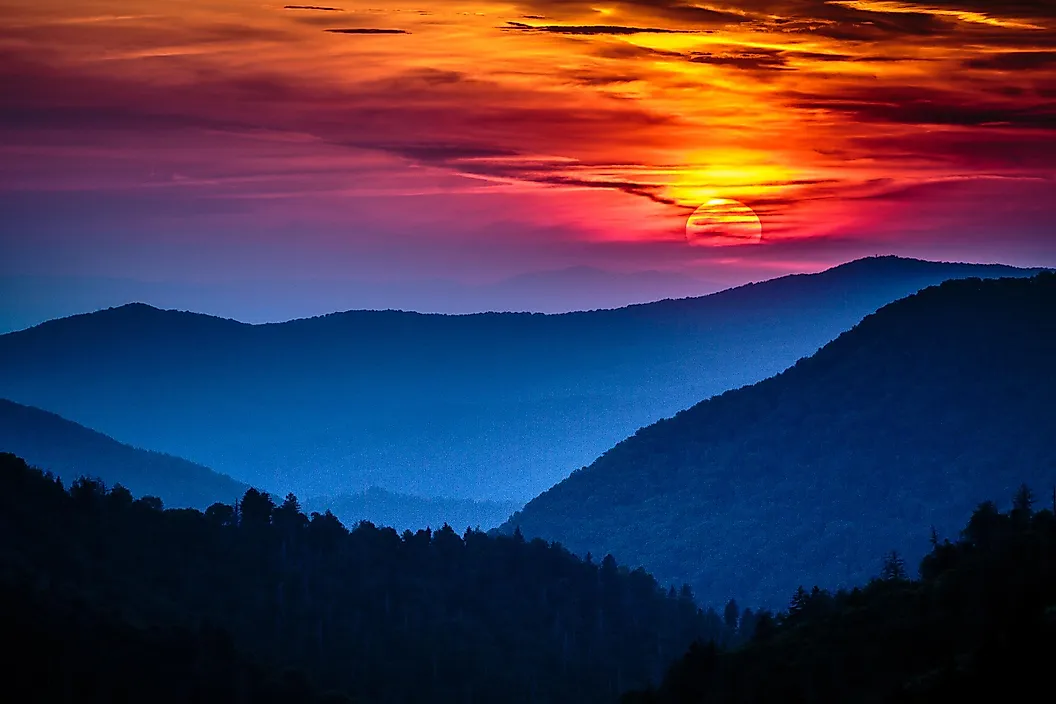
Every year, more people visit Great Smoky Mountains National Park than any other national park in the United States. Its popularity, and the fact that much of the eastern U.S. is within a day's drive, creates the impression that it's an easy place to explore. In reality, the Smokies contain more than 800 miles of trails winding through over 500,000 acres of steep Appalachian wilderness.
Unlike western parks with expansive views, visibility in many parts of the Smokies extends only a short distance beyond the trail, making it remarkably easy to lose visual reference points. The National Park Service also warns that the backcountry is managed as a natural area, meaning hikers should expect swollen streams, washed-out bridges, downed trees, and trail erosion that can alter familiar routes. Rescue, the agency cautions, "is not a certainty."
The park has seen numerous high-profile disappearances over the years. In 2018, Mitzie Sue "Susan" Clements became separated from her daughter near Andrews Bald after the two agreed to meet back at the trailhead. Despite a week-long search involving more than 100 trained personnel, helicopters, drones, search dogs, and dozens of agencies, Clements was ultimately found deceased. More recently, veteran park volunteer Ann Houghton disappeared during a planned overnight hike in January 2025. The Smoky Mountains NPS doesn't publish the annual number of reported missing hikers, but there are several listed hikers that have still not been found after losing their way in the wilderness.
Yosemite National Park

While hikers have been reported lost around popular trails like Yosemite Falls, the most dangerous part of Yosemite National Park lies in its backcountry. Nearly 95 percent of Yosemite is designated wilderness, where maintained trails become less frequent and help may be hours or even days away. Once hikers leave the park's busiest corridors, they enter hundreds of miles of remote backcountry shaped by granite domes, thick forests, high mountain passes, and deep river canyons.
That remoteness has fueled search-and-rescue operations for decades. Some involve hikers who simply underestimated the distances between trailheads. Others begin after backpackers fail to return on schedule or become disoriented while traveling cross-country between lakes and passes. Yosemite National Park maintains one of the busiest search-and-rescue programs in the National Park System because even a small navigation error can place someone in terrain where they are impossible to see from nearby trails or even from the air. According to Yosemite Search and Rescue, around 200 people get lost, become injured, or pass away in the park each year. There are also a few unresolved cases of missing hikers, including Peter Jackson, who never returned from a day hike from his campsite at White Wolf Campground in 2016.
Joshua Tree National Park

Joshua Tree National Park is home to venomous rattlesnakes, one of the most dangerous animals found in national parks in the U.S. But its strong California desert heat and similar topography are what makes it an easy place to get lost on a hike or while camping. In May 2019, search crews spent two days looking for Deno Ndilula after he and a hiking companion became confused near Willow Hole along the Boy Scout Trail. The two separated after losing the route, and although Ndilula managed to place a 911 call, darkness forced rescuers to suspend the search until the following morning. He was eventually found alive.
Much of Joshua Tree's landscape is covered with nearly identical granite formations, washes, and desert vegetation that provide few distinctive landmarks. Many social trails branch away from official routes, while extreme heat rapidly turns even short detours into dangerous situations. The National Park Service advises hikers to carry more water than they expect to need, remain on established trails whenever possible, and avoid hiking alone.
Mount Rainier National Park

More than 275 miles of maintained trails radiate from popular areas in Mount Rainier National Park like Paradise, Sunrise, and Longmire, drawing millions of visitors each year. But beneath that accessibility lies one of the country's most unpredictable hiking environments. Mount Rainier is an active volcano draped with glaciers, and the National Park Service warns that weather can deteriorate in minutes. A clear trail in the morning can disappear beneath fresh snowfall by afternoon, while dense clouds can reduce visibility enough that even experienced hikers lose all sense of direction. Much of the park also has little to no cell service, meaning that planning a hike here requires thought.
Seasonal floods regularly wash out bridges and alter river crossings, while snow lingers well into summer on many higher-elevation routes, obscuring trail markers and footprints. The National Park Service specifically identifies areas such as Panhandle Gap, Spray Park, and Seattle Park as places where snow-covered trails frequently become difficult to follow. Those conditions complicated the massive search for Dr. Sam Dubal, an experienced backpacker who disappeared while hiking the 17-mile Mother Mountain Loop in October 2020.
The Common Thread
Grand Canyon National Park punishes mistakes with heat and distance. Canyonlands hides them among twisting canyons. Joshua Tree surrounds hikers with near-endless lookalike rock formations, while Mount Rainier can simply change the trail after a winter storm. All of these U.S. national parks are very different places, but they all pose a significant risk of getting lost if hikers don't plan ahead and make smart choices while in the wilderness.