The National Parks That Used To Be Something Else
Before they became places where visitors hike, camp, and explore, some of America's national parks had very different identities. One was an industrial corridor. Another contained working farms and mountain communities, and another produced material used to make gunpowder. Several of the 63 US National Parks began as something other than protected wilderness. In many cases, evidence of those previous uses remains visible today.
Congaree Was a Logging Target

Today, Congaree National Park in South Carolina protects one of the largest remaining tracts of old-growth bottomland hardwood forest in the southeastern US. Its enormous bald cypress and tupelo trees can make it easy to assume the forest was always protected. For much of its history, however, the land was valued for its timber.
Logging companies acquired land in the Congaree floodplain during the late 19th and early 20th centuries, and some timber was cut from the region. The area's difficult terrain and frequent flooding complicated large-scale logging operations. These conditions ultimately helped preserve portions of the old-growth forest.
The protected area began as the Congaree Swamp National Monument in 1976 and was redesignated as Congaree National Park in 2003. The enormous trees visitors see today survived partly because the landscape made large-scale logging difficult.
Great Sand Dunes Included Working Land

The dunes at Great Sand Dunes National Park and Preserve dominate the landscape, but the surrounding San Luis Valley has long supported agriculture and ranching.
The dunes were originally protected as Great Sand Dunes National Monument in 1932. Congress redesignated the area as a national park and preserve in 2004, creating the larger protected landscape that exists in Colorado today.
The distinction between these two designations remains important. The national park protects the core dune field and surrounding landscapes, while the adjacent preserve operates under different rules and permits activities including hunting.
The history of settlement and working land did not disappear when the dunes became part of the national park. Ranches and agricultural lands remain part of the wider San Luis Valley, showing that the park developed within a landscape shaped by generations of human use.
Cuyahoga Valley Was an Industrial Corridor

Cuyahoga Valley National Park protects forests, wetlands, farmland, and the Cuyahoga River between Cleveland and Akron, Ohio. Before it became a national park, the valley was an important transportation and industrial corridor.
The Ohio and Erie Canal opened through the region during the 1820s, helping move agricultural products and manufactured goods. Railroads later became another major feature of the landscape.
According to the National Park Service, the valley also included farms, quarries, and industrial development. The Cuyahoga River became heavily polluted during the 20th century and later became a symbol of the country's environmental problems.
The area was established as Cuyahoga Valley National Recreation Area in 1974 before being redesignated as a national park in 2000. Still, its earlier identity remains visible. The Ohio and Erie Canal Towpath Trail follows portions of the historic canal route, while the Cuyahoga Valley Scenic Railroad continues traveling through the valley.
Shenandoah Was Home to Mountain Communities

Shenandoah National Park is known for Skyline Drive and its forested Blue Ridge Mountains. Before the park was created, however, the mountains contained farms, schools, churches, and communities that were home to hundreds of families.
The federal government acquired privately owned land during the 1930s as it assembled the area that would become the park. Some residents accepted compensation and relocated, while others resisted leaving their homes.
Evidence of those communities remains scattered throughout the park. Cemeteries, stone foundations, and old roads show that the forests did not exist outside human settlement before becoming federally protected.
Shenandoah was officially established as a national park in 1935. After farms were abandoned, many formerly cleared areas gradually returned to woodland.
Mammoth Cave Was a Working Mine

Mammoth Cave National Park is known for its enormous underground cave system, but the caves were also an industrial resource long before they became a national park.
Miners processed nitrate-rich cave sediments using wooden vats and other equipment. Portions of the underground landscape became an industrial workplace. During the War of 1812, workers extracted saltpeter, an important ingredient in gunpowder, from Mammoth Cave.
After saltpeter production declined, Mammoth Cave developed another identity as a tourist destination. Visitors traveled underground to see its enormous passages and unusual formations long before Mammoth Cave National Park was established in 1941.
Historic mining sites and artifacts remain part of the park's story. Mammoth Cave shifted from a place where people extracted resources to one where the underground environment itself became the resource worth protecting.
Grand Teton Began With Ranches

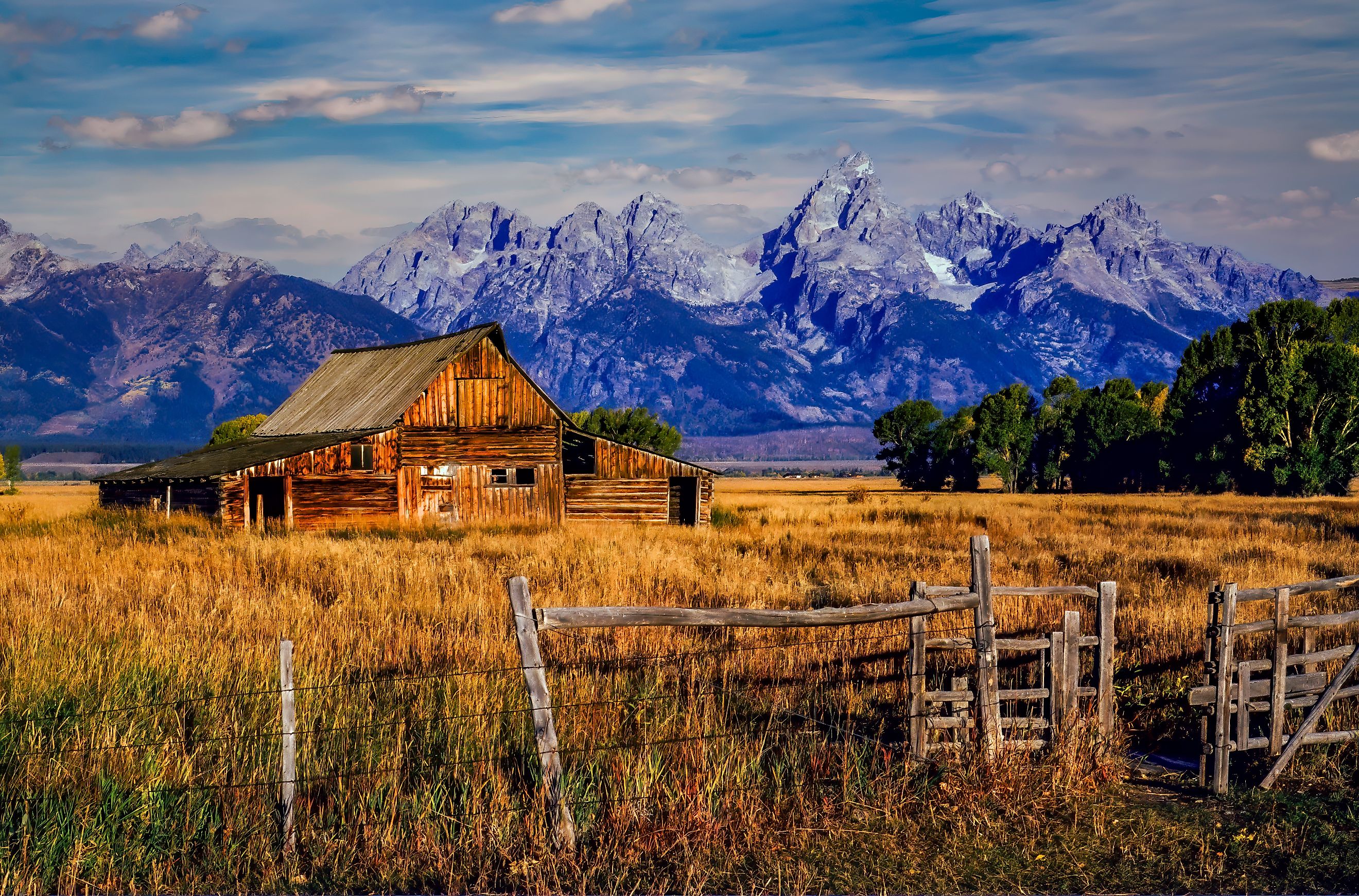
The mountains of Grand Teton National Park rise above Jackson Hole, a valley with a long history of homesteading and ranching.
Before the park reached its current boundaries, settlers established ranches throughout the valley. Cattle grazing became an important part of the area's economy, and several historic buildings from that period still survive.
The park's creation also involved decades of disagreement about how much of Jackson Hole should become federally protected. During the 1920s and 1930s, John D. Rockefeller Jr. secretly purchased thousands of acres of ranch land through the Snake River Land Company with the intention of eventually transferring the property to the federal government.
Grand Teton National Park was established in 1929, initially protecting the Teton Range and several lakes. The park expanded substantially in 1950 when much of Jackson Hole was added.
Historic ranches, cabins, and other structures remain within the park, preserving evidence of the valley's working past. The open landscape beneath the Tetons was shaped not only by geology but by settlement, ranching, and changing ideas about how the land should be used.
Hot Springs Was a Resort

Hot Springs National Park has one of the most unusual histories among the country's national parks. Long before it received its modern designation, the area's thermal springs were already attracting visitors, businesses, and hotels.
The federal government set aside the springs in 1832 as Hot Springs Reservation, decades before the National Park Service was created. It was redesignated as a national park in 1921.
The naturally heated water became the center of a growing resort and health industry. Bathhouses were built along what is now Bathhouse Row, and visitors traveled to Hot Springs to bathe in the thermal water.
The infrastructure of its earlier identity remains one of the park's defining features. Bathhouse Row still preserves the architecture of the resort era, while several of its historic buildings have taken on new uses.
Hot Springs demonstrates that not every national park began as a campaign to protect wilderness. In this case, the protected resource was already surrounded by roads, hotels, and decades of commercial activity.
The Landscape Still Remembers
Becoming a national park does not erase what came before. At Shenandoah, forests have grown over former farms and communities. Mammoth Cave still contains evidence of its industrial past. Cuyahoga Valley retains transportation routes through a landscape once shaped by factories, farms, and railroads, while Grand Teton preserves ranch buildings beneath one of the country's most recognizable mountain ranges.
These histories show that national parks do not all begin in the same way. Some were assembled from private property. Others evolved from monuments, reservations, or recreation areas.
A national park may look timeless from a trail or scenic overlook, but the landscape often contains older identities beneath the surface. Roads become trails. Farms become forests. Mines become historic sites. Ranches become protected landscapes. The national park may simply be the latest chapter in the land's much longer story.