The 10 Tallest Mountains In The Adirondacks
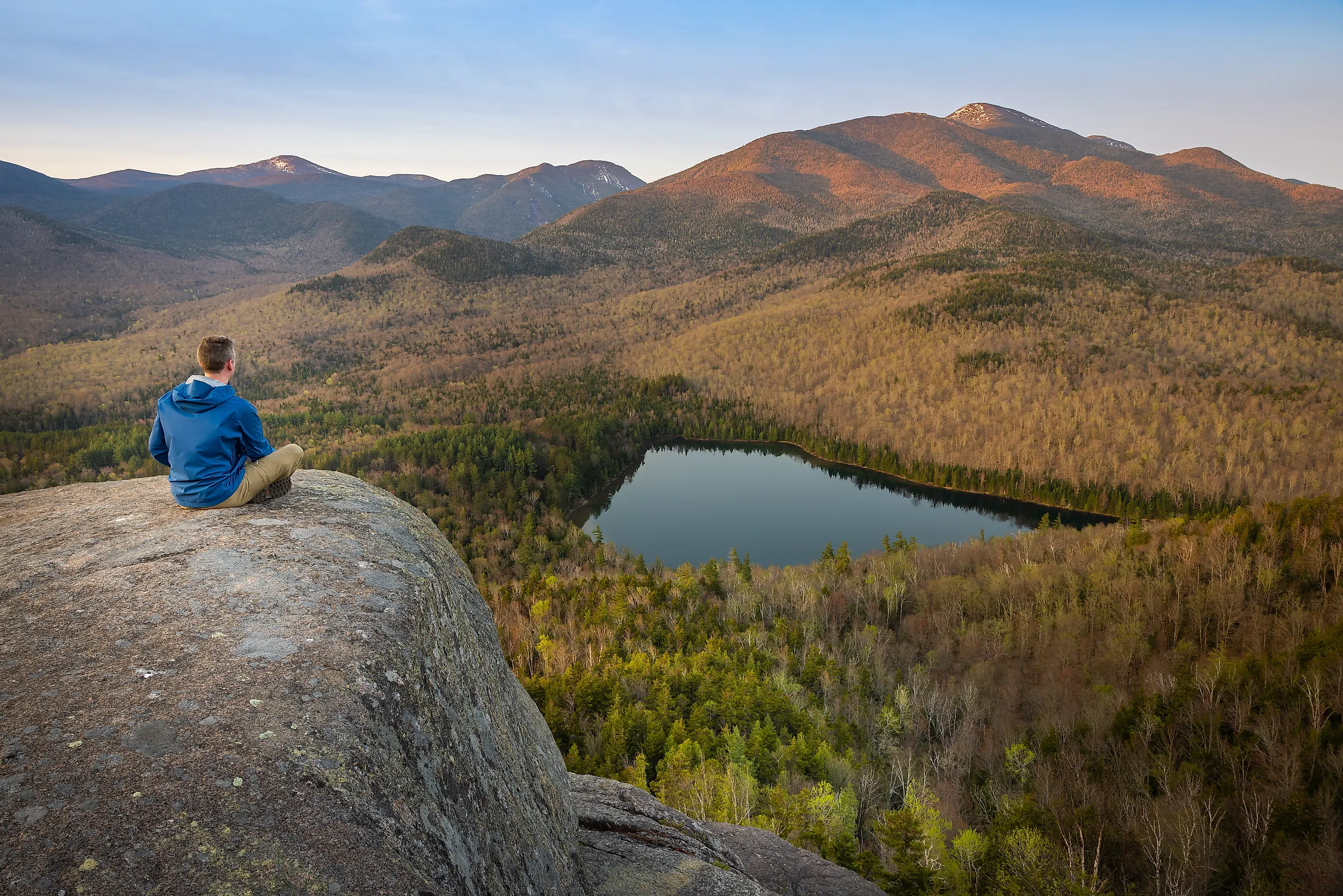
The mountains of the Adirondack High Peaks in New York State are an ancient geological anomaly. Their rocks actually belong to the Grenville Province, a vast chunk of Earth's crust more than 1 billion years old. Mount Marcy, New York's highest peak at 5,344 feet, has its own unique history, as it played an unexpected role in Theodore Roosevelt's rise to the presidency. Whiteface Mountain even hosted alpine skiing events during the 1980 Winter Olympics. These peaks, the 10 highest in the Adirondacks, all have interesting geological and human-interest stories to tell.
Mount Marcy 5,344 feet (1,629 meters)

Mount Marcy is the crown jewel of the Adirondack Mountains and the highest peak in New York state at 5,344 feet (1,629 meters). Located 20 miles south of Lake Placid, it is known to the indigenous Algonquin people as Tahawus, or Cloud Splitter. Mount Marcy is ecologically vital to the region, as Lake Tear of the Clouds lies on its western slopes and is traditionally recognized as the highest source of the Hudson River. It also has political history. In September 1901, Vice President Theodore Roosevelt was hiking down from Mount Marcy's summit when he received a message that President William McKinley was near death after being shot. Once at the trailhead, Roosevelt took a wagon ride out of the wilderness, right before learning that he had become the 26th President of the United States. Today, hikers enjoy numerous trail options to the summit in all seasons.
Algonquin Peak 5,114 feet (1,559 meters)

Located in the High Peaks Wilderness just west of Mount Marcy, Algonquin Peak is a steeper, more difficult climb than Mount Marcy. The summit of Algonquin features a rare 23.5-acre alpine tundra zone filled with fragile, ice-age Arctic plant life that survives only on exposed, wind-blown rock. In the summer, members of the Adirondack Summit Steward Program routinely stand on the summit during peak hiking season, educating people on why it's important to step on solid rock in an effort to preserve the alpine vegetation. In the winter, Algonquin becomes a serious mountaineering endeavor to reach the summit as high winter winds routinely strip away the snow, leaving the dome with a layer of thick, glare ice that requires crampons and ropes to ascend.
Mount Haystack 4,960 feet (1,512 meters)

While falling just short of 5,000 feet and the third-highest peak in the Adirondacks, Haystack is considered by many serious hikers as the most spectacular and rewarding peak in the High Peaks Wilderness area, as it offers uninterrupted 360-degree views of the surrounding mountains. Situated in proximity Mount Marcy, the two peaks are separated by the Panther Gorge, which features sheer 1,000-foot drops. Haystack's name is quite literal: when viewed from other nearby peaks, its profile looks like a perfectly symmetrical stack of hay. Haystack is difficult to access as there is no short or easy approach, and its exposed summit features a prolonged scramble over exposed bedrock.
Mount Skylight 4,926 feet (1,501 metres)

Mount Skylight is located just south of Mount Marcy, divided only by a saddle that holds Lake Tear of the Clouds. The mountain was named in 1857 by artist Frederick S. Perkins and guide Orson Schofield Phelps, who decided that when viewed from certain low angles, a unique rock formation near the peak caught the sun in a way that resembled a glass skylight. Because Skylight is buried quite deep in the wilderness, there is no quick access, and most hikes exceed 20 miles (32 kilometers) round trip. For those who make the attempt, the Legend of the Cairns awaits. According to Adirondack lore, any hiker who carries a stone up the trail and places it onto the summit cairn will please the mountain gods and be assured of good weather for their descent.
Whiteface Mountain 4,867 feet (1,483 meters)

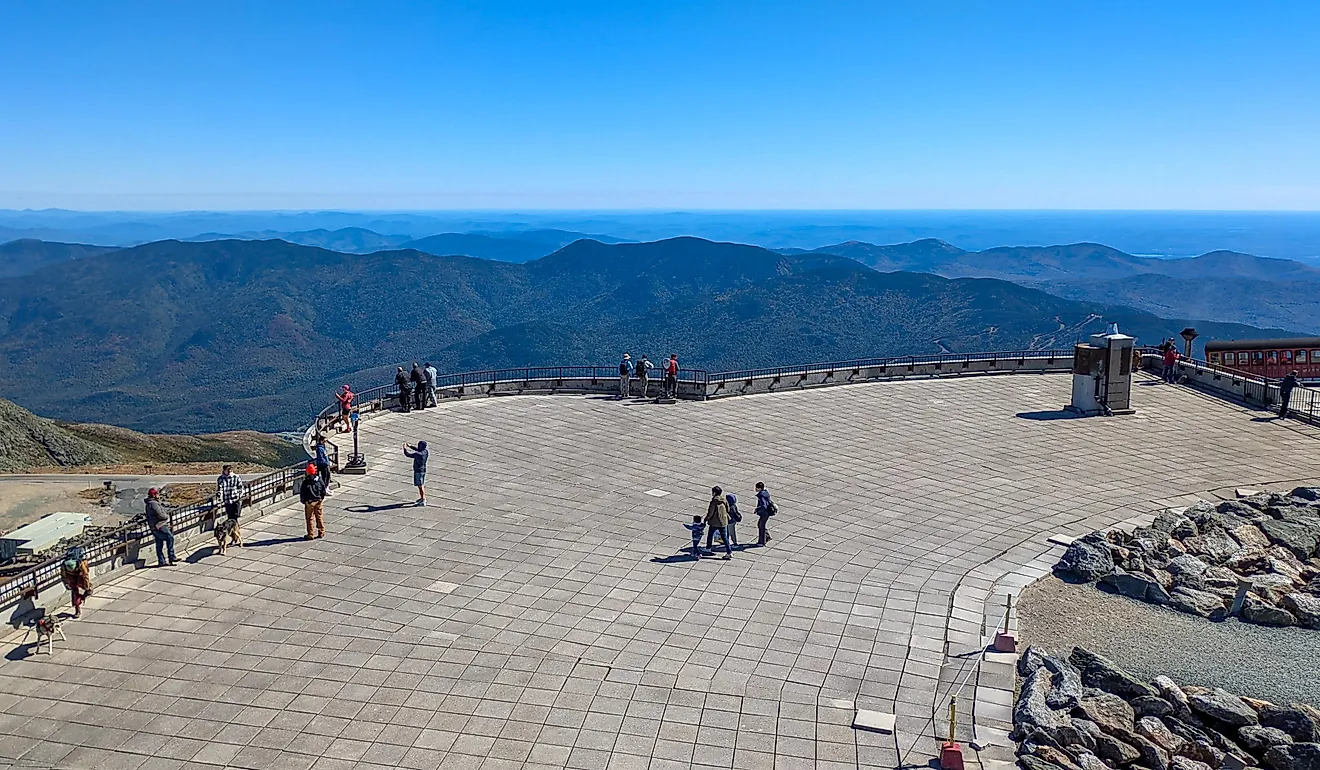
Whiteface Mountain is the Adirondacks' most developed peak, and its fifth highest. Just 10 miles north of Lake Placid, it is further from the other High Peaks Wilderness peaks on this list, and is the only peak accessible by foot, car, and elevator. Because of its unblocked position, on a clear day views stretch past Lake Placid and the Champlain Valley all the way north to Montreal, Quebec. The Whiteface Veterans' Memorial Highway opened to drivers in 1935, while the Core Elevator required engineers to blast a 400-foot pedestrian tunnel straight through the mountain's granite core to install a 27-story glass elevator that carries passengers up to the stone Castle observatory. Located on the mountain's southern slopes, Whiteface Ski Area hosted the alpine skiing events for the 1980 Olympic Winter Games and holds the largest vertical drop of any ski area in the eastern United States.
Dix Mountain 4,857 feet (1,480 meters)

Dix Mountain is located in the southeastern section of the High Peaks Wilderness area, though it stands separated from the core of the higher peaks like Mount Marcy by the Ausable River valley. Dix has a unique geographical feature called The Beckhorn, a sharp, rocky knob on its southern ridge that provides expansive views of Elk Lake, Lake Champlain, and Vermont's Green Mountains. In 1837, New York state geologist Ebenezer Emmons named the peak in honor of John Adams Dix, the Secretary of State of New York at the time, who later became state governor. Dix was an abolitionist who prevented Maryland from seceding from the Union before the Civil War. While Dix Mountain can be hiked as a standalone, most hikers summit it as part of a multi-peak loop.
Gray Peak 4,840 feet (1,475 meters)

Gray Peak is located right off Mount Marcy's western shoulder but holds an important distinction from its neighbors: Gray Peak is the highest mountain in the Adirondacks without a maintained or marked public trail leading to its summit, so hikers must rely on a trail layout known as a herd path which requires advanced backcountry navigation skills, especially in winter. For those who do reach the summit, which requires a steep half-mile scramble on all fours through dense forest, the reward is a unique perspective of Mount Marcy that looks right up its steep rock face.
Iroquois Peak 4,840 feet (1,475 meters)

Iroquois Peak is the southernmost peak in the Adirondacks' MacIntyre Range, tucked in behind Algonquin Peak. Iroquois is a wild, wind-swept mountain that, from the summit, offers lovely views of Indian Pass and the 800-foot cliffs of Wallface Mountain. Iroquois is also home to the highest mountain bog in the eastern United States. Like Gray Peak, Iroquois has no officially marked or maintained trail access and the stark summit is accessible only by a primitive, often overgrown herd path.
Basin Mountain 4,827 feet (1,471 meters)

Basin Mountain sits in a high-alpine saddle between Saddleback Mountain to its northeast and Haystack to its southwest. Buried well off the beaten track, there is no short approach to Basin, making it one of the lesser-hiked mountains on this list. Getting to Basin requires a big commitment through rough riverbeds and steep, rocky mountain slopes. Its tough landscape, however, did have an advantage. Because the cliffs on Basin Mountain are so treacherous, 19th-century logging companies found it impossible to haul timber out of its deep valleys. As a result, the area around Basin contains some of the best remaining tracts of virgin, old-growth forest in New York State.
Gothics Mountain 4,736 feet (1,444 meters)

Though just the 10th highest peak in the Adirondacks, Gothics is the undisputed architectural masterpiece on this list. It's famous for its curved, sweeping faces of bare granite, alpine tundra, and a terrifyingly steep, cable-assisted trail that offers a masterclass in technical rock scrambling. In winter, these bare, smooth sections of rock are routinely coated in a thick layer of ice, making it extremely dangerous for those without the necessary equipment like crampons and ropes. The mountain earned its name around 1850 from early wilderness explorers who noted its sharply arched, serrated ridges and steep rocky slides that resembled traditional Gothic cathedral architecture. The steep, exposed rock wasn't always like that, however. In 1903, a huge cloudburst triggered a debris avalanche on the mountain's south face, completely scouring millions of tons of soil and dense forest into the valley below, exposing the smooth granite slab that hikers challenge themselves with today.
Natural and Human History Come Together
Sculpted by glaciers over tens of thousands of years, these 10 highest peaks in the Adirondacks stand like soldiers of solid granite. For hikers, climbing these peaks is a test of endurance, as many of the routes to each respective summit are more than 20 miles long, sometimes through dense alpine scrub or steep, scree-covered faces. But they also hold deeply human stories, like Vice President Theodore Roosevelt learning he was to become president while descending Mount Marcy, or Whiteface's Olympic history. Natural and human history come together in the Adirondacks, making them one of the most interesting mountain ranges in the eastern United States.